landmark
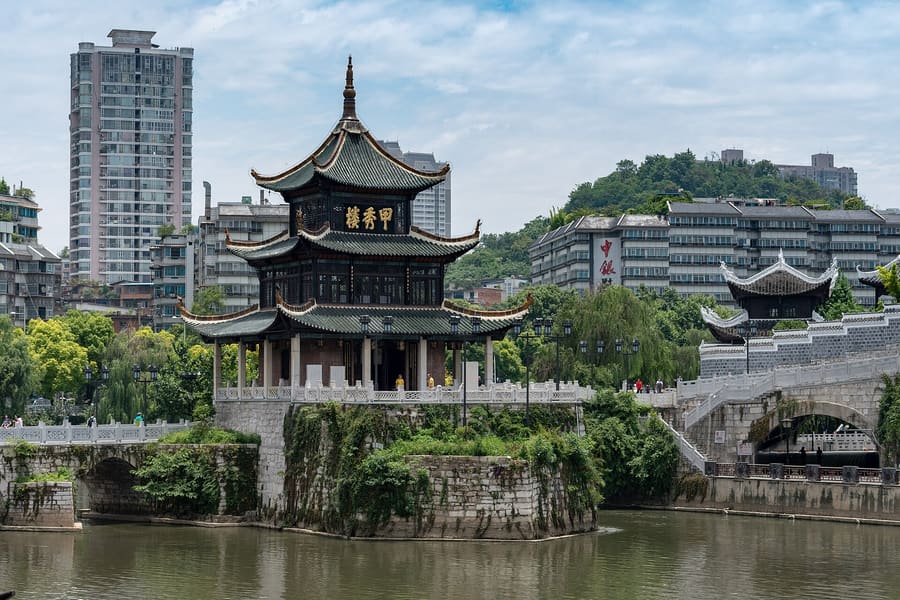
Jiaxiu Tower
A three-tier Ming dynasty pavilion built on a boulder in the Nanming River. Visit at night when yellow lights illuminate the wooden eaves.
اسأل Parleyالصين
Cool karst basins, sour chili broths, and high-tech hills.
introduction
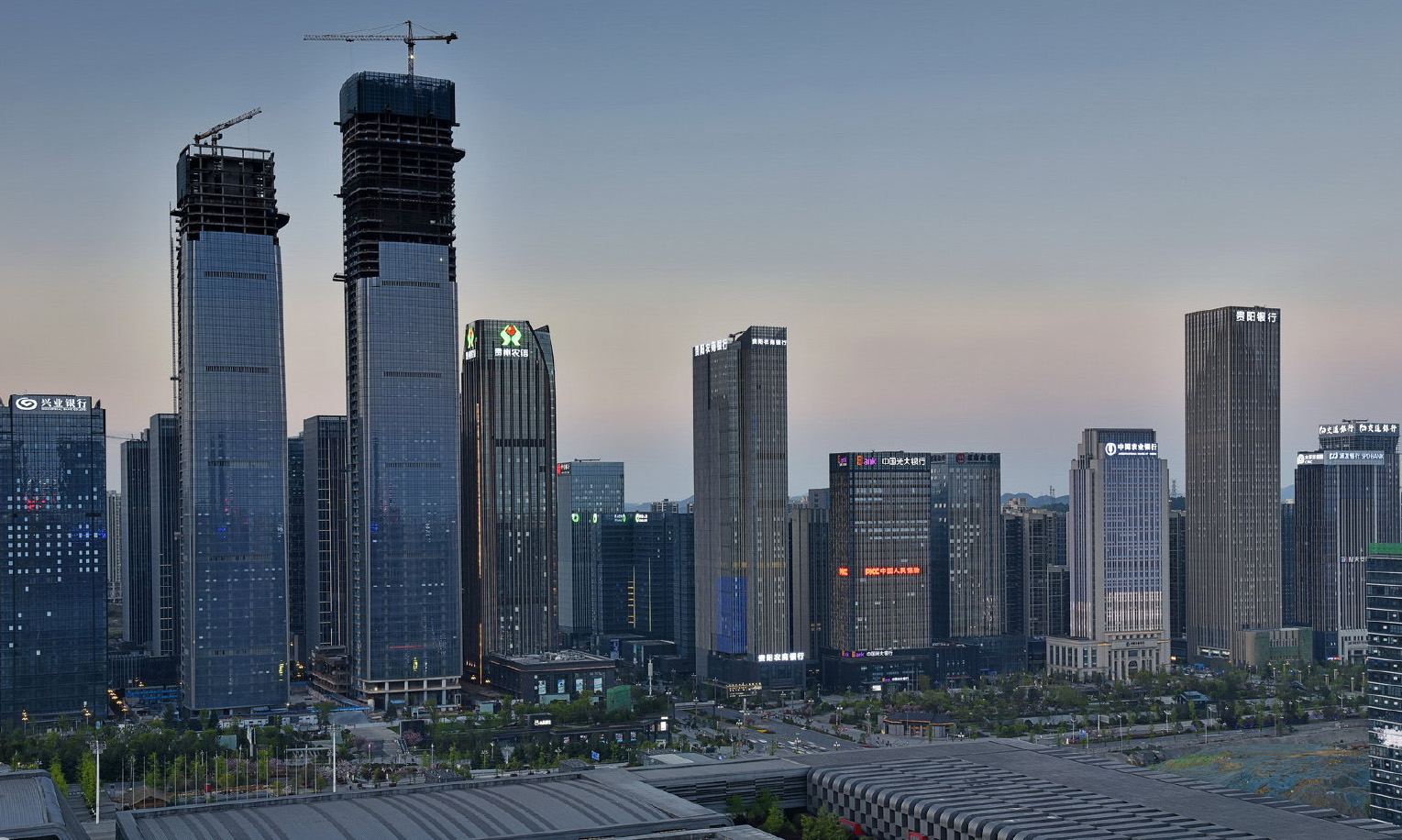
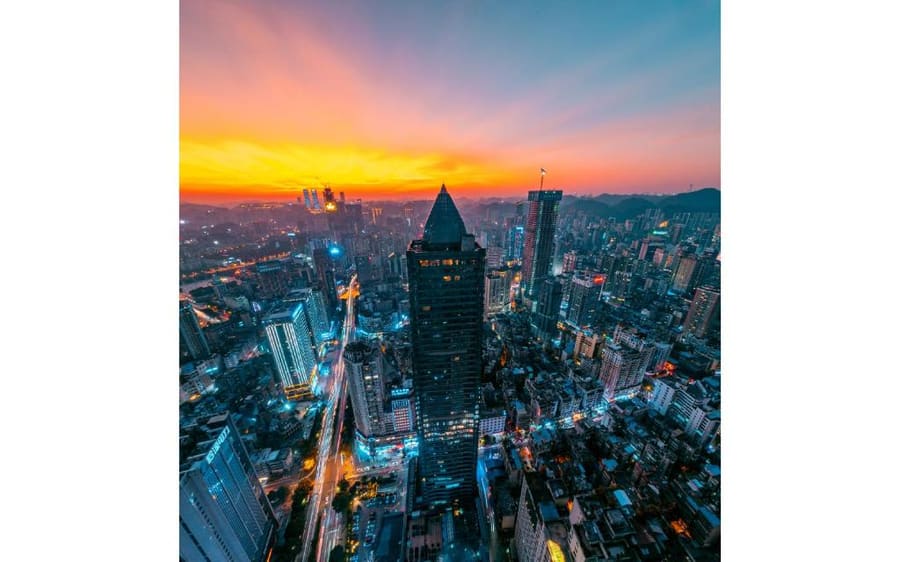
Guiyang sits on a karst plateau in southwest China, built inside mountain basins and cool summer breezes. It is the capital of Guizhou province, driven by big data server centers and night markets. You navigate the city by subway or taxi between steep hills and dense modern apartment blocks. Expect sour-spicy chilies, wild forest parks, and rapid urban growth.
Airport subway link
Subway Line 2 runs directly from Longdongbao International Airport to central Nanming District in 25 minutes for under 5 RMB.
Karst topography
Guiyang sits inside the South China Karst region, recognized by UNESCO for its dramatic limestone peak landscapes.
Summer cool climate
Summer temperatures rarely cross 28°C. Book hotels months ahead for July and August when domestic travellers flock here to escape heat.
Guiyang
xiquinhosilva · CC BY 2.0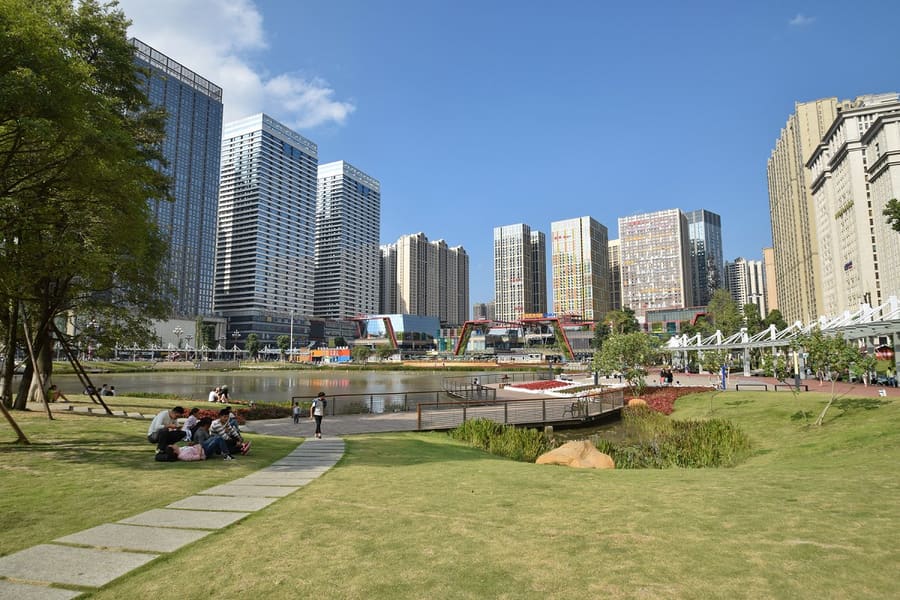
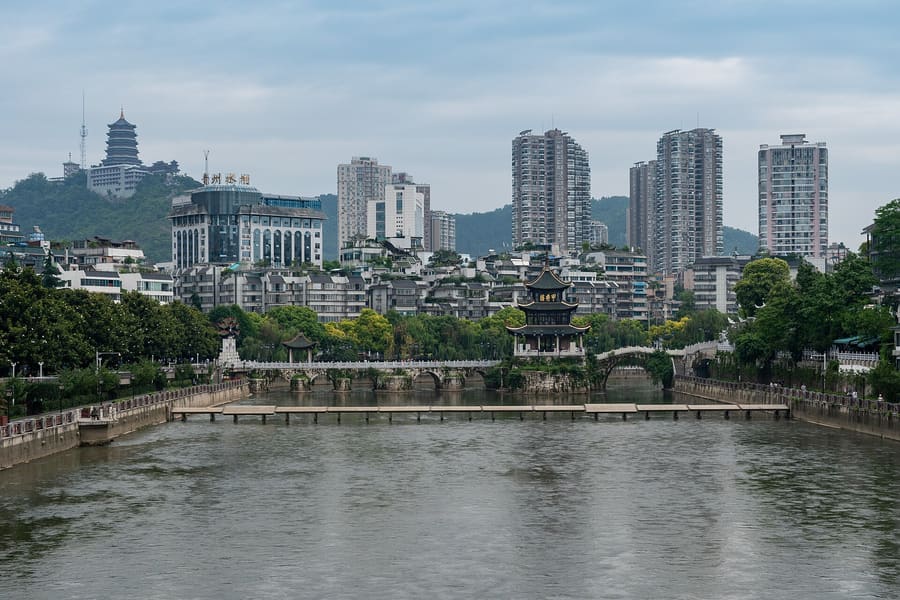
Nanming — Classic riverfront district with historic landmarks and late-night noodle shops.
Baycrest · CC BY-SA 2.5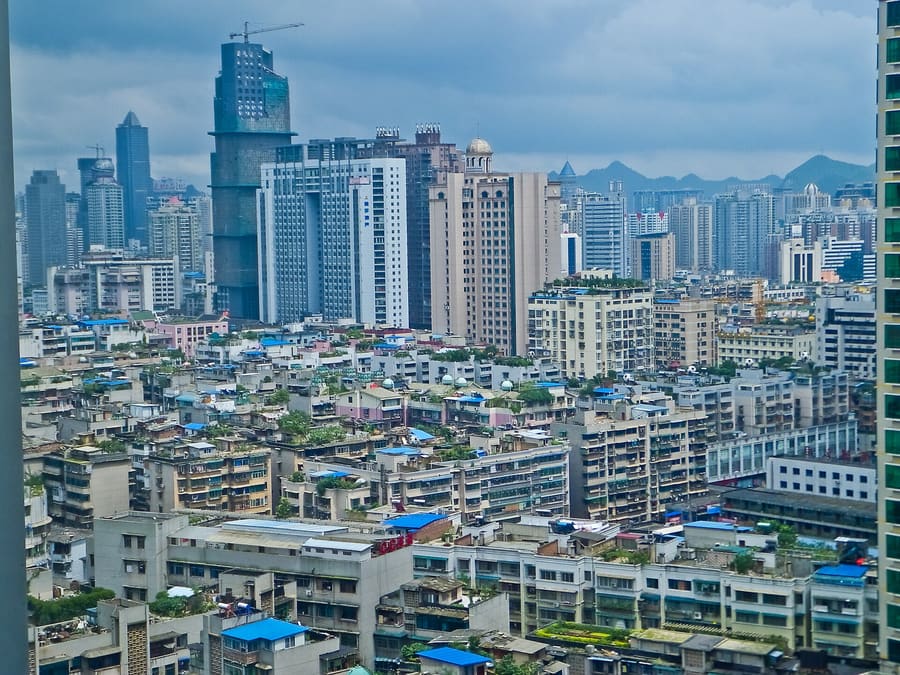
Yunyan — Old city heart with traditional food markets and proximity to forest trails.
涔水影人 · CC BY 3.0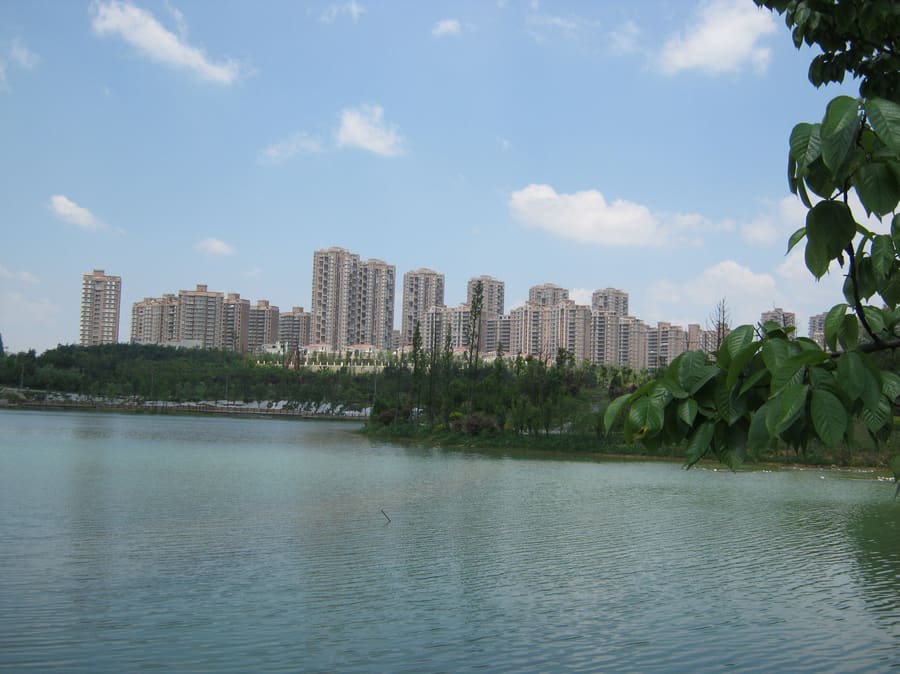
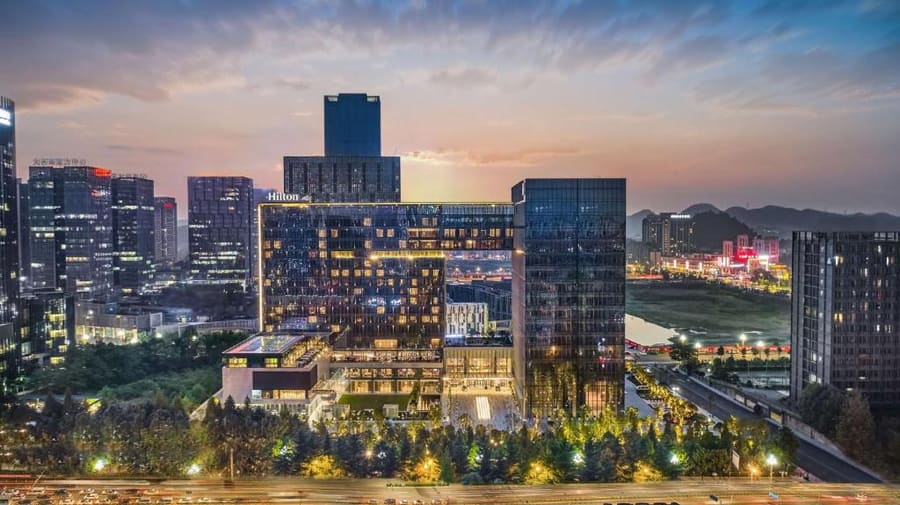
Guanshanhu — Sprawling new district featuring wide avenues, high-speed rail links, and modern business hotels.
汗血 · CC BY 3.0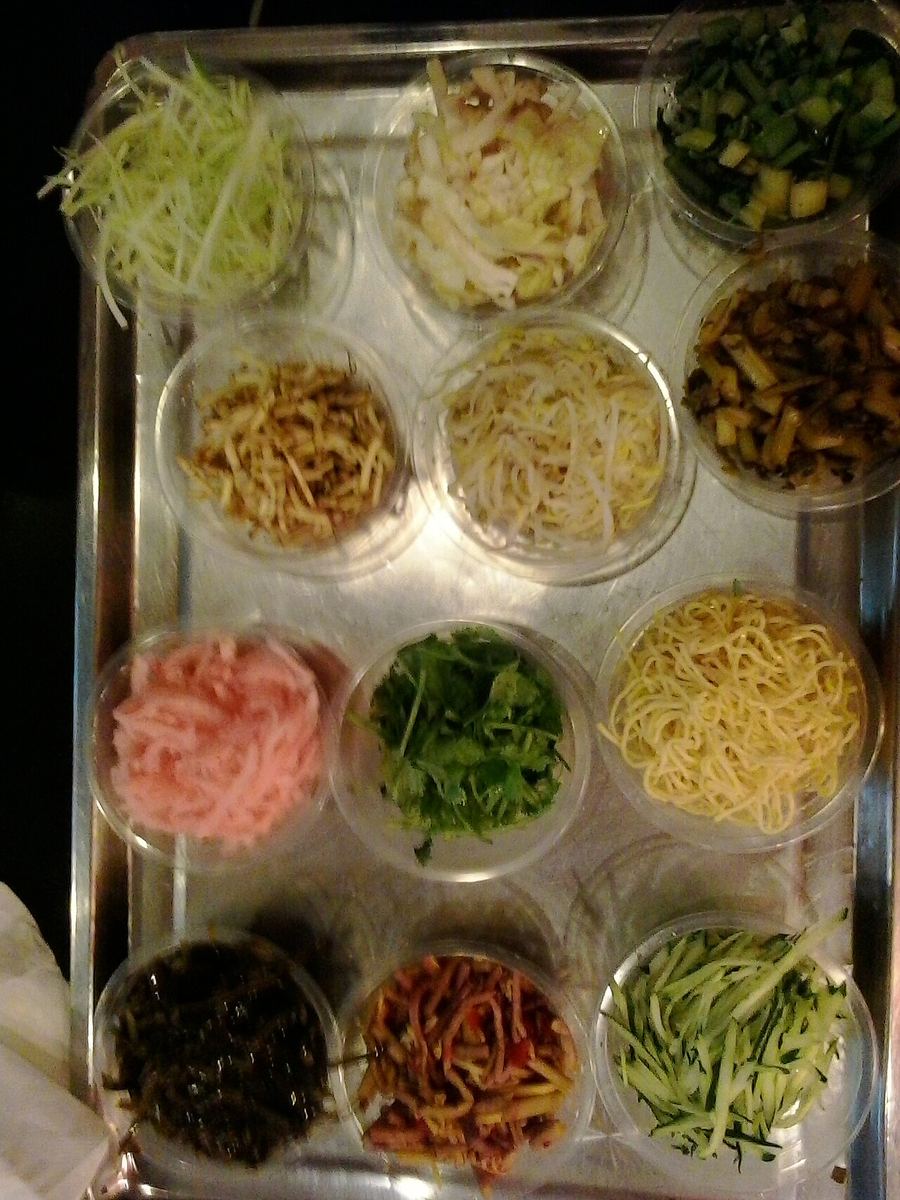
Siwawa features dozens of shredded vegetable strips wrapped in thin rice pancakes.
Caitriana Nicholson from 北京 ~ Beijing, 中国 ~ China · CC BY-SA 2.0highlights
landmark
A three-tier Ming dynasty pavilion built on a boulder in the Nanming River. Visit at night when yellow lights illuminate the wooden eaves.
اسأل Parley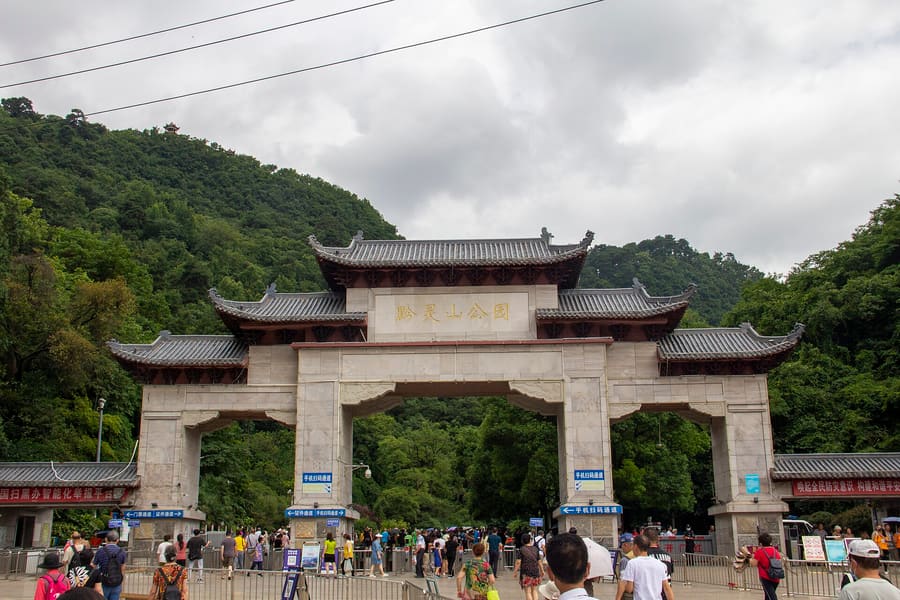
landmark
Dense urban mountain forest filled with roaming macaque monkeys. Keep food sealed in bags to avoid aggressive pulls.
اسأل Parley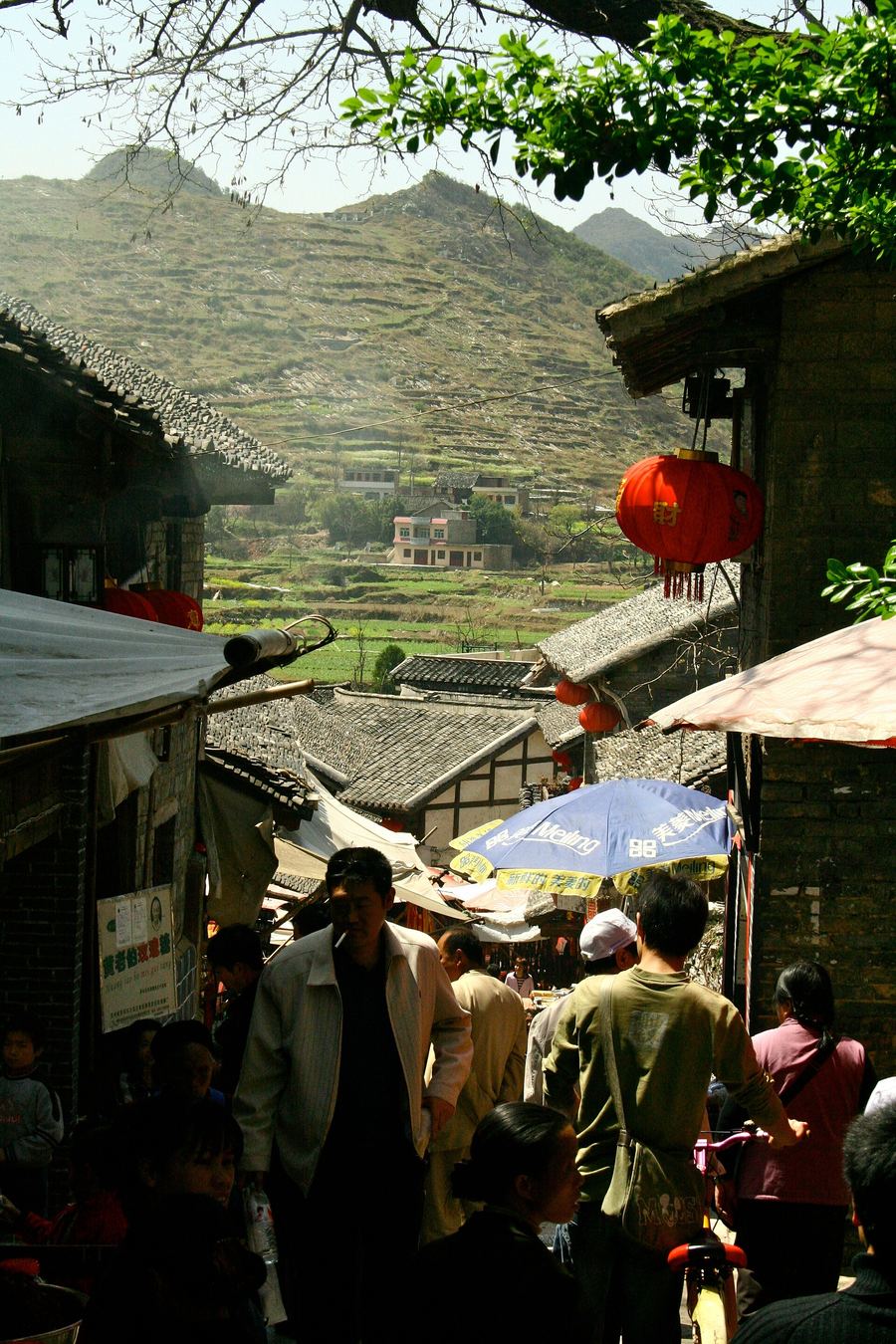
landmark
A 600-year-old military outpost with stone city walls and slate pathways. Order braised pig trotters at any street stall.
اسأل Parley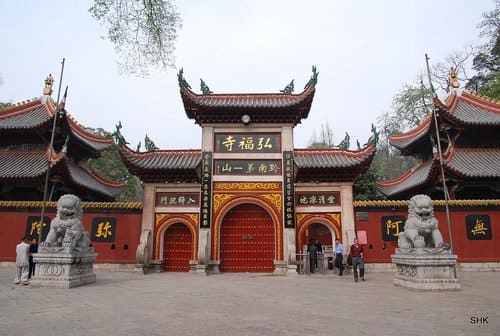
landmark
An active Qing dynasty Buddhist temple hidden near the summit of Qianling Mountain. Climb the stone stairs early to beat crowds.
اسأل Parley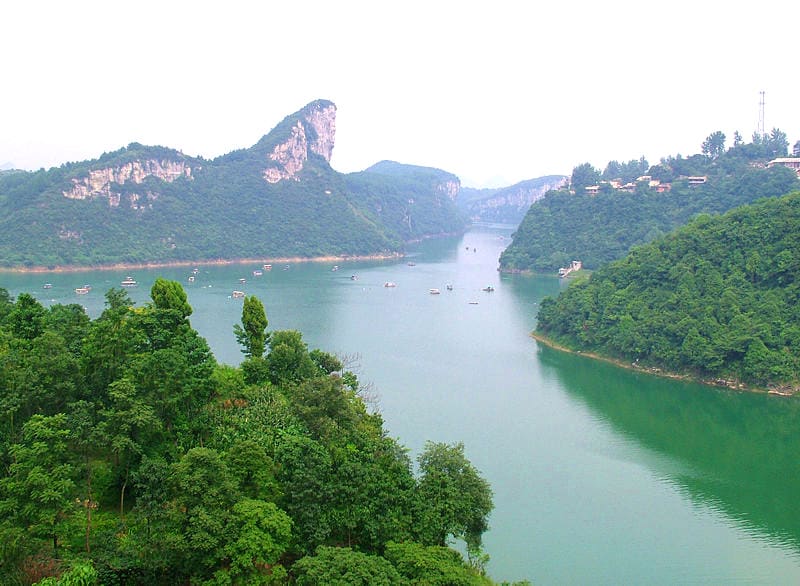
landmark
A scenic river loop lined with ancient trees and clear streams south of the city. Rent a bicycle near the main entrance to cover ground.
اسأل Parleyattractions
areas
Classic riverfront district with historic landmarks and late-night noodle shops.
قريبJiaxiu Tower and Metro Line 2.
اسأل ParleyOld city heart with traditional food markets and proximity to forest trails.
قريبQianling Mountain Park.
اسأل ParleySprawling new district featuring wide avenues, high-speed rail links, and modern business hotels.
قريبGuiyang North Railway Station.
اسأل ParleyMassive high-density residential zone packed with neon signs, street food, and crowds.
قريبThe White House and Shopping Malls.
اسأل Parleyfood
Guiyang food revolves around fermented sourness and complex chili oil. The damp mountain climate shaped a cooking culture reliant on red sour soup made from pickled tomatoes and mountain pepper oil. Eating here is hands-on and social, centered around dipping sauces mixed at your table from dozens of spices.
Siwawa features dozens of shredded vegetable strips wrapped in thin rice pancakes.
Caitriana Nicholson from 北京 ~ Beijing, 中国 ~ China · CC BY-SA 2.0Fresh river fish simmered in fermented tomato broth scented with wild mountain pepper. Add chili flakes and crushed garlic to your broth dip.
Thin rice flour pancakes stuffed with pickled radish, cucumber, and soybean sprouts. Pour spoonfuls of sour chili water into each wrap before eating.
Egg noodles served in spicy pork oil broth topped with pig blood curd and crispy pork cracklings. Eat this for breakfast at neighborhood noodle stalls.
history
Guiyang grew as a strategic military outpost linking southwest China to the central plains. Surrounded by mountains, it remained relatively isolated until railways and modern infrastructure unlocked its growth.
Ming City Walls
Ming forces build stone fortifications and found Qingyan town to secure regional control over trade routes.
Wartime Hub
Refugees and institutions retreat to Guiyang during the Second Sino-Japanese War, expanding its urban core.
Big Data Capital
China designates Guiyang as its national big data hub, drawing tech giants to build subterranean server centers.
where to stay
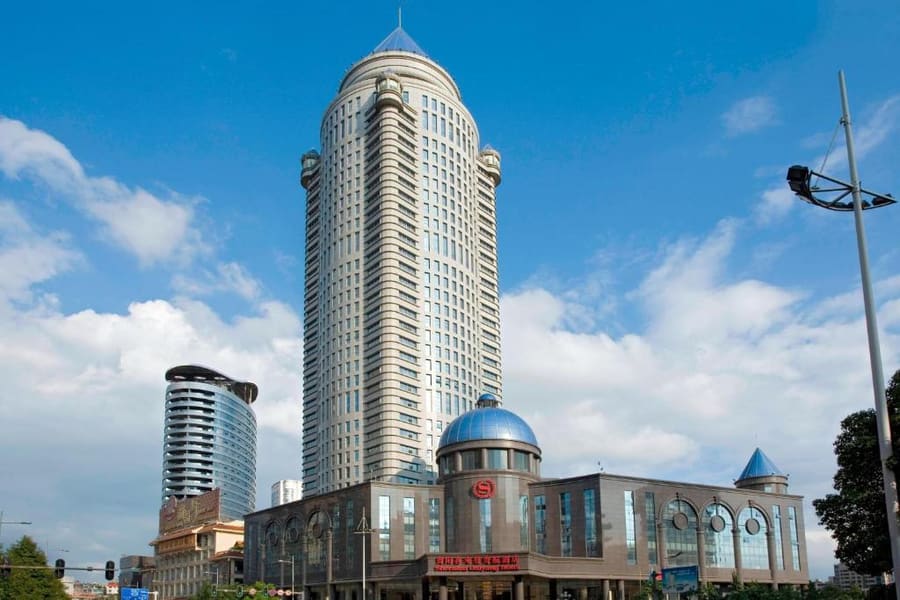
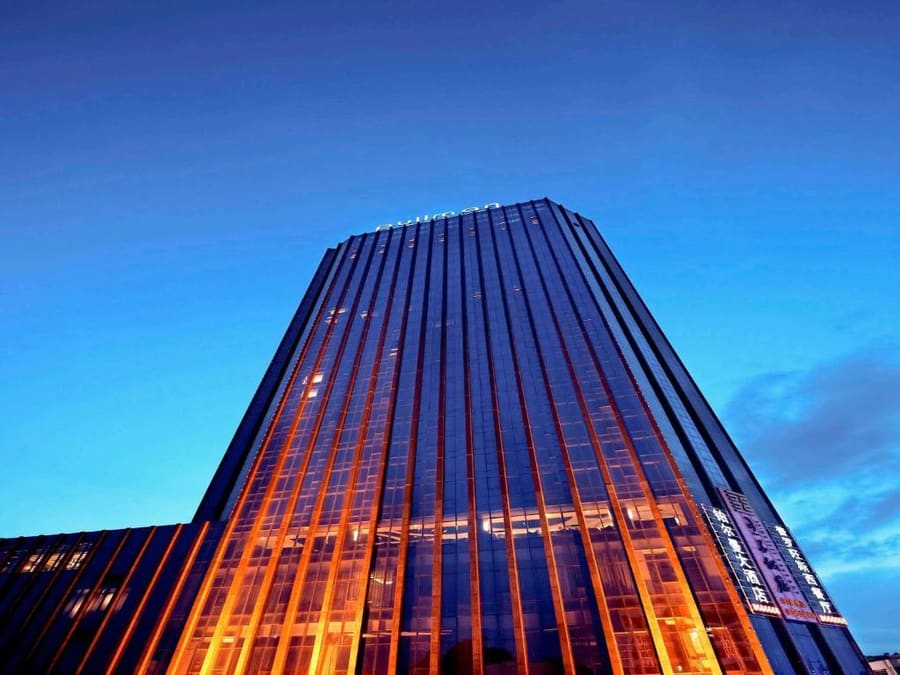
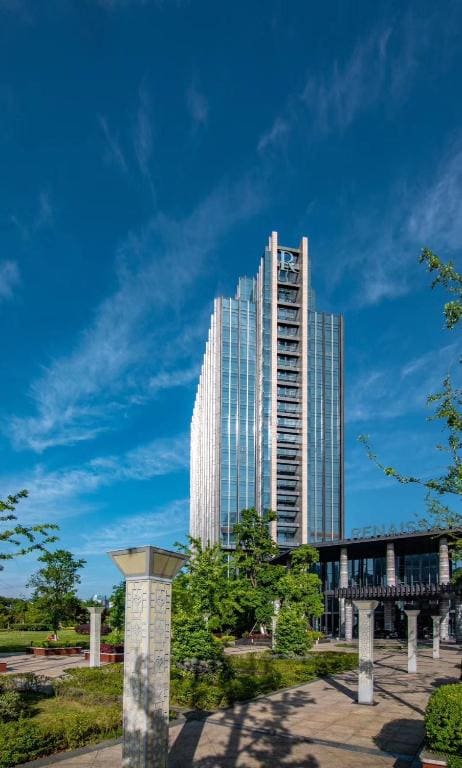
Choose by your travel priority: stay in Nanming or Yunyan for street food and historic sights, or pick Guanshanhu if arriving late by high-speed train.
Live rates, matched to the areas above.
transport
Guiyang operates a clean subway network alongside rideshare services. Buses run extensively but suffer during peak-hour traffic bottlenecks.
من Longdongbao Airport (KWE) / Guiyang North Railway Station
Official airport taxicabs queue outside arrivals. Meter starts at ¥10.
Use DiDi via Alipay or WeChat. Pick up at designated rideshare zones.
High-speed shuttle trains link Longdongbao Airport Station directly to Guiyang North.
Line 1 connects Guiyang North Railway Station to downtown, while Line 2 links the airport. Pay via Alipay transport code.
Hail rides through Alipay's built-in DiDi mini-app. English destination search works reliably for standard locations.
Guiyang traffic chokes on narrow mountain bridges from 07:30 to 09:00 and 17:30 to 19:30. Take the metro during these hours.
City buses charge flat rates of ¥2. Swipe standard transit cards or use smartphone QR codes at front doors.
cost
Guiyang offers lower daily costs than eastern coastal Chinese cities. Eating well in local neighborhood markets remains remarkably inexpensive.
A filling breakfast bowl at neighborhood noodle shops in Yunyan.
Includes fresh river fish weighed by the catty and vegetable sides.
Fares scale strictly by distance travelled across the subway system.
Clean three- or four-star properties in Nanming or Yunyan.
seasonality
MAR – MAY
Mild spring weather with frequent mist. Spring green tea harvests begin in nearby hills.
JUN – AUG
Peak summer season with cool mountain breeze. Hotel prices surge as mainland escapees arrive.
SEP – NOV
Dry autumn days with clear skies. Crisp air makes this ideal for park hiking and city walking.
DEC – FEB
Cold, humid winter weather with heavy dampness. Low tourist numbers keep hotel rates cheap.
practicalities
WeChat Pay and Alipay are mandatory for smooth transactions. Cash is rarely used even at street stalls.
Guiyang averages three rainy or overcast days out of four. Carry a compact umbrella daily regardless of morning skies.
Local food is naturally very spicy. Ask for 'wei la' (mild spice) if you cannot handle strong chili heat.
English is rarely spoken outside major international hotels. Download a translation app with offline Chinese capabilities.
Do not display loose plastic bags near Qianling Mountain monkeys. They routinely snatch items looking for food.