landmark
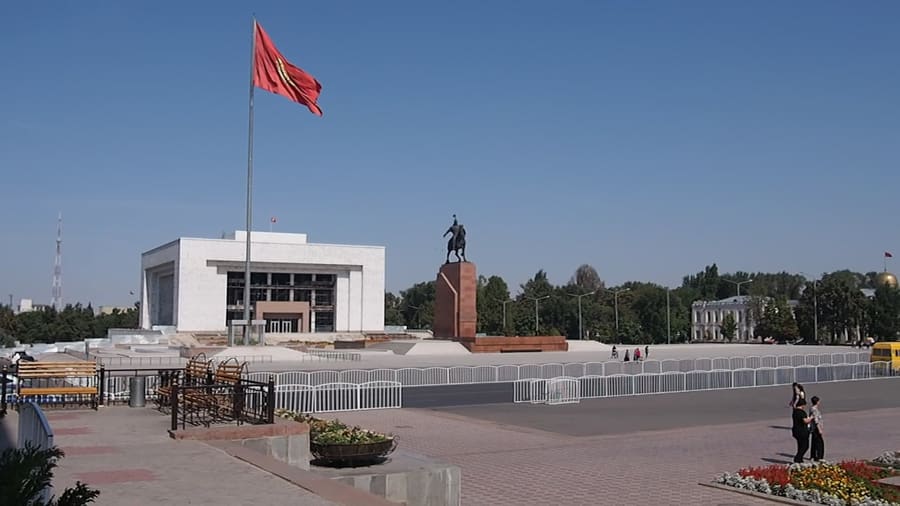
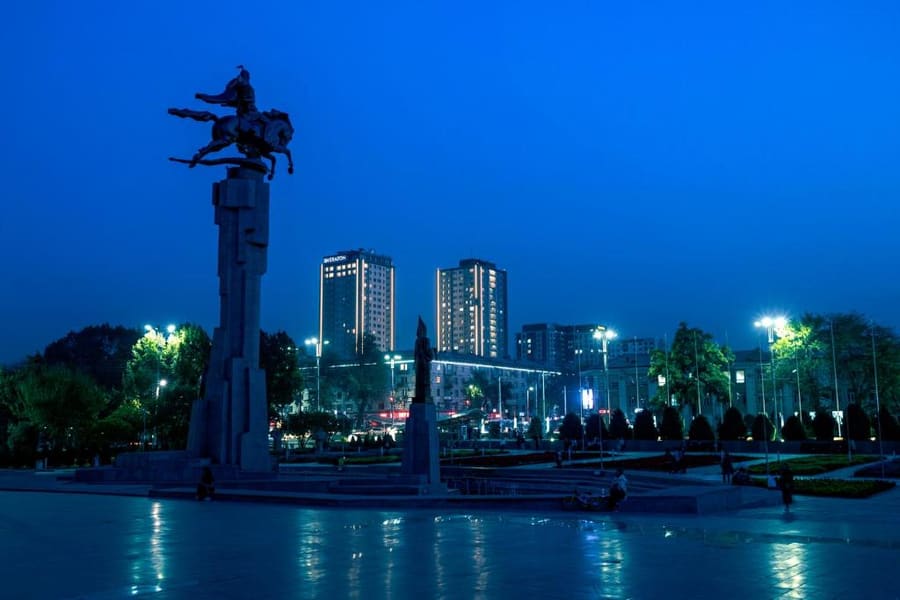
Ala-Too Square
The main Soviet central square where military parades and protests occur. Watch the guard change every hour.
Parley fragenKirgisistan
Brutalist architecture, mountain shadows, and Soviet grids.
introduction
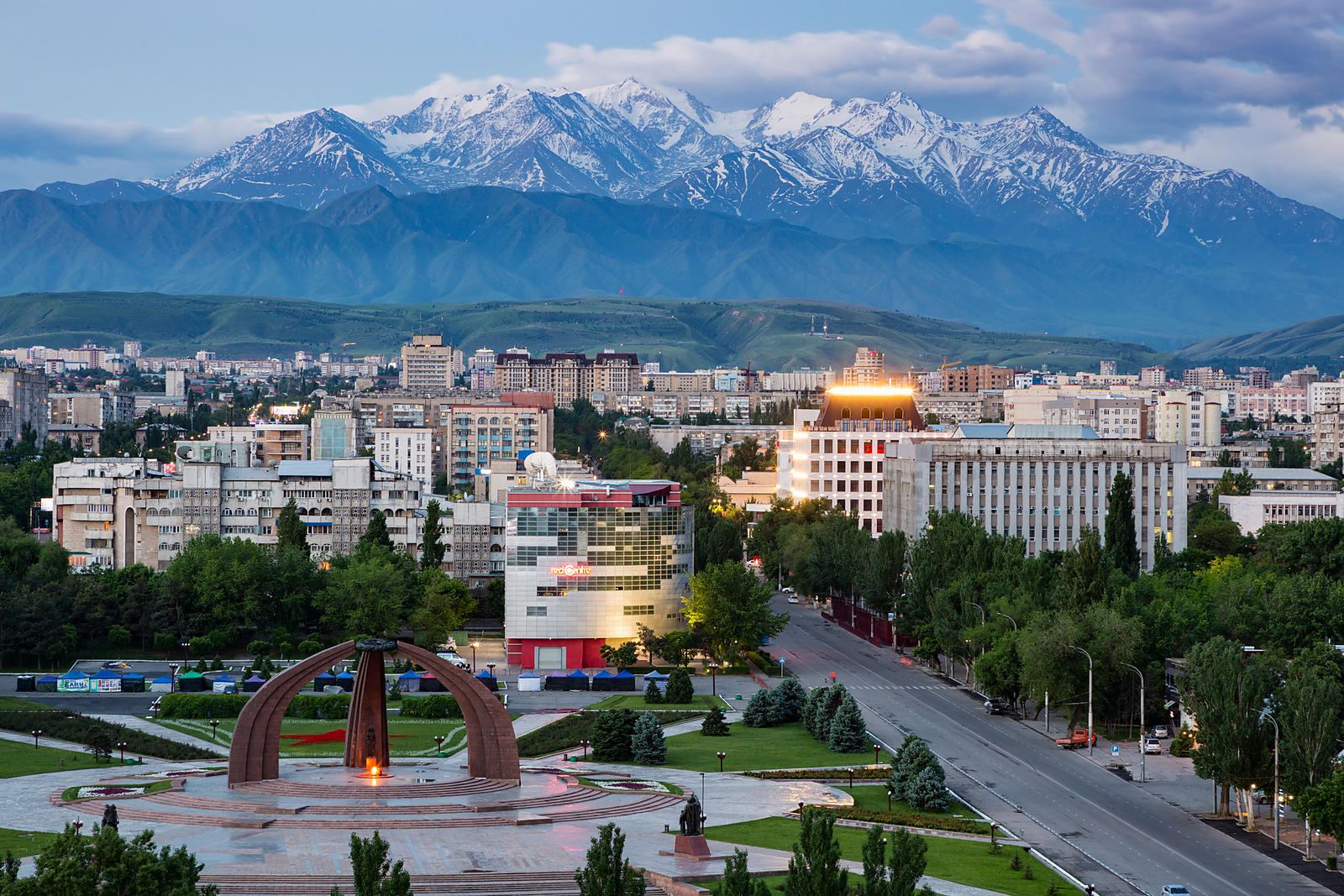
Bishkek is a green grid of Soviet planning built beneath the Tian Shan mountains. You move through wide, tree-lined avenues anchored by monumental concrete buildings and open plazas. Cold winter smog gives way to long summer evenings in outdoor beer gardens. It serves as an unpretentious base for exploring Central Asia or starting mountain treks.
Airport transport trick
Yandex Go operates reliably from Manas International Airport (FRU) to the center. Rides cost around 600–800 KGS.
Grid orientation rule
Bishkek streets follow a strict compass grid. Look south down any street to see snowcapped peaks.
Cash for markets
Rideshare apps take international credit cards. Bazaars and street stalls strictly require Kyrgyz som in cash.
Bishkek
Nikolaus · CC BY-SA 3.0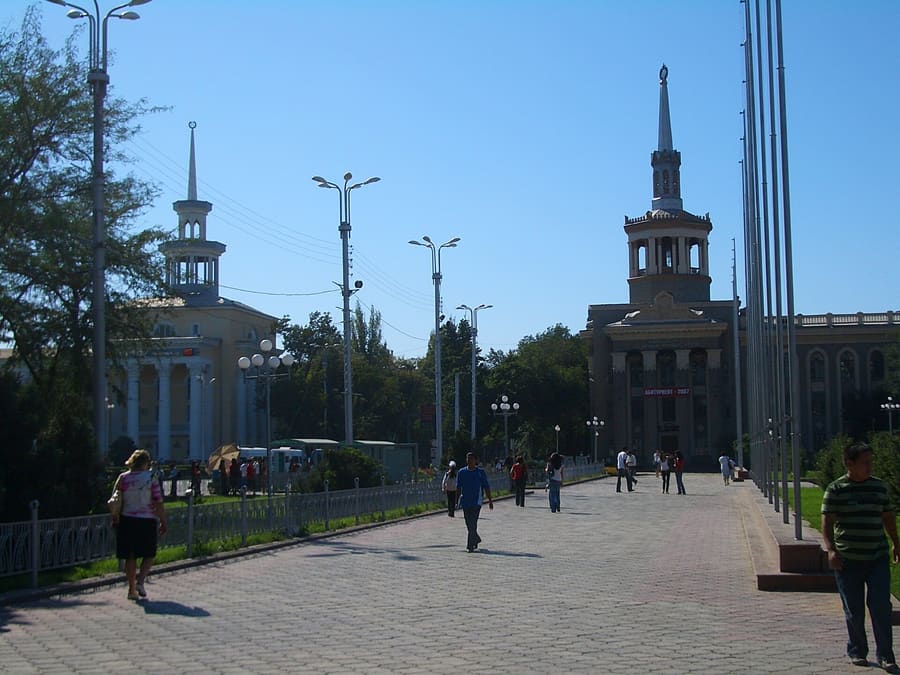
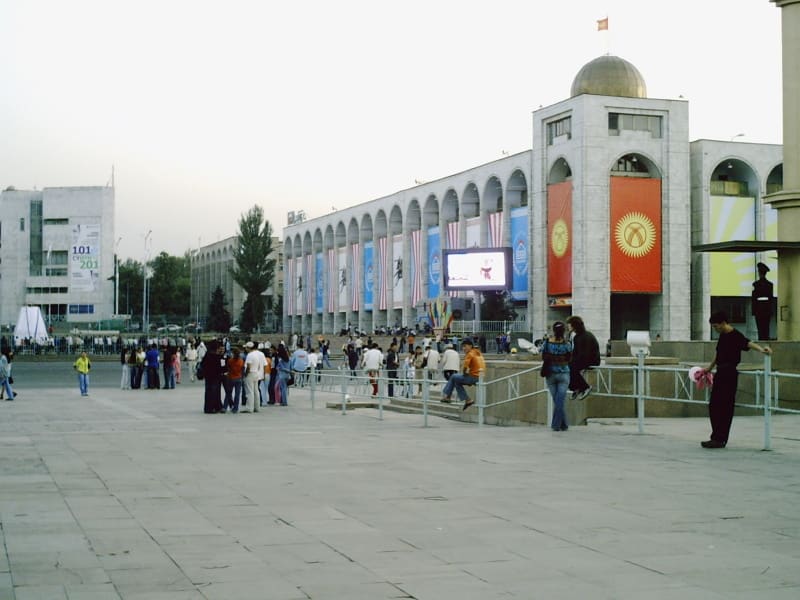
Center (Chuy & Erkindik) — Shaded boulevards, government plazas, sidewalk cafes, and brutalist monuments.
Vmenkov · CC BY-SA 3.0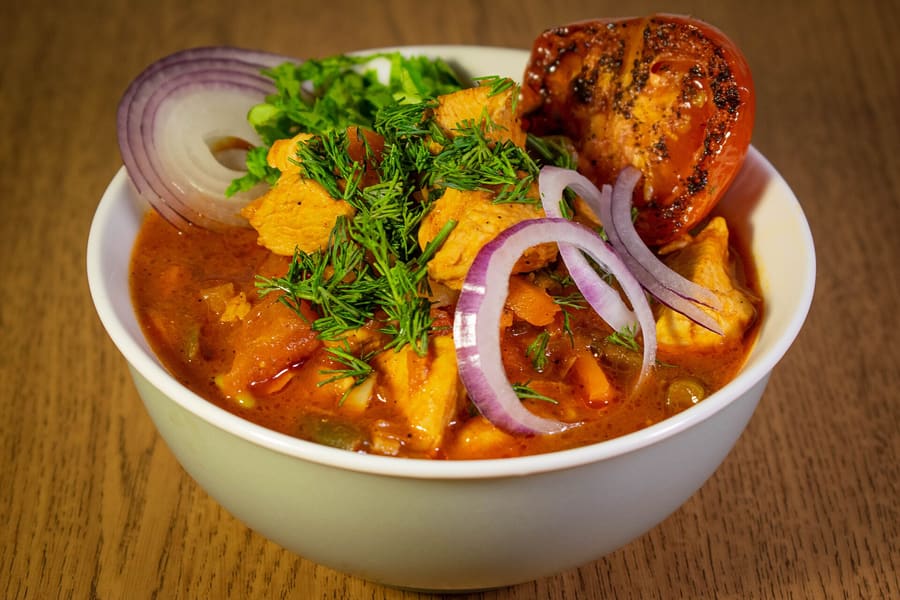
Lagman noodles are handmade daily at local eateries across Bishkek.
EugSan · CC BY-SA 4.0highlights
landmark
The main Soviet central square where military parades and protests occur. Watch the guard change every hour.
Parley fragen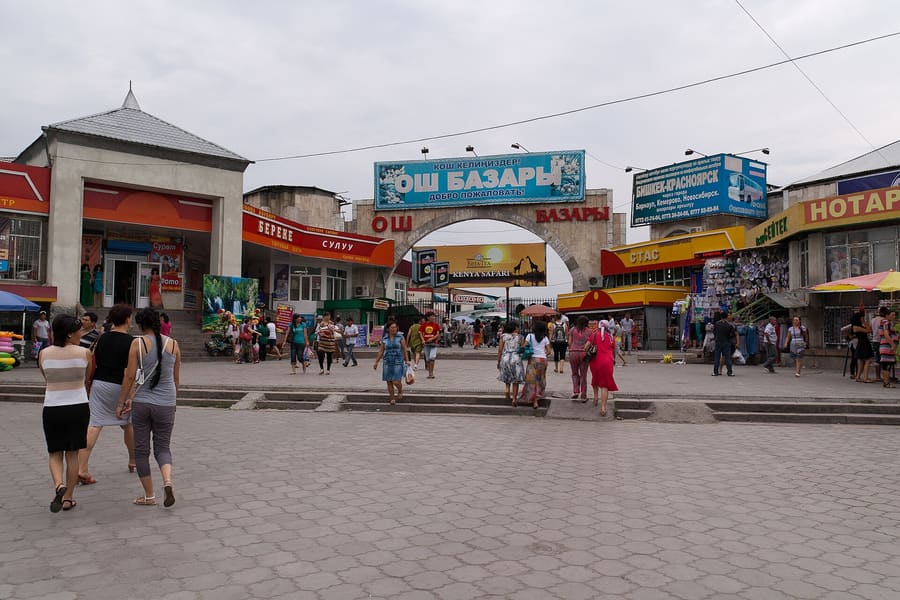
landmark
A dense market trading spices, felt hats, nuts, and hardware. Keep wallets secured in crowded corridors.
Parley fragen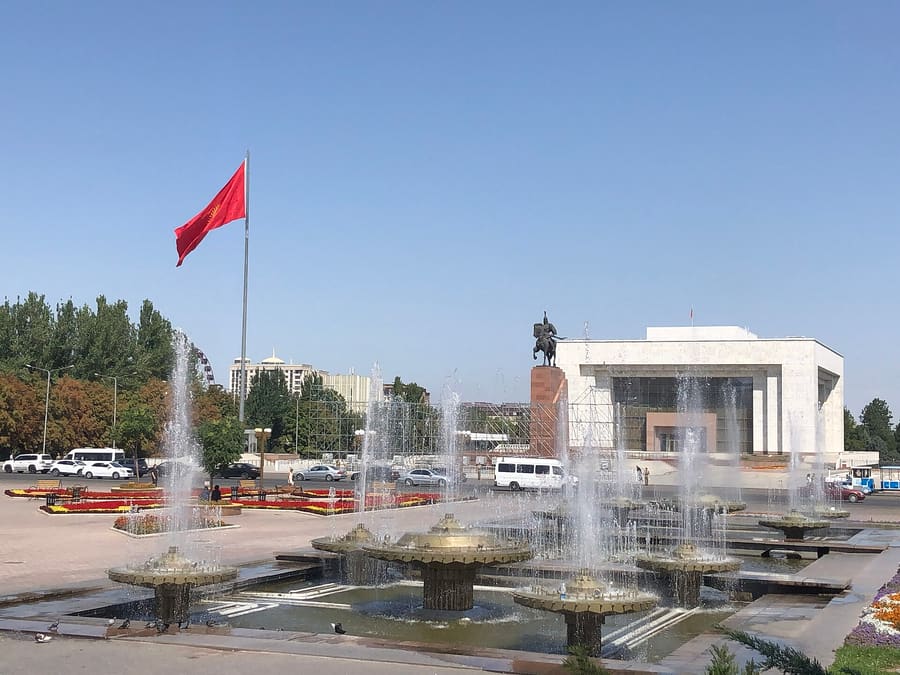
landmark
Exhibits nomadic textiles, Soviet artifacts, and gold items. Pay the separate photography fee at entry.
Parley fragenattractions
areas
Shaded boulevards, government plazas, sidewalk cafes, and brutalist monuments.
In der NäheAla-Too Square and Oak Park
Parley fragenGritty transit hub dominated by market stalls, bakeries, and heavy minibus traffic.
In der NäheOsh Bazaar and West Bus Station
Parley fragenQuiet residential zone composed of standard Soviet housing blocks and local markets.
In der NäheVictory Square and Silk Road bus routes
Parley fragenModern residential south district with cleaner air, new developments, and craft bars.
In der NäheAsanbay Center and Southern Park
Parley fragenfood
Dining in Bishkek revolves around Central Asian staples rich in dough and meat. Lagman consists of hand-stretched noodles served fried or in a rich beef broth with peppers. Beshbarmak combines flat egg noodles with boiled mutton and onion sauce, usually eaten on special occasions or in specialized national restaurants. Local dining rooms called stolovaya offer fast, cheap tray service during working hours.
Lagman noodles are handmade daily at local eateries across Bishkek.
EugSan · CC BY-SA 4.0The regional chain Navat serves solid traditional meals in cushioned tea-booths. Book ahead for dinner.
Street barrels sell Maksym Shoro, a salty fermented wheat beverage. It costs around 30 KGS per cup.
Most restaurants add a mandatory 10% to 15% service charge to the bill automatically.
history
Bishkek began as a mud-brick fort built by the Khan of Kokand along a Silk Road tributary. Russian imperial forces destroyed the fort and built a garrison named Pishpek. Renamed Frunze during the Soviet period after Bolshevik commander Mikhail Frunze, the city was completely rebuilt on a rigid grid with concrete panel architecture. It was renamed Bishkek in 1991 when Kyrgyzstan gained independence.
Fortress foundation
The Khanate of Kokand builds the fortress of Pishpek to control local trade routes.
Russian imperial rule
Tsarist troops capture and destroy the fortress, establishing a Russian military outpost.
Renamed Frunze
The city becomes the Kyrgyz Soviet capital and undergoes systematic grid planning.
Capital of Kyrgyzstan
The city takes the name Bishkek following the collapse of the Soviet Union.
where to stay
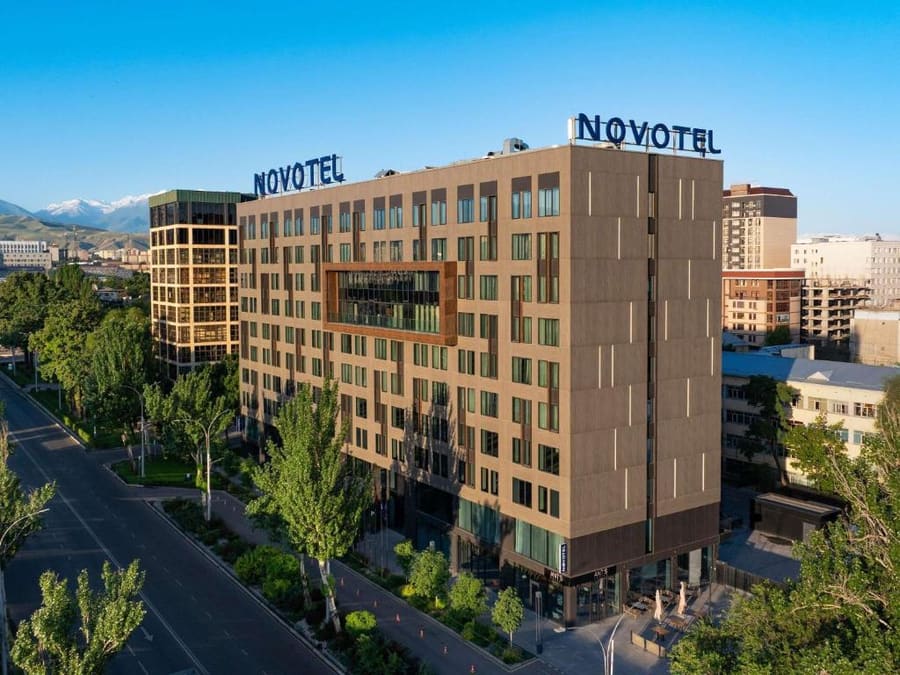
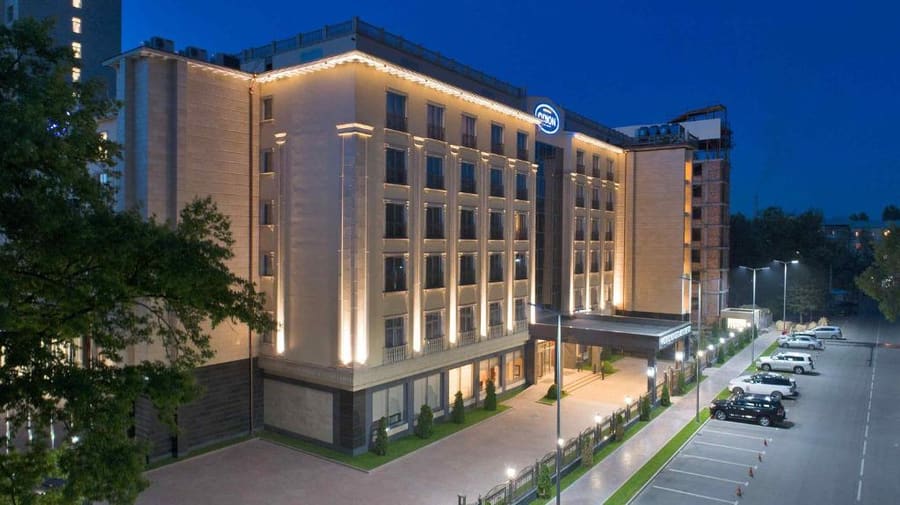
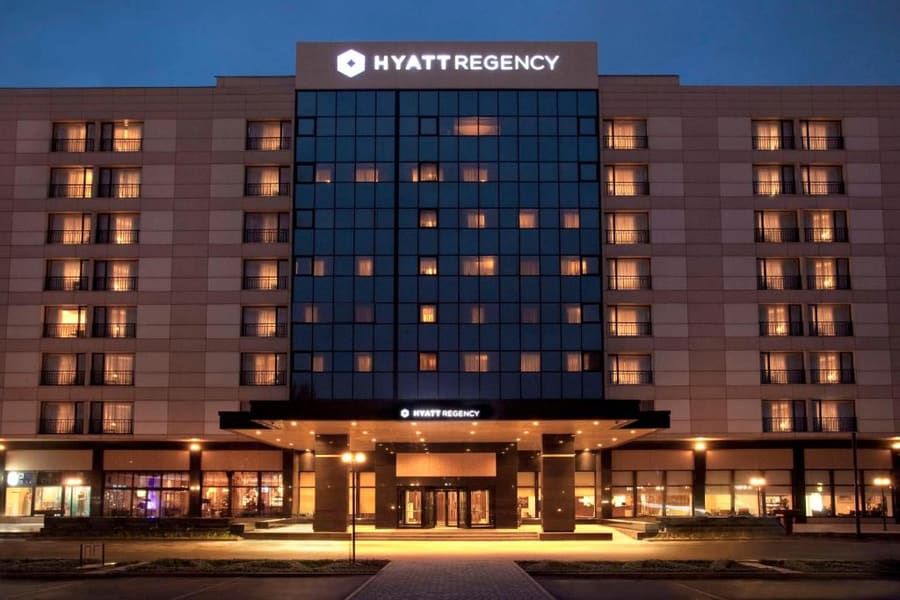
Choose your location based on air quality and walking preferences. The central grid along Erkindik Avenue keeps you close to museums, parks, and major bus lines. Staying in the south (Asanbay) trades central access for modern apartments and cleaner winter air away from city heating emissions.
Live rates, matched to the areas above.
transport
Bishkek relies on ride-hailing apps, municipal electric buses, and private marshrutka minibuses; trolleybuses no longer run in Bishkek, having been decommissioned in 2024 and replaced by electric buses. Taxis booked via apps are inexpensive and avoid payment disputes. Walking is straightforward in the center thanks to wide sidewalks and shaded trees.
Ab Manas International Airport (FRU)
Book via Yandex Go app using free airport Wi-Fi inside arrival terminal.
Marshrutka No. 380 departs regularly outside the main terminal doors.
Pre-arranged driver holding a sign at arrivals.
Download Yandex Go before arriving. Set payment to cash or link an international credit card.
City buses require a Tulpar smart card or QR pay. Cash payments cost higher standard rates.
Traffic halts between 17:30 and 19:30 on Prospect Chuy and Akhunbaev Street.
Unmetered street cabs charge inflated prices to foreign visitors. Always stick to app fares.
cost
Bishkek remains one of Central Asia's most affordable capitals. Cash in Kyrgyz Som (KGS) is essential for small markets and transportation. ATMs are widespread throughout the city center.
Plentiful serving at local restaurants or market food stalls.
Standard app fare anywhere within the inner ring road.
Available at modern coffee houses along Erkindik Avenue.
Standard adult ticket; photography requires an additional fee.
seasonality
MAR – MAY
Mild temperatures and blooming trees. Optimal time for urban walking.
JUN – AUG
Hot daytime temperatures exceeding 35°C. City empties as locals head to Issyk-Kul.
SEP – NOV
Warm autumn days and clear mountain views. High season for outdoor markets.
DEC – FEB
Freezing conditions and thick coal smog. Mountain roads can become hazardous.
practicalities
Russian is spoken universally in Bishkek commercial and government settings. Kyrgyz is widely spoken as the state language.
Demir Bank ATMs reliably accept foreign Visa and Mastercard cards to dispense local Som.
Passport holders from many Western nations do not require visas for short stays under 60 days.
Coal-fired heating causes high pollution levels from November through February. Pack an N95 mask.
Tap water comes directly from alpine runoff but old pipes cause contamination. Drink filtered water.