landmark
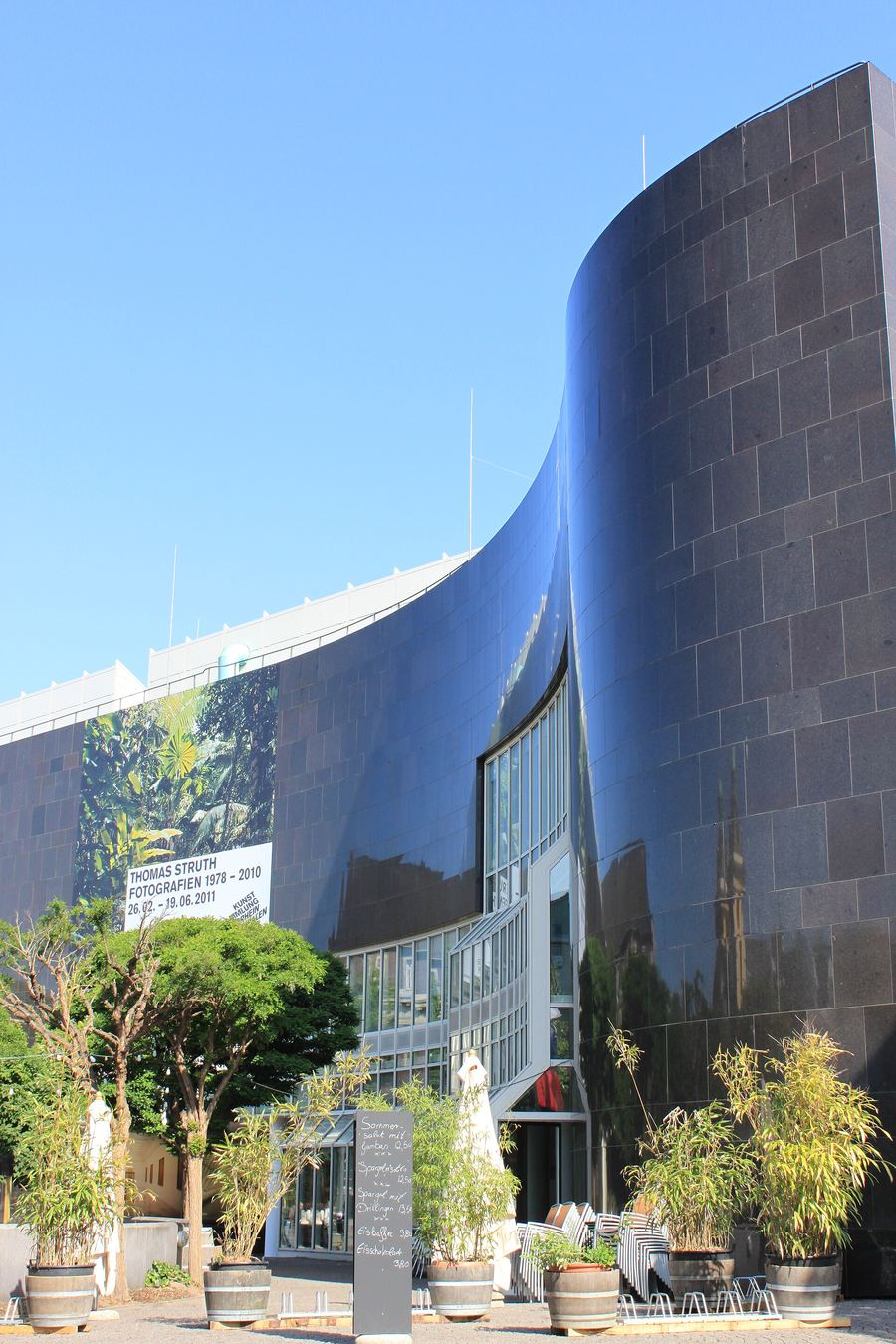
Kunstsammlung K20
This modern art collection holds masterworks by Paul Klee and Joseph Beuys behind its curved black granite facade.
Parley fragenDeutschland
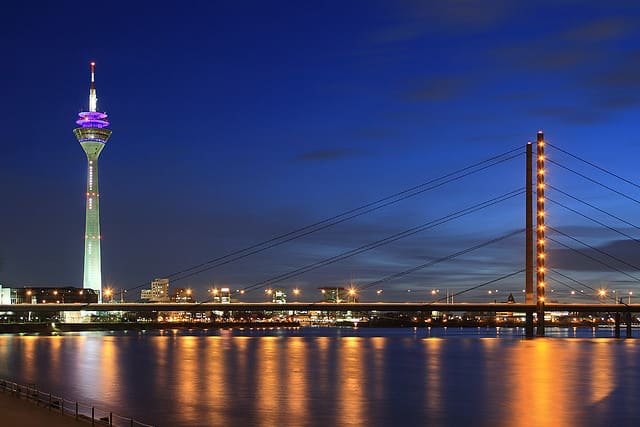
Fashion capital, Rhine promenades, and Altbier breweries.
introduction
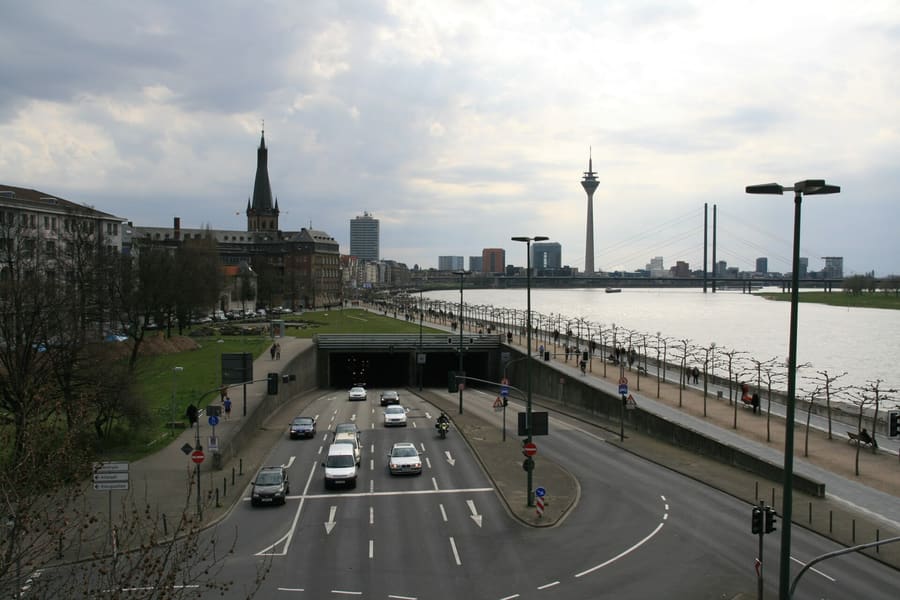
Düsseldorf is a compact financial hub on the Rhine that trades in fashion, modern art, and dark beer. The city center divides clearly into distinctive sectors, from luxury shopping along Königsallee to traditional house breweries in the Altstadt. You can cross the entire central core on foot or via a short tram ride. Expect a sharp contrast between corporate polish and relaxed pub culture.
Airport rail choice
S-Bahn S11 runs directly from Düsseldorf Airport Terminal station to Hauptbahnhof in 12 minutes for €3.30. Avoid the SkyTrain unless heading to the airport long-distance station.
Sunday store closures
Shops on Königsallee close on Sundays. Plan museum visits, Rhine walks, or Altbier brewery tours for the end of the week.
Düsseldorf
Pixelcrew · CC BY-SA 3.0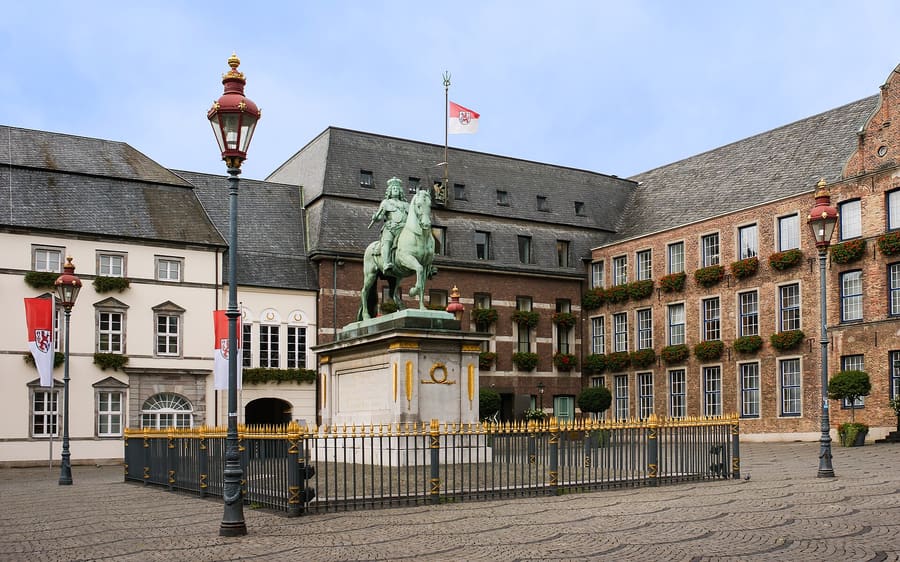
Altstadt — Dense medieval grid packed with traditional brewpubs, riverfront promenades, and late-night drinking spots.
Anıl Öztaş · CC BY-SA 4.0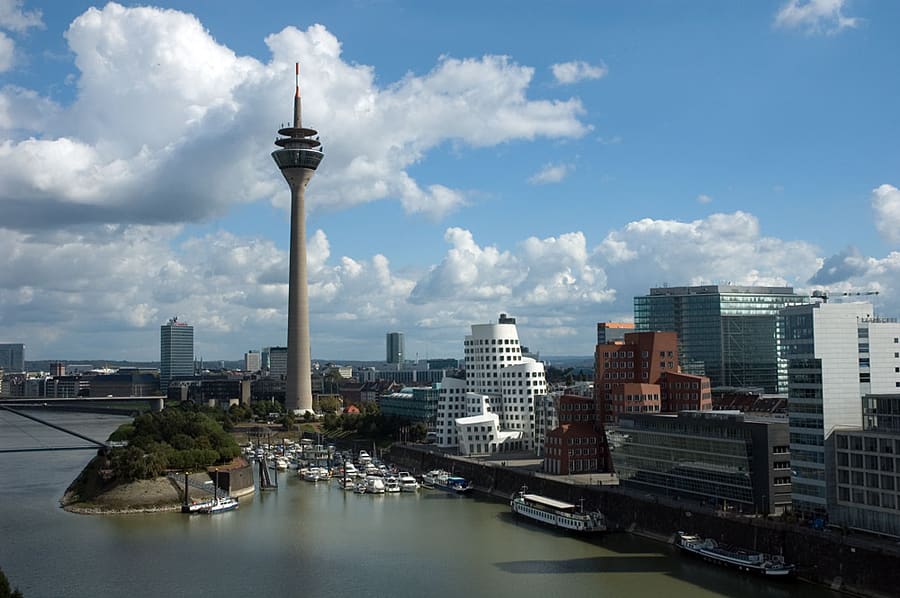
MedienHafen — Redeveloped harbor docks featuring Frank Gehry structures and upscale waterfront dining.
Ingo Valentin< · CC BY-SA 3.0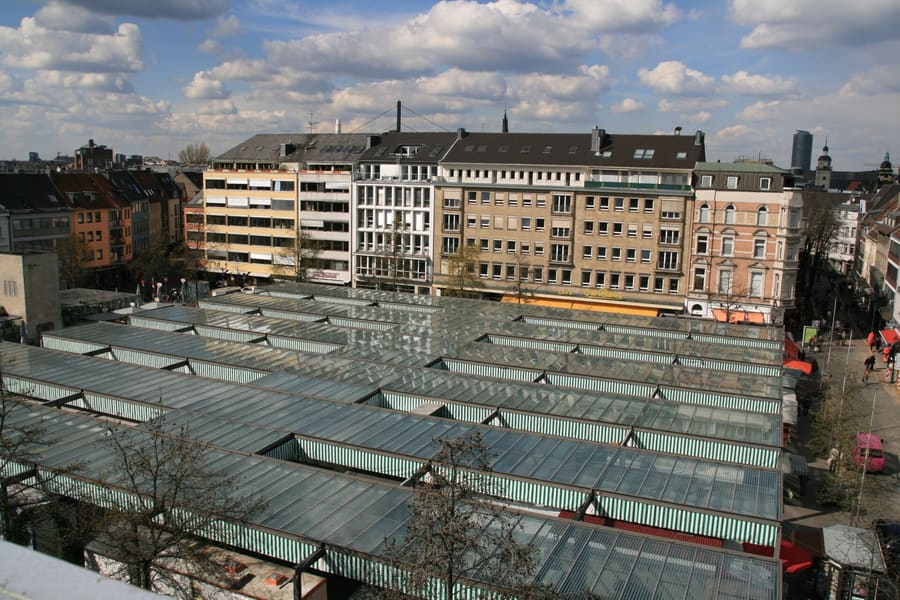
Carlstadt — Neoclassical square lined with antique shops, cozy cafes, and the daily market at Carlsplatz.
Pixelcrew · CC BY-SA 3.0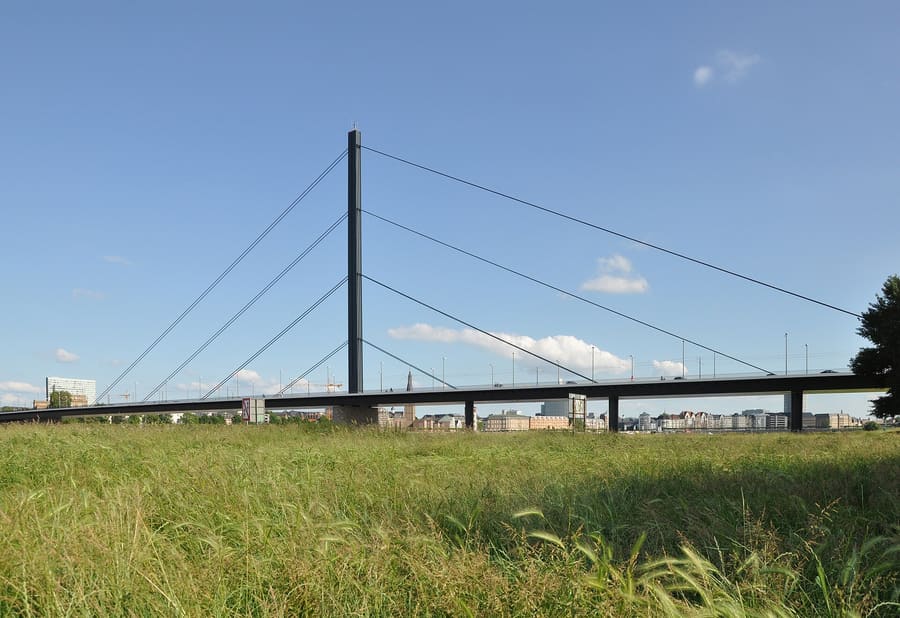
Oberkassel — Quiet residential district across the Rhine filled with Jugendstil townhouses and leafy avenues.
EveryPicture · CC BY-SA 3.0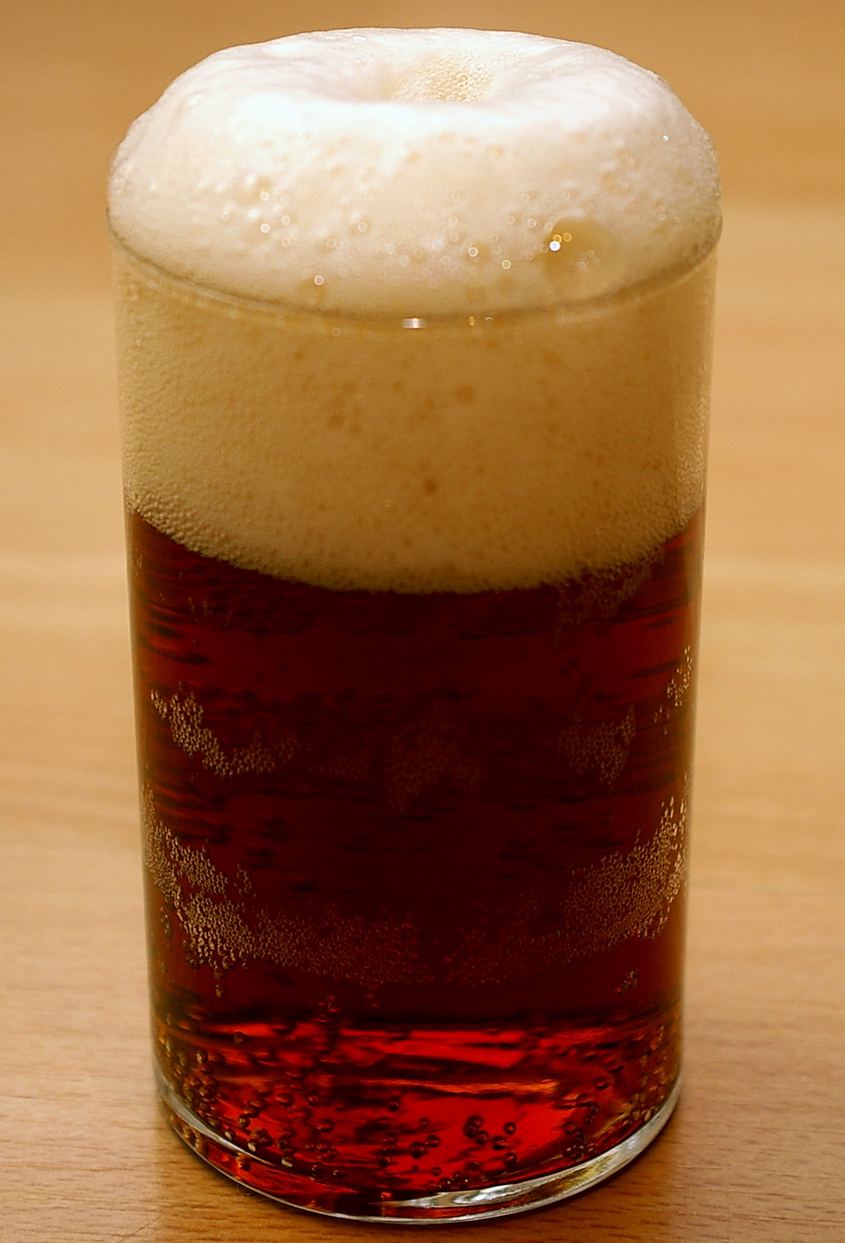
Freshly poured Altbier at a traditional Düsseldorf house brewery.
Johann H. Addicks · CC BY-SA 3.0highlights
landmark
This modern art collection holds masterworks by Paul Klee and Joseph Beuys behind its curved black granite facade.
Parley fragen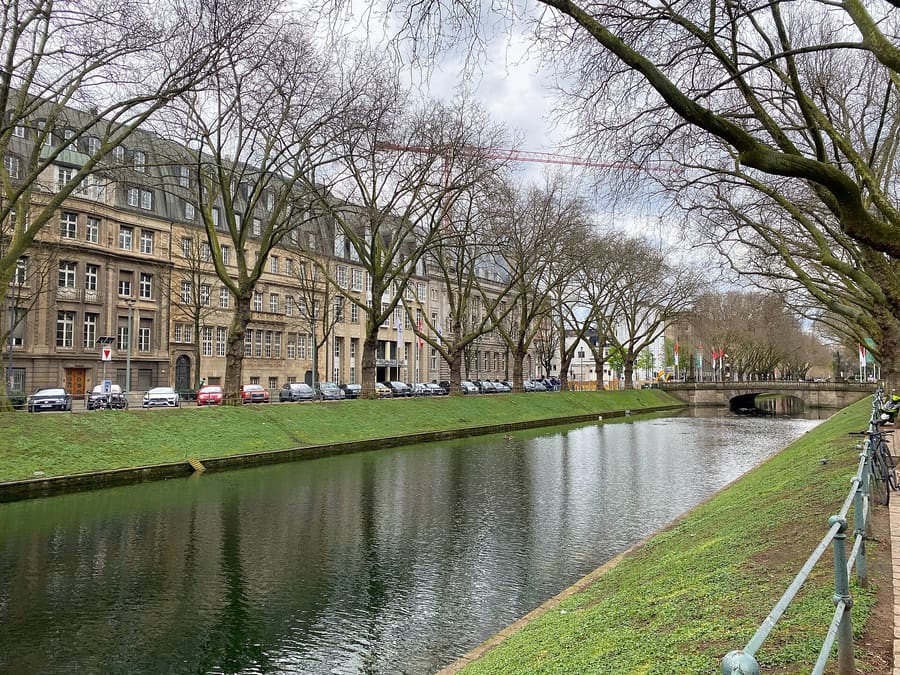
landmark
The city's luxury shopping canal separates high fashion flagships on the east bank from banking headquarters on the west.
Parley fragen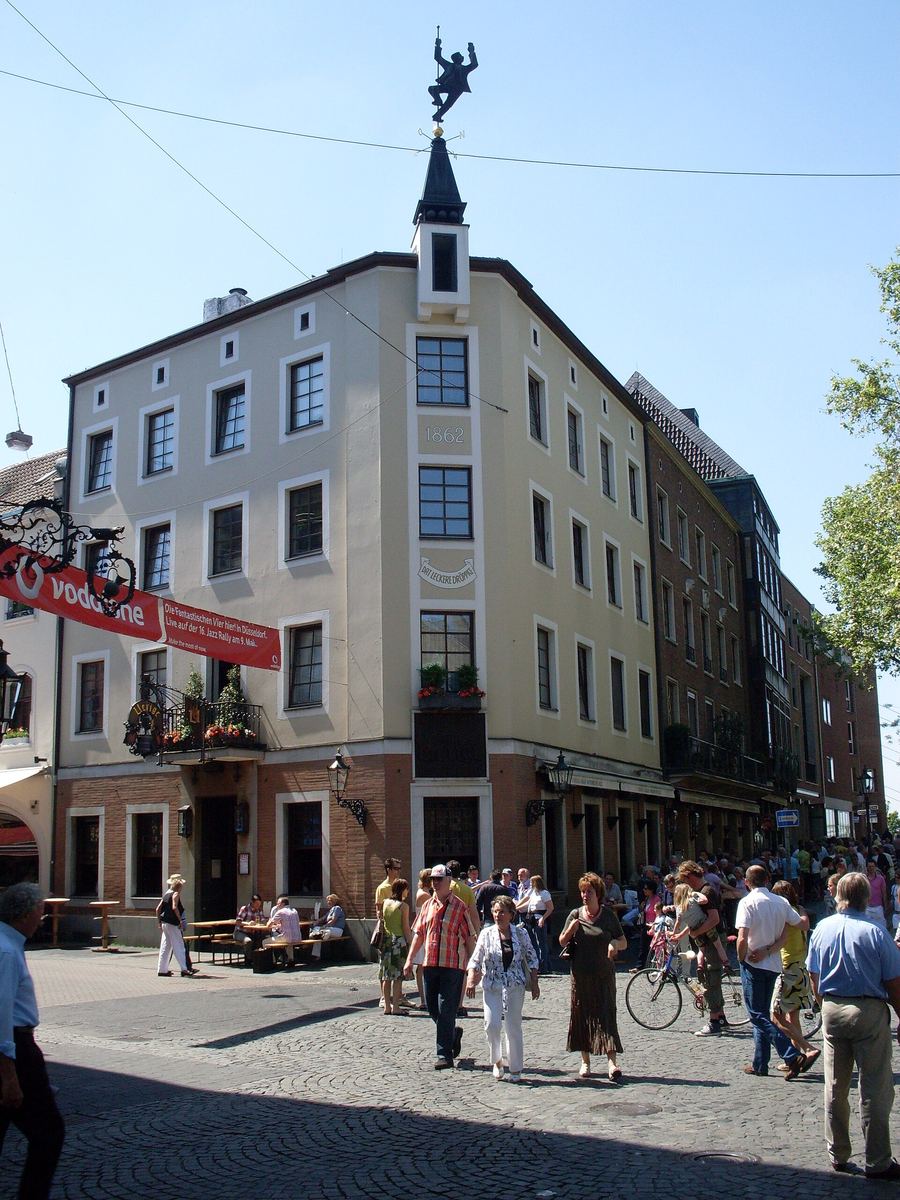
landmark
Köbes waiters serve top-fermented Altbier continuously until you place a coaster over your glass.
Parley fragen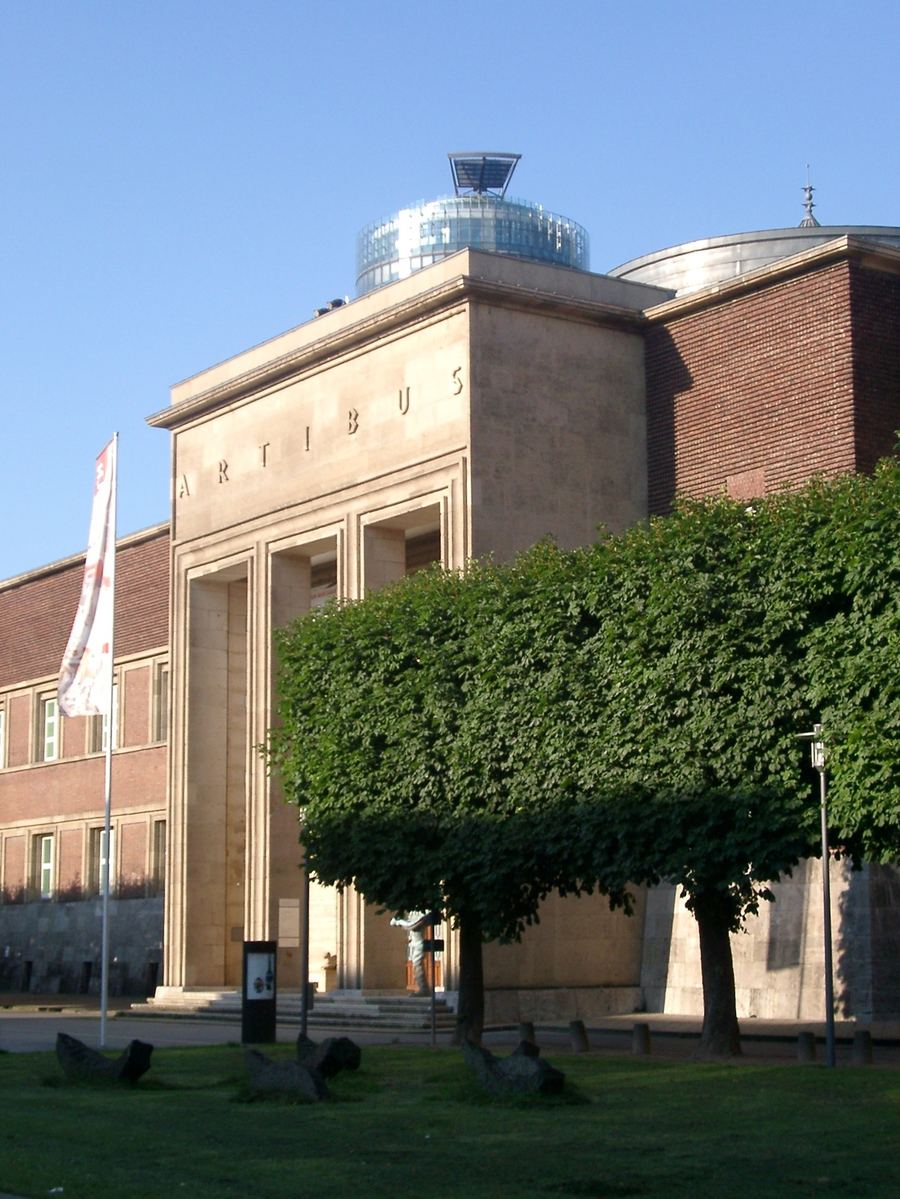
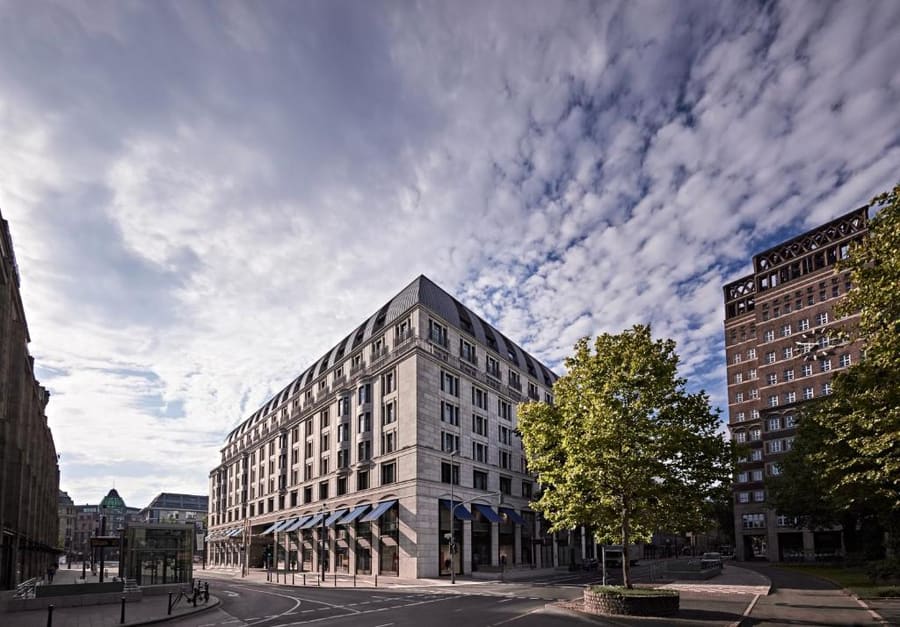
landmark
Located in Ehrenhof, this museum houses glass art, fine paintings, and the Tonhalle concert hall next door.
Parley fragenattractions
areas
Dense medieval grid packed with traditional brewpubs, riverfront promenades, and late-night drinking spots.
In der NäheCarlstadt and Kunstsammlung K20
Parley fragenRedeveloped harbor docks featuring Frank Gehry structures and upscale waterfront dining.
In der NäheUnterbilk and Rheinturm
Parley fragenNeoclassical square lined with antique shops, cozy cafes, and the daily market at Carlsplatz.
In der NäheKönigsallee and Altstadt
Parley fragenQuiet residential district across the Rhine filled with Jugendstil townhouses and leafy avenues.
In der NäheRhine meadows and Altstadt
Parley fragenfood
Düsseldorf eats in two distinct languages. In the historic brauhäuser, top-fermented Altbier accompanies hearty Rhenish dishes like Sauerbraten and Halve Hahn. A short walk east toward the main station leads to Immermannstraße, where authentic Japanese izakayas and ramen shops draw long lines every evening.
Freshly poured Altbier at a traditional Düsseldorf house brewery.
Johann H. Addicks · CC BY-SA 3.0Waiters replace your glass automatically when it empties. Place your cardboard coaster on top of your glass to signal you are done.
Carlsplatz market serves gourmet street food from 08:00 to 18:00 on weekdays, including fresh seafood and German sausages.
Popular ramen joints like Takumi do not take reservations. Arrive 15 minutes before opening to avoid hour-long queues.
history
Düsseldorf grew from a small village on the Düssel stream into a regional trade powerhouse. Its development accelerated in the 19th century through industrial growth and financial institutions along the Rhine.
Town privileges
Düsseldorf granted city status after local forces defeated the Archbishop of Cologne at Worringen.
Court of Jan Wellem
Elector Johann Wilhelm transformed the city into a regional art center during his reign.
State capital
Düsseldorf chosen as capital of the newly established state of North Rhine-Westphalia.
MedienHafen opening
Redevelopment converts old industrial docks into a modern district for media and design.
where to stay
Choose your base by your noise tolerance and dining preferences. The central districts are compact and easily connected by tram or foot.
Live rates, matched to the areas above.
transport
Düsseldorf has an efficient transit network operated by Rheinbahn. Trams, underground Stadtbahn trains, and local buses share a unified ticketing structure.
Ab Düsseldorf Airport (DUS)
S-Bahn S11 runs directly from Airport Terminal station to Hauptbahnhof.
Official taxis line up outside arrival halls with metered fares.
Stamp paper transit tickets at orange validation boxes on platforms before boarding trains.
For journeys up to 3 stops, buy a discounted Kurzstrecke ticket at station kiosks.
Night buses and trams operate every 30 minutes until dawn on Friday and Saturday nights.
The core district between Hauptbahnhof, Königsallee, and Rhine River is easily navigated on foot.
cost
Düsseldorf is slightly pricier than eastern German cities, but offers great value in pub dining and local transport options.
Brewpubs serve small glasses to keep beer cold and carbonated.
Portions are generous and usually include pork belly and bamboo shoots.
Discounted admission available during early morning and late evening hours.
Covers unlimited travel on buses, trams, and local S-Bahn trains.
seasonality
MAR – MAY
Mild weather and blooming gardens in Nordpark. Moderate hotel rates outside major trade fair dates.
JUN – AUG
Warm days bring lively crowds to the Rhine promenade. Pop-up bars open along the riverbank.
SEP – NOV
Crisp autumn weather ideal for museum visits. Trade fair events can cause hotel rates to spike.
DEC – FEB
Christmas markets light up central squares in December. Carnival street celebrations start in February.
practicalities
Messe Düsseldorf events cause room rates to quadruple. Check trade show dates before confirming travel plans.
While cards are widely accepted, traditional beer gardens and Carlsplatz food stalls often prefer cash.
Strong currents and commercial barge traffic make swimming in the Rhine River prohibited and hazardous.
English is widely spoken across hotels, restaurants, and retail shops in central Düsseldorf.
German law enforces quiet hours (Ruhezeit) on Sundays and after 22:00 every evening.