landmark
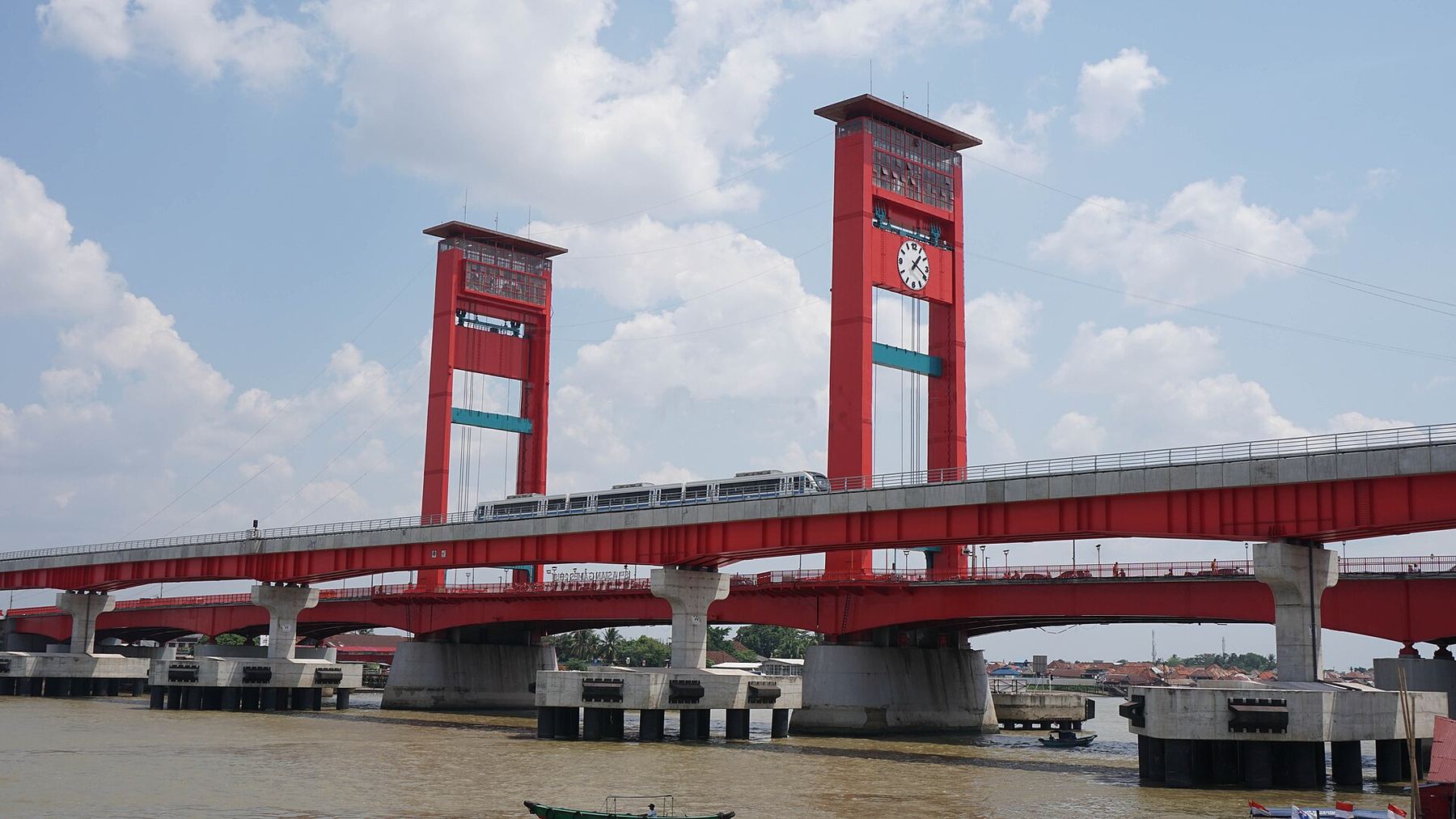
Ampera Bridge
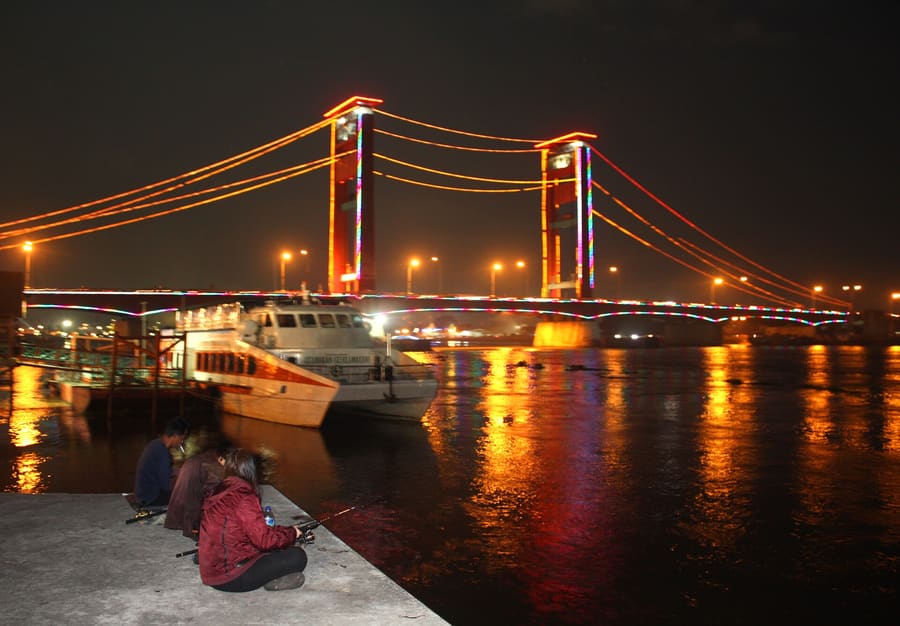
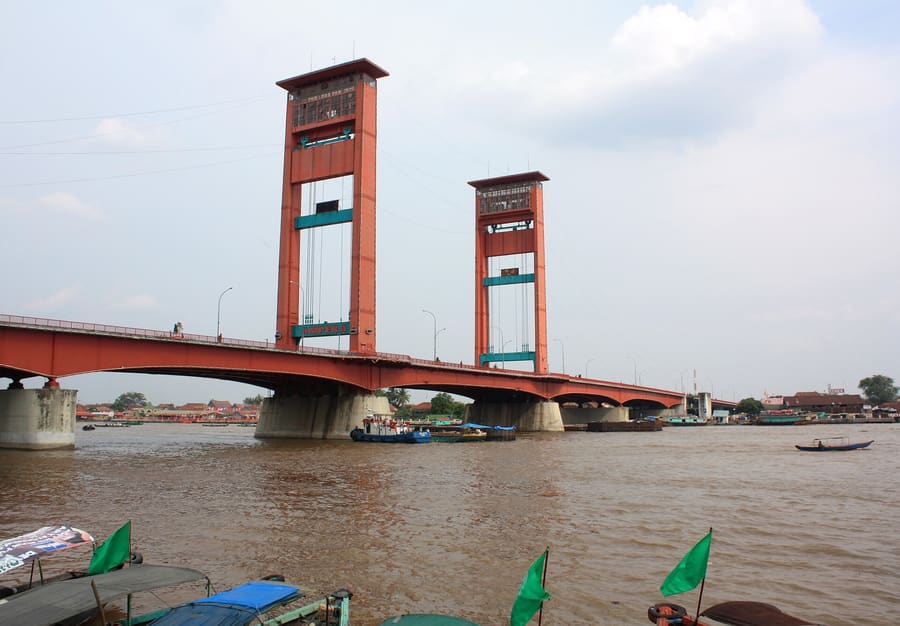
Red vertical-lift bridge spanning the Musi River. Walk the pedestrian deck at dusk when city lights switch on.
Parley fragenIndonesien
Musi River trade, Srivijaya history, and spiced fish cakes.
introduction
Palembang built its power on the wide Musi River, which splits the city into Ilir and Ulu sides. The Light Rail Transit system connects the airport to downtown and crosses the river alongside the steel Ampera Bridge. Expect humid heat, heavy boat traffic, and local food dominated by freshwater fish and sour vinegar sauces.
Airport LRT train
The LRT station connects directly to Sultan Mahmud Badaruddin II Airport terminal. A ticket into downtown costs IDR 10,000 and avoids traffic bottlenecks.
Srivijaya maritime empire
Palembang served as the center of the Srivijaya Buddhist empire from the 7th to 13th centuries. The Sultan Mahmud Badaruddin II Museum holds recovered stone inscriptions.
Musi Riverboat rentals
Hire wooden ketek boats at Benteng Kuto Besak pier for trips to Kemaro Island. Agree on the total round-trip fare with the captain before boarding.
Palembang
Gunawan Kartapranata · CC BY-SA 3.0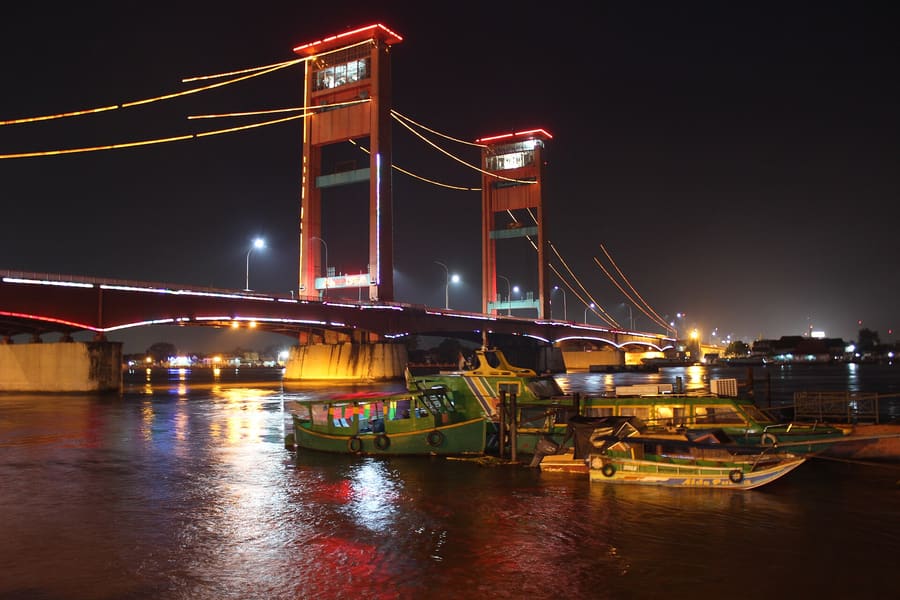
16 Ilir — Dense trade district north of the Musi River filled with textile stalls, food vendors, and boat docks.
D.W. Fisher-Freberg · CC BY-SA 3.0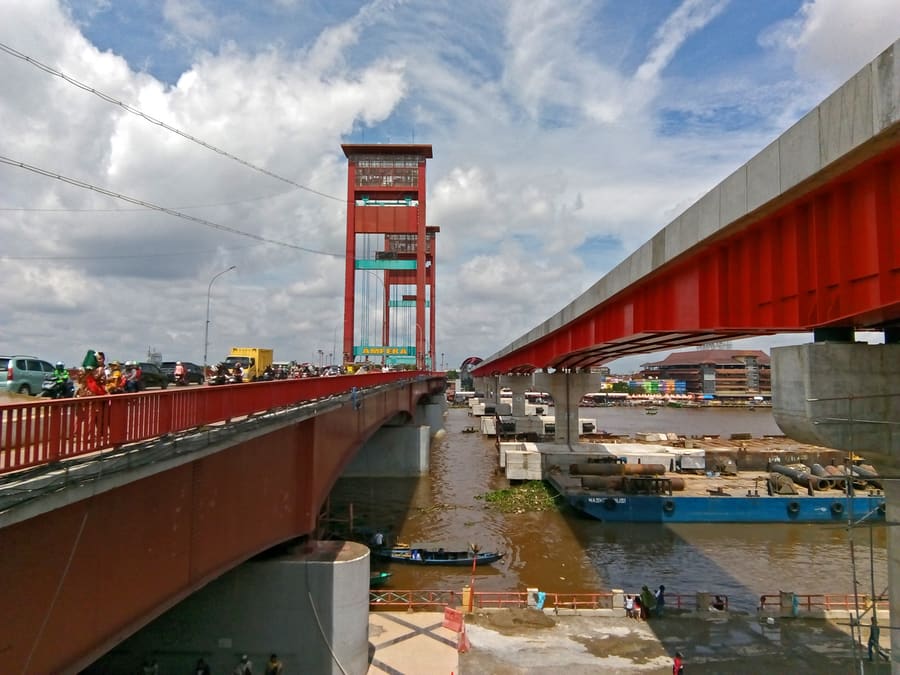
7 Ulu — Historic southern riverbank area known for traditional wooden stilt houses and Chinese heritage sites.
baka_neko_baka · CC BY 2.0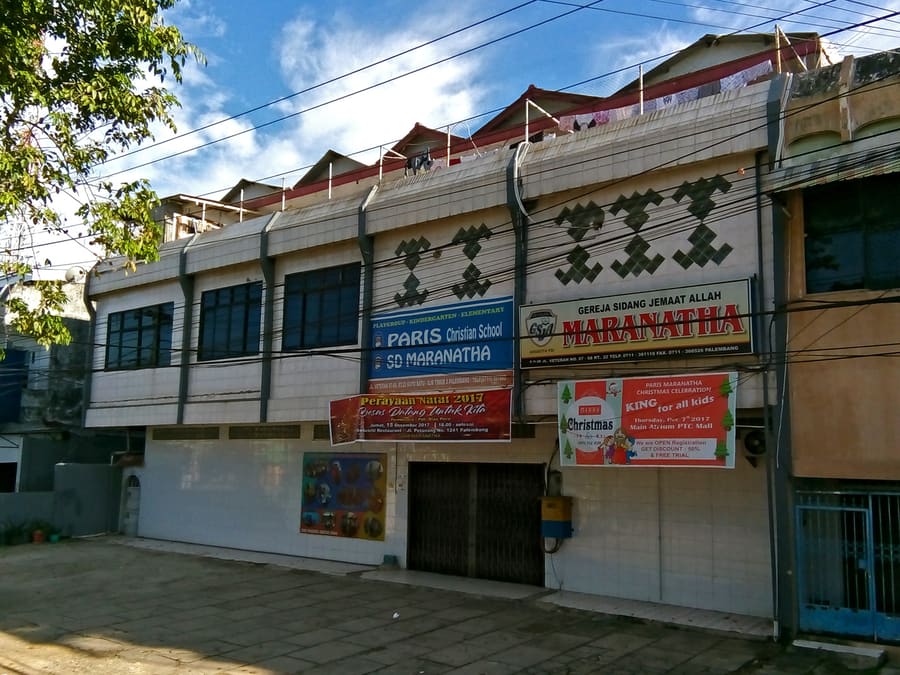
Rajawali — Modern commercial quarter with upscale mid-rise hotels, air-conditioned cafes, and established pempek shops.
baka neko baka · CC BY 2.0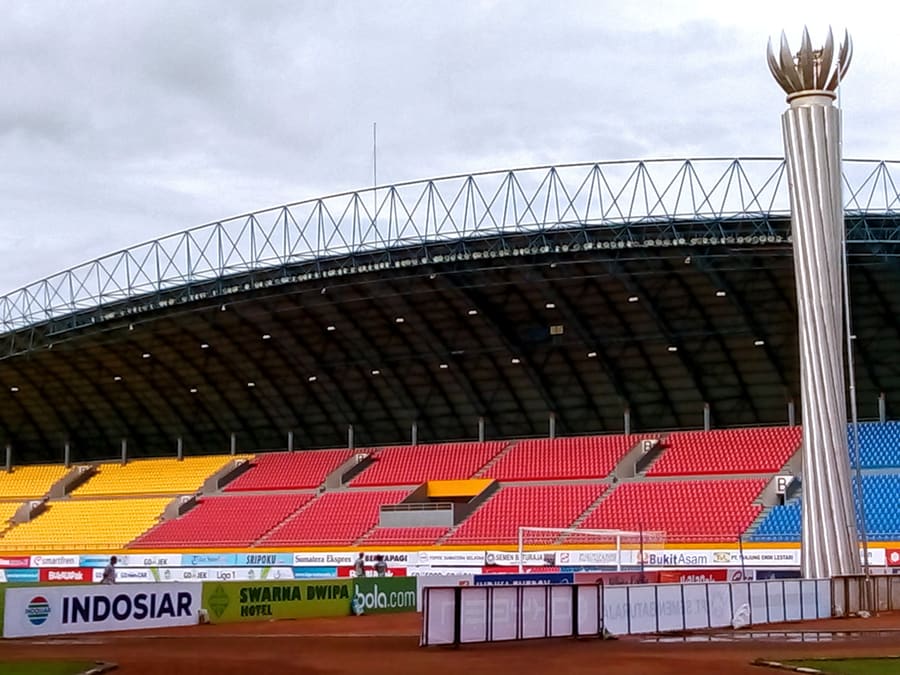
Jakabaring — Open southern suburb built around international sports venues, wide avenues, and artificial lakes.
baka_neko_baka · CC BY 2.0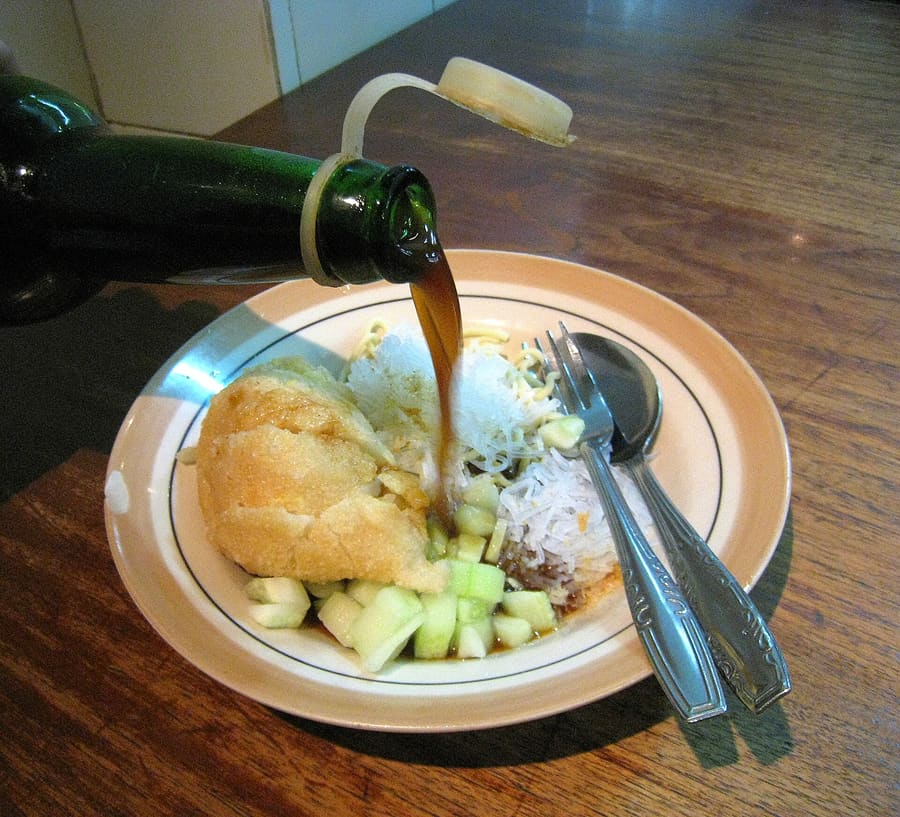
Pempek kapal selam stuffed with egg, served alongside dark vinegar cuko sauce.
Gunawan Kartapranata · CC BY-SA 3.0highlights
landmark
Red vertical-lift bridge spanning the Musi River. Walk the pedestrian deck at dusk when city lights switch on.
Parley fragen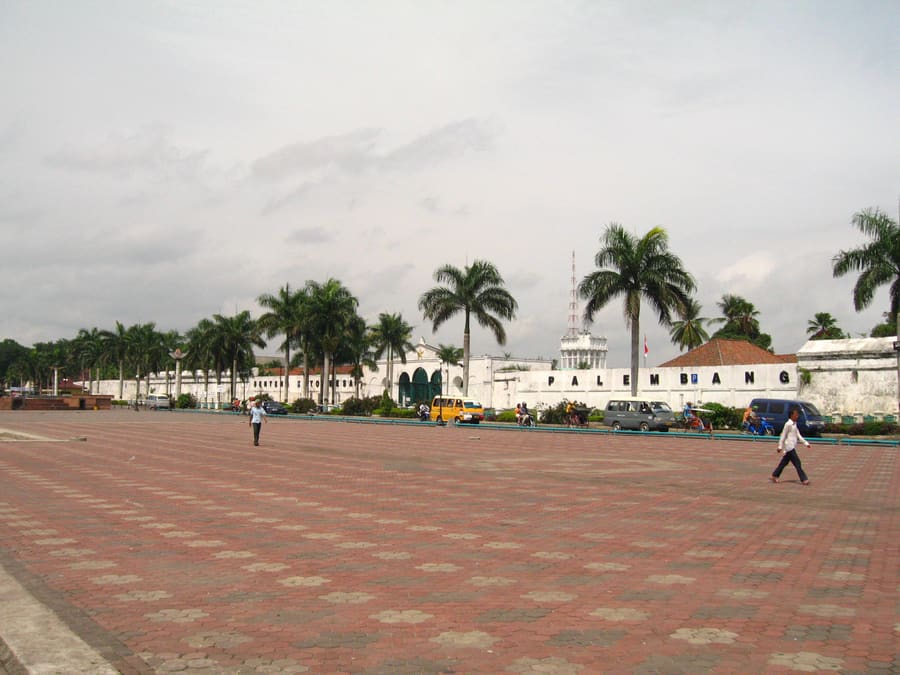
landmark
18th-century stone fortification facing the river. The plaza serves as the city's primary evening gathering spot.
Parley fragen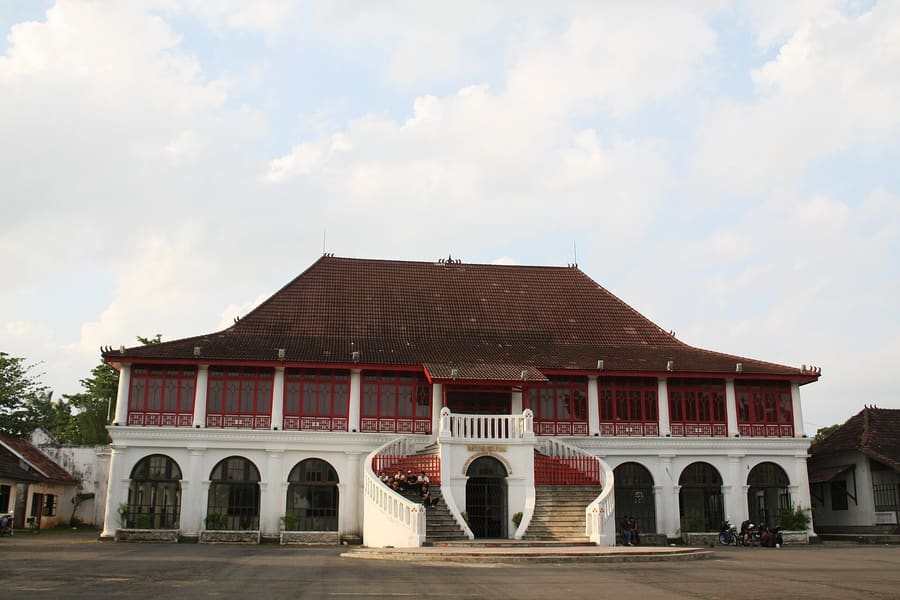
landmark
Displays royal Palembang textiles, weapons, and Dutch colonial artifacts next to the main river plaza.
Parley fragen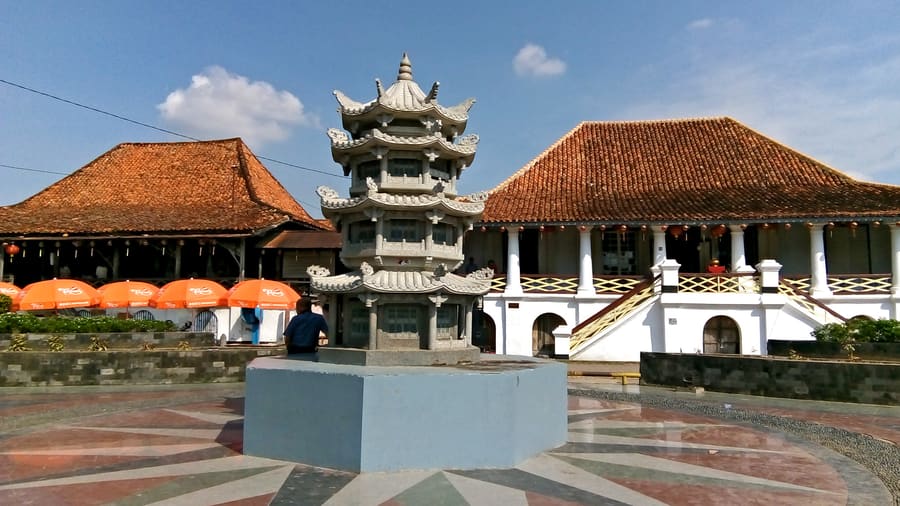
landmark
Delta island housing a nine-story Chinese pagoda. Reached in 20 minutes by hiring a motorboat at the waterfront.
Parley fragen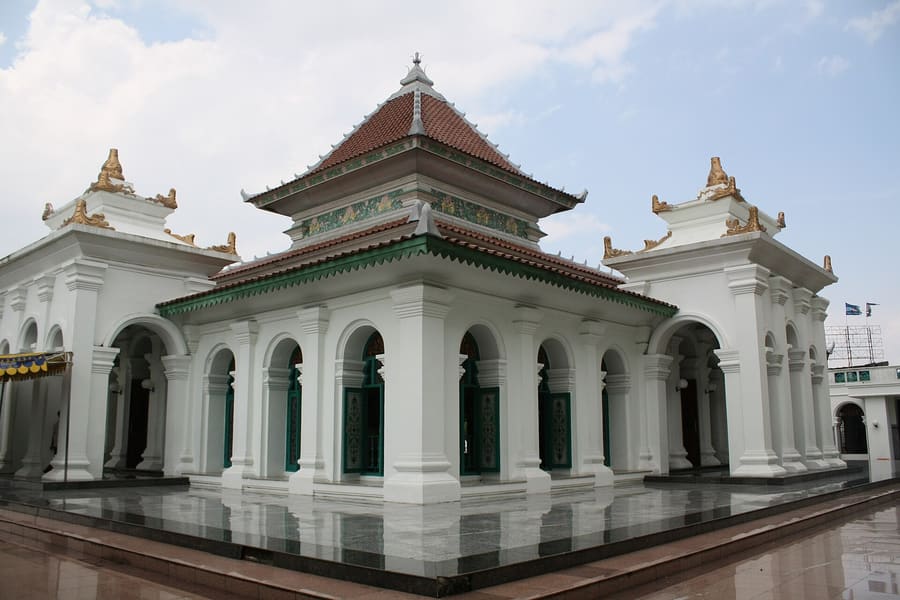
landmark
Main Islamic site combining Chinese roof curves and European arches. Dress conservatively to enter the courtyard.
Parley fragenattractions
areas
Dense trade district north of the Musi River filled with textile stalls, food vendors, and boat docks.
In der NäheAmpera Bridge, Kuto Besak Fortress, Pasar 16 Ilir
Parley fragenHistoric southern riverbank area known for traditional wooden stilt houses and Chinese heritage sites.
In der NäheMusi South Bank, Kapitan Riverside, Ampera Bridge
Parley fragenModern commercial quarter with upscale mid-rise hotels, air-conditioned cafes, and established pempek shops.
In der NähePalembang Icon Mall, LRT Station, SMB II Museum
Parley fragenOpen southern suburb built around international sports venues, wide avenues, and artificial lakes.
In der NäheGelora Sriwijaya Stadium, OPI Mall, LRT Terminus
Parley fragenfood
Palembang cuisine relies heavily on fish dishes. Saltwater mackerel, along with freshwater species like snakehead fish, are ground with tapioca starch to make pempek, the city's staple dish. Locals eat pempek at all hours, dipping fried or boiled varieties into dark cuko sauce made from palm sugar, tamarind, garlic, and bird's eye chilies.Noodle dishes also dominate the morning meal. Mie celor features thick wheat noodles drowned in a coconut milk gravy thickened with crushed river shrimp and bean sprouts. For lunch, regional restaurants serve pindang patin, a clear catfish soup spiced with lemongrass, turmeric, and fresh pineapple chunks.
Pempek kapal selam stuffed with egg, served alongside dark vinegar cuko sauce.
Gunawan Kartapranata · CC BY-SA 3.0Ask for pempek kapal selam if you want a whole egg cooked inside the dough. Pempek lenjer is cylindrical, while pempek adaan includes chopped shallots.
Noodle stalls cook their shrimp broth fresh in the morning. Popular spots along Jalan Merdeka sell out before noon.
Local custom permits drinking small bowls of remaining cuko sauce directly after finishing your fish cakes.
history
Palembang originated as a maritime trading port along the Straits of Malacca shipping lanes. In the 7th century, it became the political center of Srivijaya, a thalassocratic Buddhist empire controlling trade across Southeast Asian sea lanes. Maritime fleets gathered tax revenues on spices and Chinese silks passing through the Musi estuary.Following Srivijaya's decline, the Palembang Sultanate emerged in the 17th century as an Islamic state. Sultan Mahmud Badaruddin II resisted Dutch colonial expansion until his capture in 1821. The city expanded into an industrial hub after oil and rubber production increased across South Sumatra in the 20th century.
Kedukan Bukit Inscription
Stone marker recorded the founding of a sacred settlement under Sri Jayanasa, establishing Srivijaya's base.
Chola Invasion
Raids by the Chola empire from South India crippled Srivijaya naval dominance over regional trade routes.
Ampera Bridge Opens
Japan completed the river bridge as war reparations, linking the Seberang Ilir and Seberang Ulu halves.
LRT Operation
Indonesia launched its first light rail transit system to connect the airport with Asian Games sports venues.
where to stay
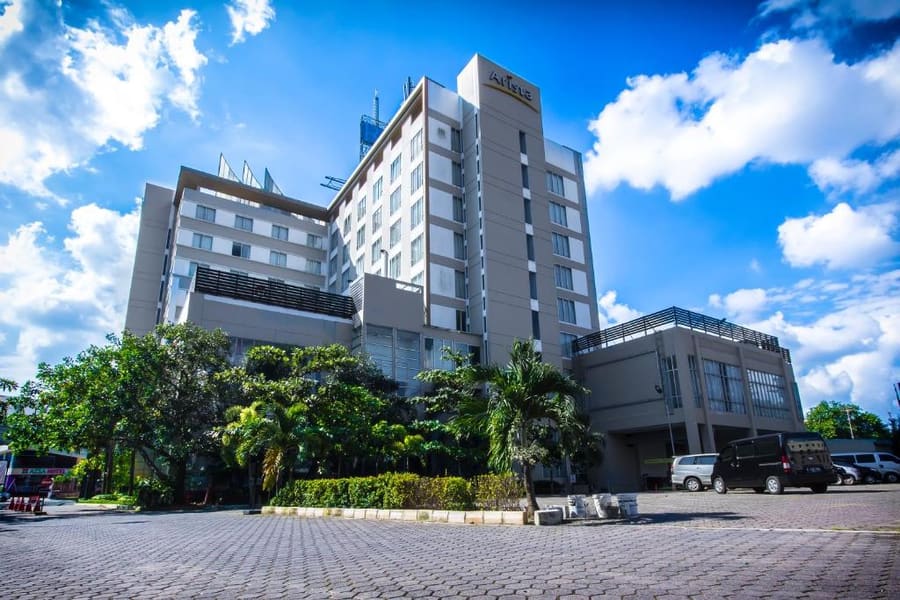
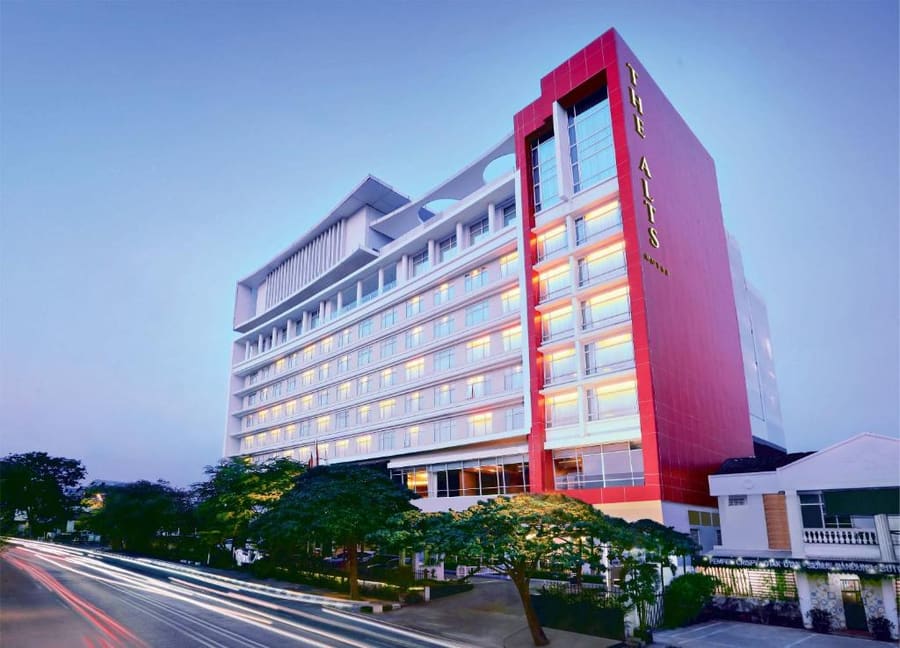
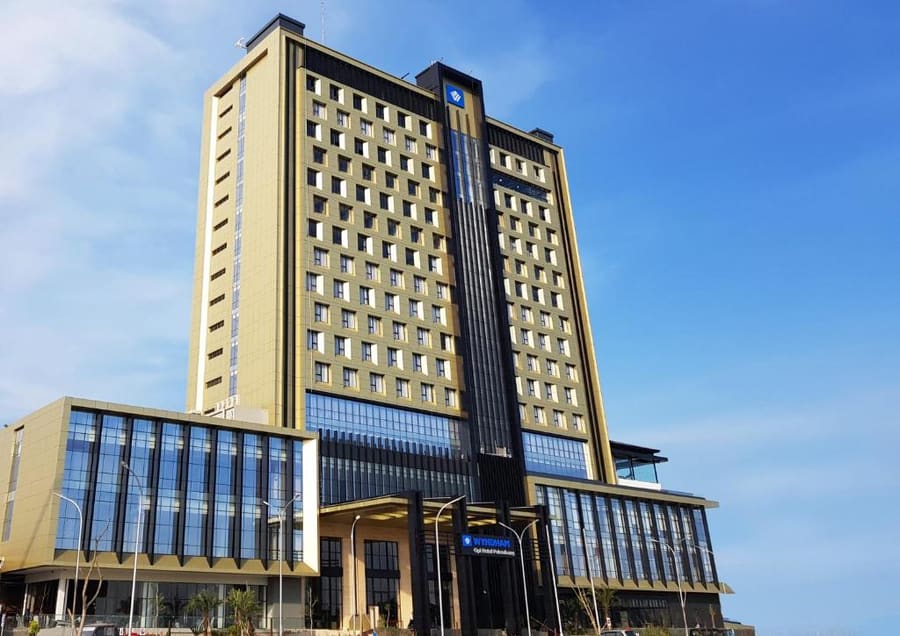
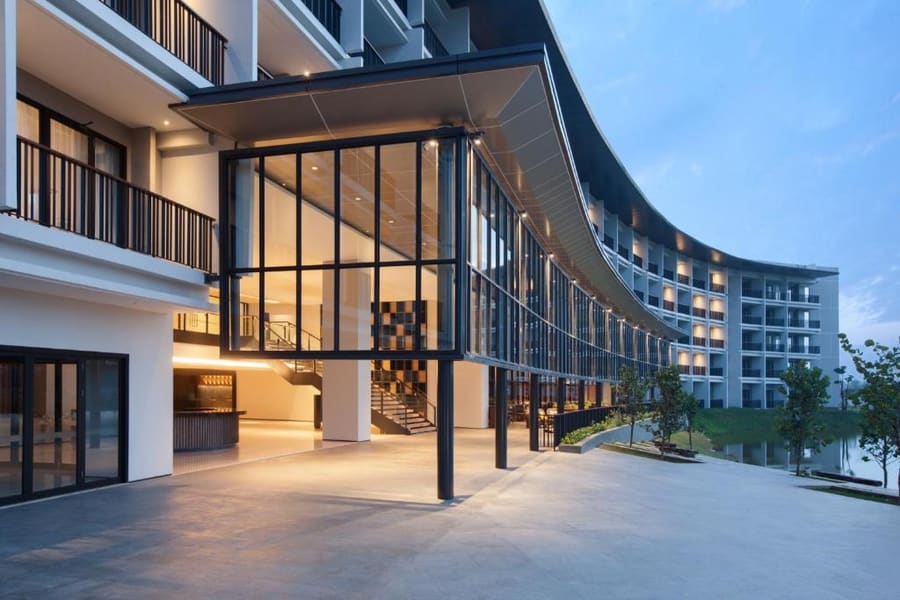
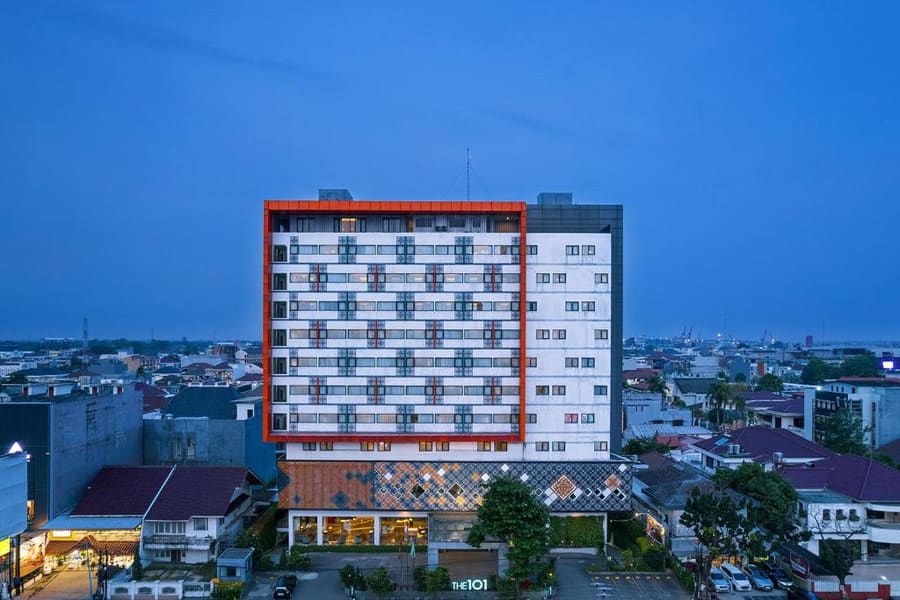
Choose your hotel based on proximity to the LRT line or the Musi riverfront. The Ilir side of the city offers the best density of commercial services, modern shopping centers, and full-service business hotels. Staying near the river puts you within walking distance of historical monuments and evening street markets.
Live rates, matched to the areas above.
transport
Palembang has a linear transit structure organized around the Musi River crossing. The elevated Palembang Light Rail Transit (LRT) runs 23 kilometers from the airport south to Jakabaring. On the water, wooden motorboats called ketek operate as point-to-point water taxis across the Musi.
Ab Sultan Mahmud Badaruddin II Airport (PLM)
Departs directly from the airport station every 30 minutes into city centre.
Use Grab or Gojek apps at designated arrival pick-up zones outside baggage claim.
Metered airport taxis queue outside arrivals. Ensure the driver engages the meter.
Pay LRT fares with standard Indonesian bank e-money cards or purchase single-use tokens at ticket counters.
Ketek boats lack meters. Confirm whether agreed prices cover a one-way trip or round-trip wait time.
Red-and-white feeder buses connect LRT stations to residential streets for IDR 4,000 using e-money cards.
Vehicular traffic stalls on the bridge deck between 17:00 and 19:00. Take the LRT to cross the river quickly.
cost
Palembang is significantly cheaper than Jakarta or Bali for food and local transit. Daily expenses remain low unless booking high-end hotels or hiring private boats for full-day Musi excursions.
Small street stalls charge IDR 4,000 per piece, while established indoor shops charge up to IDR 8,000.
Served at specialized morning noodle shops across the Ilir district.
Fares cost IDR 5,000 for regular stops and IDR 10,000 for trips starting or ending at the airport.
Covers a private boat charter for up to six passengers round-trip from Kuto Besak.
seasonality
JUN – AUG
Drier weather makes boat travel on the Musi comfortable. Midday temperatures regularly top 32°C.
SEP – NOV
Transition period with afternoon thundershowers. Smoke haze from regional agricultural burning can occur.
DEC – FEB
Peak rainy season brings localized street flooding. High water levels make river boat boarding easier.
MAR – MAY
Moderate rainfall and lower tourist volume. Good time for visiting museums and historic sites without queues.
practicalities
Palembang stays humid year-round. Carry drinking water when exploring outdoor markets.
Shops and street markets shut down between 11:30 and 13:00 on Fridays for congregational prayers.
Ketek captains, market vendors, and street pempek stalls do not accept electronic payments or cards.
Wear clothing covering shoulders and knees when visiting mosques and traditional kampung neighborhoods.
River boarding ramps slip when wet from Musi River waves and rain. Hold handrails firmly.