landmark
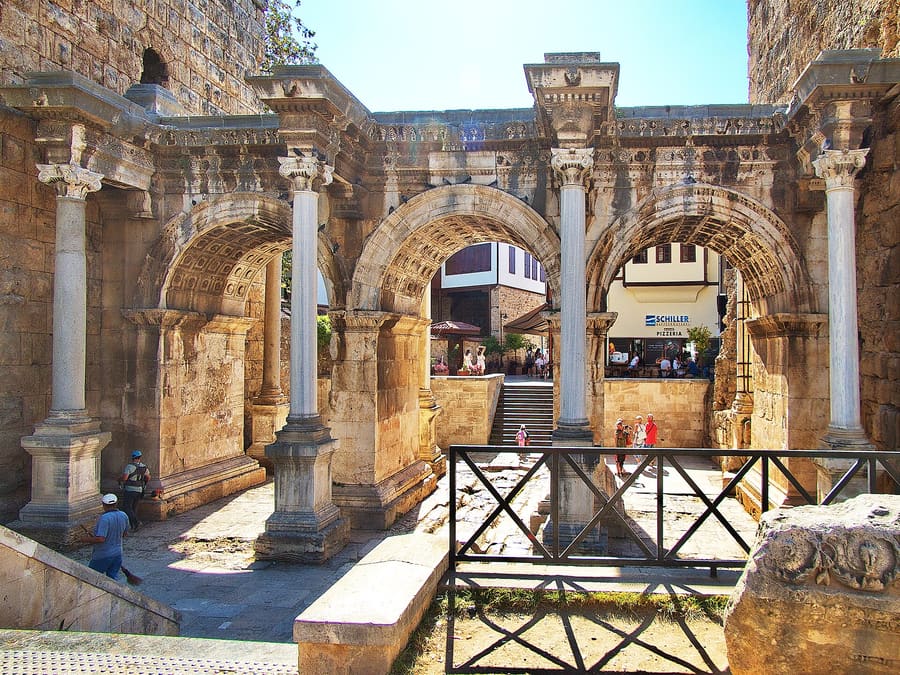
Hadrian's Gate
A Roman triple arch built in 130 CE. Walk under the original marble grooved by wagon wheels to cross into Kaleiçi.
Ρωτήστε το ParleyΤουρκία
Clifftop Roman ruins meet Mediterranean deep water.
introduction
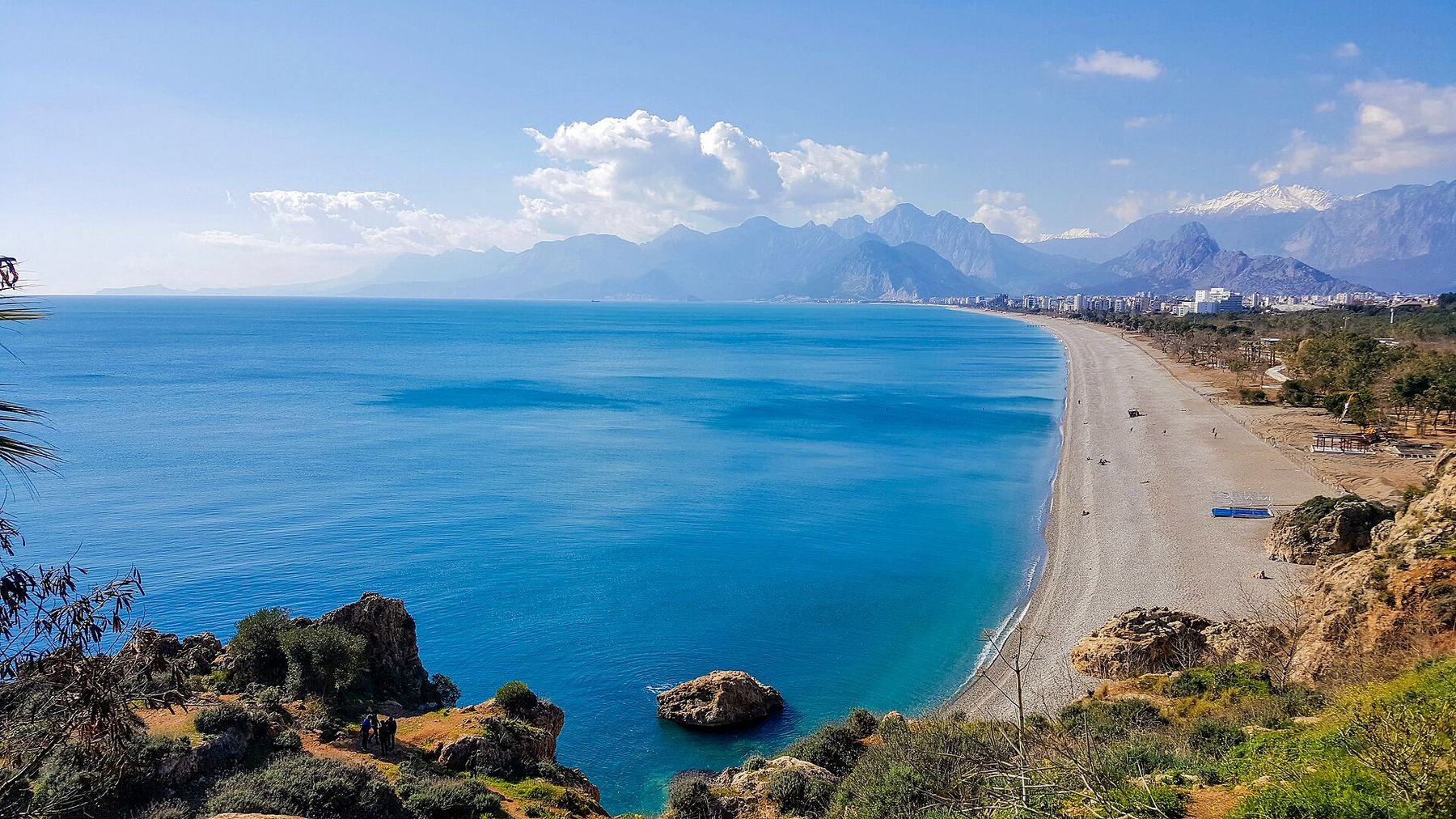
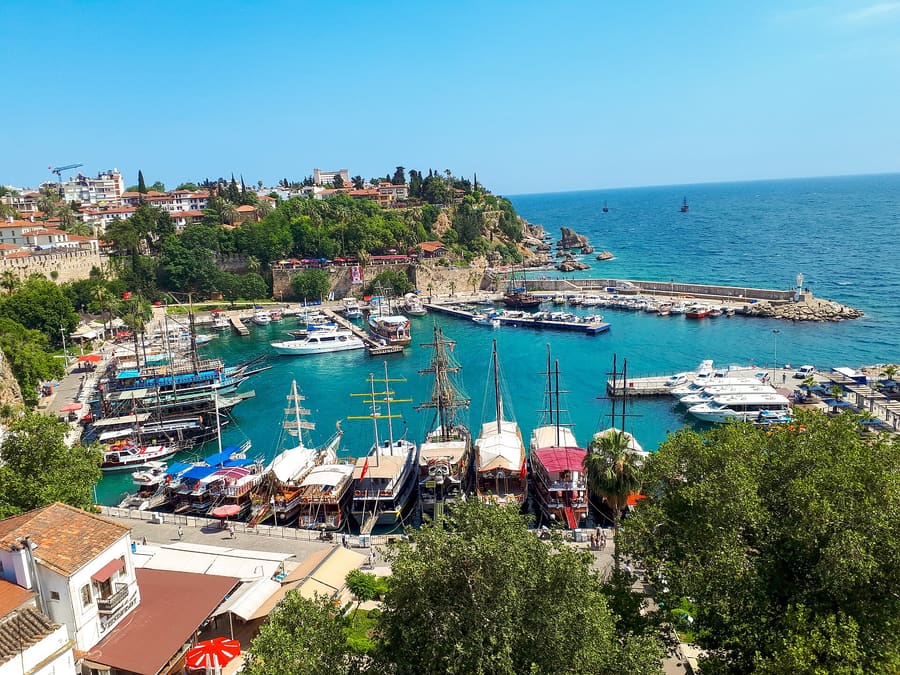
Antalya sits on a limestone plateau rising directly above the Gulf of Antalya. Roman city walls enclose its historic core, while long pebble and sand beaches extend to the east and west. You move between high-altitude Pisidian ruins in the morning and deep-water harbour platforms by afternoon. Expect intense summer heat and clear Mediterranean water year-round.
Cultural status
Antalya Museum holds one of Turkey's largest Roman sculpture collections, salvaged from nearby Perge.
Kaleiçi navigation
Cars cannot enter most of the old town. Have your hotel meet you at Hadrian's Gate to carry heavy bags.
Antalya
REHBER0770 · CC BY-SA 4.0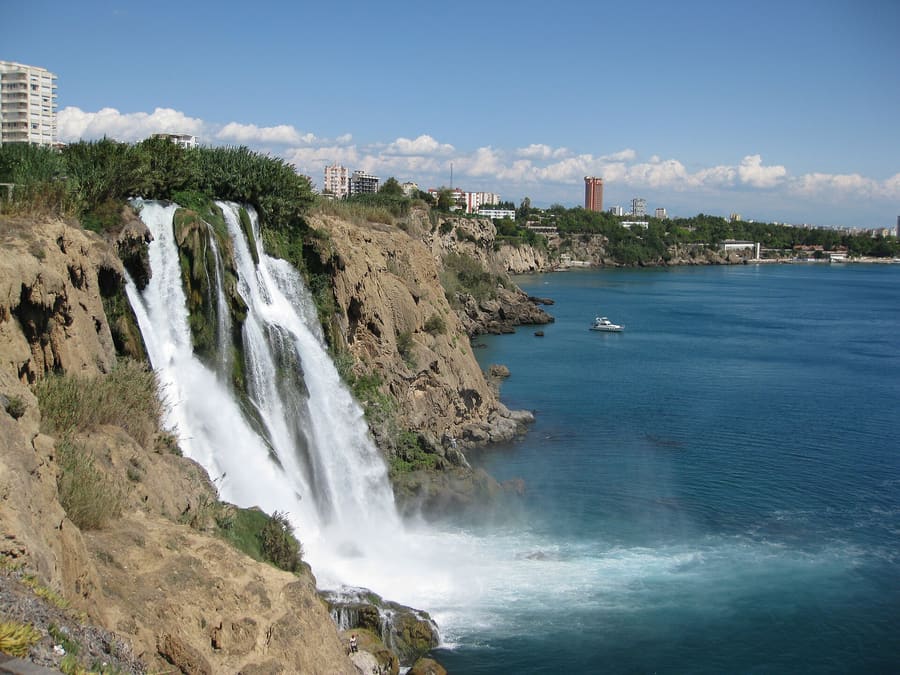
Lara — Upper clifftop suburbs giving way to large self-contained beach resorts further east.
bynyalcin · CC BY 3.0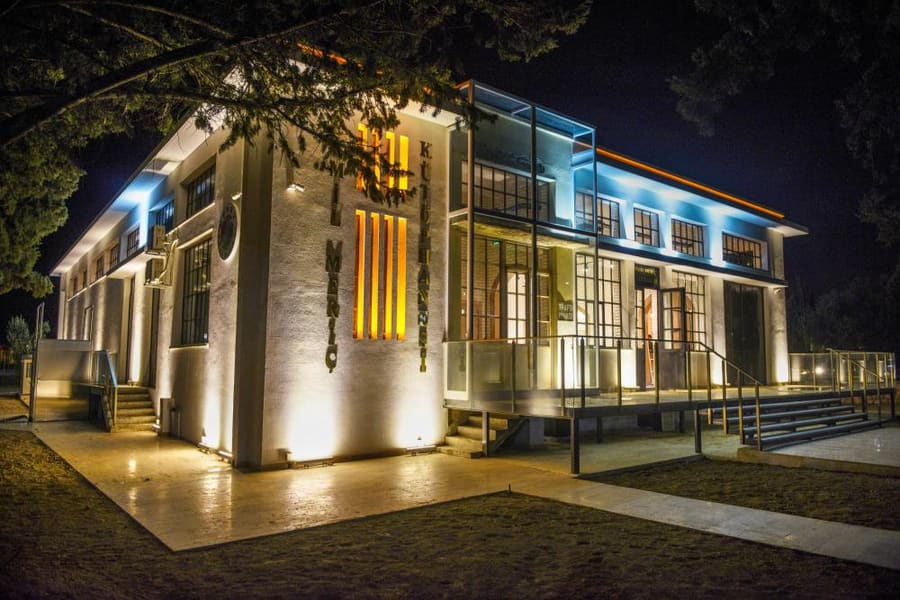
Kepez — Inland plateau district housing the central bus station and local residential blocks.
Mroguzhanceylan · CC BY-SA 4.0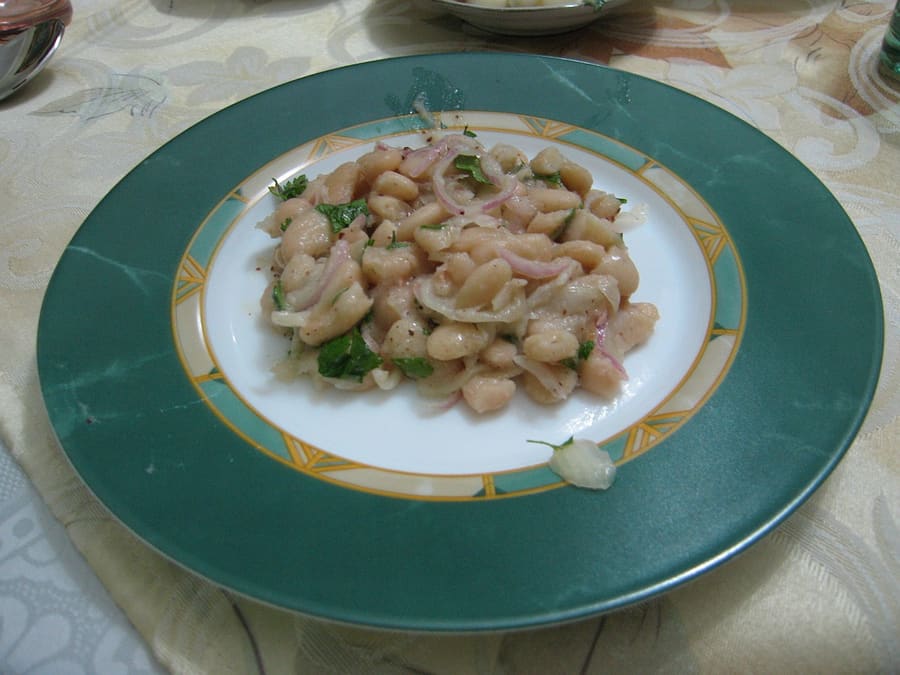
Antalya-style piyaz served with boiled egg and a thick tahini dressing.
Chapultepec · Public domainhighlights
landmark
A Roman triple arch built in 130 CE. Walk under the original marble grooved by wagon wheels to cross into Kaleiçi.
Ρωτήστε το Parley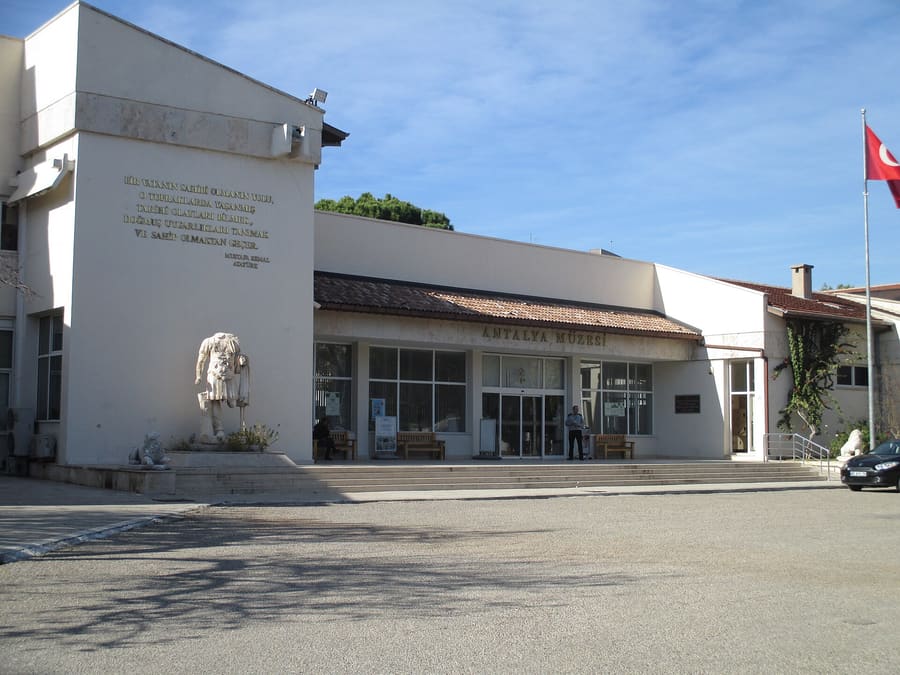
landmark
Houses elite Roman statuary recovered from nearby archaeological digs. Visit early in the day before tour buses arrive.
Ρωτήστε το Parley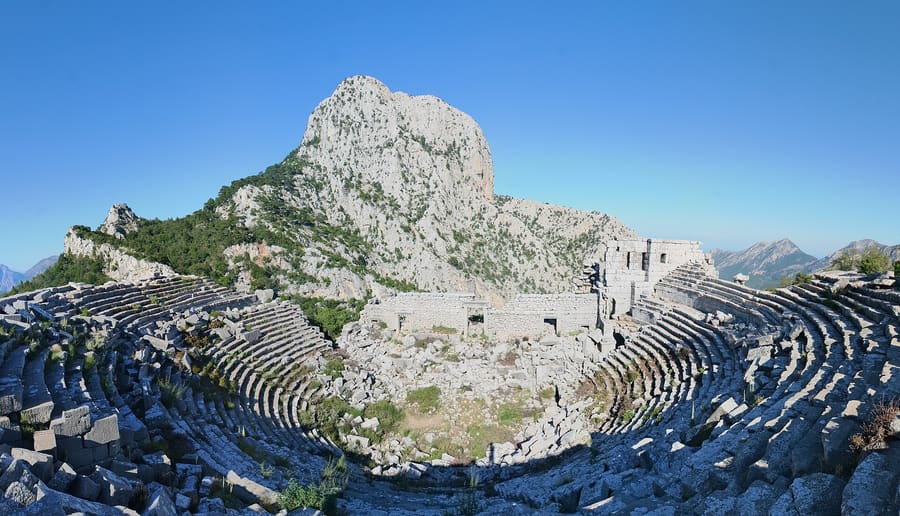
landmark
A mountain Pisidian city 1,000 metres high. Bring sturdy boots to walk through unexcavated stone temples.
Ρωτήστε το Parley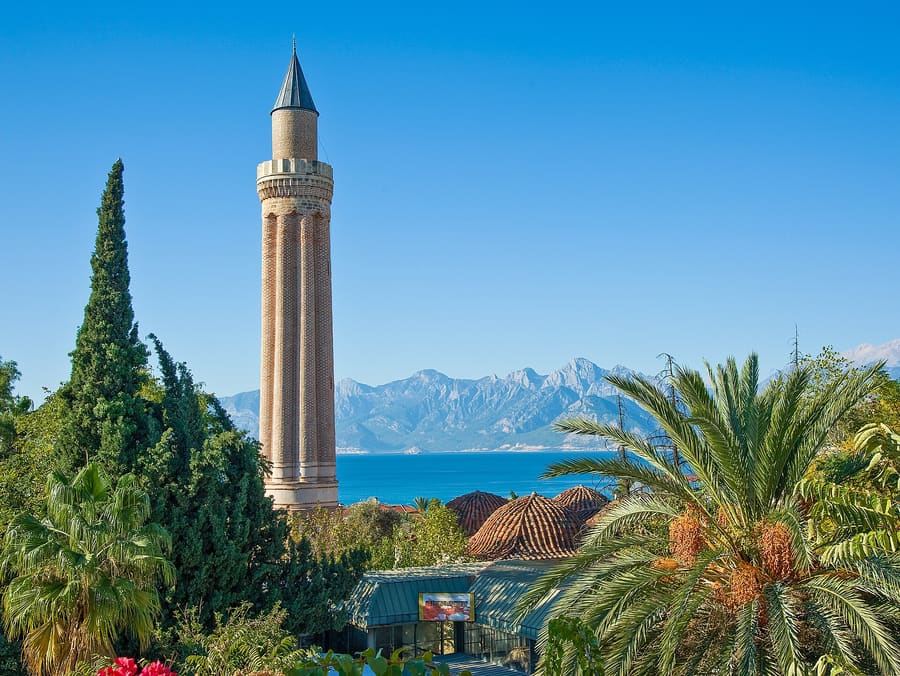
landmark
A 13th-century Seljuk minaret built with fluted red brick. It marks the northern entrance to the old quarter.
Ρωτήστε το Parleyattractions
areas
Upper clifftop suburbs giving way to large self-contained beach resorts further east.
ΚοντάLower Düden Waterfall
Ρωτήστε το ParleyInland plateau district housing the central bus station and local residential blocks.
ΚοντάOtogar Bus Terminal
Ρωτήστε το ParleyModern residential boulevards running alongside a wide pebble beach and park strip.
ΚοντάAntalya Museum, Atatürk Park
Ρωτήστε το Parleyfood
Antalya cooks white bean salad differently from the rest of the country. Elsewhere in Turkey, piyaz is dressed simply with olive oil, vinegar, and onions. In Antalya, cooks blend tahini, warm garlic water, lemon juice, and boiled egg yolks into a thick sauce poured over small Çandır beans. The dish functions as a main course alongside charcoal-grilled skewers of şiş köfte.For seafood, avoid the harbour-front tourist menus in Kaleiçi. Local fishers unload catches early; head to small restaurants two streets inland or along the clifftop roads in Lara for seasonal red mullet or sea bass priced by weight.
Antalya-style piyaz served with boiled egg and a thick tahini dressing.
Chapultepec · Public domainOrder piyaz at dedicated spots like Piyazcı Ahmet. Check that tahini forms the base sauce.
Clifftop venues along Lara serve multi-dish Turkish breakfasts until 14:00 daily.
Select whole fish at the counter. Confirm the per-kilogram price before the kitchen cooks it.
history
Pergamene Foundation
Attalos II establishes the port city of Attalia as a naval base.
Hadrian's Gate Built
Emperor Hadrian visits the city, prompting construction of the triple arch.
Seljuk Annexation
Sultan Keyhusrev I takes the harbour, securing Mediterranean naval access.
Port Redevelopment
Commercial shipping moves to the West Port; Kaleiçi transitions to tourism.
where to stay
transport
Antalya relies on two distinct tram systems alongside local bus lines. The modern Antray light rail connects the airport, the central bus station (Otogar), and northern districts. The single-track Nostalji Tram runs along the coastal cliffs from the Antalya Museum past Kaleiçi to Işıklar. Contactless credit cards work on trams and public buses.
Antray is the fast light-rail system. The Nostalji Tram is a historic coastal line operating every 30 minutes.
Tap contactless credit cards directly on readers. An extra fee applies compared to an AntalyaKart.
Minibuses cover locations outside tram routes. Hand cash directly to the driver upon boarding.
Taxis cannot access most inner alleys. Meet drivers at Hadrian's Gate or the Cumhuriyet Square ranks.
cost
Antalya offers moderate local prices away from primary resort zones. Always request payments in Turkish Lira; paying in Euros at beach stands or tourist markets results in unfavorable exchange rates.
seasonality
MAR – MAY
Mild daytime temperatures around 20–25°C. Water remains cool, but conditions are ideal for hiking ancient sites.
JUN – AUG
High temperatures exceed 38°C with high humidity. Beaches become crowded and sight-seeing during midday is difficult.
SEP – OCT
Sea temperatures stay warm while air heat drops to comfortable levels. Ideal window for combining beach and ruins.
NOV – FEB
Frequent rain showers mixed with clear sunny days. Swimming ends, but room rates in Kaleiçi drop significantly.
practicalities
Konyaaltı consists of grey pebbles that stay clean but require water shoes. Lara offers natural coarse sand.
Kaleiçi has no natural sand beach. Swimmers drop into deep water via vertical ladders anchored to wooden cliff decks.
Inland sites like Termessos lack shops or water stations. Carry adequate drinking water before leaving the highway.
Yivliminare functions as an active place of worship. Cover knees and shoulders and remove shoes prior to entering.
Withdraw Turkish Lira from bank ATMs. Card machines in small shops may default to foreign currency conversion fees.