landmark
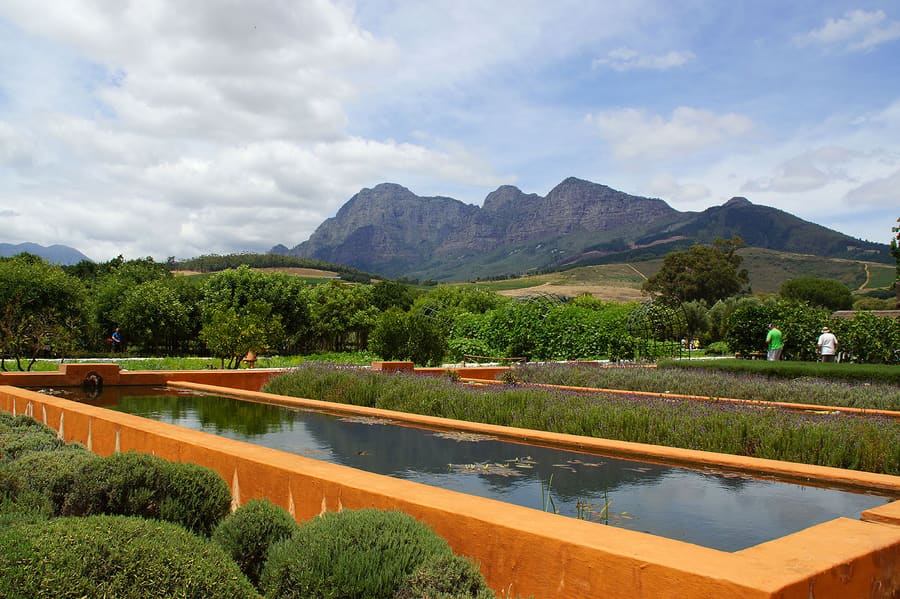
Babylonstoren Gardens
A sprawling 3.5-hectare fruit and vegetable garden built along historic Cape Dutch lines. Pay entry at the gate or book lunch early.
Ρωτήστε το ParleyΝότια Αφρική
Old vines, mountain passes, and slow multi-course lunches.
introduction
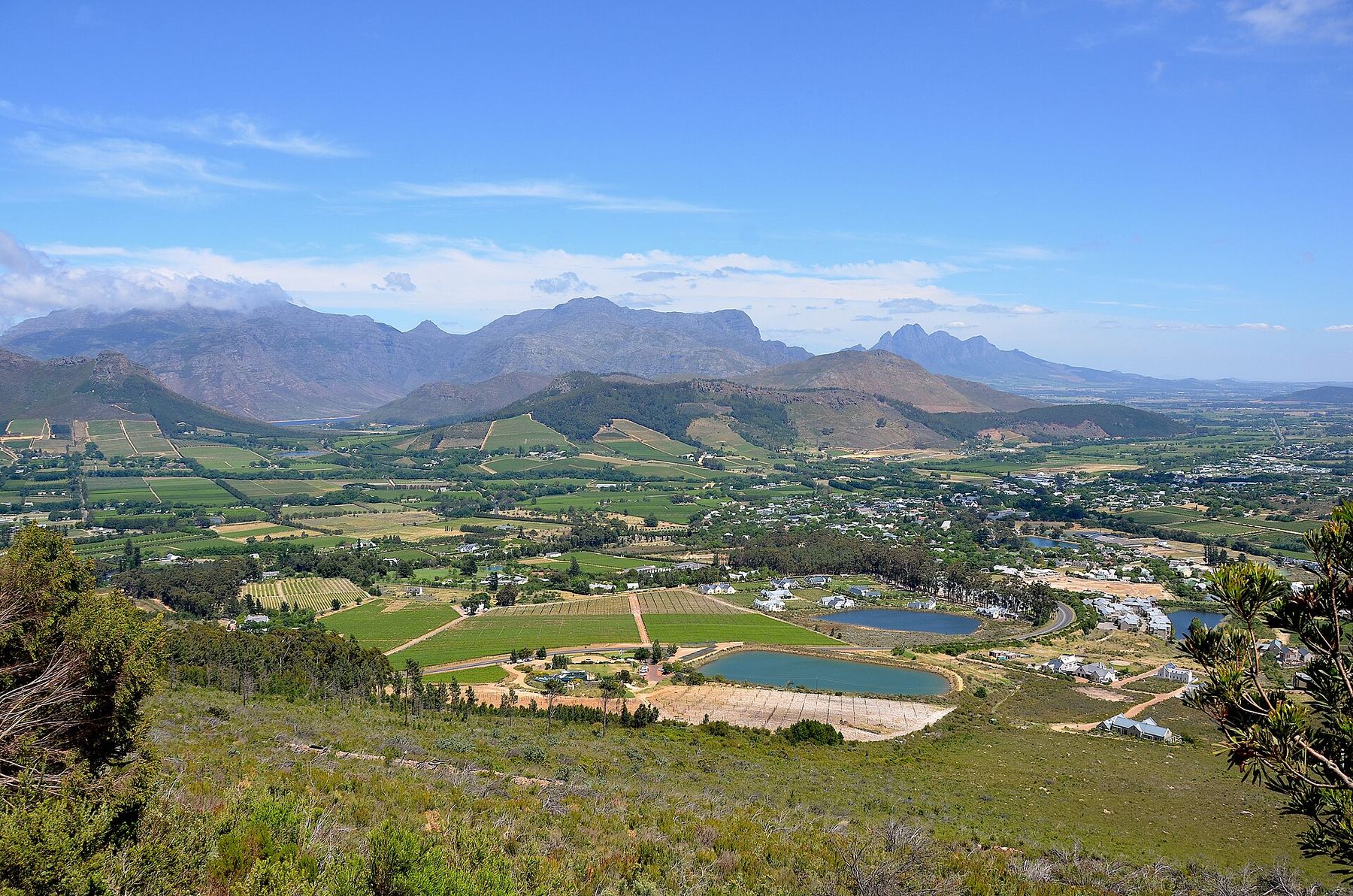
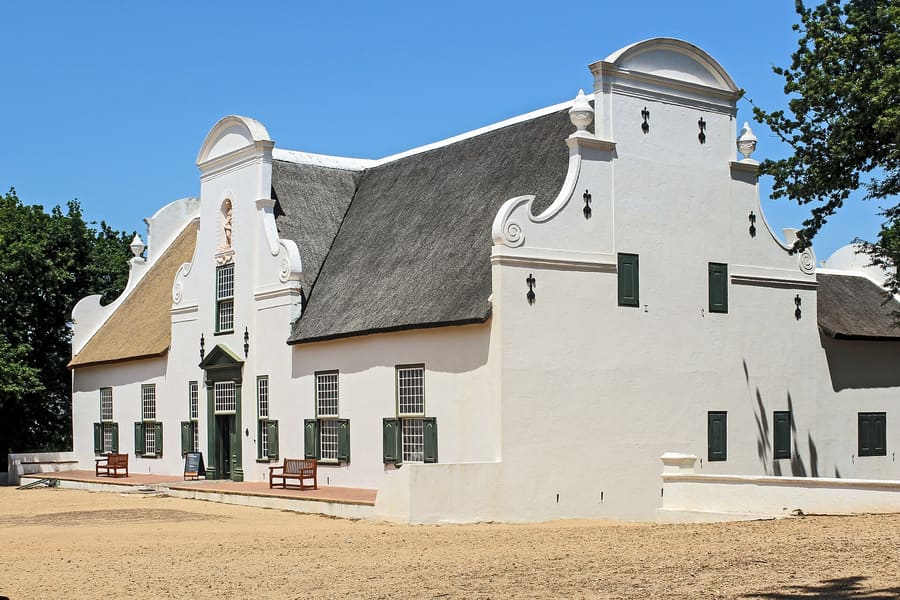
The Cape Winelands spread across valley floors framed by dramatic sandstone peaks an hour east of Cape Town. You move between towns like Stellenbosch, Franschhoek, and Paarl by rental car or targeted wine buses. Expect focused Cabernet Sauvignon and Chenin Blanc tastings, Cape Dutch homesteads, and long lunches that dominate your afternoons. It is an agricultural landscape built on grand estates and precise hospitality.
Airport connection
Cape Town International Airport sits 35 kilometers west of Stellenbosch. Renting a car at the terminal saves high long-distance rideshare fares.
UNESCO Biosphere Reserve
The region sits within the Cape Floral Region Protected Areas UNESCO site. Native fynbos vegetation covers the surrounding mountains.
Tasting reservations
Top estates require advance bookings for weekend tastings and cellar tours. Reserve flagship restaurant tables weeks before arriving.
Cape Winelands
Martinvl · CC BY-SA 4.0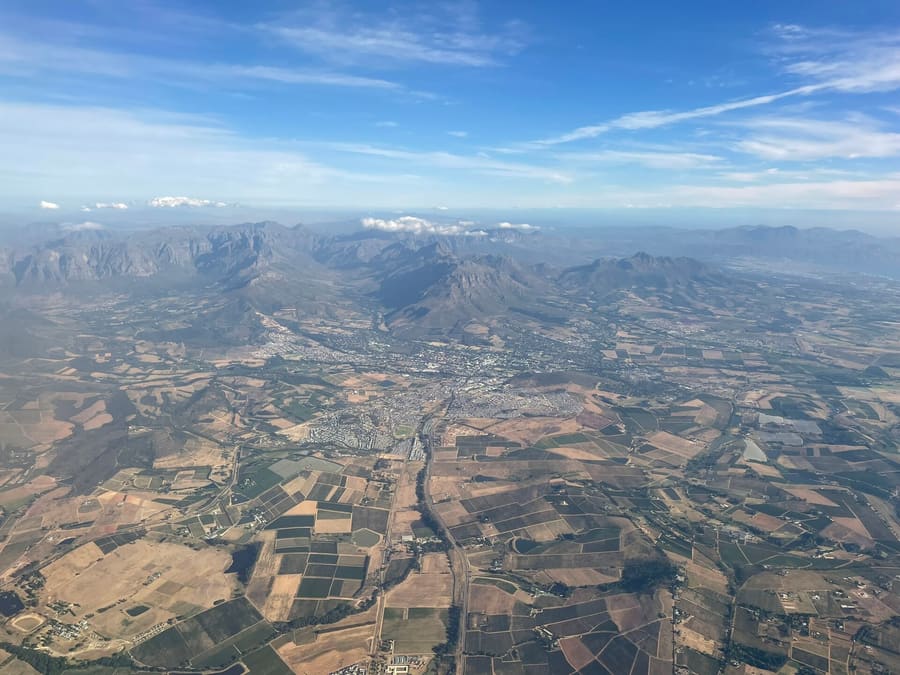
Stellenbosch — Oak-lined university hub with active street life, boutique shopping, and high-density restaurant rows.
CJJ2501 · CC0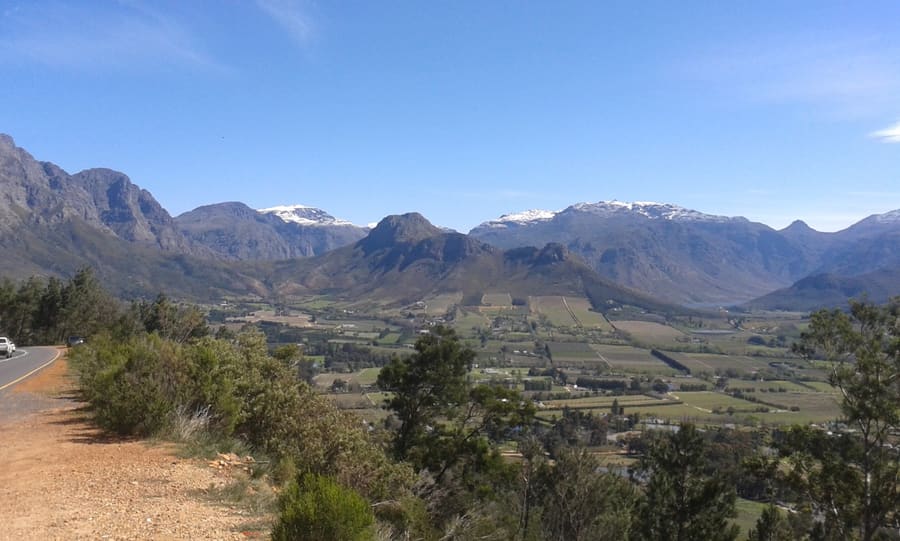
Franschhoek — Quiet valley village centered on fine dining, high-end tasting rooms, and French Huguenot roots.
Glany Saldanha · CC BY 3.0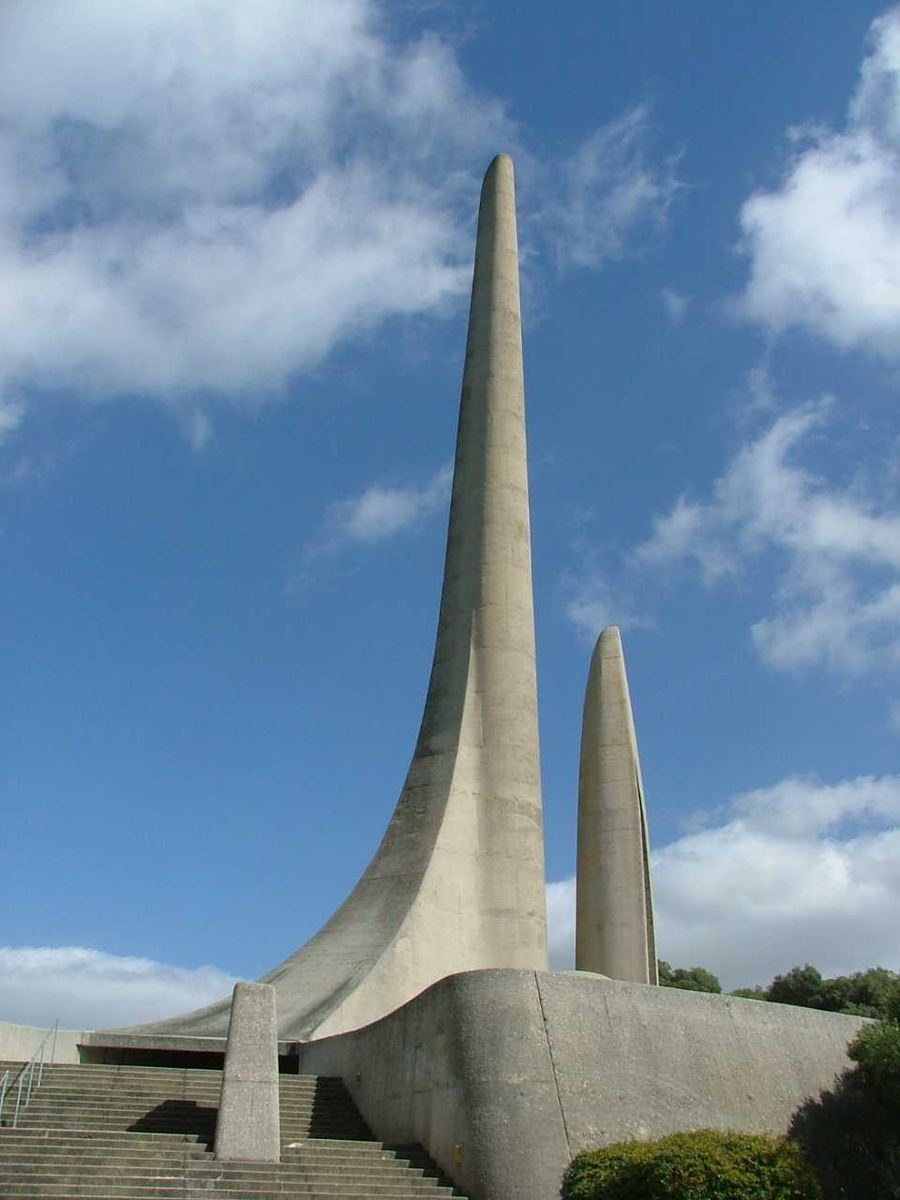
Paarl — Broad agricultural valley dominated by massive granite outcrops, traditional cellars, and school grounds.
Dingy · CC BY-SA 3.0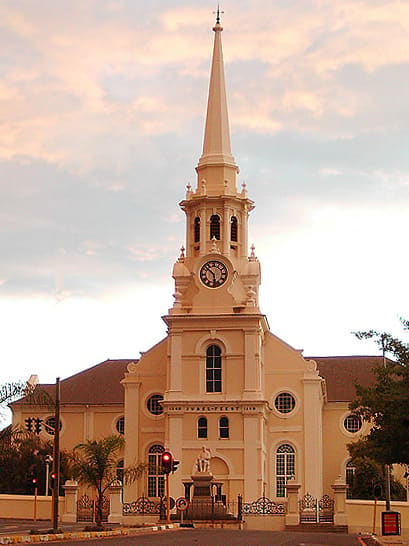
Wellington — Working farm valley specializing in vine nurseries, small-batch potstill brandy, and quiet countryside.
Morne · Public domain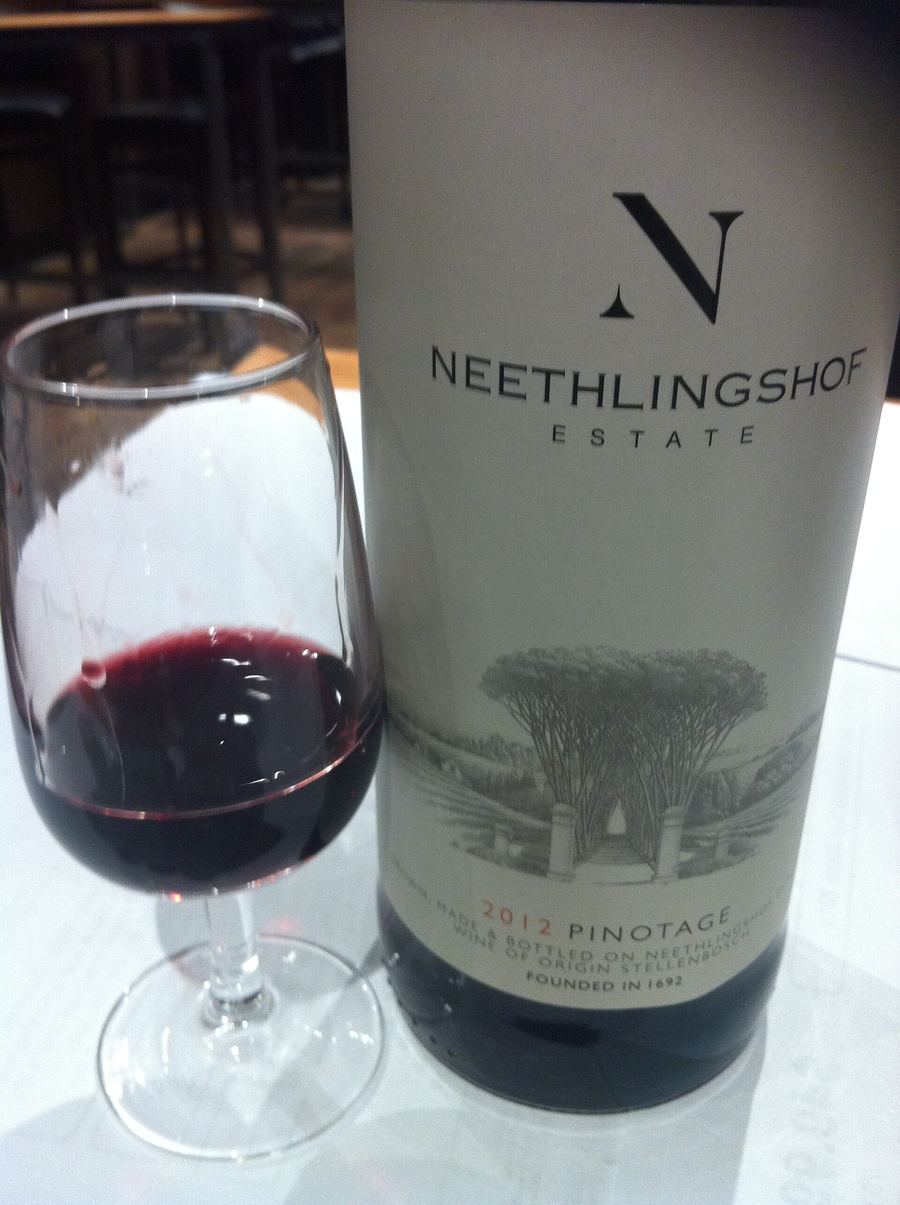
Local varietals like Pinotage and Chenin Blanc are paired directly with vineyard tasting menus.
Agne27 · CC BY-SA 3.0highlights
landmark
A sprawling 3.5-hectare fruit and vegetable garden built along historic Cape Dutch lines. Pay entry at the gate or book lunch early.
Ρωτήστε το Parley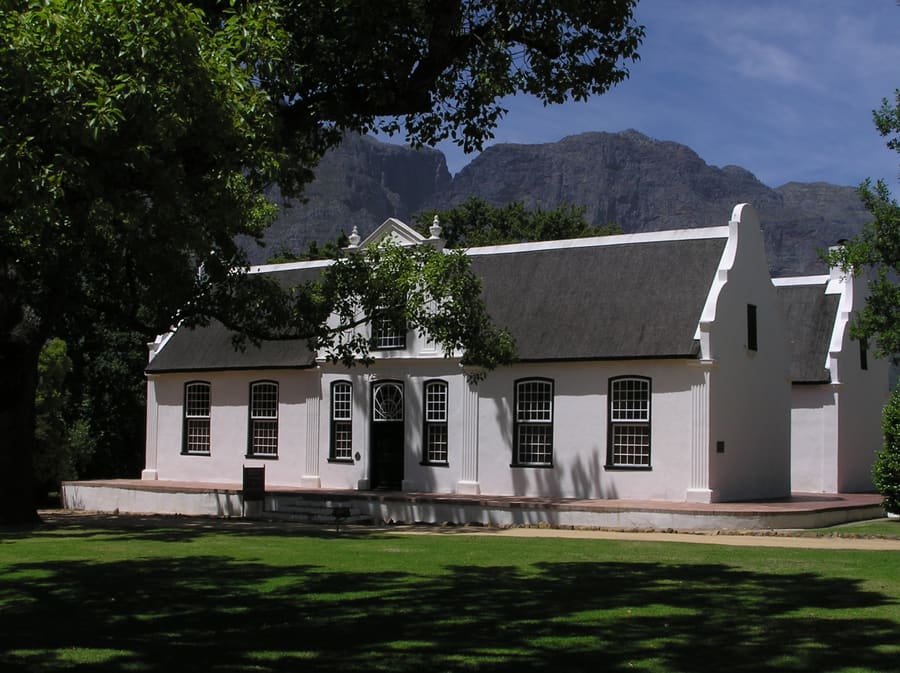
landmark
One of the oldest farms in South Africa, established in 1685. Visit for farm-to-table picnics under ancient oak trees.
Ρωτήστε το Parley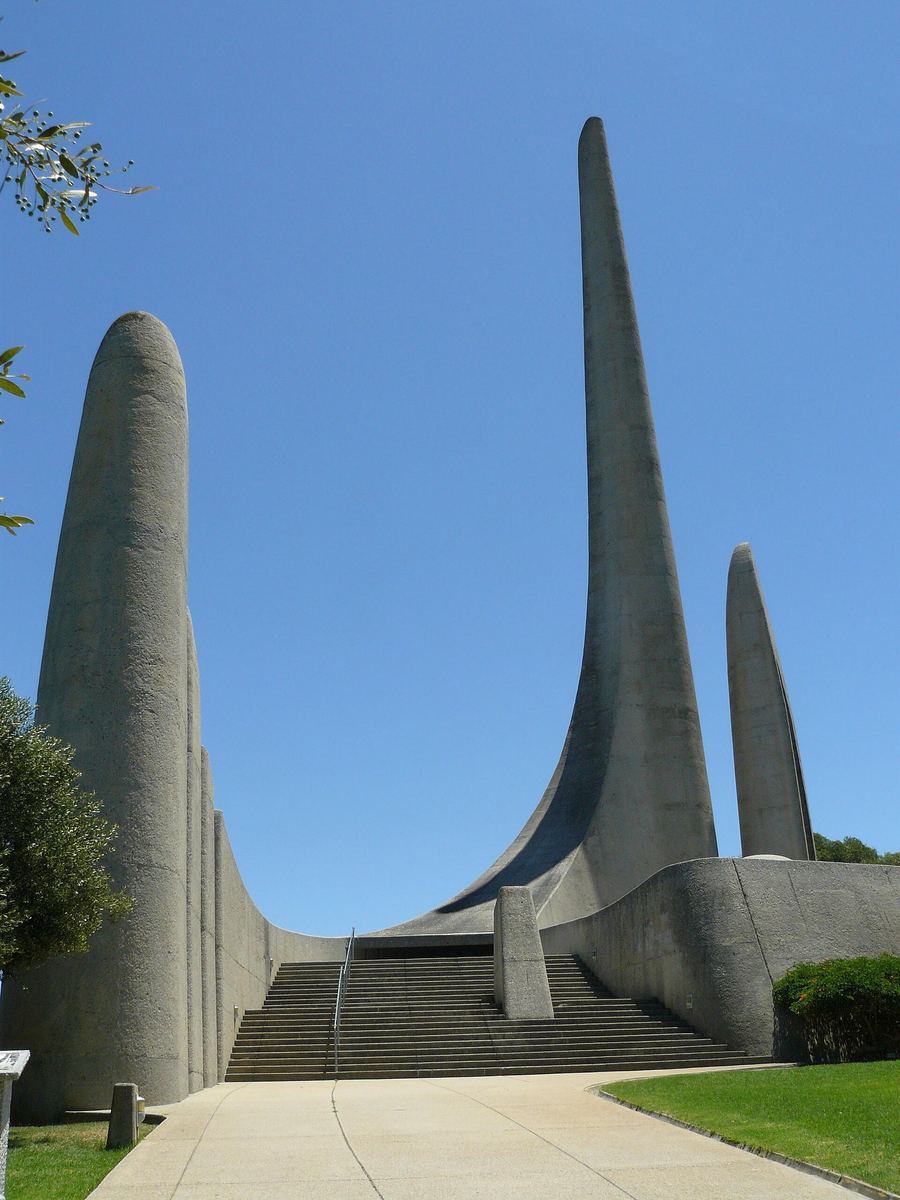
landmark
Striking concrete spires on Paarl Mountain dedicated to the Afrikaans language. The summit offers views clear to Table Mountain.
Ρωτήστε το Parleyattractions
areas
Oak-lined university hub with active street life, boutique shopping, and high-density restaurant rows.
ΚοντάJonkershoek Nature Reserve
Ρωτήστε το ParleyQuiet valley village centered on fine dining, high-end tasting rooms, and French Huguenot roots.
ΚοντάFranschhoek Pass
Ρωτήστε το ParleyBroad agricultural valley dominated by massive granite outcrops, traditional cellars, and school grounds.
ΚοντάPaarl Mountain Nature Reserve
Ρωτήστε το ParleyWorking farm valley specializing in vine nurseries, small-batch potstill brandy, and quiet countryside.
ΚοντάBainskloof Pass
Ρωτήστε το Parleyfood
Dining in the Cape Winelands centers on vineyard lunches that stretch across entire afternoons. Estates run dedicated farm shops, bakeries, and fine-dining spaces alongside their tasting rooms. Local menus highlight game meats, Cape Malay spices, and seasonal harvests grown on site.
Local varietals like Pinotage and Chenin Blanc are paired directly with vineyard tasting menus.
Agne27 · CC BY-SA 3.0Kitchens at vineyard restaurants usually take their final orders around 14:30. Plan your morning tasting route around your lunch spot.
Sample traditional bobotie, a spiced minced meat dish baked with an egg custard topping. Estates often serve it alongside chutneys and yellow rice.
Tasting fees range from ZAR 80 to ZAR 150 per person at standard cellars. Most estates waive this fee if you purchase a bottle.
history
The agricultural roots of the Cape Winelands trace back to the late 17th century when Dutch colonists and French Huguenot refugees established fruit and grape farming across fertile valley basins.
Founding of Stellenbosch
Cape Governor Simon van der Stel marks out town plots along the Eerste River, planting oak trees and establishing agricultural farms.
Huguenot Arrival
French Protestant refugees settle in Olifantshoek, later renamed Franschhoek, introducing viticultural knowledge to the valley.
First Wine Route
Stellenbosch establishes South Africa's first official wine route, formalizing cellar-door sales and regional tourism.
Franschhoek Wine Tram
An open-air railway system launches along historic tracks, linking valley estates via hop-on hop-off routes.
where to stay
Choose your base based on how you want to handle dinner and transport. Stellenbosch offers urban street life where you can walk to dinner. Franschhoek caters to luxury dining within a compact footprint. Paarl and Wellington suit travelers seeking quiet farm stays and larger properties.
transport
Distances between valleys mean a vehicle is essential. A rental car gives you maximum freedom, while organized trams and private drivers remove the drink-driving risk during vineyard hops.
Από Cape Town International Airport (CPT)
Essential for full region freedom. Tip parking attendants ZAR 5-10 when leaving.
Best for Stellenbosch arrival. Harder to get return rides late at night or in Paarl.
Pre-book for hassle-free vineyard transfers and door-to-door service.
Use authorized taxi desks inside terminal arrivals hall; confirm rate before departing.
Eight color-coded lines service different combinations of estates using trams and open-air buses. Tickets cost around ZAR 330.
Uber works well inside central Stellenbosch. Drivers are rare in rural Paarl or late at night in Franschhoek.
Official and unofficial parking attendants operate in town centers. A tip of ZAR 5 to ZAR 10 is customary when leaving.
cost
Prices reflect high hospitality standards but remain favorable for international travelers using foreign currency. Standard wine tastings are affordable, while high-end multi-course dinners require budgeting akin to European cities.
Covers five to six wines. Reserve pourings and aged vintages carry higher fees.
Price per person excluding wine pairings at top vineyard restaurants.
Standard adult day pass for hop-on hop-off service in Franschhoek.
Standard price at specialty coffee shops in Stellenbosch or Paarl.
seasonality
DEC – FEB
Peak summer brings daily temperatures over 30°C and heavy visitor numbers. Reserve dining and stays months ahead.
MAR – MAY
Grape harvest season features clear days, turning vineyard leaves, and manageable afternoon temperatures.
JUN – AUG
Winter brings rain, cool air, and green landscapes. Fireplaces run in tasting rooms and crowd levels drop.
SEP – NOV
Spring brings blooming fynbos, warming days, and fresh vine growth across all four main valleys.
practicalities
Most estate tasting rooms close by 16:30 or 17:00. Start your wine tasting early in the day.
Credit and debit cards are accepted almost universally across estates, restaurants, and town shops.
The valley summer sun is strong. Bring high-SPF sunscreen and hats for outdoor farm lunches.
Smart-casual wear fits every tasting room and dining space. Formal dress is rarely expected.
Franschhoek Pass and Bainskloof Pass feature sharp bends. Drive carefully during heavy winter rain.