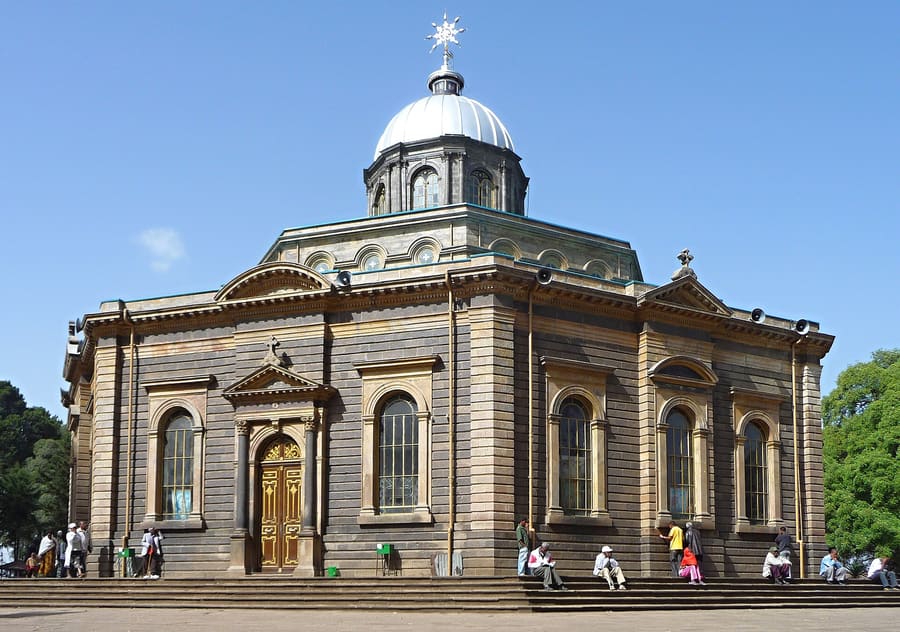

landmark
National Museum of Ethiopia
Home to the fossilized remains of Lucy. Visit on weekday mornings to avoid school groups.
Ethiopia
High-altitude diplomacy, raw coffee culture, and urban scale.
Addis Ababa sits over 2,300 metres above sea level in the Ethiopian highlands. The city moves fast, driven by diplomatic headquarters, construction projects, and street-level commerce. You navigate it by ride-hailing apps, blue minibuses, or the light rail network. Days run on a local clock that counts hours from sunrise, so timing requires attention.
Piassa — Historic quarter with Italian-era architecture, traditional gold shops, and old coffee houses.
01
landmark
Home to the fossilized remains of Lucy. Visit on weekday mornings to avoid school groups.
landmark
The resting place of Emperor Haile Selassie. Modest dress covering shoulders and knees is mandatory.
landmark
One of Africa's largest open-air markets. Keep valuables secure and hire a local guide to navigate.
landmark
Set inside Emperor Haile Selassie's former palace. It details the traditions of over eighty ethnic groups.
02
03
Modern commercial strip dominated by international hotels, cafes, and airport proximity.
NearbyBole Airport and Meskel Square.
Ask ParleyDiplomatic and business core housing major international agencies and traditional music venues.
NearbyUN Economic Commission and National Museum.
Ask ParleyHistoric quarter with Italian-era architecture, traditional gold shops, and old coffee houses.
NearbyNational Museum and Merkato.
Ask ParleyLeafy residential district favoured by long-term expatriates and quiet cafes.
NearbySarbet and African Union Headquarters.
Ask Parley04
Addis Ababa's food revolves around injera, a sourdough flatbread made from fermented teff flour. Diners tear off pieces of injera with their right hand to scoop up vegetable stew or spicy meat wot. Tere sega, raw beef served with chili paste and clarified butter, is a prized local delicacy available at specialized butcher houses called sigabet.
Eat exclusively with your right hand. A host may offer you a gursha, placing a morsel directly in your mouth as a gesture of hospitality.
Orthodox Christians fast from meat and dairy on Wednesdays and Fridays. Restaurants offer elaborate yetsom beyaynetu vegetable platters on these days.
A traditional coffee ceremony involves roasting green beans, grinding them, and brewing three successive rounds in a clay pot called a jebena.
05
Founded in 1886 by Empress Taitu Betul, Addis Ababa expanded rapidly around royal encampments. Ethiopia lost its independence during the 1936–1941 Italian military occupation, regaining sovereignty only after liberation in World War II, a period during which basic grid plans were laid out. Following World War II, the capital established its role as an African diplomatic center, becoming the home of the Organisation of African Unity in 1963.
City founded
Empress Taitu selects the hot springs site at the foot of Mount Entoto and names it Addis Ababa.
Italian occupation
Italian forces occupy the city, building modern roads and establishing the Piassa quarter.
OAU established
Addis Ababa becomes headquarters for the Organisation of African Unity, now the African Union.
Derg regime
A military junta overthrows Emperor Haile Selassie, leading to political purge and economic decline.
06
Where you stay in Addis Ababa depends heavily on your tolerance for traffic. Bole offers smooth airport transfers and modern dining. Kazanchis puts you near diplomatic offices and evening music venues. Large portions of Piassa's historic streetscapes and heritage buildings were demolished in 2024 during the city's corridor redevelopment initiative, though construction is frequent.
Highly rated hotels in Addis Ababa.


07
Addis Ababa's transport system combines modern infrastructure with traditional blue minibuses. Ride-hailing applications provide the most dependable option for foreign visitors, avoiding street negotiations.
From Addis Ababa Bole International Airport (ADD)
Apps like Feres or RIDE offer fixed rates and eliminate price haggling.
Yellow airport taxis cost more than blue street cabs. Agree on the fare before setting off.
The two-line Light Rail system is useful for travelling between Meskel Square and . Buy paper tickets at platform booths.
Local apps like RIDE and Feres dominate transport. Download them and ensure you have a working local SIM card.
Blue and white minibuses follow fixed routes. Conductors shout destinations from open doors; cash payment is required.
Gridlock hits major intersections around Bole Road and Meskel Square from 08:00 to 09:30 and 17:00 to 19:30.
08
Addis Ababa is affordable compared to Western capitals, though luxury hotel rates match global norms. Cash is essential for small vendors, while credit cards are accepted in major hotels.
A freshly pulled espresso or traditional jebena coffee at a local cafe.
A full meal of assorted vegetarian stews served on injera.
Cross-town transit during non-peak hours using local apps.
Standard foreign visitor entry at major national museums.
09
OCT – FEB
Dry season with warm days and cool nights. Best conditions for sightseeing and trekking.
MAR – MAY
Belg short rains bring intermittent showers. Temperatures remain mild with manageable crowds.
JUN – SEP
Kiremt heavy rains hit the city. Downpours occur daily, making unpaved streets muddy.
10
At 2,300 metres, physical exertion feels harder during your first two days. Drink extra water.
Scheduled and unscheduled electricity outages occur. Mid-range and upscale hotels run generators.
ATMs frequently run out of bills or reject foreign cards. Carry sufficient cash for daily expenses.
Buy SIM cards at official Ethio Telecom branches. You must present your original passport.
Pickpocketing is common in crowded areas like . Carry minimal cash and keep phones secured.
Contents
Your trip
Going to Addis Ababa?
Tell Parley when you’re going and what you enjoy, and it plans the days around this guide.
Plan with Parley


