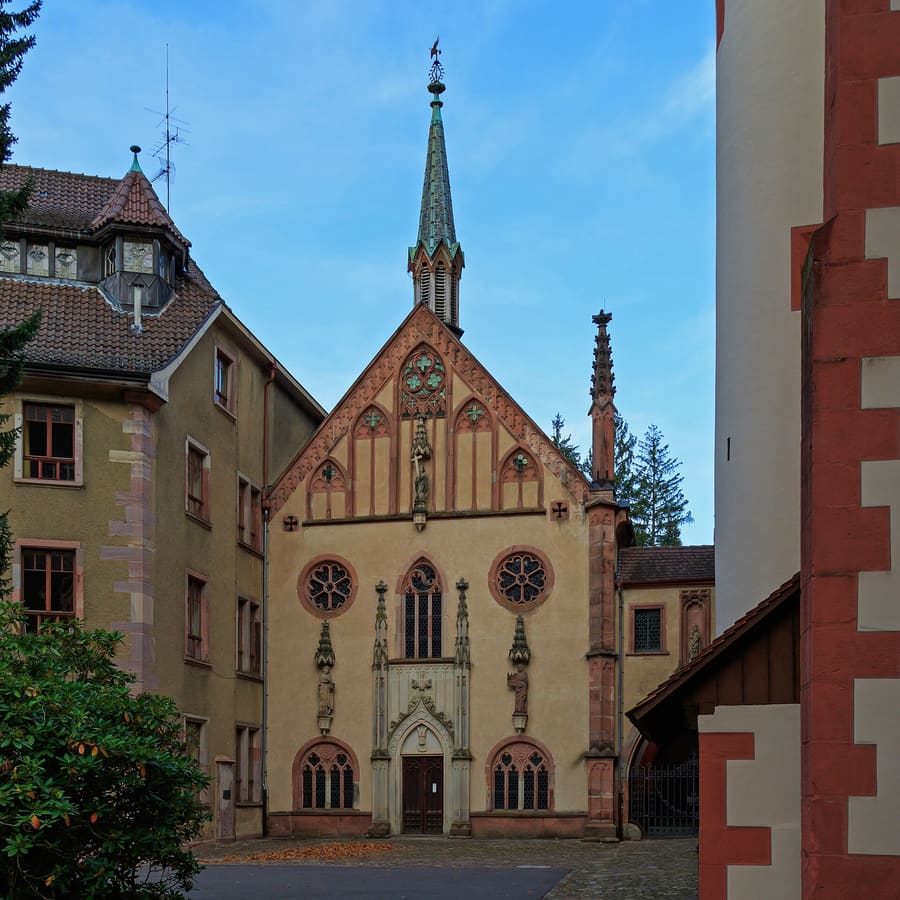
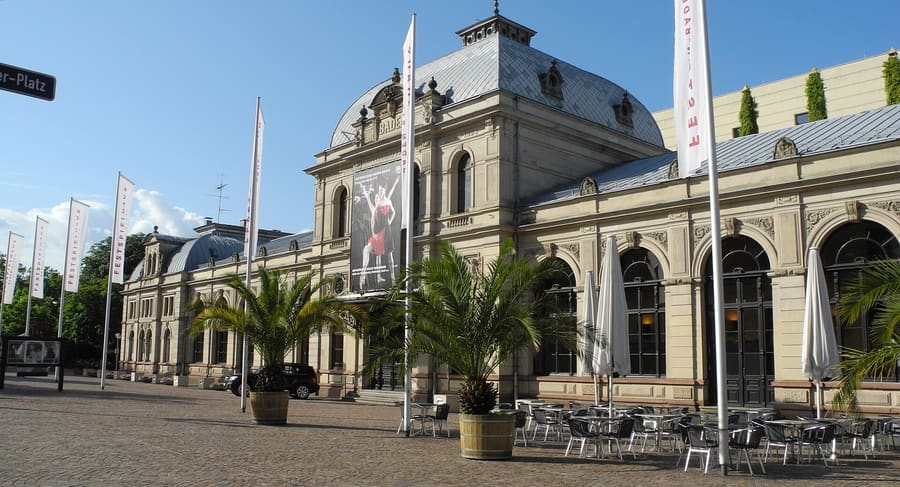

landmark
Friedrichsbad
A nineteenth-century Roman-Irish bathhouse. You follow a mandatory 17-station thermal circuit without clothing.
Germany
Thermal springs, nineteenth-century casino culture, and Black Forest slopes.
Baden-Baden rests on thermal springs at the western edge of the Black Forest. You move through the town on foot along the Oos River, surrounded by Belle Époque villas and forested hills. Expect formal decorum, high spa prices, and quiet evenings after dinner.
Lichtental — A quiet residential village anchored by a 13th-century Cistercian abbey.
Weststadt — Former working-class district turned cultural hub around the Festspielhaus.
Rehrücken (saddle of venison) served with hand-scraped Spätzle and cranberries.
01
landmark
A nineteenth-century Roman-Irish bathhouse. You follow a mandatory 17-station thermal circuit without clothing.
landmark
A modern 4,000-square-metre pool complex fed by thermal springs. Swimwear is required in the main pools.
landmark
A 2.3-kilometre parkway along the Oos River lined with 300 tree species. Walk south from Goetheplatz to reach Lichtental.
landmark
A luminous Richard Meier building dedicated to modern and contemporary art. Integrated directly into Lichtentaler Allee.
landmark
One of Europe's steepest funicular railways. It climbs 370 vertical metres to the Merkur summit in under six minutes.
02
03
Cobbled lanes, steep alleys around the Collegiate Church, and thermal steam above rooftops.
NearbyFriedrichsbad, Caracalla Therme, Marktplatz
Ask ParleyGrand nineteenth-century architecture, manicured lawns, and high-end hotel dining.
NearbyKurhaus, Trinkhalle, Lichtentaler Allee
Ask ParleyA quiet residential village anchored by a 13th-century Cistercian abbey.
NearbyKloster Lichtenthal, Brahmshaus, South Park
Ask ParleyFormer working-class district turned cultural hub around the Festspielhaus.
NearbyFestspielhaus, City Rail Station, Lange Straße
Ask Parley04
Baden cuisine sits at the intersection of Swabian and Alsatian traditions. Local menus emphasize Black Forest game, hand-scraped Spätzle, and freshwater trout from nearby streams.The surrounding Ortenau and Rebland wine regions supply dry Riesling and Spätburgunder (Pinot Noir). Fine dining centers on traditional French-influenced technique served in hotel dining rooms.
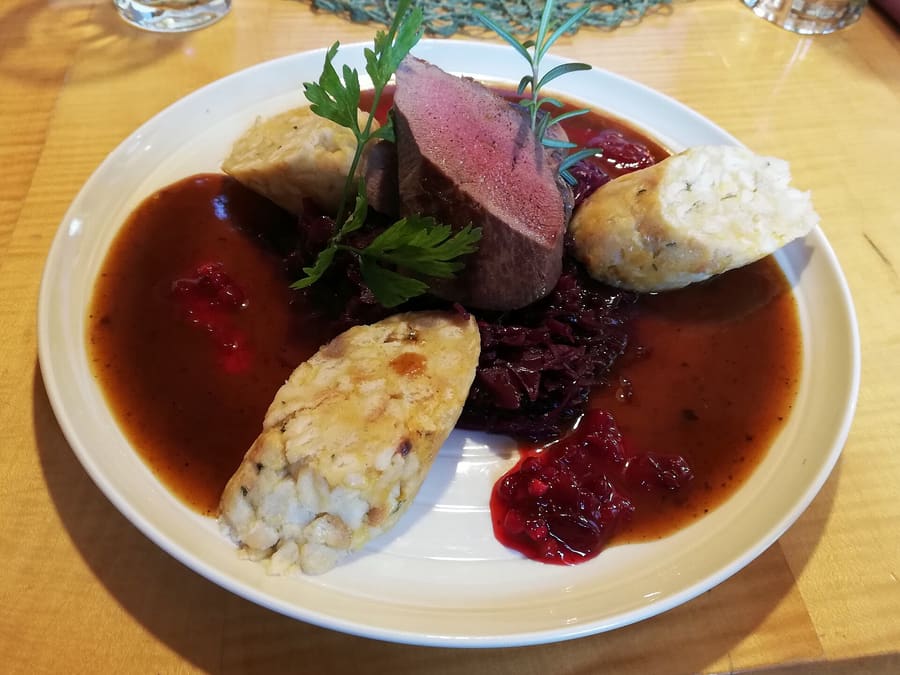
Rehrücken (saddle of venison) served with hand-scraped Spätzle and cranberries.
Kitchens in traditional restaurants close early by southern European standards, often taking last orders at 21:00.
Restaurant The Grill inside the Casino requires photo ID and compliance with the dress code for entry.
05
The Roman settlement was established around 75 AD under Emperor Vespasian and was named Aquae Aureliae in 213 AD under Emperor Caracalla to exploit thermal springs pumping 800,000 litres of mineral water daily. The town served as a garrison spa for soldiers stationed on the Rhine frontier.In the nineteenth century, French casino managers and Grand Dukes redeveloped Baden-Baden into the summer capital of Europe. Kings, composers, and writers gathered here, establishing its grand hotel culture.
Kurhaus construction
Friedrich Weinbrenner designs the neoclassical assembly rooms and casino.
Friedrichsbad opens
Grand Roman-Irish bathhouse opens, establishing modern spa protocols.
Festspielhaus inauguration
Germany's largest opera house opens inside a converted railway station.
06
Choose your hotel based on mobility and evening plans. Kurviertel places you steps from high-end dining and the casino. Altstadt offers historic charm but requires walking up steep hills. Weststadt sits near the opera and provides easier parking options.
Highly rated hotels in Baden-Baden.


07
Central Baden-Baden is compact and easily covered on foot. Public transit consists of a dense bus network operated by KVV, linking the main station to downtown and surrounding mountain slopes.
From Baden-Baden Hauptbahnhof (Rail Hub)
Line 201 departs every 10 minutes directly to Augustaplatz and Leopoldplatz.
Ranks sit outside the main station exit. Standard meter tariffs apply.
Line 201 is the transit backbone. It connects the train station through downtown to Lichtental every 10 minutes.
Buy single tickets or day passes via the KVV app or directly from ticket machines at major stops.
The central district is pedestrianized. Park in underground garages like Kurhaus Garage (€25/day) upon arrival.
Bus line 204 or 205 runs from Leopoldplatz directly to the valley station.
08
Baden-Baden rates among Germany's more expensive destinations due to high luxury hotel and spa density. Budget options exist primarily outside the central Kurviertel ring.
Rates depend on duration (1.5 to 3 hours or day pass). Sauna access adds €5.
Basic 3-hour ticket costs €32; adding the soap-brush massage brings the total to €49.
Standard entry fee for classic slot machines or table games. Photo ID is mandatory.
Includes ascending and descending funicular rides.
09
MAR – MAY
Spring blooms fill Lichtentaler Allee. Warm daytime temperatures make walking comfortable before summer crowds arrive.
JUN – AUG
Peak season bringing high hotel rates and crowded thermal pools. Book rooms and spa slots weeks in advance.
SEP – NOV
Fall foliage covers Black Forest slopes. Wine harvests in neighboring Rebland produce regional tasting events.
DEC – FEB
Cold weather highlights thermal bath appeal. The Christmas Market fills central squares throughout December.
10
Table games require a jacket and shirt for men. Ties are recommended, though blazer rentals exist at coat check.
is entirely textile-free every day. restricts nudity to its upstairs sauna complex.
Shops along Lange Straße close entirely on Sundays. Restaurants and thermal baths remain open.
Bring a valid passport or national ID card if you plan to enter the Casino; digital photos are refused.
The Panoramaweg hiking trail starts behind the town center. Trailhead maps sit outside the tourist office.
Contents
Your trip
Going to Baden-Baden?
Tell Parley when you’re going and what you enjoy, and it plans the days around this guide.
Plan with Parley


