
landmark
Forbidden City
The world's largest imperial palace complex. Book at 20:00 exactly seven days prior and enter through Meridian Gate.
China
Imperial monuments, six ring roads, and alleyway food.
Beijing is laid out along six concentric ring roads around the . Broad avenues make walking between neighbourhoods impractical, so you will rely heavily on the subway. The key is balancing days spent inside massive imperial compounds with evenings along northern hutong alleys.
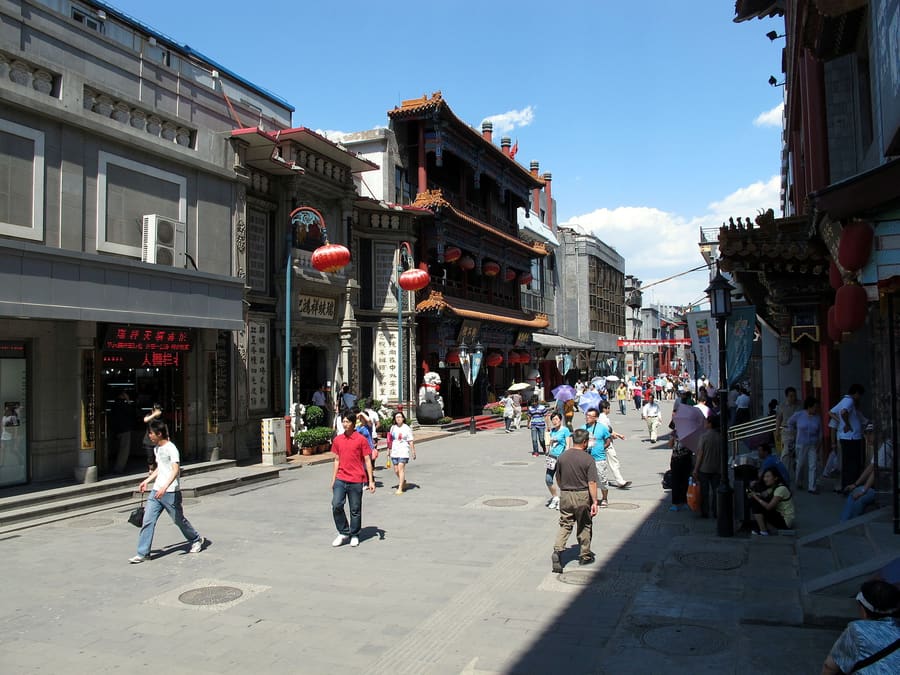
Qianmen & Dashilan — Restored Qing-dynasty commercial streets directly south of Tiananmen Square.
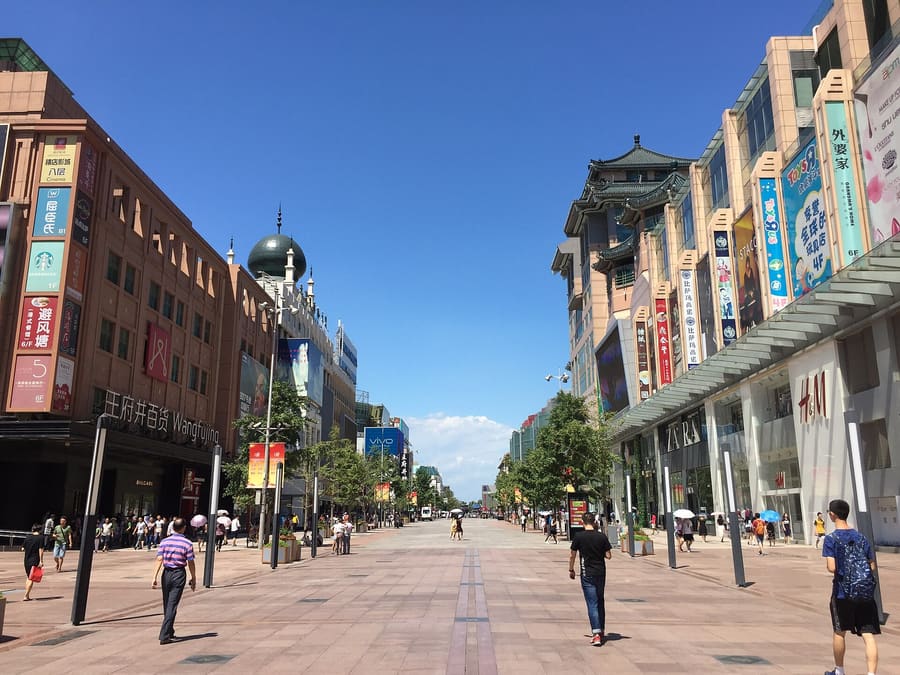
Wangfujing — Wide pedestrian shopping boulevard lined with department stores and international hotels.
Crispy Peking duck carved tableside, served with thin wheat pancakes, scallions, and sweet bean sauce.
01
landmark
The world's largest imperial palace complex. Book at 20:00 exactly seven days prior and enter through Meridian Gate.
landmark
Ming and Qing ritual grounds. Arrive before 08:30 to watch locals practice tai chi in the surrounding pine park.
landmark
A 290-hectare park dominated by Kunming Lake. Take subway Line 4 to Beigongmen to skip the main southern gate queues.
landmark
Restored wall section 73km northeast of the city. Cable cars run up; a toboggan runs down from Tower 6.
landmark
An artificial hill directly north of the Forbidden City. Climb to Wanchun Pavilion for the definitive overhead park view.
02
03
Traditional courtyard alleys surrounding the Drum and Bell Towers and Houhai lakes.
NearbyLama Temple and Jingshan Park
Ask ParleyRestored Qing-dynasty commercial streets directly south of Tiananmen Square.
NearbyForbidden City and Temple of Heaven
Ask ParleyModern commercial district filled with international dining, malls, and cocktail bars.
NearbyChaoyang Park and Embassy District
Ask ParleyWide pedestrian shopping boulevard lined with department stores and international hotels.
NearbyForbidden City and Dongdan
Ask Parley04
Beijing cuisine relies on wheat, soybeans, and mutton rather than the rice staples of southern China. Peking duck (Beijing kaoya) remains the main event: whole birds roasted in open wood-fired ovens, carved tableside into crispy skin and tender meat. You wrap the duck slices in thin steamed pancakes with cucumber julienne, scallions, and sweet bean sauce.Beyond duck, everyday eating happens in small neighbourhood joints. Zhajiangmian features thick handmade wheat noodles topped with diced pork fried in salty fermented soybean paste and raw cucumber. Morning markets offer jianbing, a savoury mung-bean crepe folded with crispy wonton crackers, coriander, chili oil, and sweet sauce.
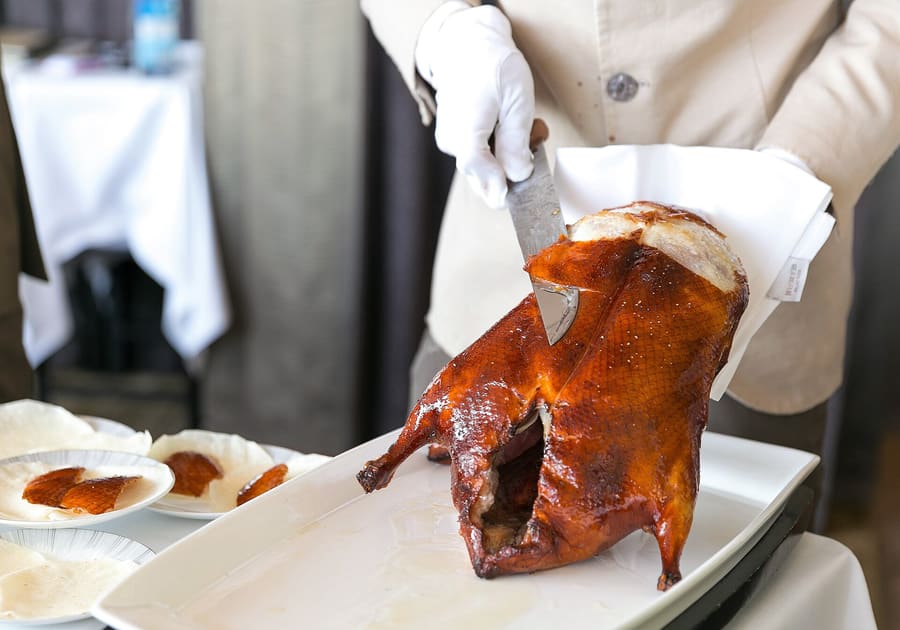
Crispy Peking duck carved tableside, served with thin wheat pancakes, scallions, and sweet bean sauce.
Specialist duck houses like Dadong or Siji Minfu require advance queueing via WeChat miniapps or waiting in line by 11:00 for lunch.
Jianbing stalls operate from 06:30 to 09:30 along residential hutong corners. Expect to pay 8–12 CNY per crepe.
Most restaurants use QR codes pasted on the table for ordering and payment through WeChat Pay or Alipay.
05
Beijing served as China's northern capital under the Jin and Yuan dynasties before the Ming Emperor Yongle redesigned the city in 1403. He established the central north-south axis that still dictates the modern urban grid. Construction of the and anchored Beijing as the political heart of China.The Qing dynasty expanded imperial retreats outward to the . The 20th century transformed the city with monumental communist architecture around Tiananmen Square, followed by rapid subway expansion and high-rise development for the 2008 Olympic Games.
Forbidden City Built
Emperor Yongle moves the Ming capital north from Nanjing, building the imperial palace.
Foreign Enclaves
Diplomatic legations establish bases south of the Forbidden City following the Second Opium War.
Capital Re-established
Mao Zedong proclaims the People's Republic of China from Tiananmen Gate.
Olympic Expansion
Beijing constructs major architecture like the Bird's Nest and doubles its subway footprint.
06
Choose your hotel based on subway access rather than proximity to a single sight. Beijing's scale makes walking across district boundaries time-consuming. Staying along Metro Line 2 or Line 8 gives direct access to major transit hubs and sight corridors.
Highly rated hotels in Beijing.


07
The Beijing Subway is fast, clean, and cheap. Fares follow a distance-based structure starting at 3 CNY. Stations feature clear English signage and automated ticket machines. Taxis and ride-hailing via DiDi work well but frequently stall in Ring Road traffic during peak rush hours (07:30–09:30 and 17:30–19:30).
From Beijing Capital International Airport (PEK)
Capital Airport Express to Dongzhimen Station. Connects directly to Metro Line 2 and Line 13.
Official taxi queue outside terminals. Expressway tolls are added to the meter fare.
Buses run to Beijing Railway Station and West Station; slower than the train during day traffic.
Add a digital Beijing Transit Card to Apple Wallet or Alipay to tap directly at turnstiles without buying paper single-ride tokens.
Use the DiDi app embedded inside Alipay to book cars with fixed pricing and automatic English-to-Chinese driver translation.
Most metro lines open at 05:00 and close between 22:30 and 23:30. Night buses replace key corridors after midnight.
Factor an extra 5–10 minutes into every subway trip to clear security bag checks at station entrances.
08
Beijing runs almost entirely on digital payments through Alipay and WeChat Pay linked to international credit cards. Cash is legally accepted but vendors rarely carry change. Cashless apps handle everything from street-food crepes to museum tickets.
Off-peak ticket costs 40 CNY (Nov–Mar); peak season ticket costs 60 CNY (Apr–Oct).
Includes whole roast duck, pancakes, condiments, and hot side dishes at mid-range duck houses.
Distance-based fare covering almost all journeys within the inner ring roads.
Direct tourist bus fare from Qianmen or Dongzhimen to the visitor center.
09
MAR – MAY
Spring brings warming temperatures and blooming trees. Occasional spring dust storms blow in from Gobi.
JUN – AUG
Hot, humid, and rainy with temperatures exceeding 35°C. Heavy domestic school holiday crowds at all imperial sights.
SEP – NOV
Clear skies, comfortable temperatures, and autumn foliage make this the peak window for sightseeing.
DEC – FEB
Freezing dry weather with temperatures regularly below 0°C. Short queues at attractions and low hotel rates.
10
Download Alipay or WeChat before arrival and complete passport identity verification to link your Visa or Mastercard.
Carry your physical passport everywhere. Security personnel check passports at subway entry hubs, major squares, and sight gates.
Avoid visiting during National Day week (first week of October) and Spring Festival when domestic travel peaks.
Monitor air quality using local weather apps. Carry N95 masks for days when the AQI exceeds 150.
Tap water in Beijing is not safe for drinking. Electric kettles are provided in nearly all hotel rooms to boil tap water.
Contents
Your trip
Going to Beijing?
Tell Parley when you’re going and what you enjoy, and it plans the days around this guide.
Plan with Parley


