
landmark
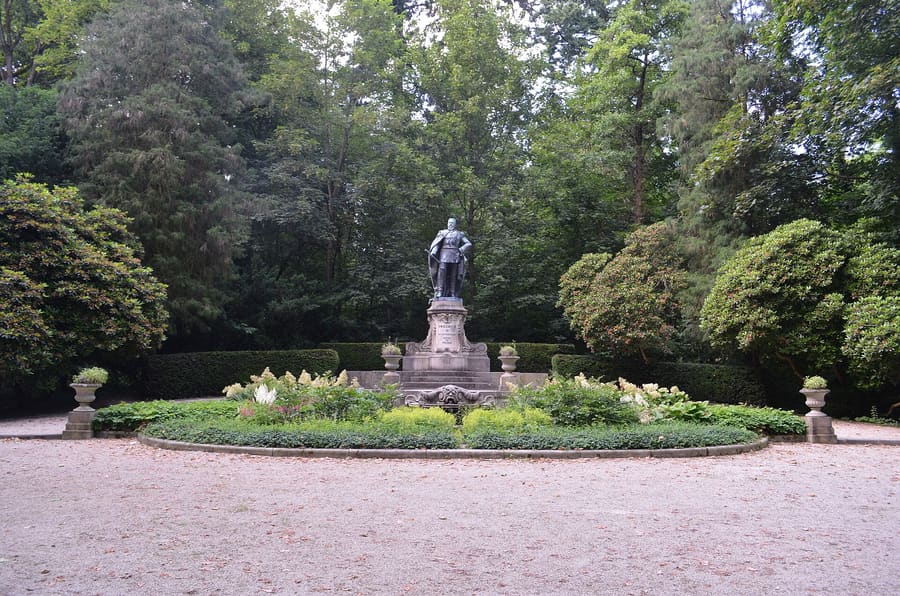
Brandenburg Gate
The 18th-century neoclassical monument that symbolized Cold War division. Visit at dawn to beat the dense crowds.
Germany
An expansive city shaped by Cold War history and raw nightlife.
Berlin functions as a cluster of distinct neighborhoods rather than a single centralized city. High-speed S-Bahn and U-Bahn trains bridge wide physical distances quickly. Expect brutalist concrete, expansive parklands, and visible history around every corner.
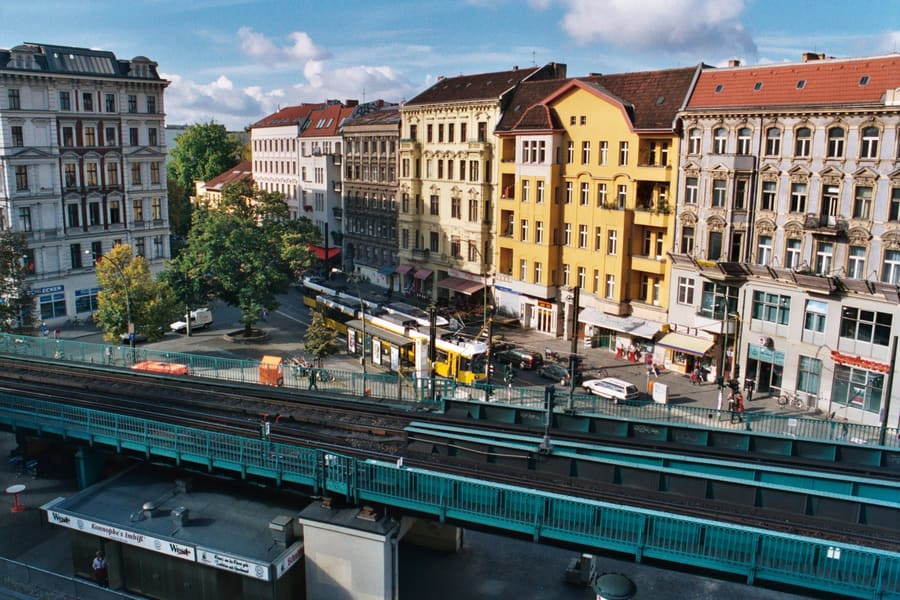
Kreuzberg — Gritty, creative, and energetic. Packed with canal-side cafes, street markets, and famous nightlife.
Neukölln — Unpretentious, diverse, and fast-changing. Middle Eastern bakeries line streets beside independent bars.
Prenzlauer Berg — Leafy, restored, and family-oriented. Cobblestone streets are lined with boutiques and brunch spots.
Currywurst, a Berlin street staple since 1949.
01
landmark
The 18th-century neoclassical monument that symbolized Cold War division. Visit at dawn to beat the dense crowds.
landmark
Seat of the German parliament featuring a glass dome with 360-degree city views. Advance online registration is mandatory.
landmark
A complex of five world-class museums on the Spree. Get a single-day Museum Island pass to enter multiple sites.
landmark
A field of 2,711 concrete slabs creating an undulating grid. The underground information center is free but requires queuing.
landmark
A 1.3-kilometer section of the Berlin Wall covered in political street art. Free to walk 24 hours a day.
landmark
A former Cold War airport converted into a massive public park. Enter via the Oderstraße gates to reach the main runway.
02
03
Central, polished, and historic. Grand boulevards sit beside major galleries and high-end shopping.
NearbyMuseum Island, Brandenburg Gate, Tiergarten
Ask ParleyGritty, creative, and energetic. Packed with canal-side cafes, street markets, and famous nightlife.
NearbyEast Side Gallery, Landwehr Canal, Görlitzer Park
Ask ParleyUnpretentious, diverse, and fast-changing. Middle Eastern bakeries line streets beside independent bars.
NearbyTempelhof Field, Weserstraße, Maybachufer
Ask ParleyLeafy, restored, and family-oriented. Cobblestone streets are lined with boutiques and brunch spots.
NearbyMauerpark, Kulturbrauerei, Kollwitzplatz
Ask Parley04
Berlin dining ranges from fast street stalls to international culinary dining. Döner kebab and currywurst remain the definitive local quick meals, consumed around the clock across all districts.Neighborhood corner shops known as Spätis serve as public gathering points. Locals grab drinks here to consume on nearby street benches before heading out.Cash remains necessary at smaller food stands, bakery counters, and older street stalls. Always carry small euro bills when targeting casual eateries.
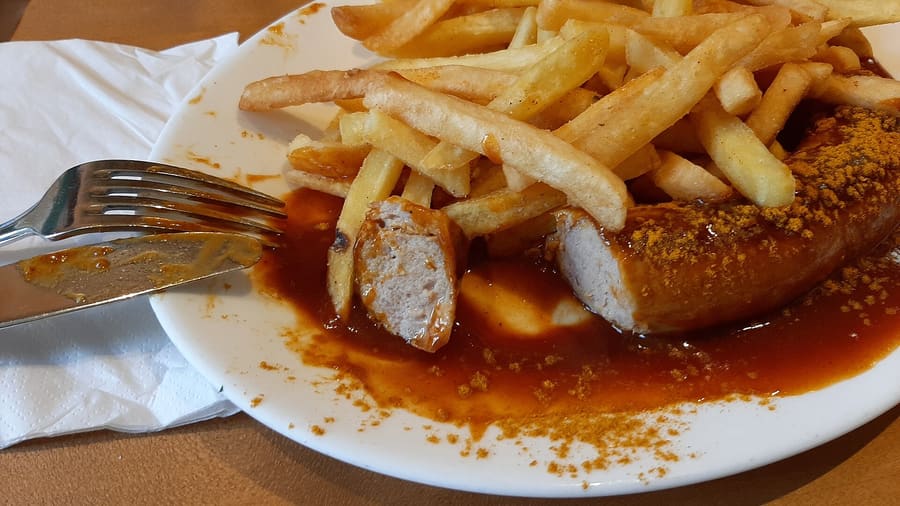
Currywurst, a Berlin street staple since 1949.
Order a classic döner in flatbread with 'mit allem' (all salad options) and garlic or spicy sauce at local stalls.
While supermarkets close on Sundays, restaurants, cafes, and Spätis remain open throughout the day.
Check for card terminals before sitting down; many mid-tier places only take German Girocards or cash.
05
Berlin grew from twin medieval trading towns into the capital of the Kingdom of Prussia and later the German Empire. Its modern urban structure reflects rapid late 19th-century industrial development.The 20th century brought severe destruction during World War II, followed by 28 years of division by the Berlin Wall. Reunification in 1990 re-established Berlin as the national capital, igniting decades of urban construction and political transformation.
Imperial Capital
Berlin becomes the capital of the unified German Empire, prompting rapid industrial and population growth.
Post-war Division
Allied forces split the defeated city into four occupation sectors, setting up Cold War tensions.
Wall Construction
East Germany builds the Berlin Wall, completely encircling West Berlin and physically dividing the city.
Fall of the Wall
Mass peaceful protests force the border checkpoints open on November 9, leading to German reunification.
06
Choose your base by transport access rather than proximity to a single sight. Staying near an S-Bahn ring station or a major U-Bahn intersection like Alexanderplatz or Kottbusser Tor makes cross-city travel effortless.
Highly rated hotels in Berlin.


07
Berlin runs on an integrated transit network operated by BVG and Deutsche Bahn. The same ticket works on the U-Bahn (underground), S-Bahn (overground trains), trams, and buses.Tickets are split into zones A, B, and C. Zone AB covers the entire city footprint; you only need zone ABC if traveling to BER Airport or Potsdam.
From Berlin Brandenburg Airport (BER)
FEX regional express runs to Hauptbahnhof. Requires an ABC ticket.
Line S9 runs through eastern districts to central stations.
Ranks sit outside Terminal 1 and 2 arrivals.
Stamp paper tickets in the small yellow or red boxes on platforms or bus decks before boarding. Unstamped tickets incur a €60 fine.
U-Bahn and S-Bahn trains run continuously without stopping on Friday and Saturday nights.
Trams run almost exclusively in former East Berlin districts; buses handle equivalent routes in the west.
Uber and Bolt operate legally in Berlin but function as licensed taxi dispatch services.
08
Berlin remains more affordable than Western European capitals like London or Paris, though prices have risen significantly in recent years. Daily costs depend heavily on dining choices and transport methods.
A standard street lunch item across all city districts.
Includes two main courses and drinks at a sit-down restaurant.
Valid for two hours in one direction across all transit modes.
Local pilsner served at a bar or pub.
09
MAR – MAY
Cool days with blooming trees. Outdoor cafes open by late April.
JUN – AUG
Long daylight hours and park culture. Expect crowded sights and warm weather.
SEP – NOV
Crisp autumn temperatures. Excellent window for museum visits and lower hotel rates.
DEC – FEB
Cold and dark, but Christmas markets run through December.
10
Retail shops and supermarkets close on Sundays by federal law. Train station stores are the exception.
English is widely spoken in customer-facing roles, though basic German greetings are welcomed.
Always keep €20 in cash for small purchases, public toilets, and market stalls.
Tap water is safe to drink everywhere, but restaurants charge for bottled water by default.
Do not walk in painted red or cobbled bike lanes; cyclists move fast and expect a clear path.
Contents
Your trip
Going to Berlin?
Tell Parley when you’re going and what you enjoy, and it plans the days around this guide.
Plan with Parley


