landmark
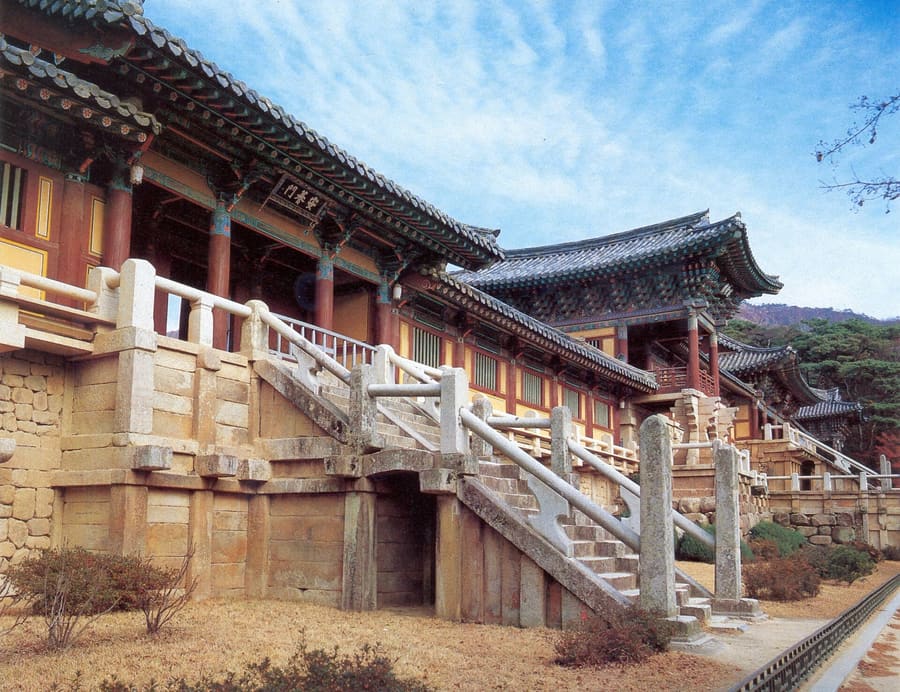
Bulguksa Temple
Eighth-century Buddhist temple complex featuring original Silla stone pagodas and bridges. Arrive before 09:00 to beat tour buses.
Ask ParleySouth Korea
The ancient Silla capital turned open-air museum
introduction
Gyeongju operates as an open-air museum where ancient burial mounds rise directly beside modern coffee shops. As the capital of the Silla Kingdom for nearly a millennium, the city packs over a thousand years of royal heritage into a compact valley. You can cycle between UNESCO world heritage monuments within thirty minutes, provided you navigate around weekend tourist traffic. Plan for early mornings at major sites to avoid crowd surges from regional tour buses.
Heritage status
The city center and surrounding mountain valleys form a UNESCO World Heritage site divided into five historic zones.
Night view timing
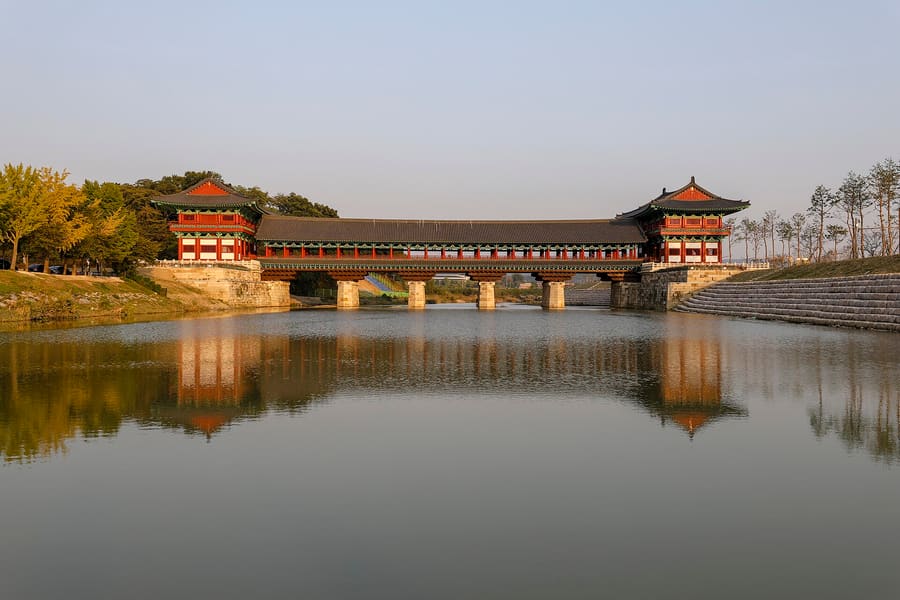
Visit Donggung Palace and Wolji Pond after sunset when lights reflect on the water. Buy tickets at machines to skip long lines.
Gyeongju
bryan... · CC BY-SA 2.0
Hwangnam-dong — Traditional Hanok architecture converted into hip cafes, boutiques, and guesthouses.
Basile Morin · CC BY-SA 4.0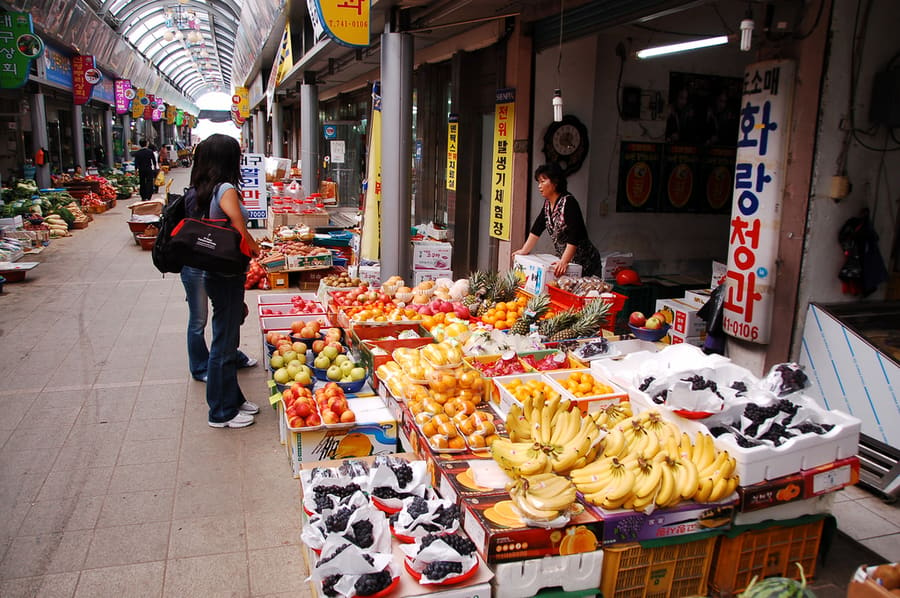
Downtown / Seongdong — Practical urban grid with traditional markets, bus connections, and affordable dining.
riNux from Taipei, Taiwan · CC BY-SA 2.0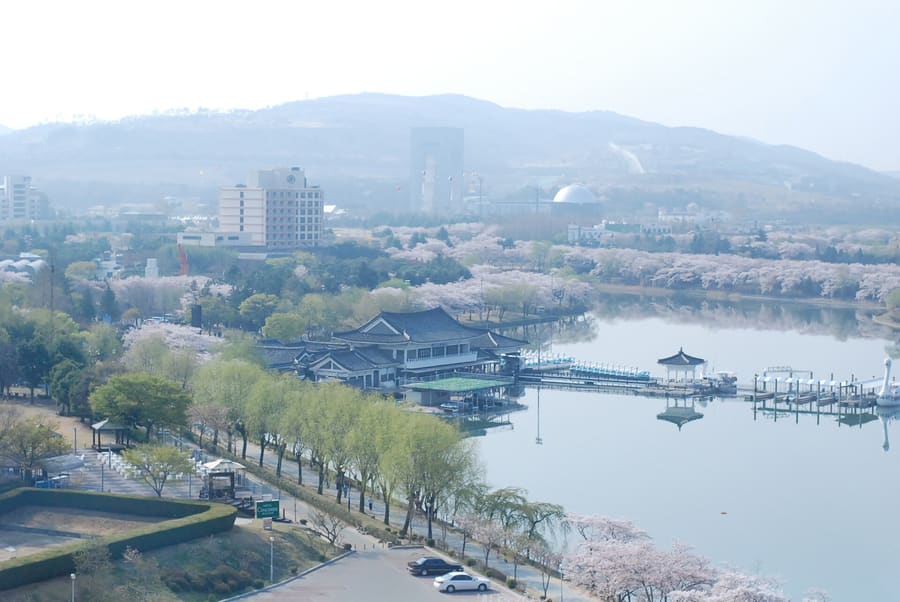
Bomun Lake Resort — Sprawling lakefront tourist complex with international resort hotels and golf courses.
myllissa from Seoul, S. Korea · CC BY 2.0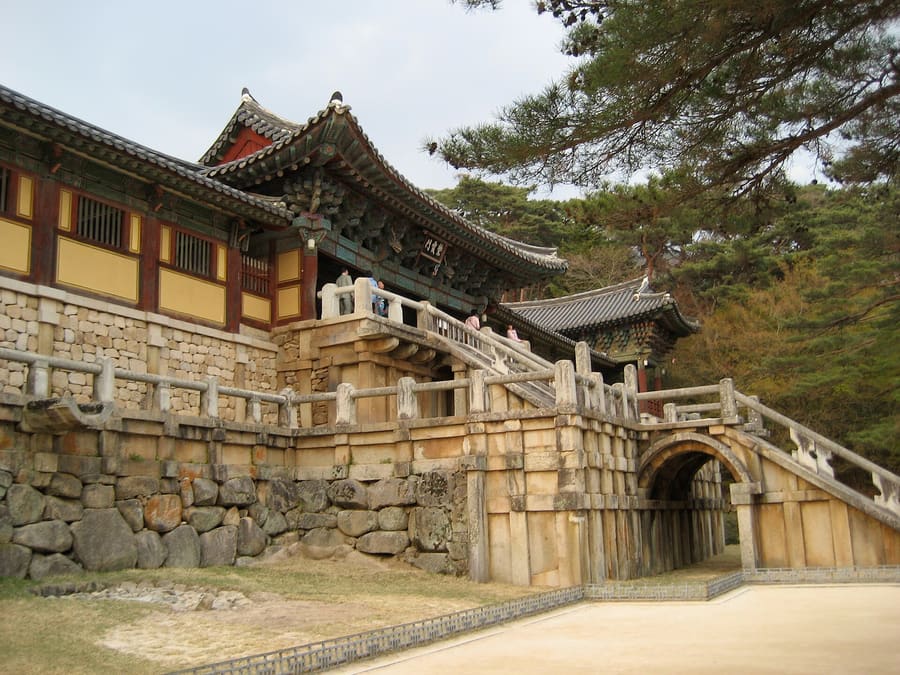
Jinhyeon-dong — Quiet hillside village at the foot of Mount Tohamsan surrounding Bulguksa Temple.
Tae Hoon Kang · CC BY 2.0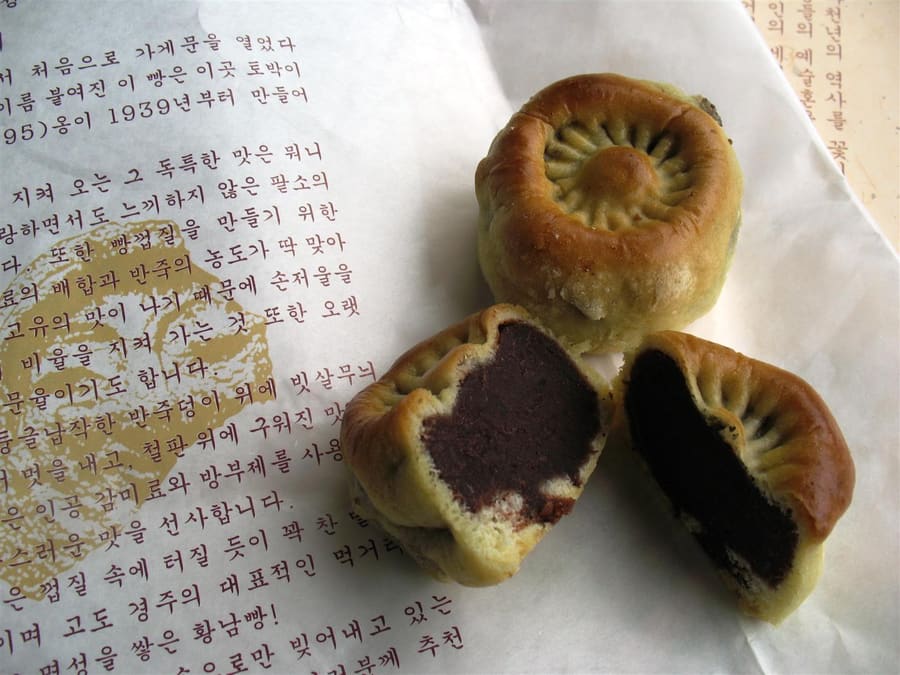
Hwangnam-ppang, small round pastries stuffed with red bean paste baked continuously in Hwangnam-dong.
ProjectManhattan · CC0highlights
landmark
Eighth-century Buddhist temple complex featuring original Silla stone pagodas and bridges. Arrive before 09:00 to beat tour buses.
Ask Parley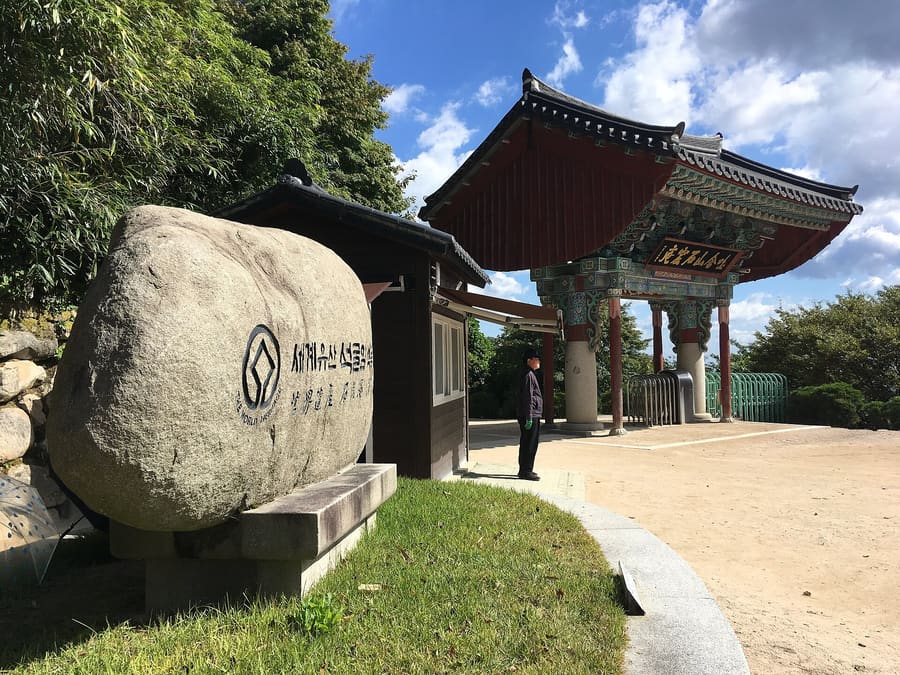
landmark
Mountain cave hermitage housing a carved granite Buddha overlooking the Sea of Japan. Take bus 12 up from Bulguksa.
Ask Parley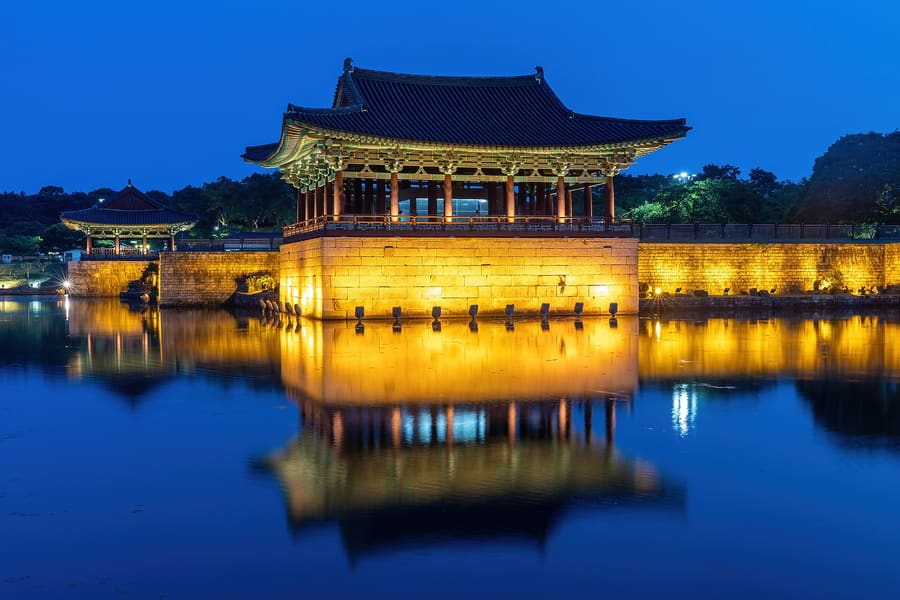
landmark
Secondary royal palace grounds with a artificial pond built in 674 AD. Best visited after sunset for floodlit views.
Ask Parley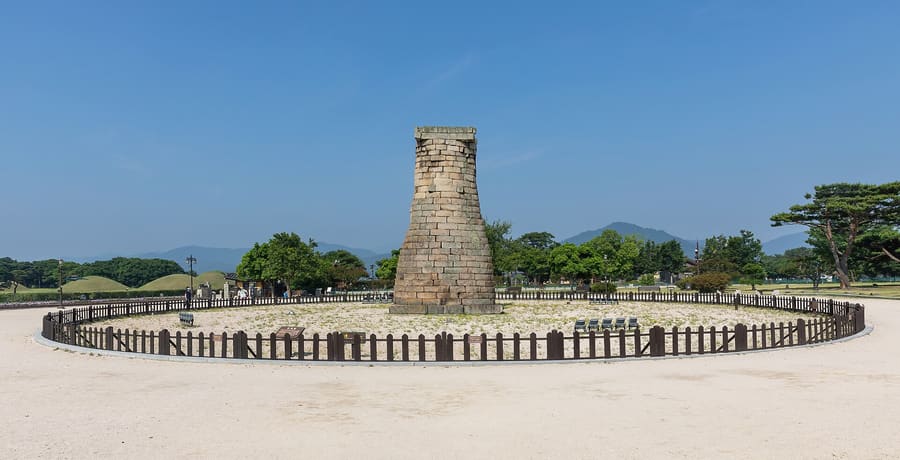
landmark
Asia's oldest surviving astronomical observatory built from 362 stone blocks. Free open field access day and night.
Ask Parley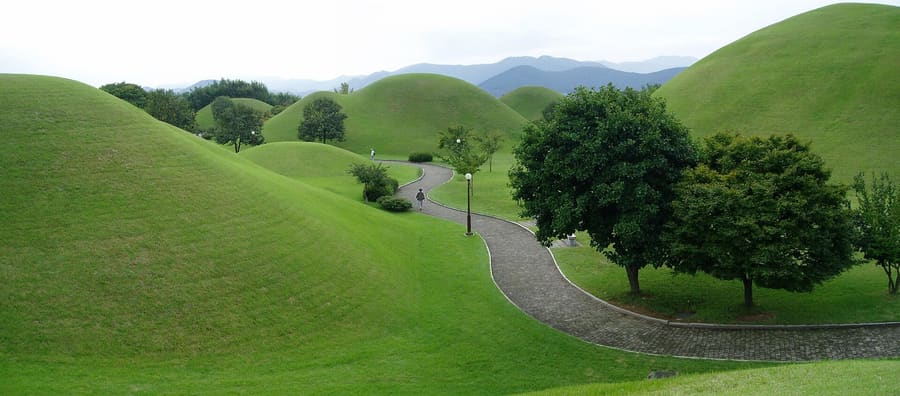
landmark
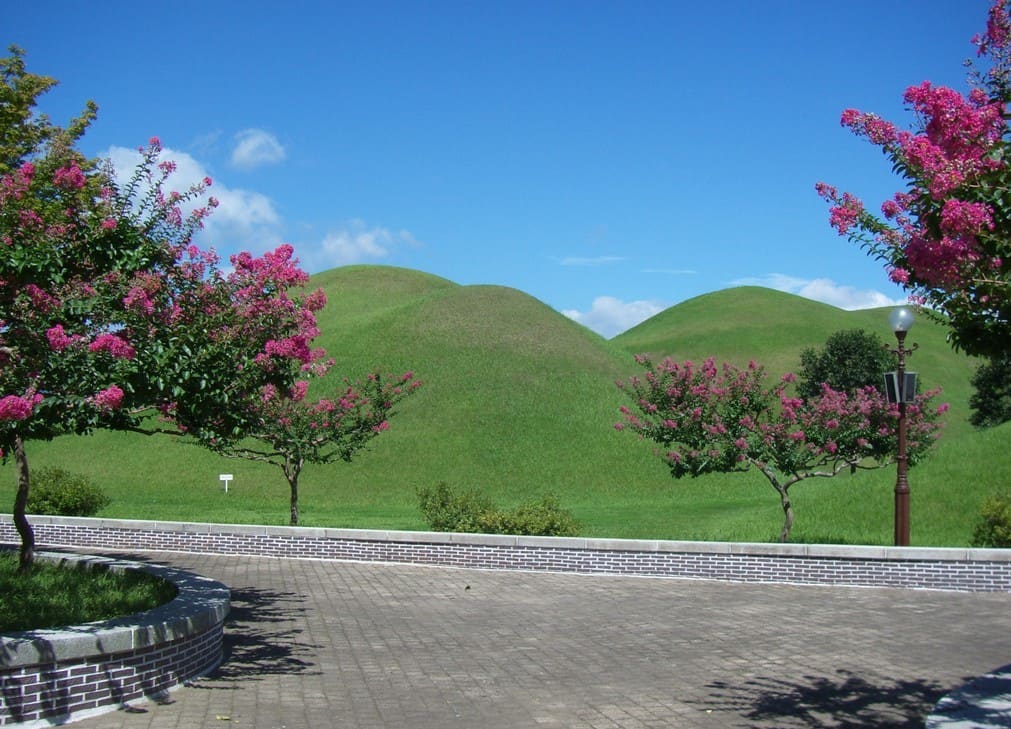
Park enclosing 23 grass-covered royal tombs, including Cheonmachong which you can enter to view gold artifacts.
Ask Parley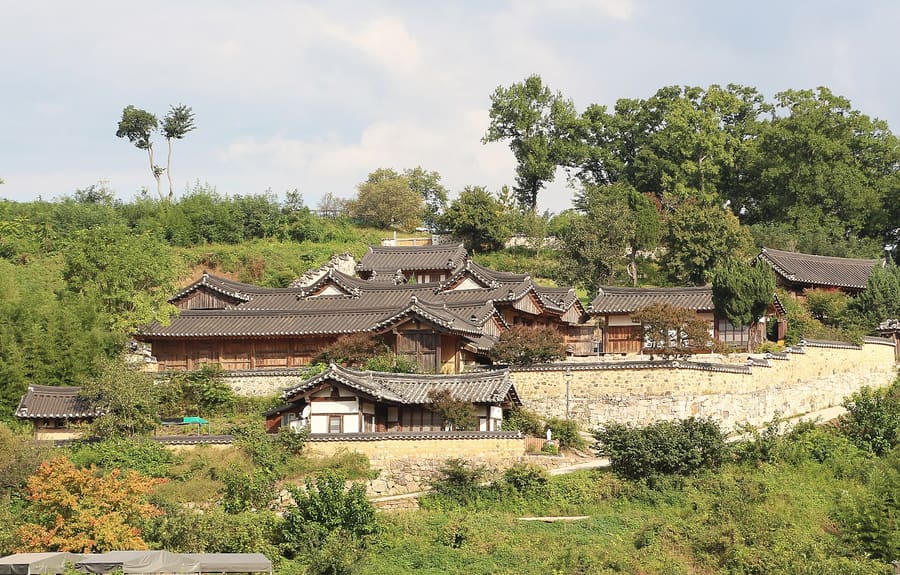
landmark
Preserved 15th-century clan village with thatched roofs and hillside noble houses. Located 16 km north of downtown.
Ask Parleyattractions
areas
Traditional Hanok architecture converted into hip cafes, boutiques, and guesthouses.
NearbyDaereungwon and Cheomseongdae
Ask ParleyPractical urban grid with traditional markets, bus connections, and affordable dining.
NearbyGyeongju Bus Terminal and Seongdong Market
Ask ParleySprawling lakefront tourist complex with international resort hotels and golf courses.
NearbyGyeongju World and Bomun Lake walking paths
Ask ParleyQuiet hillside village at the foot of Mount Tohamsan surrounding Bulguksa Temple.
NearbyBulguksa and Seokguram Grotto
Ask Parleyfood
Gyeongju dining centers around ssambap, a meal format featuring dozens of small side dishes paired with fresh rice and vegetable wraps. The city's bakery tradition revolves around small pastries filled with sweetened red bean paste, pioneered in Hwangnam-dong in 1939.
Hwangnam-ppang, small round pastries stuffed with red bean paste baked continuously in Hwangnam-dong.
ProjectManhattan · CC0Order ssambap along Hwangnam-dong where a spread of up to twenty side dishes arrives with rice, grilled meats, and raw leafy greens.
Buy warm Hwangnam-ppang directly from the original shop near Hwangnam-dong. The thin dough is stuffed with whole red bean paste.
Head inside Seongdong Market at lunch to find the Korean buffet line, where flat fees buy unlimited home-style side dishes.
history
Gyeongju served as the capital of the Silla Kingdom for nearly 1,000 years, from 57 BC to 935 AD. Silla eventually unified the Korean peninsula in the 7th century, ushering in a golden age of Buddhist art and architecture.
Silla Kingdom founded
Gyeongju is established as the political capital, known as Seorabeol.
Peninsular unification
Silla defeats neighboring kingdoms, concentrating wealth and royal construction in Gyeongju.
Golden era construction
Bulguksa Temple and Seokguram Grotto are constructed under Prime Minister Kim Dae-seong.
Fall of Silla
The kingdom submits to Goryeo, and political power shifts north away from Gyeongju.
UNESCO designation
Gyeongju Historic Areas are inscribed as a UNESCO World Heritage site.
where to stay
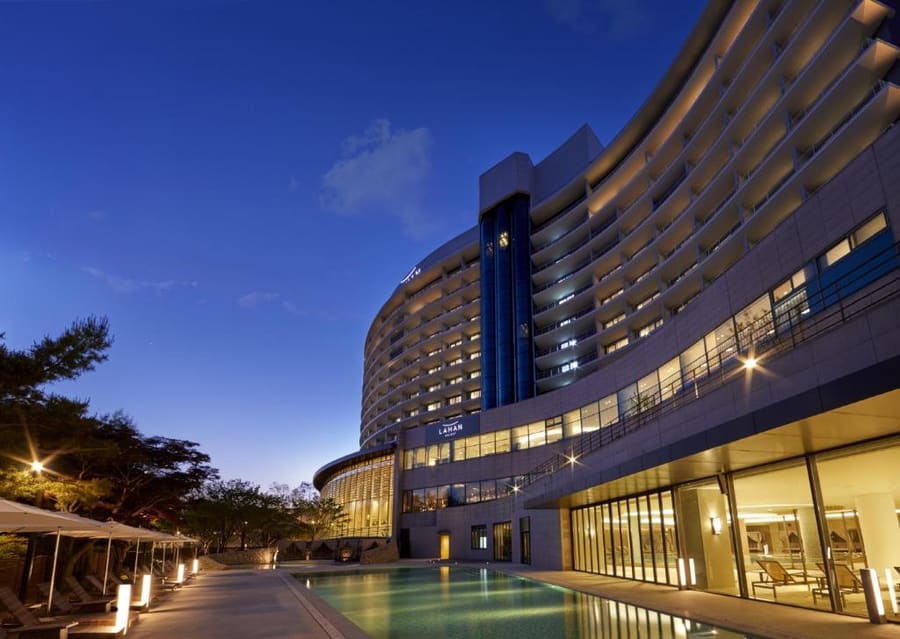
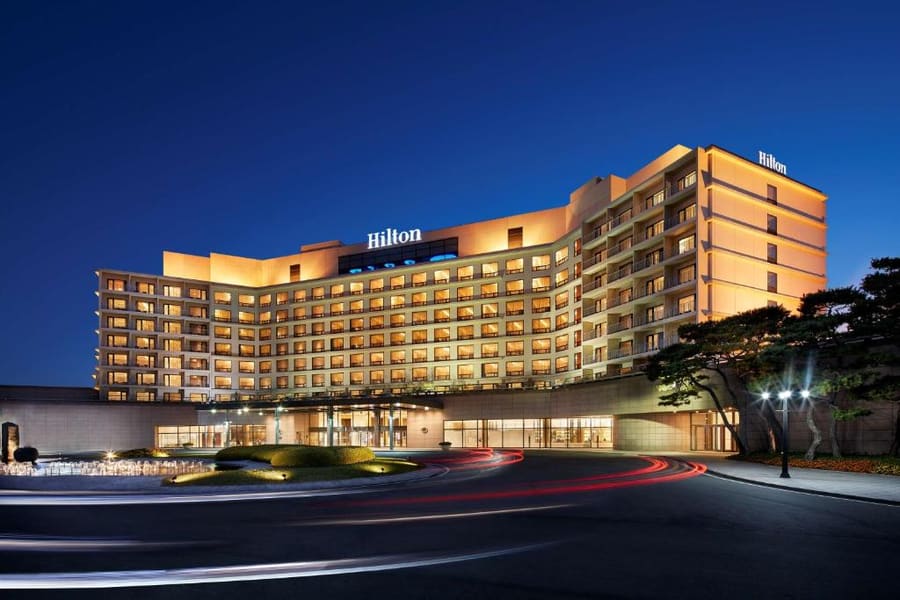
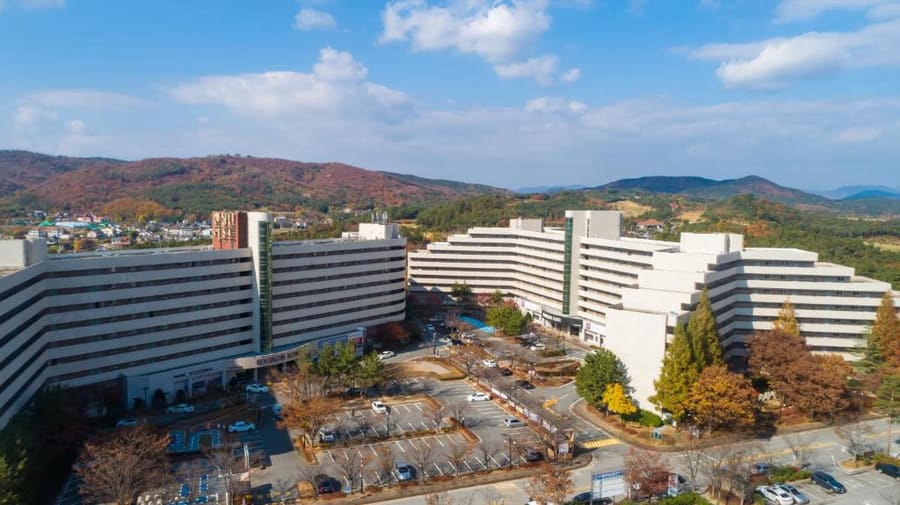
Choose your location based on your transport and daily schedule. Stay in Hwangnam-dong to walk to key central tombs and evening dining. Select Bomun Lake if you want large western resort amenities, or stay near Bulguksa to enter the temple grounds at opening time.
Live rates, matched to the areas above.
/3c8a9e614b8a.jpg)
/e51e77dda499.jpg)
transport
Gyeongju lacks a subway system. Central sights are easily reached on foot or bicycle, while buses connect outlying areas like Bulguksa and Yangdong Village.
From Singyeongju Station (KTX) or Bus Terminal
Bus 700 or 50 connects Singyeongju KTX Station directly to central Hwangnam-dong.
Available outside Singyeongju KTX exit; metered fare into the historic downtown.
Bus 10 runs clockwise and Bus 11 runs counter-clockwise, linking Hwangnam-dong, Bomun Lake, and Bulguksa.
Tap a standard T-money card or contactless credit card when boarding and exiting city buses.
Rent bicycles near Hwangnam-dong to travel between Daereungwon, Cheomseongdae, and Wolji Pond along flat lanes.
Buses to Yangdong Village run less than once per hour; check terminal departure timetables before setting out.
cost
Gyeongju offers inexpensive site admissions, but weekend lodging in Hanok districts costs significantly more than weekday stays.
Entry to royal tombs and historic grounds remains low across municipal attractions.
Price per person for full rice wrap set meals in Hwangnam-dong.
Standard daily rate from rental shops lining Hwangnam-dong.
Flat single-ride transit rate paid via card.
seasonality
MAR – MAY
Cherry blossoms bloom along Bomun Lake in April. Reserve accommodation months in advance.
JUN – AUG
High temperatures and humidity. Sightseeing is best during early mornings and evening hours.
SEP – NOV
Clear skies and fall foliage around Mount Tohamsan. Comfortable walking conditions.
DEC – FEB
Cold weather with low crowd numbers. Sights stay open, though outdoor cycling is brisk.
practicalities
While credit cards work in shops, carry cash for smaller stalls inside Seongdong Market.
Google Maps does not provide walking transit directions in South Korea; download KakaoMap or Naver Map.
Climbing or stepping onto the royal grass tombs is strictly forbidden and monitored by guards.
Cheomseongdae, Gyerim forest, and Donggung Palace share continuous walking paths.