
landmark
Deutsches Eck
The artificial spit where Moselle waters merge into the Rhine. Climb the colossal monument pedestal for elevated river views.
Germany
Where the Rhine meets the Moselle beneath Prussian fortresses.
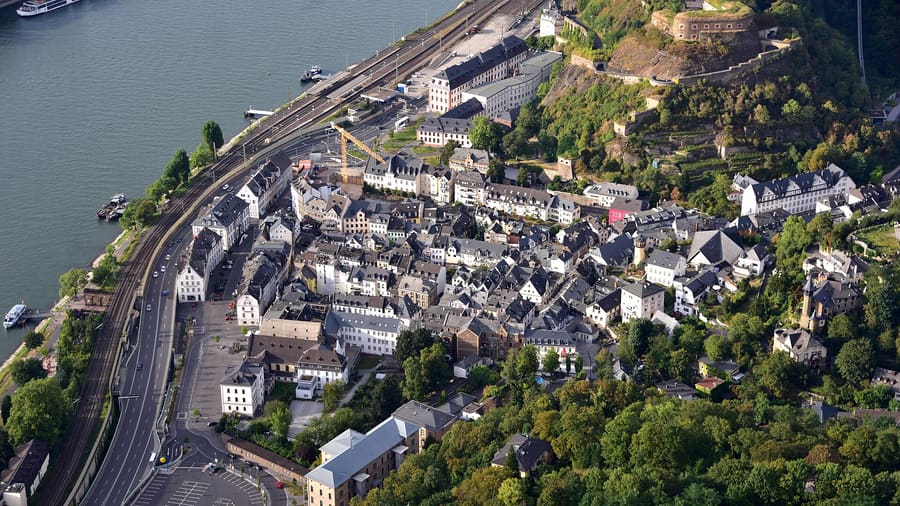
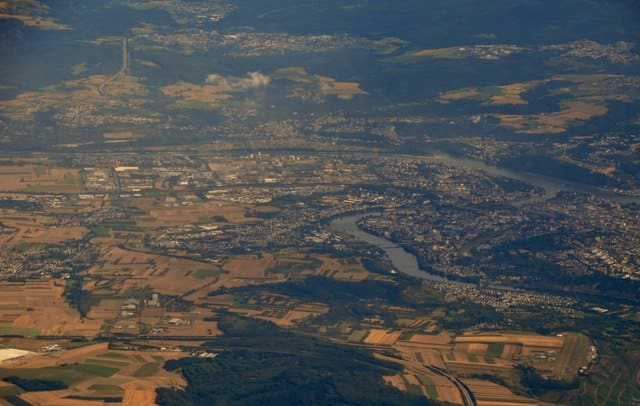
Koblenz sits pinned to the ground where the Moselle flows into the Rhine at the . You navigate the city on foot through its compact Old Town or cross the river via a high-capacity cable car to reach . Wind shapes the river corridor, so winters feel damp while summers bring heavy wine-tavern foot traffic. Expect stark Prussian military architecture standing alongside medieval churches.
Ehrenbreitstein — A quiet, village-like enclave across the Rhine beneath the fortress walls.
Südliche Vorstadt — A leafy 19th-century residential district between the railway station and river promenade.
Moselweis — A relaxed neighbourhood along the Moselle river loop with local winemaking roots.
Dippekuchen, a traditional crusty potato dish cooked in a heavy iron pot.
01
landmark
The artificial spit where Moselle waters merge into the Rhine. Climb the colossal monument pedestal for elevated river views.
landmark
A massive Prussian fortress sitting 118 metres above the Rhine. It houses regional history exhibits and sweeping valley overlooks.
landmark
Aerial tramway transporting riders directly across the Rhine to the fortress. Glass floors in select cabins reveal river traffic below.
02
03
Narrow cobblestone streets filled with traditional wine taverns and historic plazas.
NearbyDeutsches Eck and Cable Car base.
Ask ParleyA quiet, village-like enclave across the Rhine beneath the fortress walls.
NearbyEhrenbreitstein Fortress.
Ask ParleyA leafy 19th-century residential district between the railway station and river promenade.
NearbyKoblenz Hbf and Kaiserin-Augusta-Anlagen.
Ask ParleyA relaxed neighbourhood along the Moselle river loop with local winemaking roots.
NearbyMoselle cycle path.
Ask Parley04
Koblenz cuisine reflects its location between the Moselle and Rhine valleys. Heavy, starch-rich regional dishes pair with crisp local white wines. Restaurants in the Altstadt serve these historic recipes alongside draught beers from nearby Bitburg and the Eifel region.
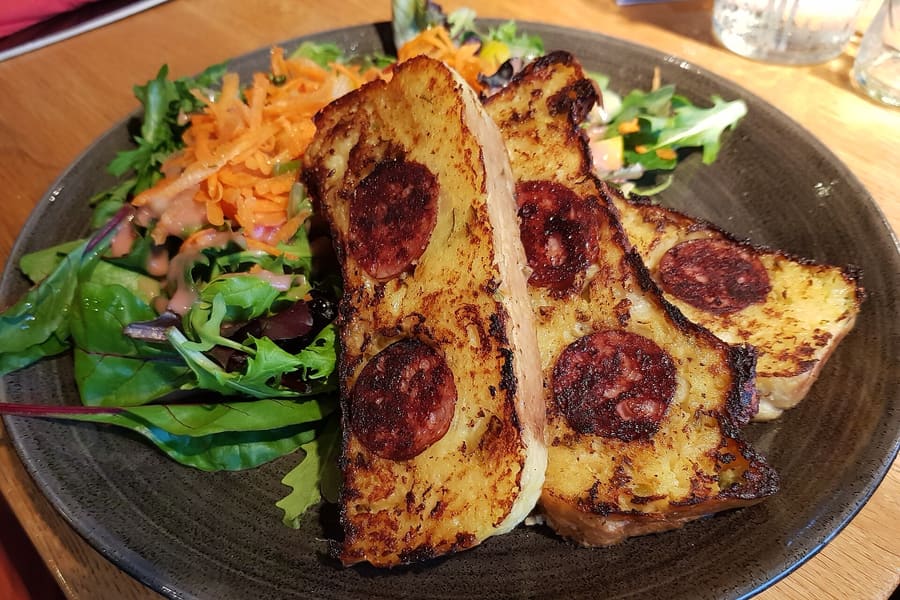
Dippekuchen, a traditional crusty potato dish cooked in a heavy iron pot.
Try this savory baked cake of grated potatoes, bacon, and sausage, often served with applesauce at local brauhauses.
Moselle wines can lean sweet. Specify 'Trocken' at wine taverns like Weinstube beim Schängel if you prefer crisp acidity.
Traditional taverns stop serving hot food between 14:00 and 17:30 before reopening for dinner service.
05
Founded by the Romans as Confluentes around 9 BC, Koblenz grew because of its strategic river location. The city shifted from Electorate of Trier rule to French occupation, then became a heavily fortified Prussian garrison town.
Roman Fort Construction
Drusus establishes a military post named Confluentes at the river junction.
Teutonic Order Arrives
Archbishop Theoderich von Wied invites the knights, giving the Deutsches Eck its name.
Prussian Rule Begins
The Congress of Vienna assigns Koblenz to Prussia, prompting massive fortress construction.
Wartime Destruction
Air raids destroy 85% of the historic center, which is carefully rebuilt after the war.
06
Choose your base by your transit needs and river preferences. The Altstadt puts sights outside your door, while Südliche Vorstadt keeps train connections seamless.
Highly rated hotels in Koblenz.
See more Koblenz hotels07
Koblenz is highly walkable, with the historic center tightly clustered near the rivers. A dedicated network of koveb buses connects outer districts, while ferries and cable cars handle river crossings.
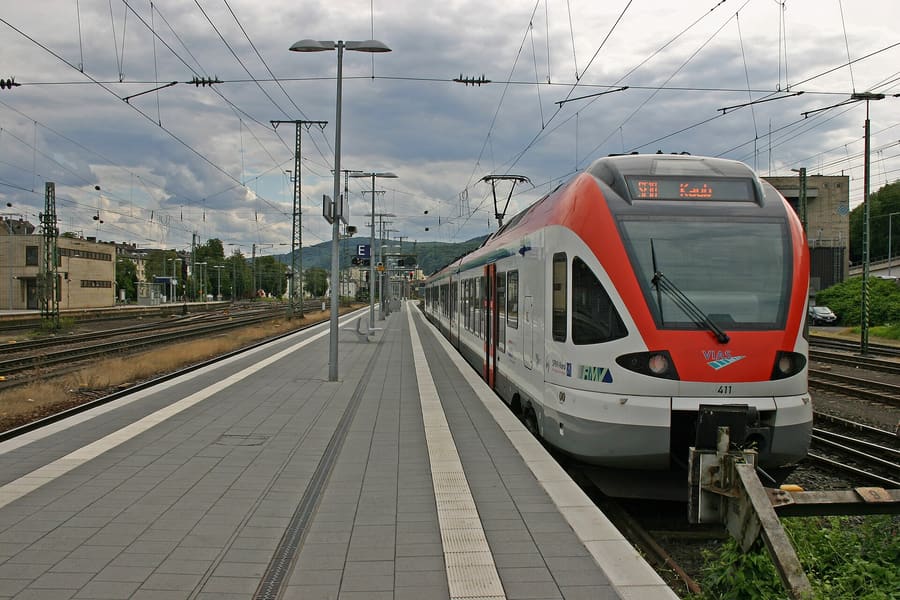
From Koblenz Hauptbahnhof (Hbf)
Lines 3 and 13 run every 10 minutes from Hbf to Löhrcenter and Altstadt.
Ranks sit directly outside the main exit of Koblenz Hbf.
Direct RE5 or Regional Express trains link Frankfurt Airport (FRA) to Koblenz Hbf.
A Single Tageskarte costs less than two single rides if you plan three bus trips.
The Seilbahn runs daily April to October, but operates on reduced winter schedules.
Stamping paper tickets upon entry prevents heavy fines on koveb city buses.
Drivers accept contactless cards, eliminating the need for exact euro coins.
08
Koblenz sits at a moderate price tier compared to Frankfurt or Cologne. Mid-range dining and local transit remain reasonable outside festival weekends.
Covers the round trip cable car journey over the Rhine.
Grants access to all exhibitions inside Festung Ehrenbreitstein.
Standard 0.2L poured in local Altstadt wine taverns.
Hearty portion served at traditional Brauhaus restaurants.
09
MAR – MAY
Spring brings crisp river air and opening ferry routes. Wine bars unroll patio seating by late April.
JUN – AUG
Warm days bring high river cruise traffic. Expect busy cable car queues and packed Rhine promenades.
SEP – OCT
Grape harvest season in the nearby Moselle valley. Wine festivals peak across regional towns.
NOV – DEC
Chilly damp days leading to Christmas markets on Altstadt plazas. Cable car runs limited hours.
10
Retail stores close fully on Sundays. Supermarkets inside Koblenz Hbf remain open for basics.
High water in spring can temporarily pause lower river ferry crossings along the Rhine.
While hotels accept cards, smaller bakery kiosks prefer cash for orders under ten euros.
If the cable car stops due to wind, steep footpaths run up from Ehrenbreitstein town.
Contents
Your trip
Going to Koblenz?
Tell Parley when you’re going and what you enjoy, and it plans the days around this guide.
Plan with Parley


