landmark
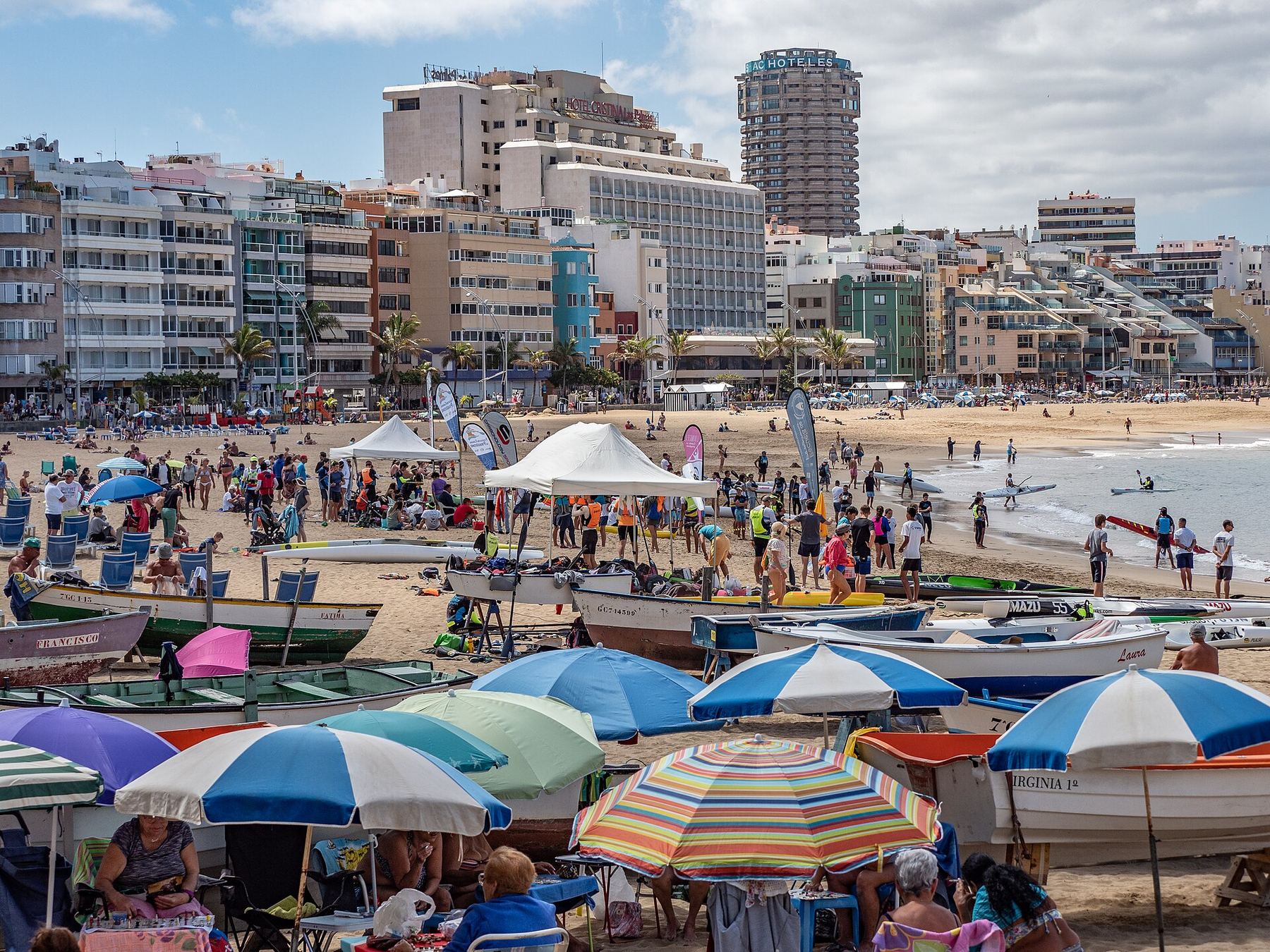
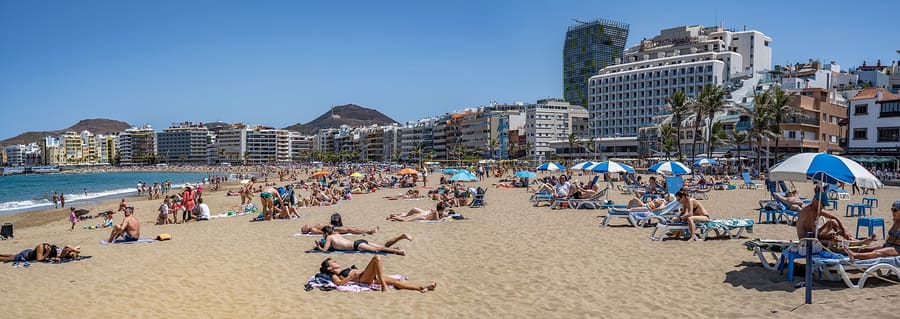
Playa de Las Canteras
A three-kilometre city beach protected by a natural sandstone reef. Visit at low tide when the water behind the reef turns completely still.
Ask ParleySpain
Atlantic trade winds, urban reef beach, and Canarian style.
introduction
Las Palmas de Gran Canaria is a working Atlantic port city spread along a narrow peninsula. The south holds the 15th-century historic core of Vegueta, while the north opens to the long crescent of Playa de Las Canteras. Yellow Guaguas Municipales buses connect the two poles in twenty minutes. Expect urban beach culture mixed with Spanish island logistics.
Airport transport
Line 60 buses run every 30 minutes from Gran Canaria Airport directly to San Telmo and Santa Catalina stations.
Colonial layout
Vegueta holds an intact 15th-century Atlantic colonial street grid established during Castilian expansion.
Natural harbour
Low tide at Playa de Las Canteras exposes La Barra, a natural sandstone reef that calms the bay for swimming.
Las Palmas de Gran Canaria
Pepelopex · CC BY-SA 3.0Playa de Las Canteras — Oceanfront promenade with surfers, sea swimmers, and sidewalk tables along the sand.
Bengt Nyman from Vaxholm, Sweden · CC BY 2.0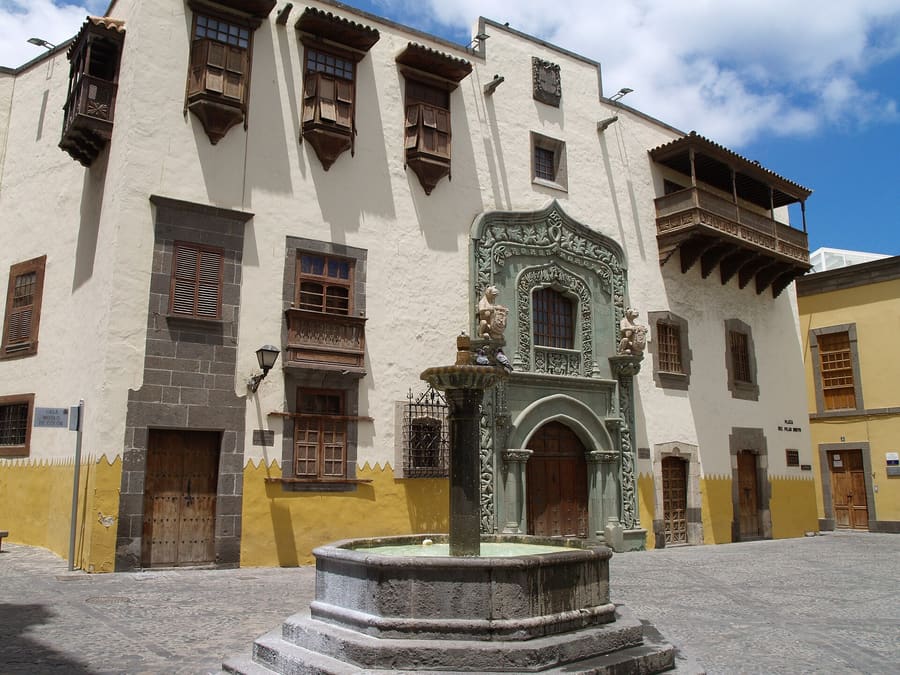
Vegueta — Historic, cobblestoned, quiet by day and lively during Thursday evening tapas crawls.
Cesar Gonzalez · CC BY-SA 2.0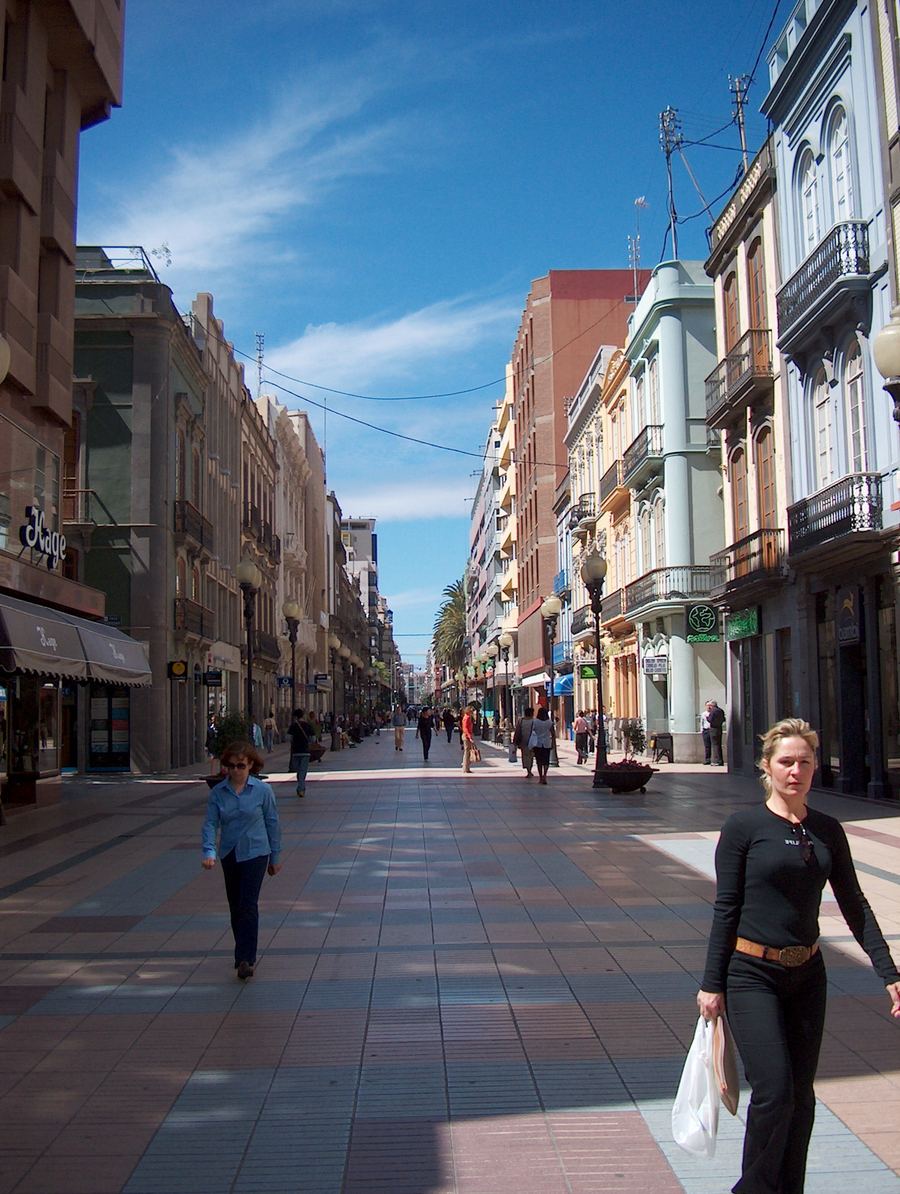
Triana — Commercial centre filled with 19th-century commercial townhouses and open-air cafes.
Matti Mattila from Helsinki, Finland · CC BY-SA 2.0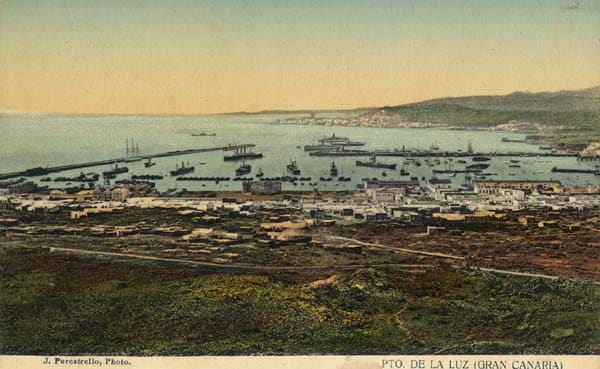
Puerto - Santa Catalina — Working port hub with ferry terminals, international eats, and Santa Catalina park.
Jordao Da Luz Perestello · Public domain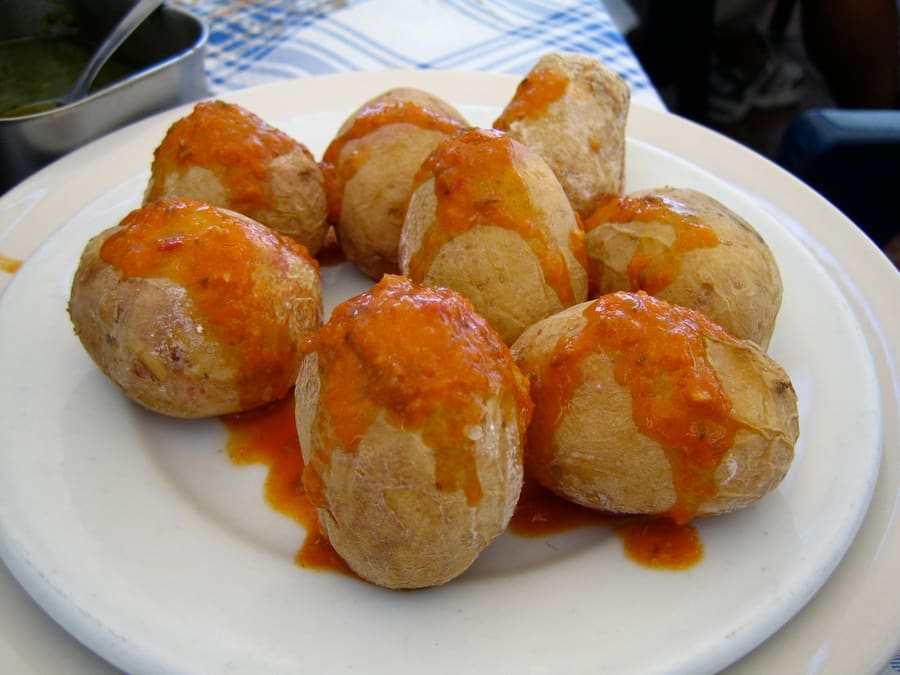
Papas arrugadas served with red and green mojo sauce
Fer.. · CC BY 2.0highlights
landmark
A three-kilometre city beach protected by a natural sandstone reef. Visit at low tide when the water behind the reef turns completely still.
Ask Parleylandmark
The 1478 founding quarter with cobbled lanes and timber balconies. Thursday evenings bring the local tapas crawl across Calle Mendizábal.
Ask Parley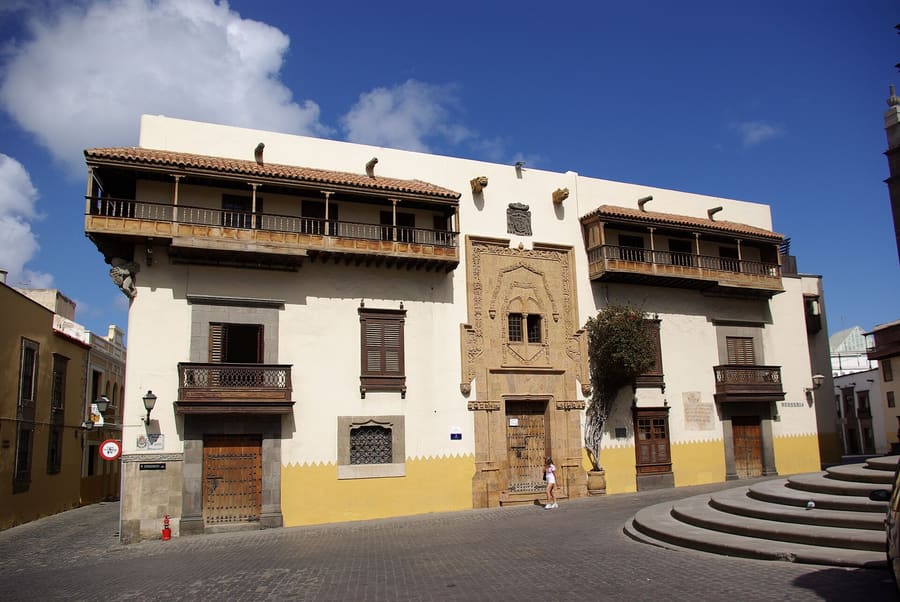
landmark
A governor's mansion where Christopher Columbus stayed in 1492. Examine early navigational charts and Atlantic trade maps inside.
Ask Parley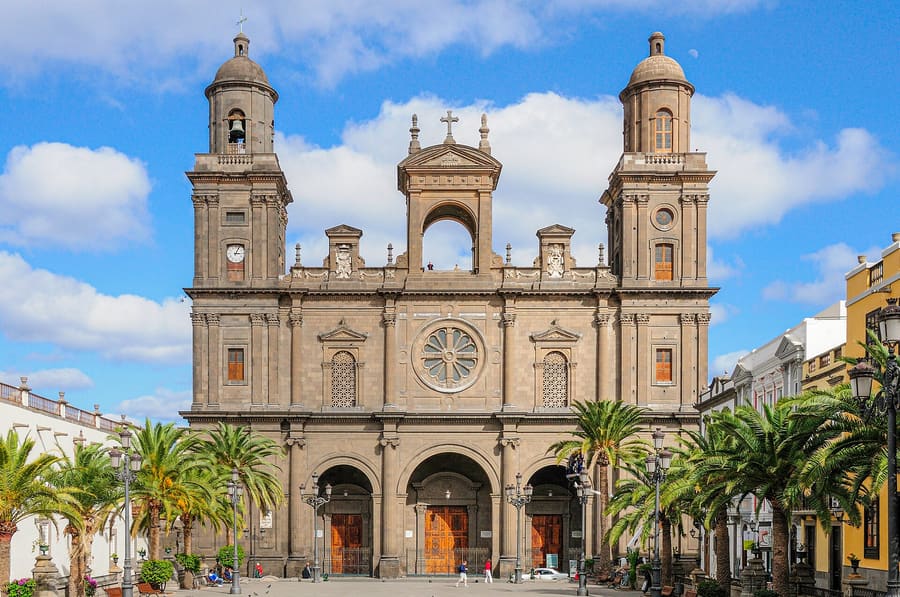
landmark
The twin-towered cathedral dominating Plaza de Santa Ana. Pay €2 extra to take the lift up the south tower for rooftops and port views.
Ask Parley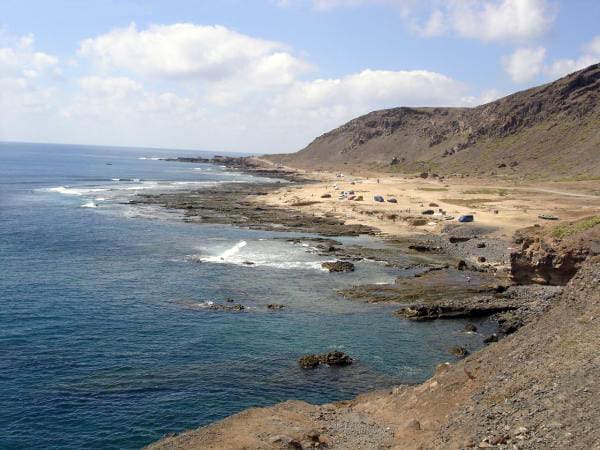
landmark
A wild volcanic coastline extending northwest from Las Canteras. Walk the boardwalk at sunset to see surfers tackle heavy right-hand breaks.
Ask Parleylandmark
A pedestrianised shopping corridor lined with Modernist architecture. Best browsed late afternoon when shops reopen after lunch closures.
Ask Parleyattractions
areas
Oceanfront promenade with surfers, sea swimmers, and sidewalk tables along the sand.
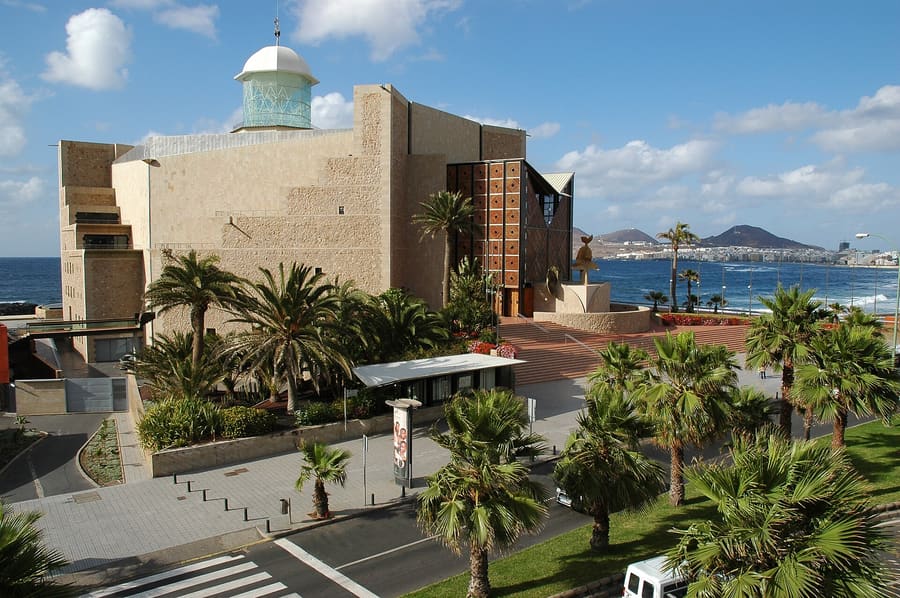
NearbyAuditorio Alfredo Kraus, El Confital.
Ask ParleyHistoric, cobblestoned, quiet by day and lively during Thursday evening tapas crawls.
NearbyCasa de Colón, Santa Ana Cathedral.
Ask ParleyCommercial centre filled with 19th-century commercial townhouses and open-air cafes.
NearbySan Telmo bus station, Vegueta.
Ask ParleyWorking port hub with ferry terminals, international eats, and Santa Catalina park.
NearbyPoema del Mar aquarium, Las Canteras.
Ask Parleyfood
Canarian cooking balances North African influences with staple Spanish preparations. Fresh Atlantic catch dominates local menus, led by cherne (wreckfish) and viejas (parrotfish), usually grilled and served whole with garlic and oil. Every meal includes papas arrugadas—small salt-crusted local potatoes dipped in garlic mojo rojo or cilantro mojo verde. Mercado de Vegueta supplies fresh tropical fruit and morning espresso before the midday heat.
Papas arrugadas served with red and green mojo sauce
Fer.. · CC BY 2.0Order fresh cherne at beachside freidurías along Las Canteras for firm white fish caught in nearby Atlantic waters.
Head to Vegueta on Thursday nights after 20:00 when bars along Calle Mendizábal serve cheap pinchos and beer.
Buy local dwarf bananas (plátano canario) directly from fruit vendors at the central market counter.
history
Founded in 1478 by Castilian military commander Juan Rejón, Real de Las Palmas served as the initial outpost for Spanish expansion into the Atlantic. Christopher Columbus anchored here in 1492 to repair his ships before crossing to the West Indies. The settlement developed rapidly as a fortress town, sugar trading port, and steamship coaling station connecting Europe, Africa, and the Americas.
Castilian foundation
Juan Rejón establishes a fortified camp in Vegueta, starting the conquest of Gran Canaria.
Columbus anchors
Christopher Columbus stops in Las Palmas to repair the Pinta before making his first transatlantic voyage.
Dutch attack
Dutch admiral Pieter van der Does sacks part of the city before being repelled by island militia.
Port construction
Work begins on Puerto de la Luz, turning Las Palmas into a primary Atlantic steamship refuelling station.
where to stay
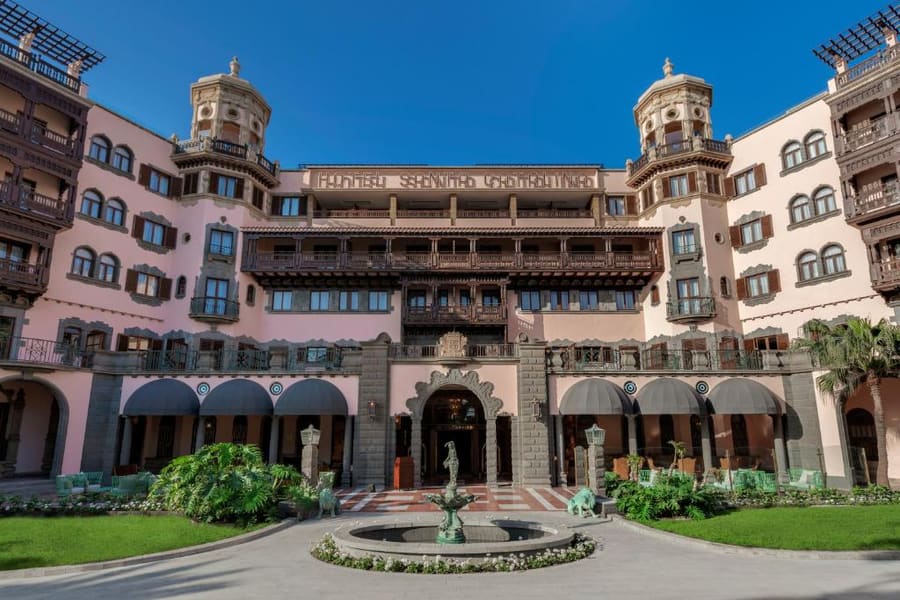
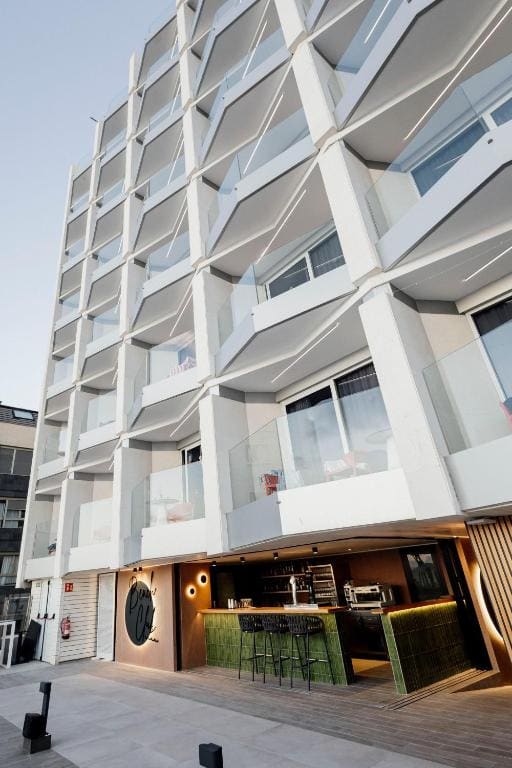
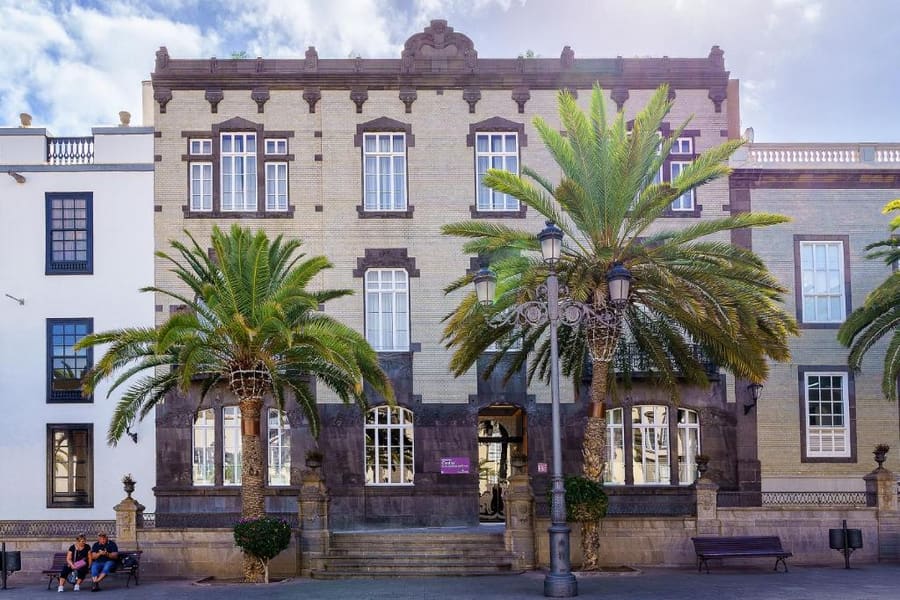
Choose by your daily priority: beachfront swimming or historic urban atmosphere. Las Canteras gives immediate ocean access and sunset walks, but stays louder at night. Vegueta places you inside historic architecture near museums, though you will rely on buses to reach the sea.
Live rates, matched to the areas above.
transport
Las Palmas uses Guaguas Municipales, bright yellow city buses running frequent routes between Vegueta and Santa Catalina. The urban layout is long and thin, making buses or coastal walking paths the logical movement choices.
From Gran Canaria Airport (LPA)
Line 60 connects LPA airport to San Telmo and Santa Catalina stations every 30 minutes.
Official taxis use meters. Surcharges apply after 22:00 and on holidays.
Pre-book for fixed pricing if traveling with surfboards or excessive luggage.
Single bus tickets cost €1.40 paid via contactless card directly on the bus.
Use San Telmo station for Vegueta and Triana; use Santa Catalina for Las Canteras beach.
Pick up yellow Sitycleta bicycles from street bays for €1.50 per 30-minute ride.
cost
Las Palmas is less tourist-inflated than southern Gran Canaria resort towns. Prices reflect local island wages, though beachfront dining along Las Canteras carries a premium.
Standard cafe pricing in Vegueta and Triana neighbourhoods.
Served as a standard side dish in traditional island tascas.
Fresh catch of the day like cherne or vieja sold by weight.
Fixed price for any Guaguas Municipales route across town.
seasonality
SEP – NOV
Warmest sea temperatures of the year (23°C) and consistent surf. Autumn brings lower humidity and moderate beach crowds.
DEC – FEB
Mild winter sun averaging 20°C. High season for European visitors escaping northern winters; book lodging early.
MAR – MAY
Spring brings clear skies and comfortable walking weather. Sea temperatures hover near 19°C before summer heating starts.
JUN – AUG
The Pan de Burro cloud blanket often traps humidity over the city. Spanish families arrive for peak summer holidays.
practicalities
Pay close attention to red flags at Las Canteras; currents outside La Barra reef are strong.
Independent shops in Triana close between 13:30 and 16:30, while larger chains remain open.
Local Spanish uses guagua for bus and sancocho for fish stew. Pronunciation mirrors Caribbean Spanish.
Gran Canaria uses IGIC tax (7%) rather than standard Spanish VAT, making luxury goods slightly cheaper.