
landmark
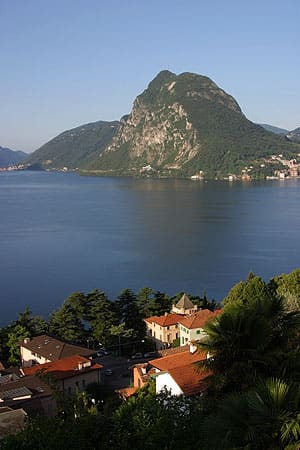
Monte San Salvatore
A funicular lifts you to 912 metres for 360-degree views. Ride up late afternoon to watch lake shadows lengthen.
Switzerland
Swiss financial order meets Italian lake life.
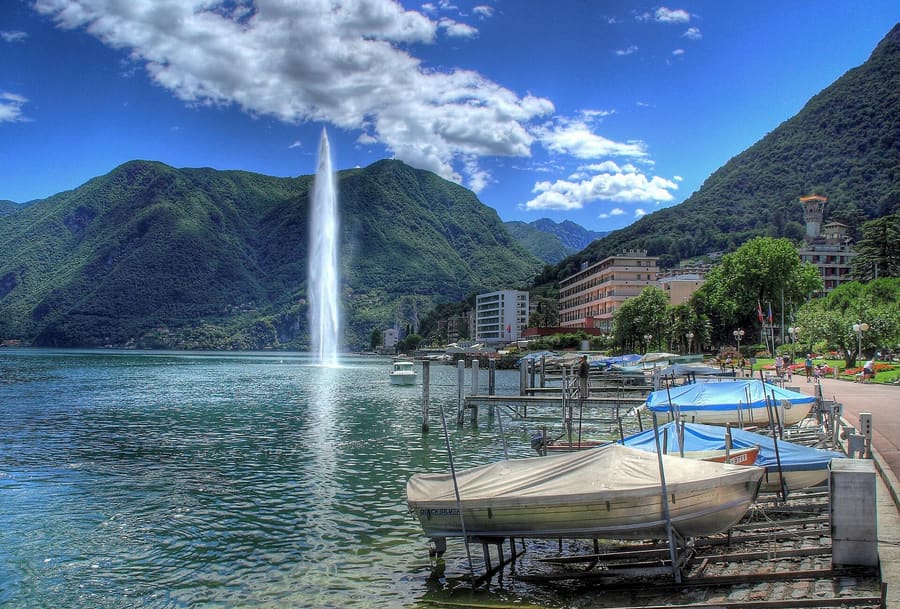
Lugano sits in Switzerland's Italian-speaking Ticino canton, where palms line the promenade and banks face Lake Lugano. You travel between steep lakeside hills using three urban funiculars and yellow PostBuses. Expect Swiss efficiency paired with espresso culture, though prices remain strictly Swiss Francs. Walking the pedestrian core takes under twenty minutes, but steep stairs test your legs off the main squares.
Paradiso — Waterfront resort strip at the base of Monte San Salvatore.
Castagnola — Residential hillside slope facing south across the bay.
Loreto & Montarina — Elevated residential neighbourhood behind the main train station.
A shaded stone table at a traditional Ticinese grotto in the hills around Lugano.
01
landmark
A funicular lifts you to 912 metres for 360-degree views. Ride up late afternoon to watch lake shadows lengthen.
landmark
Claimed as Switzerland's sunniest peak, reached by funicular from Cassarate. Walk down through Brè village to inspect art installations.
landmark
The city's modern arts center hosting theatre, concert hall, and MASI collection. Free entry to the ground-floor space and lakeside courtyard.
landmark
Early Renaissance limestone facade overlooking the Old Town roofs. Walk down the stepped alleyways from here to Piazza della Riforma.
landmark
A car-free fishing village clinging to steep rock faces above Lake Lugano. Take the lake ferry out and walk back along the Olive Path.
02
03
Arcaded shopping streets, lively cafes, and fast lake access.
NearbyPiazza della Riforma and the main ferry pier.
Ask ParleyWaterfront resort strip at the base of Monte San Salvatore.
NearbySan Salvatore funicular station.
Ask ParleyResidential hillside slope facing south across the bay.
NearbyMonte Brè funicular and Lido di Lugano.
Ask ParleyElevated residential neighbourhood behind the main train station.
NearbyLugano SBB station and LAC arts center.
Ask Parley04
Ticino cuisine centers on the grotto—traditional rustic stone taverns built into mountain slopes to keep wine and cured meats cool. In Lugano, you eat polenta cooked in copper cauldrons alongside braised beef shank or local luganighe sausages. While espresso and risotto feel entirely Italian, restaurant bills reflect Swiss labor costs and strict Swiss meat sourcing standards.
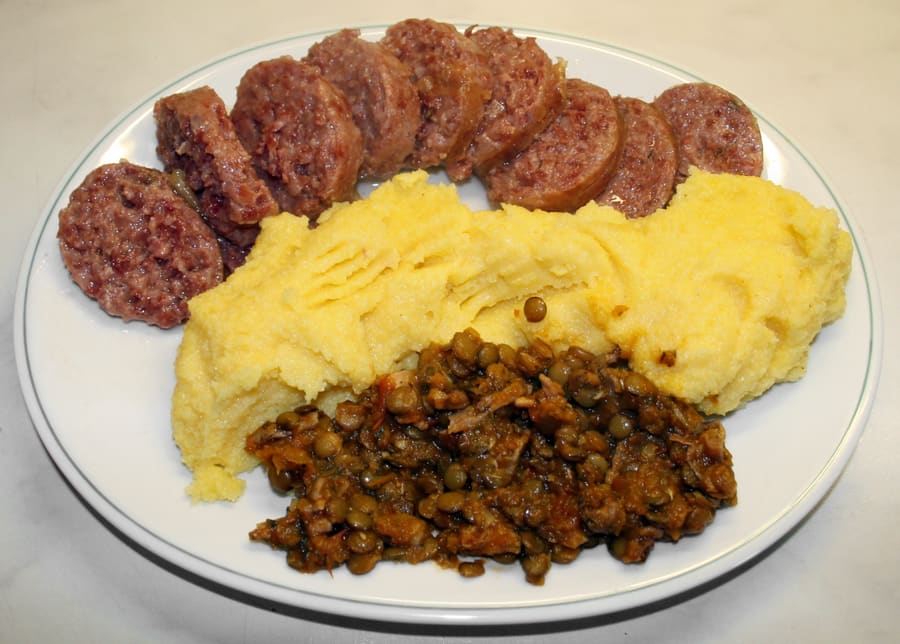
A shaded stone table at a traditional Ticinese grotto in the hills around Lugano.
Inner city grotti often tailor menus to visitors. Take the bus up to mountain suburbs like Sorengo or Brè for wood-fired polenta and local Merlot served in two-handled terracotta cups (boccalino).
Kitchens close strictly between 14:00 and 18:30. If you miss lunch, look for a paninoteca near Piazza Cioccaro for focaccia stuffed with Ticino alpine cheese.
Ticino produces world-class white and red Merlot. House wines in stone grotti are affordable and served fresh from wooden barrels.
05
Lugano evolved from a disputed medieval fishing territory into a strategic border hub between Milanese dukes and Swiss Confederates. Swiss forces secured control of Ticino in 1512, establishing a centuries-long era of Swiss administration over Italian-speaking lands. The arrival of the Gotthard railway in 1882 transformed Lugano from an isolated lakeside town into a premier European winter resort and international banking centre.
Swiss Confederation Rule
Swiss bailiffs take administrative control of Lugano, establishing a stable frontier with Lombardy.
Canton Ticino Created
Napoleon dissolves the old bailiwicks and establishes Canton Ticino as an equal member of the Swiss Confederation.
Gotthard Rail Line Opens
Direct rail transit through the Alps connects northern Europe to Lugano, driving a massive tourism boom.
Gotthard Base Tunnel
The world's longest railway tunnel opens, cutting train travel time from Zurich to Lugano down to two hours.
06
Choose your base by elevation and evening habits. Centro Storico keeps you steps from restaurants and ferries but costs more for smaller rooms. Paradiso offers mid-range lakefront hotels with flatter terrain, while Castagnola provides quieter residential views at the expense of a longer walk home.
Highly rated hotels in Lugano.


07
Lugano is compact but vertical. Pedestrian streets thread through the flat center along the lake, but moving inland requires climbing stairs or riding funiculars. Local public transport is clean, frequent, and fully integrated across boats, buses, and cable railways.
From Milan Malpensa Airport (MXP) / Lugano SBB Station
Direct SBB EuroCity trains connect Zurich Hauptbahnhof to Lugano through the Gotthard Base Tunnel.
Express airport shuttles run from Malpensa directly to Lugano train station.
Every overnight hotel, hostel, or campsite guest receives a free Ticino Ticket. It gives unlimited free rides on all regional trains and buses across the canton.
The Funicolare Lugano-Stazione connects the high-level SBB rail station down to central Piazza Cioccaro in two minutes.
Società Navigazione del Lago di Lugano operates regular passenger ferries. Use them to cruise to or Morcote, then walk back along coastal paths.
Yellow PostBus routes depart from Lugano station to remote Ticinese villages where city buses do not go.
08
Lugano uses the Swiss Franc (CHF). Prices align with Zurich rather than neighboring Italy, so budget accordingly for food and services. Euros are occasionally accepted in tourist spots, but change is given in Swiss Francs at an unfavorable rate.
Drinking coffee at a table in Piazza della Riforma carries a standard table service charge.
Expect to pay around CHF 30–40 per main dish of polenta and meat, plus CHF 20 for house wine.
Ticino Ticket holders receive a 30% discount on mountain funicular fares.
Swiss Travel Pass holders ride free on public lake ferry lines.
09
MAR – MAY
Camellias bloom and temperatures reach 18°C. Mountain paths clear and spring lake ferry schedules begin.
JUN – AUG
Warm days averaging 28°C draw swimmer crowds to lidos. Expect higher room rates and busy weekend promenades.
SEP – OCT
Chestnut harvest season and autumn wine festivals in October. Crisp, sunny days ideal for mountain hikes.
NOV – FEB
Quiet winter months with occasional mountain snow. Many outdoor grotto restaurants close until spring.
10
Contactless card payment is ubiquitous across Lugano, including on buses, mountain funiculars, and small bakery counters.
Stores along Via Nassa close by 17:00 on Saturdays and remain shut Sundays. Train station shops stay open daily until late.
While English and German are spoken in hotels and restaurants, greeting staff with 'Buongiorno' sets a polite local tone.
For a small admission fee, you get heated pools, a sandy beach, and direct lake entry near Parco Ciani.
Cloud cover can obscure or San Salvatore while the town is sunny. Review live camera feeds at funicular bases before paying.
Contents
Your trip
Going to Lugano?
Tell Parley when you’re going and what you enjoy, and it plans the days around this guide.
Plan with Parley


