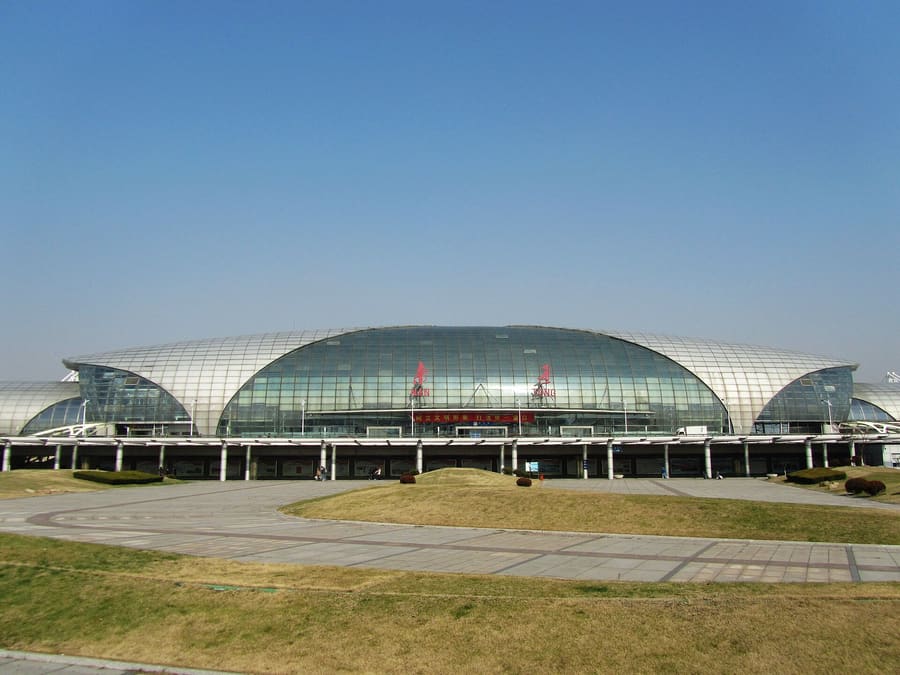

landmark
Haohe River Moat
A medieval city moat turned 15-kilometer ring park. Night boat tours depart from East Park dock until 20:30.
China
Where the Yangtze meets the sea, shaped by mill heritage.
Nantong sits at the mouth of the Yangtze River opposite Shanghai. Formed around a double-loop moat called the Haohe, the city balances early 20th-century industrial heritage with rapid modern transit expansions. You move easily between mountain river overlooks, historic textile quarters, and urban parks using two metro lines. Expect high-salt estuary seafood, coastal winds, and a quieter pace than its southern neighbors.
Gangzha & Tangzha — Former industrial mill district transformed into modern malls and canal heritage sites.
01
landmark
A medieval city moat turned 15-kilometer ring park. Night boat tours depart from East Park dock until 20:30.

landmark
China's first public museum, set in a botanical garden. Entry is free; scan your passport at the gate.
02
03
Dense ring moat precinct packed with street food, retail streets, and traditional housing.
NearbyNantong Museum and Haohe docks.
Ask ParleyScenic southern riverfront dominated by green peaks, temples, and riverside boardwalks.
NearbyLangshan peak and Yangtze wetlands.
Ask ParleyFormer industrial mill district transformed into modern malls and canal heritage sites.
NearbyTangzha town and Vientiane City mall.
Ask ParleySprawling new district featuring lake parks, modern convention centers, and wide boulevards.
NearbyZilang Lake Park and Grand Theatre.
Ask Parley04
Nantong dining relies on its location between freshwater rivers and saltwater flats. Estuary catches like razor clams and mud snails arrive daily at local markets. Meals focus on light seasonings, ginger, and rice wine to emphasize raw freshness.
Order steamed razor clams cooked with garlic and vermicelli at central seafood restaurants along Qingnian Road.
Local eateries stew this native fowl in clear broth with ginger and wild bamboo shoots.
Nantong cooks stew local taro with pork belly until gelatinous, then serve it cold or hot as a savory staple.
05
Nantong grew from a salt production outpost on the Yangtze estuary into a defensive river fortress during the Tang Dynasty. In 1895, scholar-turned-industrialist Zhang Jian selected the town for his model modern city initiative. He established the Dasheng Cotton Mill, one of China's earliest modern private textile enterprises, alongside schools, museums, and weather stations here within three decades.
Moat Construction
Workers dig the Haohe River moat to defend the newly established military outpost.
Dasheng Cotton Mill
Zhang Jian opens the Dasheng Cotton Mill, initiating China's first modern industrial city plan.
First Public Museum
Nantong Museum opens to the public, combining natural history with botanical gardens.
Bridge Rail Link
The Shanghai-Su-Tong Yangtze River Bridge opens, cutting rail time to Shanghai to one hour.
06
Choose your base by transit convenience and sight focus. Chongchuan Old Town keeps you within walking distance of evening food and the Haohe moat. Southern riverfront hotels offer fresh air and Yangtze views, while northern stations suit early train connections.
Highly rated hotels in Nantong.


07
Nantong operates two subway lines and an extensive city bus network. Ride-hailing cars are fast and cheap across the flat urban terrain.
From Nantong Xingdong International Airport (NTG) / Nantong West Station
From Xingdong Airport (NTG) to downtown Chongchuan via G345 highway.
Buses depart NTG airport after every domestic flight arrival to Central Coach Station.
Use the Alipay Transit tab set to Nantong Metro to scan directly through subway turnstiles.
Local city buses cost ¥2 per ride; drivers do not give change if mobile pay fails.
Metro Line 1 gets crowded between 07:30–09:00 near South Street interchange.
Taxis are sparse around Junshan; call rides through DiDi or WeChat mini-programs.
08
Nantong costs significantly less than Shanghai across accommodation, dining, and transit. Daily budgets go further here.
A bowl of local seafood noodles or taro pork dish at a neighborhood eatery.
Three river seafood dishes and local beer at a sit-down restaurant.
Fares depend on distance traveled across Line 1 or Line 2.
Includes access to hill trails and Guangjiao Temple grounds.
09
MAR – MAY
Spring brings blooming trees around Haohe moat and comfortable walking temperatures around 18°C.
JUN – AUG
Summers are hot and humid with occasional coastal typhoons. Mornings suit outdoors, afternoons indoors.
SEP – NOV
Crisp autumn air and clear skies make this peak season for Langshan climbing and river seafood.
DEC – FEB
Cold winter winds blow off the estuary. Temperatures hover near 2°C with light crowds.
10
and industrial heritage halls shut every Monday for maintenance.
English signage is rare outside transit hubs; keep photo-translation apps ready on your phone.
Link your foreign credit card to Alipay before arriving to pay seamlessly at shops and metro gates.
Estuary winds along the Yangtze embankment are sharp even on warm sunny days.
River park boardwalks near Langshan submerge during exceptional spring high tides.
Contents
Your trip
Going to Nantong?
Tell Parley when you’re going and what you enjoy, and it plans the days around this guide.
Plan with Parley

