
landmark
Manufaktura
A 27-hectare former cotton factory turned modern plaza. Visit MS2 inside for 20th-century Polish avant-garde art.
Poland
Red-brick textile mills rebuilt into culture, food, and film.
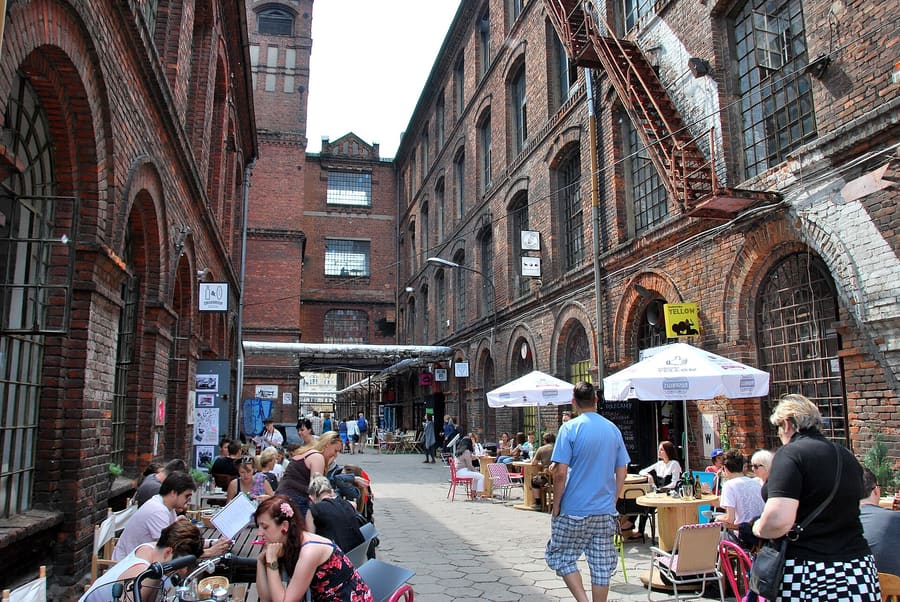
Łódź built its wealth on 19th-century cotton manufacturing before losing its industrial base in the 1990s. Today, massive brick mill complexes house modern art galleries, food halls, and design studios. You move through the city along Piotrkowska Street, a four-kilometre straight axis that connects the north industrial zones to south textile factories. Expect sharp contrasts between restored brick palaces and unrenovated 19th-century backyards.
Piotrkowska Centrum — The core dining, nightlife, and pedestrian corridor of Łódź.
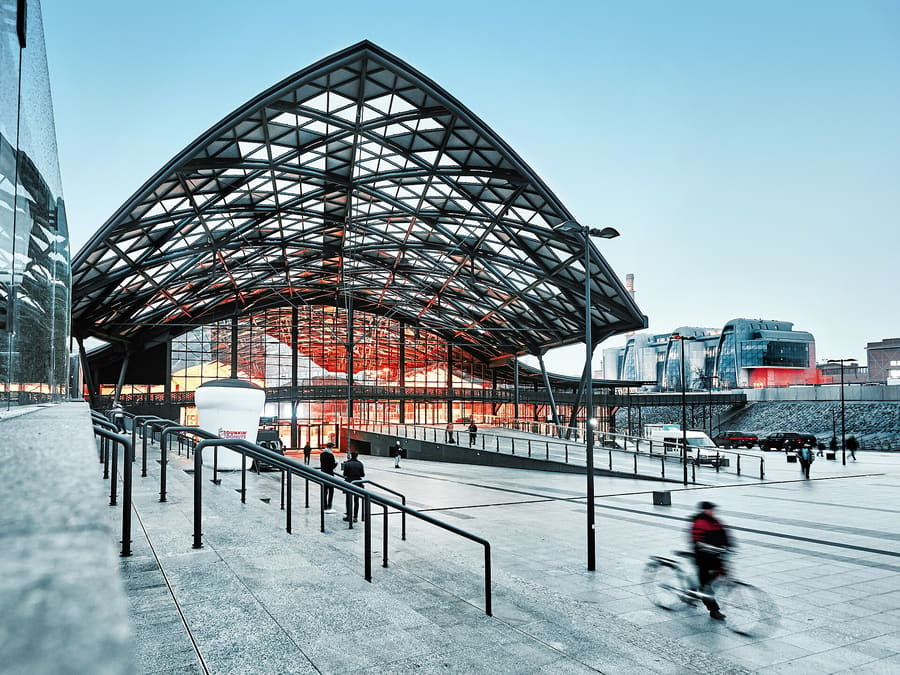
Fabryczna Quarter — Modern transit hub surrounded by former power plants and new apartments.
Zalewajka served with rye bread and smoked bacon.
01
landmark
A 27-hectare former cotton factory turned modern plaza. Visit MS2 inside for 20th-century Polish avant-garde art.
landmark
Gilded residence of Łódź's top 19th-century textile baron. Buy a combined ticket to access the museum and courtyard.
landmark
A restored 1907 power plant housing a planetarium and interactive exhibits. Book planetarium seats online at least one day ahead.
landmark
Located in the White Factory mill on southern Piotrkowska. The open-air wooden architecture park behind it opens on dry days.
02
03
Industrial heritage meets shopping plazas and grand bourgeois palaces.
NearbyManufaktura and Poznański Palace
Ask ParleyThe core dining, nightlife, and pedestrian corridor of Łódź.
NearbyOff Piotrkowska and Grand Hotel
Ask ParleyAtmospheric red-brick mill district with cobblestone lanes and art studios.
NearbyHerbst Palace and Scheibler's Factory
Ask ParleyModern transit hub surrounded by former power plants and new apartments.
NearbyŁódź Fabryczna and EC1
Ask Parley04
Łódź cuisine reflects its 19th-century working-class roots. The defining dish is zalewajka, a sour rye soup cooked with diced potatoes, wild mushrooms, and marjoram, originally served as a cheap, warming breakfast for cotton mill workers. Traditional milk bars and modern Polish bistros along Piotrkowska still serve zalewajka alongside knedle ze śliwkami (potato dumplings filled with plums and topped with breadcrumbs).
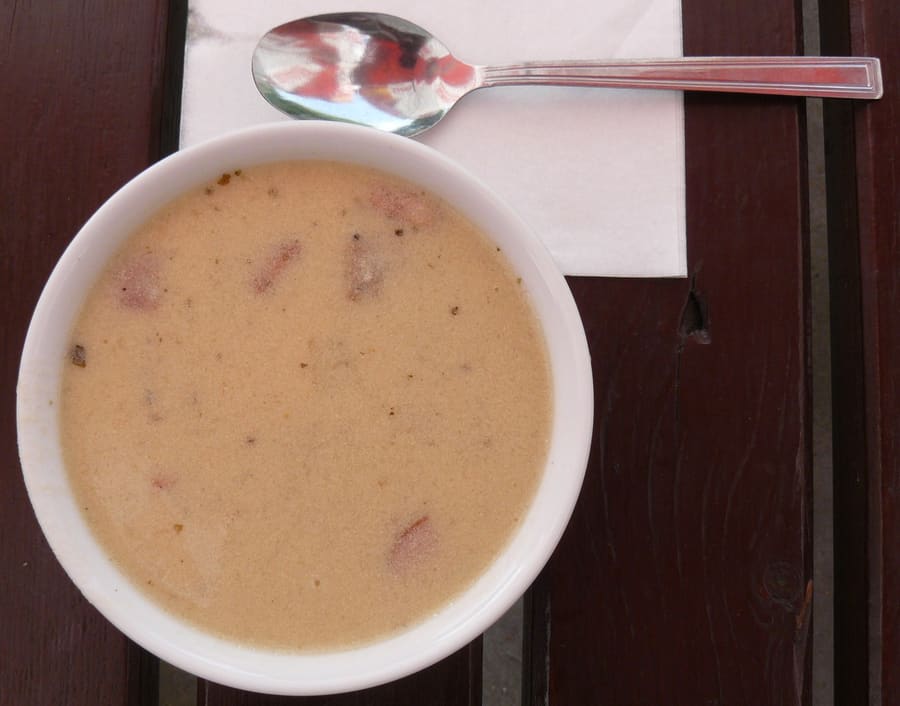
Zalewajka served with rye bread and smoked bacon.
Order the soup at traditional milk bars like Bar Mleczny Słoneczny or regional dining spot Restauracja Galicja in .
Former cotton printing works at Piotrkowska 138 now hosts container bars, craft breweries, and food trucks.
Most kitchen service peaks between 13:00 and 19:00. Trendy spots on Piotrkowska keep kitchens open until 22:00.
05
In 1820, the Kingdom of Poland designated Łódź as a factory settlement due to its fast-flowing streams and large surrounding forests. Within decades, Jewish, Polish, German, and Russian entrepreneurs turned a small wooden village into one of Europe's largest textile manufacturing hubs. World War II destroyed the city's large Jewish population and culture. Post-war nationalisation kept the looms running until state industrial collapse in the 1990s forced a massive urban pivot toward technology, film, and heritage adaptive reuse.
Industrial mandate
Łódź receives official status as a textile manufacturing town, drawing mill owners and workers across Europe.
Poznański and Scheibler expansion
Industrialists construct giant red-brick textile empires, housing tens of thousands of workers in self-contained mill towns.
Film School founded
The National Film School opens in Łódź, eventually training directors Andrzej Wajda, Roman Polański, and Krzysztof Kieślowski.
Textile crash
State factories shut down rapidly post-communism, prompting high unemployment and thirty years of urban renewal projects.
Manufaktura opens
The opening of Manufaktura sets the European standard for converting abandoned industrial complexes into public urban hubs.
06
Choose your neighbourhood by your transit priority: stay along Piotrkowska for walkability to restaurants, or stay near Fabryczna for quick train connections to Warsaw.
Highly rated hotels in Łódź.
See more Łódź hotels07
Łódź is extremely flat and walkable along its main north-south axis. Trams do not run down central Piotrkowska Street because it is a pedestrian precinct, but tram routes run along parallel avenues like Aleja Kościuszki and Ulica Zachodnia, making public transit faster than taxis during peak traffic hours.
From Łódź Władysław Reymont Airport (LCJ) / Łódź Fabryczna Station
Line 65A connects Łódź Airport (LCJ) directly to the main rail stations.
Official airport taxi stand at LCJ terminal exit.
Public transit uses timed tickets: 20-minute (4.40 PLN) or 40-minute (5.60 PLN). Validate immediately upon boarding.
Modern MPK trams feature payment terminals accepting contactless bank cards directly on board.
Piotrkowska pedestrian zone is closed to cars, but parallel streets like Zachodnia clog between 16:00 and 18:00.
Download Jakdojadą for real-time tram schedules and digital ticket purchases.
08
Łódź remains significantly cheaper than Warsaw or Kraków for dining, culture, and accommodation.
Main dish and craft beer at a restaurant on Piotrkowska.
Valid on all MPK trams and buses within city zone 1.
Entry to major museums like MS2 or .
Specialty coffee in Off Piotrkowska court.
09
MAR – MAY
Mild temperatures around 12–18°C. Excellent for walking tours before summer humidity.
JUN – AUG
Warm days reaching 28°C. Courtyard beer gardens stay crowded until late hours.
SEP – NOV
Crisp autumn weather. Autumn leaves stand out against red-brick factory walls.
DEC – FEB
Freezing conditions down to -5°C. Manufaktura hosts a seasonal ice rink and light displays.
10
Large retail stores and supermarket chains close on most Sundays under Polish law. Dining venues stay open.
Piotrkowska's best architectural details and hidden murals are inside residential courtyards.
Contactless card and phone payments are accepted almost everywhere, including street food vendors.
Visit Piotrkowska 3 during daylight hours to see the mirror-mosaic courtyard created by Joanna Rajkowska.
Pedal rickshaws operate along the pedestrian boulevard; agree on a fixed price before getting in.
Contents
Your trip
Going to Łódź?
Tell Parley when you’re going and what you enjoy, and it plans the days around this guide.
Plan with Parley


