
landmark
Valle de la Luna
Wind-carved salt ridges and dunes 13km west. Visit late afternoon to see the rock turn deep crimson at sunset.
Chile
A high-altitude oasis built on dust, salt, and stars.
San Pedro sits at 2,400 metres above sea level in the driest desert on Earth. It operates as an unpaved basecamp for high-altitude salt flats, thermal geysers, and clear night skies. You move through town on foot along dusty adobe lanes, using it primarily to launch day trips into the surrounding altiplano. Expect extreme solar radiation by day and freezing high-desert temperatures after dark.
Ayllu de Quitor — Rural oasis zone 3km north along the San Pedro River with quiet farmsteads.
Patasca, a rich Andean corn and meat broth served in desert towns.
01
landmark
Wind-carved salt ridges and dunes 13km west. Visit late afternoon to see the rock turn deep crimson at sunset.
landmark
Over 80 active geysers at 4,300m elevation. Arrive by 06:00 to catch steam plumes against freezing morning air.
landmark
Shallow salt lagoon inside National Reserve Los Flamencos. Andean flamingos feed here in cracked salt crust year-round.
landmark
Twin high-altitude blue lakes, Miscanti and Miñiques, at 4,200m. Pre-book park entry tickets online before departure.
landmark
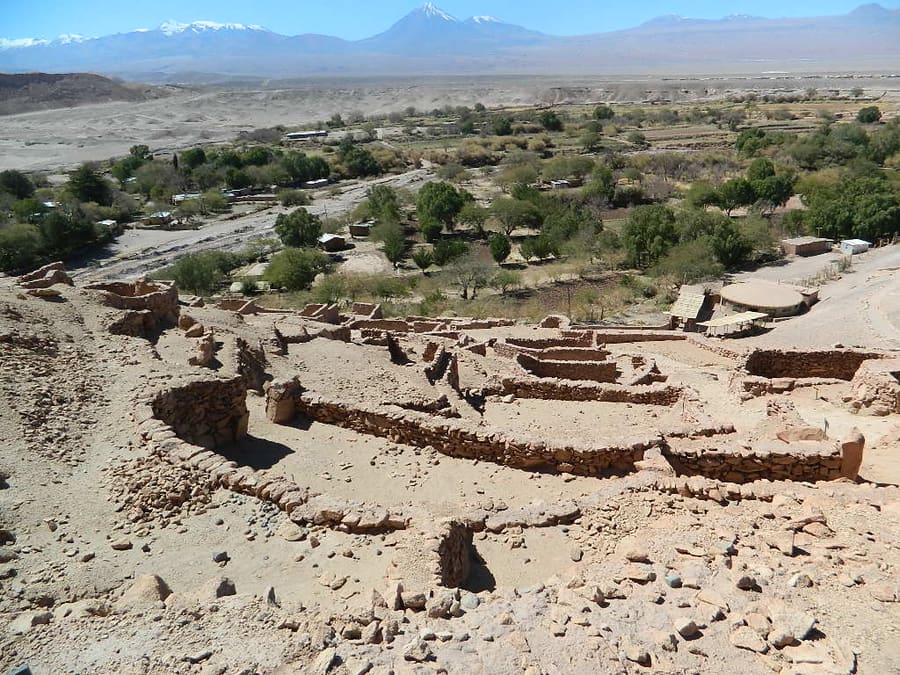
A 12th-century Atacameño stone fortress 3km north. Hike to the upper viewpoint for a clear layout of the river valley.
landmark
Built in 1774 with adobe walls and a ceiling made of cactus wood tied with llama leather. Located on the main plaza.
02
03
Unpaved pedestrian streets filled with tour operators, rustic cafes, and souvenir stalls.
NearbyChurch of San Pedro and central bus terminals
Ask ParleyRural oasis zone 3km north along the San Pedro River with quiet farmsteads.
NearbyPukará de Quitor fortress and Catarpe valley
Ask ParleyAgricultural settlement south of town surrounded by quince orchards and chañar trees.
NearbyCejar Lagoon road
Ask ParleyLeafy western suburb housing eco-resorts hidden behind thick adobe security walls.
NearbyValle de la Luna access roads
Ask Parley04
Dining in San Pedro relies on native desert herbs and high-altitude crops. Local kitchens use rica-rica, an aromatic desert bush, to season stews and flavour cocktails. Chañar syrup, extracted from the fruit of the chañar tree, provides a dark molasses sweetness to meats and desserts. Quinoa and corn form the grain backbone of traditional Atacameño cooking.Because fresh produce travels hundreds of kilometres through the desert from agricultural valleys in central and northern Chile, vegetable quality varies by season. Llama meat appears on menus as grilled steaks or skewers. It tastes lean and slightly mineral, similar to venison.
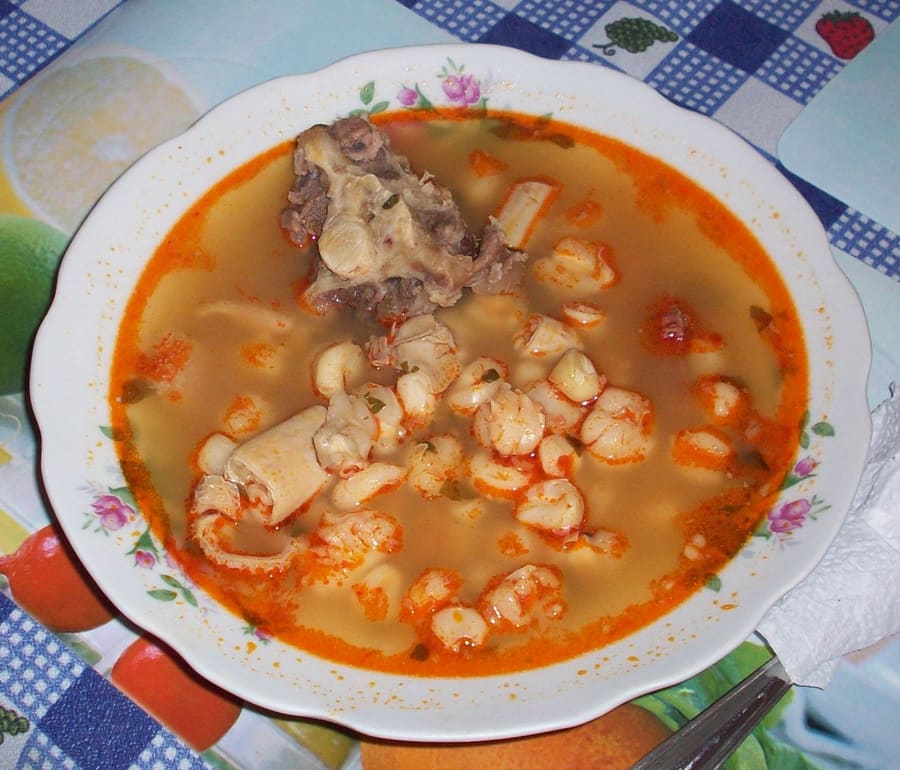
Patasca, a rich Andean corn and meat broth served in desert towns.
Order a Rica-Rica Sour at town restaurants. The desert herb gives the standard Pisco Sour an herbal, sage-like profile.
Tap water carries high mineral content. Drink filtered or bottled water to avoid stomach distress at high altitude.
Kitchens fill up fast around 19:30. Most visitors eat early because geyser tours pick up before 05:00.
05
The Atacameño people, or Likan Antai, developed sophisticated terraced agriculture in this oasis over two millennia ago. They constructed complex stone irrigation canals to channel mountain runoff from the Andes. In the late 15th century, the Inca Empire expanded south, absorbing the oasis into its road network and fortifying local structures.Spanish conquistador Pedro de Valdivia claimed the oasis in 1540 on his trek to central Chile. San Pedro remained an isolated cattle-driving stop between Argentina and the Pacific coast for centuries. Copper mining dominated the surrounding region in the 20th century before high-altitude astronomy and global tourism shifted the town's economy.
Atacameño settlement
Early farmers establish irrigated agro-pastoral communities across the San Pedro river oasis.
Inca conquest
The Inca Empire incorporates the oasis, strengthening fortresses like Pukará de Quitor.
Spanish arrival
Pedro de Valdivia arrives in the oasis, establishing Spanish control over the trade corridor.
Church completed
Construction finishes on the adobe Church of San Pedro, still standing on the main plaza today.
Tourism expansion
Backpackers and nature travellers replace mining and trade as the town's chief revenue driver.
06
Choose your base based on transport independence. Staying inside the Town Centre puts you within walking distance of tour operators, restaurants, and bus hubs. Choosing an ayllu outside town provides total silence and clear dark skies, but requires pre-arranged driver services, private rentals, or long bike rides along unlit dirt tracks.
Highly rated hotels in San Pedro de Atacama.


07
San Pedro has no commercial airport of its own. All air passengers land at El Loa Airport (CJC) in Calama, 100 kilometres to the northwest. From Calama, you take a highway across the wind-swept desert plain straight to the oasis. The town of San Pedro itself is entirely walkable, but reaching peripheral desert parks requires guided tour vans, rented 4x4s, or stout mountain bikes.
From Calama Airport (CJC)
Shared door-to-door vans run continuously for all incoming domestic flights.
Pre-arranged car for up to four passengers with direct drop-off at rural ayllu lodges.
Most group excursion operators collect passengers directly from town centre hotels between 04:30 and 08:00.
Rent a bicycle in town for 12,000 CLP per day to reach or independently.
Pick up 4x4 rentals at Calama Airport. Town has limited gas stations, so fill up before heading into distant high-altitude passes.
San Pedro has no metro, public buses, or Uber. Local taxis exist but must be called via hotel front desks.
08
San Pedro is significantly more expensive than other Chilean cities like Santiago or Valparaíso. Isolating supplies in the middle of a hyper-arid desert drives up fuel, food, and lodging overheads. Budget travellers rely on local day-menu lunch spots, while high-end tour operators bundle transport, meals, and park entry fees together.
Standard group price including transport and breakfast. National park entry fee is charged extra.
Set lunch (menú del día) including a soup, main dish, and juice along Calle Caracoles.
Individual entrance charge per reserve (, ). Paid in cash or online portal.
Night sky telescope session led by an astronomer, including hot drink transfers.
09
MAR – MAY
Clear autumn skies and moderate day temperatures (22°C). High season crowds thin out.
JUN – AUG
High-desert winter. Cold daylight winds and sub-zero nights (-5°C). Excellent stargazing.
SEP – NOV
Warm spring days and low rainfall. Ideal window for high-altitude trekking and road trips.
DEC – FEB
Bolivian Winter season. Rare cloudbursts can flood dirt roads and force park closures.
10
San Pedro sits at 2,400m; plateau lakes reach 4,200m. Drink water, avoid alcohol on arrival day, and carry coca tea.
The high elevation solar burn rate is severe. Wear wide-brim hats, polarized sunglasses, and SPF 50+ sunscreen daily.
ATMs in town often run out of paper notes on long weekends. Indigenous park gates accept cash CLP only.
Book astronomy tours during the New Moon phase. A Full Moon washes out night visibility of the Milky Way.
Temperatures swing by 25°C in a single day. Bring a thermal down jacket for pre-dawn starts and light cotton for noon.
Contents
Your trip
Going to San Pedro de Atacama?
Tell Parley when you’re going and what you enjoy, and it plans the days around this guide.
Plan with Parley


