landmark
The Ridge
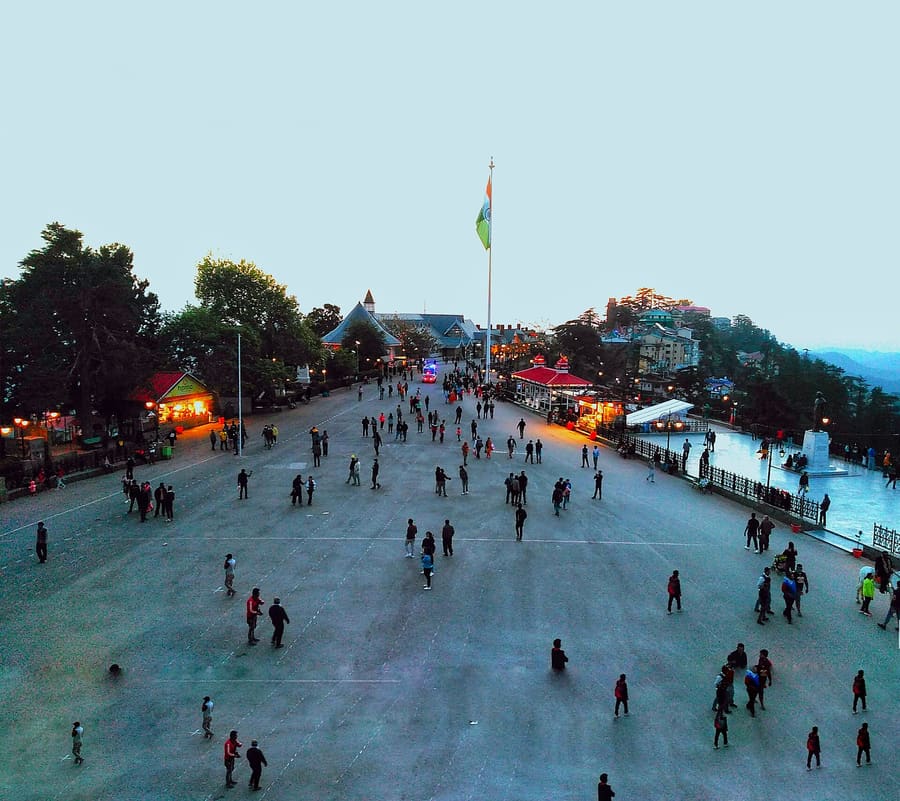
Open ridge space with views of the Himalayas. Go before 08:00 to dodge photography crowds and hawkers.
Ask ParleyIndia
High-altitude British administrative history and pine forest walking.
introduction
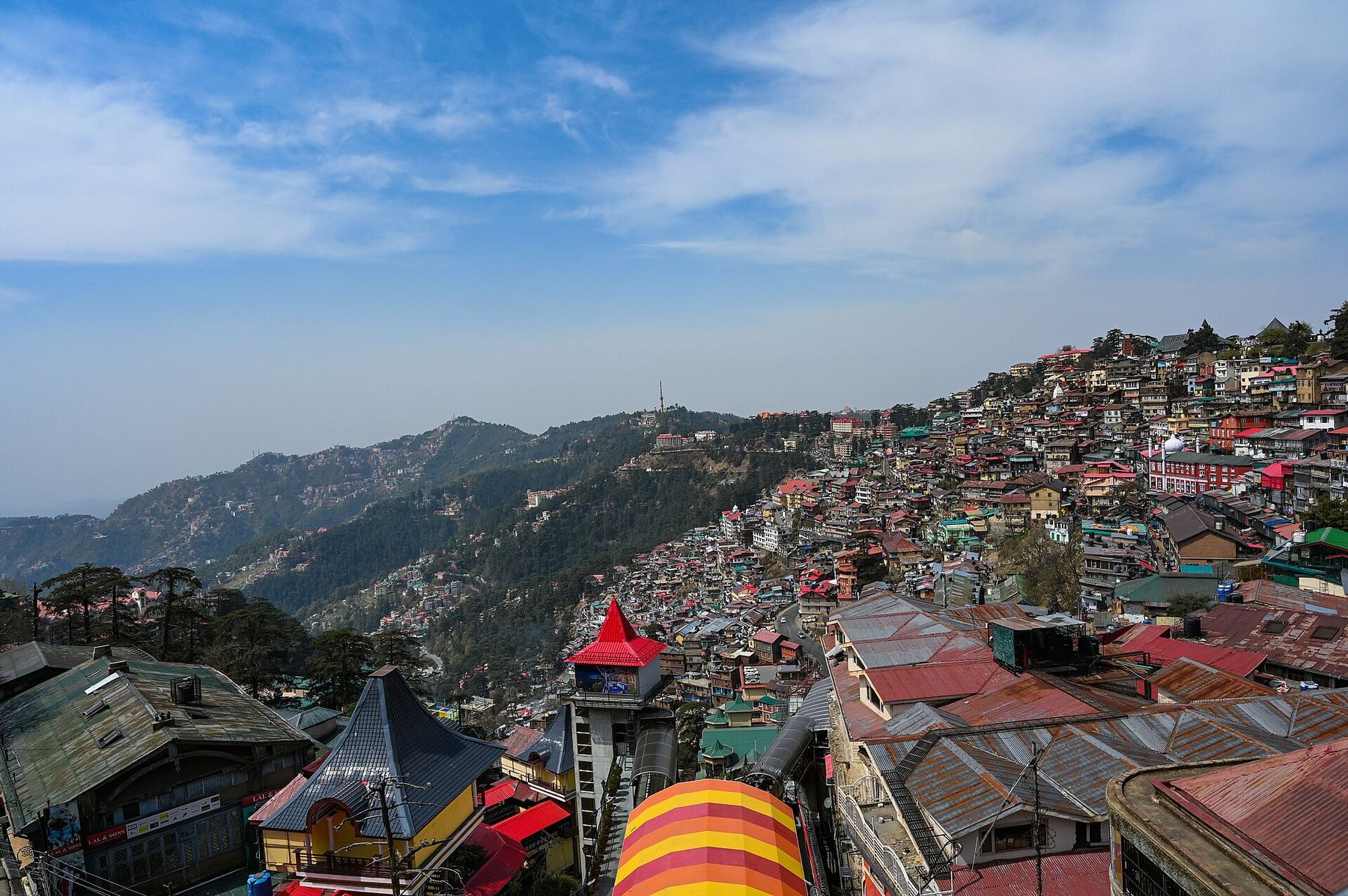
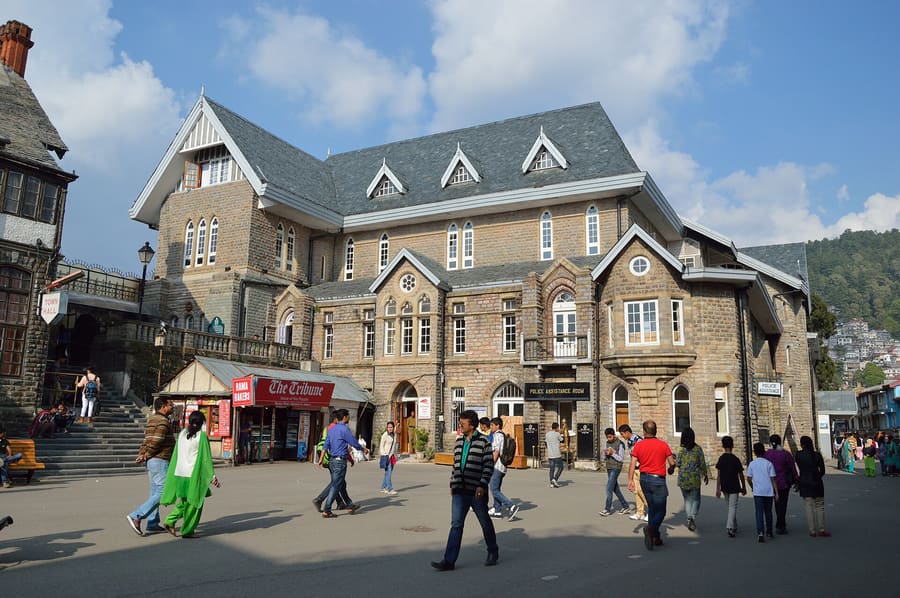
Shimla sits along a narrow mountain ridge in the Himalayan foothills. The city operates on steep vertical layers linked by public lifts and footpaths rather than roads. Motorized vehicles cannot enter the core promenade, forcing everyone to walk. Expect colonial stone architecture, cold winter mornings, and heavy weekend traffic on the roads leading up.
Pedestrian zone rule
Vehicles are banned on Mall Road and the Ridge. You walk or take the Himachal Pradesh Tourism lift between lower and upper levels.
Shimla
Biswarup Ganguly · CC BY 3.0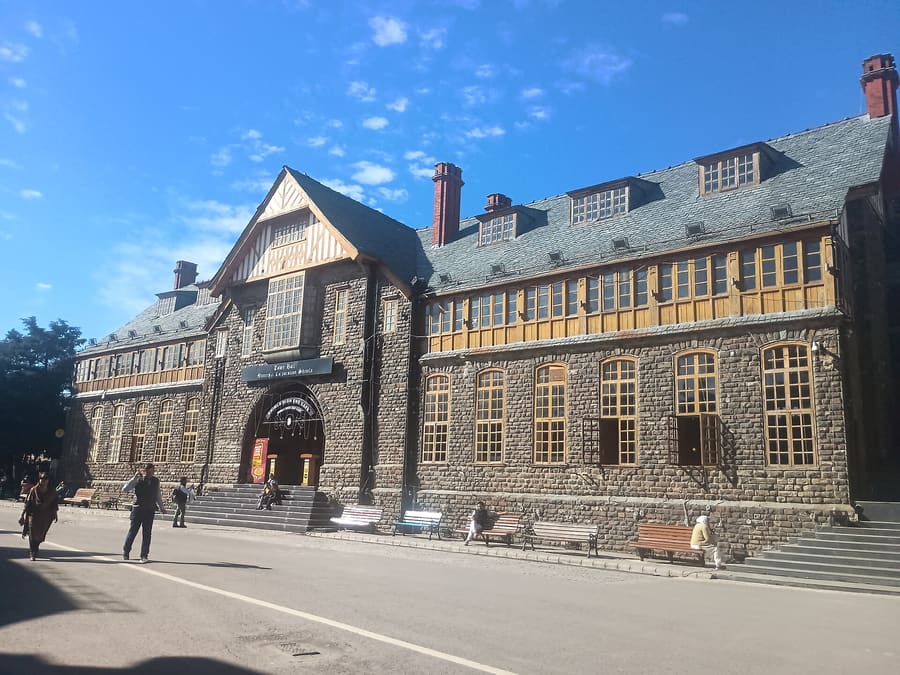
Mall Road & Ridge — Car-free promenade life with steep staircases and civic heritage.
Rajani Gairshail · CC BY-SA 4.0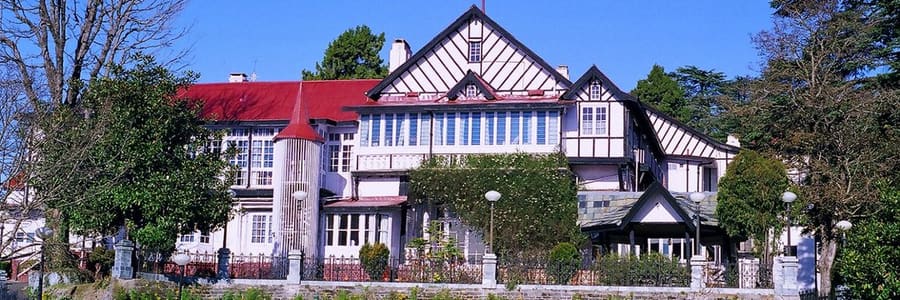
Chotta Shimla — Administrative area with quieter residential streets and official residences.
itsrahulkashyap · CC BY-SA 4.0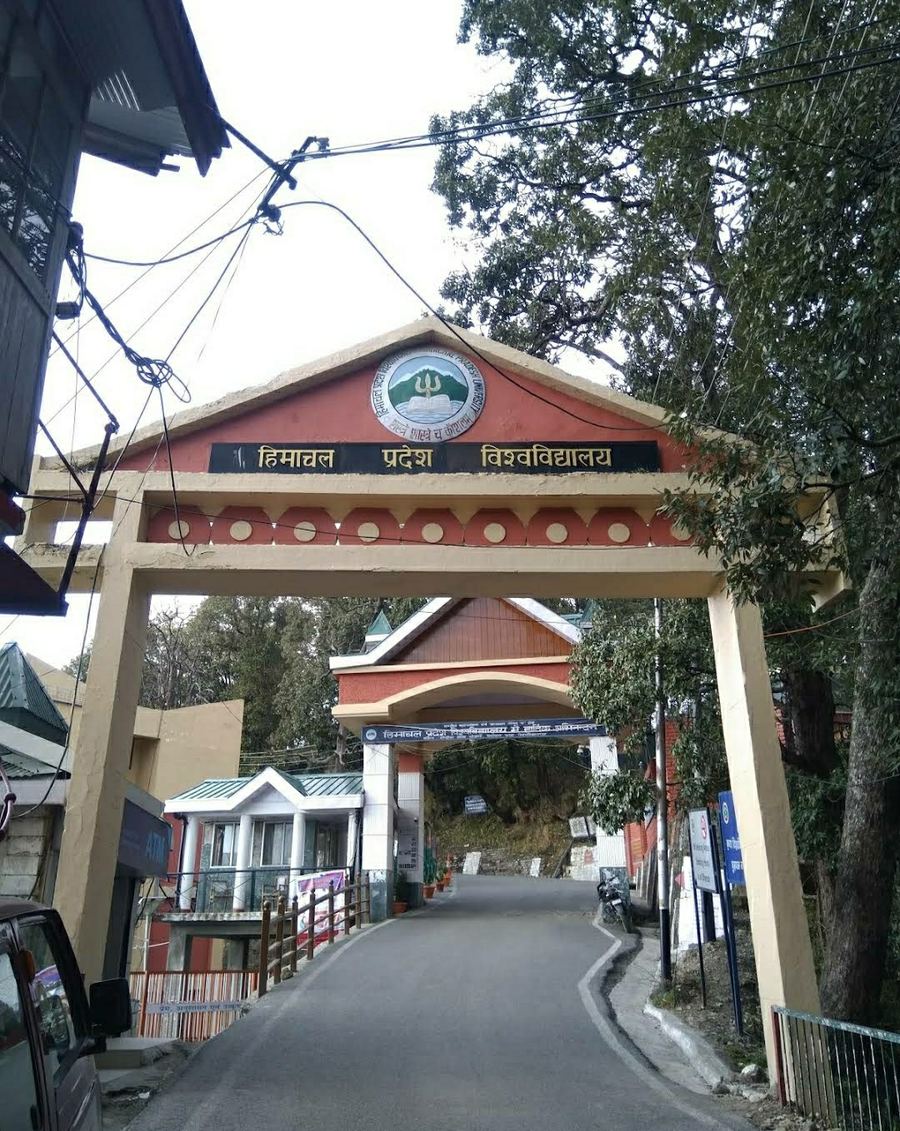
Summer Hill — University precinct with quiet pine woods and railway access.
Shimle Wala · CC BY-SA 4.0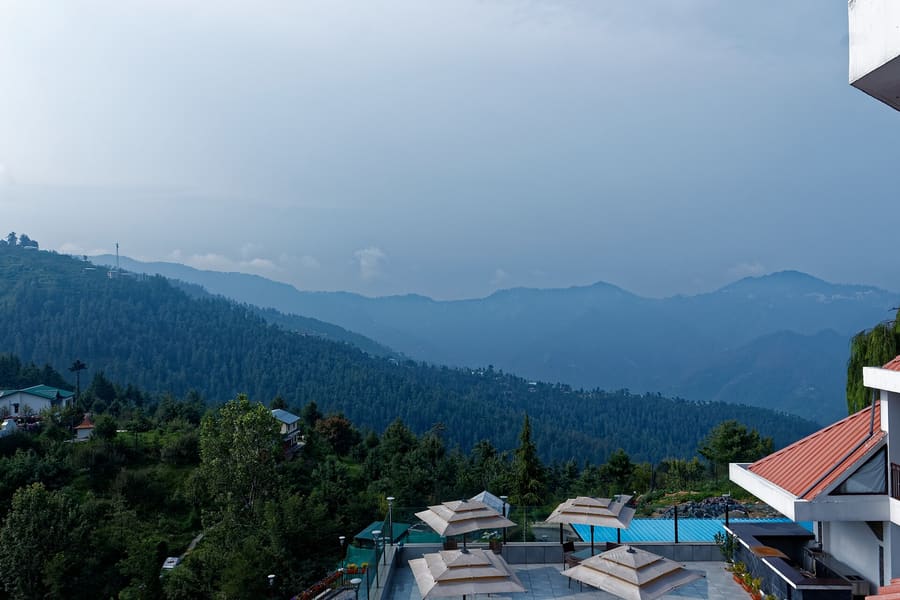
Mashobra — Forest village surrounded by apple orchards and cedar woods.
Supreet · CC BY-SA 4.0highlights
landmark
Open ridge space with views of the Himalayas. Go before 08:00 to dodge photography crowds and hawkers.
Ask Parley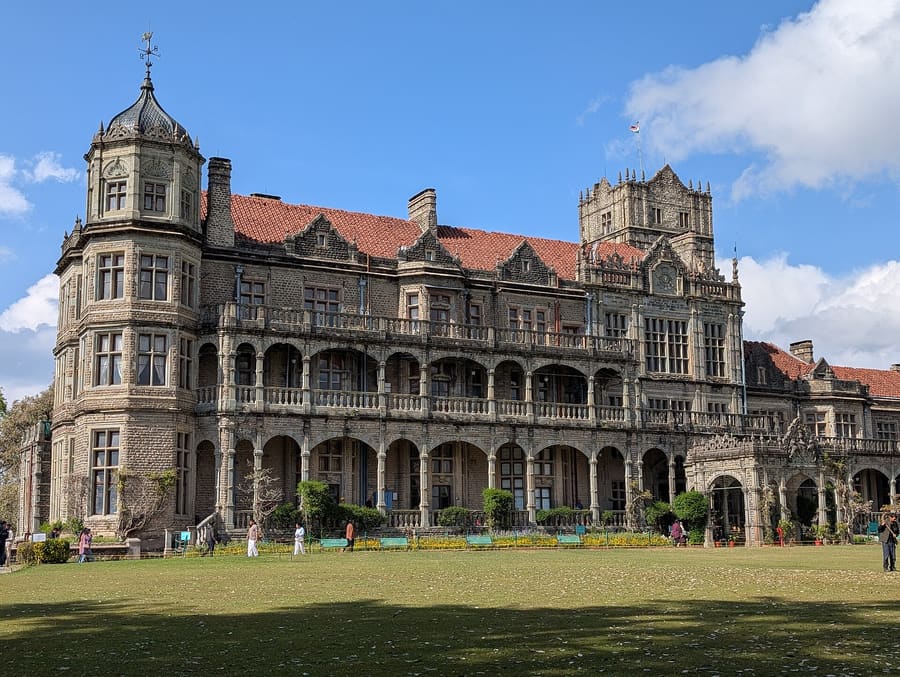
landmark
The 1888 Scottish baronial seat of British rule. Entry ticket includes a guided interior walk of the ground floor.
Ask Parley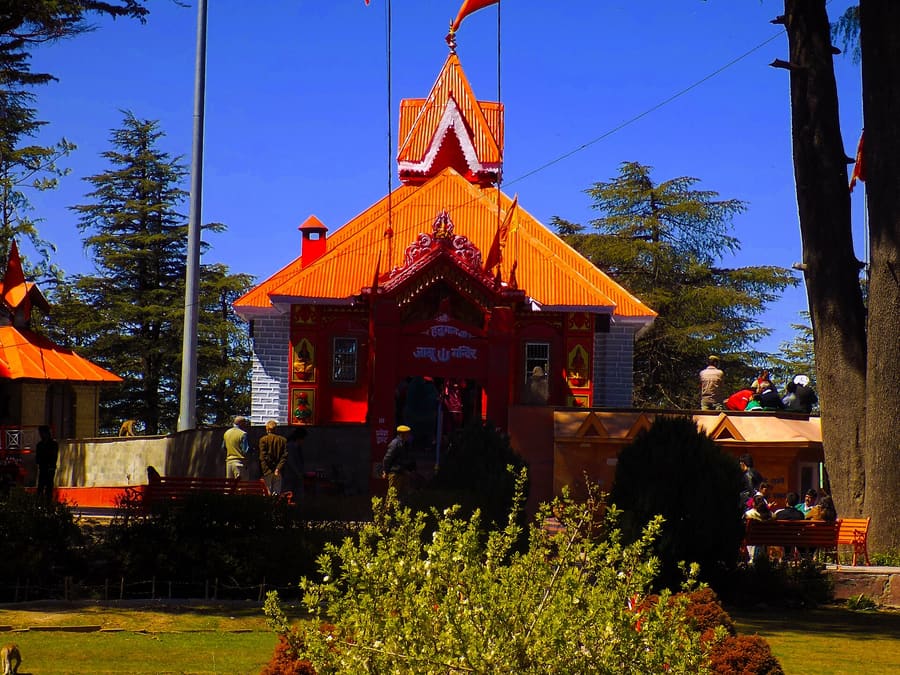
landmark
A hilltop Hanuman temple at 2,455 metres elevation. Take the ropeway from Ridge; watch your glasses around monkeys.
Ask Parley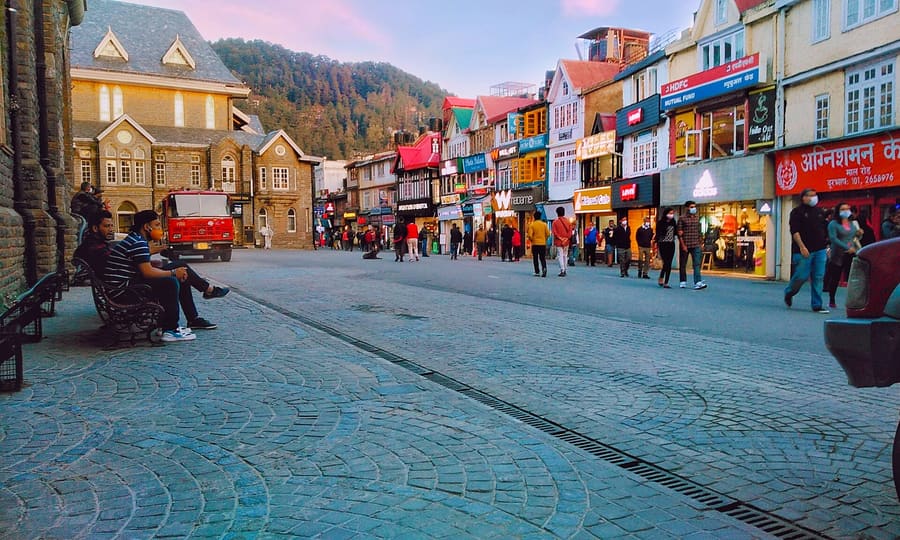
landmark
The main car-free promenade lined with shops and municipal buildings. Best visited in early evening for atmosphere.
Ask Parley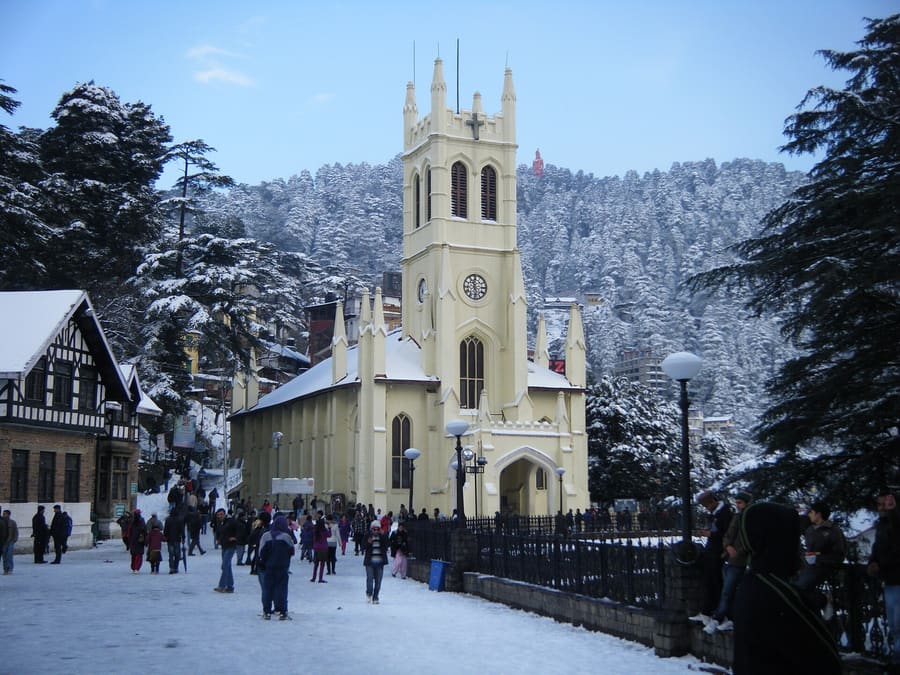
landmark
Northern India's second oldest church built in 1857. Stained glass windows represent faith, hope, charity, and fortitude.
Ask Parleyattractions
areas
Car-free promenade life with steep staircases and civic heritage.
NearbyChrist Church and Gaiety Theatre
Ask ParleyAdministrative area with quieter residential streets and official residences.
NearbyRaj Bhavan and Secretariat
Ask ParleyUniversity precinct with quiet pine woods and railway access.
NearbyHP University and Shimla station
Ask ParleyForest village surrounded by apple orchards and cedar woods.
NearbyCraignano Nature Park
Ask Parleyfood
Himachali cuisine relies on slow-cooked lentils, yoghurt sauces, and fermented wheat dough to withstand cold mountain winters. Dham is a traditional festive meal served on broad leaf plates, featuring madra—chickpeas cooked in spiced yoghurt gravy. On Mall Road, British-era bakeries still churn out butter biscuits, rum balls, and fruitcakes alongside hot coffee.
Order the traditional thali at Himachali Rasoi on Mall Road to taste madra and khatta without waiting for a festival.
Visit Indian Coffee House at 09:00 for filter coffee and cutlets before the afternoon tourist lines form.
Buy fresh siddu from street stalls near Lower Bazaar during winter months for a dense, filling lunch.
history
Shimla was a small village until British officers established a climate retreat here in the 1820s. By 1864, it became the official summer capital of British India, moving the entire colonial government up from Calcutta for six months each year. The Kalka-Shimla railway opened in 1903, locking in accessibility. The city served as the capital of East Punjab after 1947 before becoming Himachal Pradesh's state capital in 1966.
First British House
Captain Charles Pratt Kennedy builds the first permanent European dwelling, Kennedy House.
Summer Capital
Viceroy John Lawrence declares Shimla the official summer capital of the British Raj.
Toy Train Opens
The 96-kilometre narrow-gauge line opens, connecting Kalka to Shimla across 102 tunnels.
Simla Conference
Colonial leaders meet at the Viceregal Lodge to negotiate Indian self-governance terms.
Statehood
Shimla becomes the capital of the newly created state of Himachal Pradesh.
where to stay
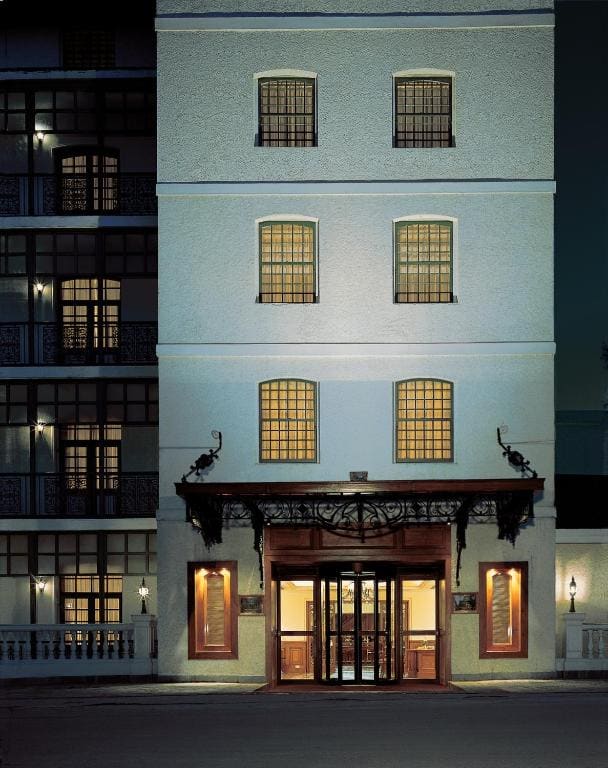
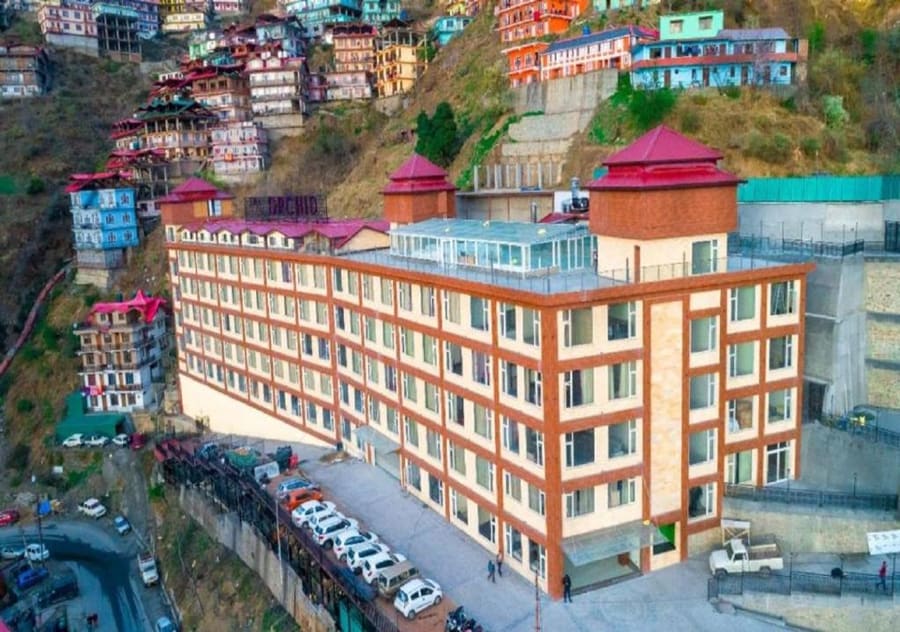
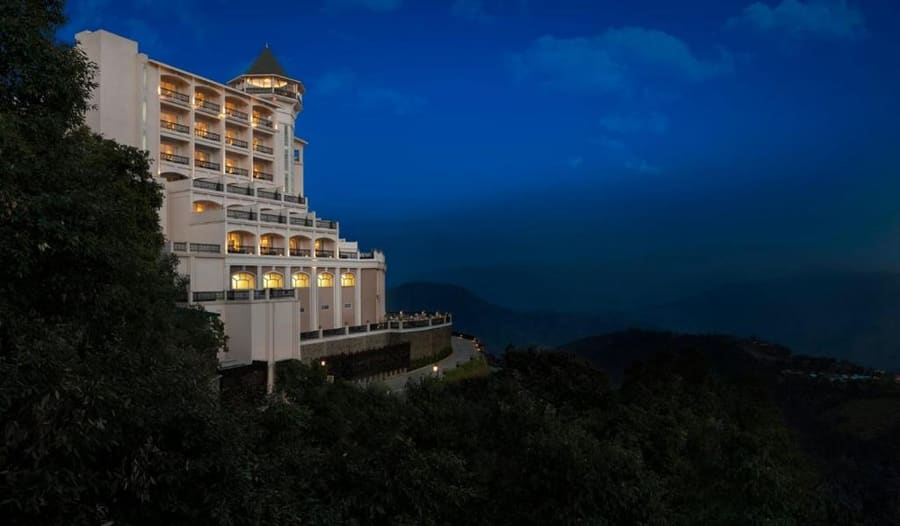
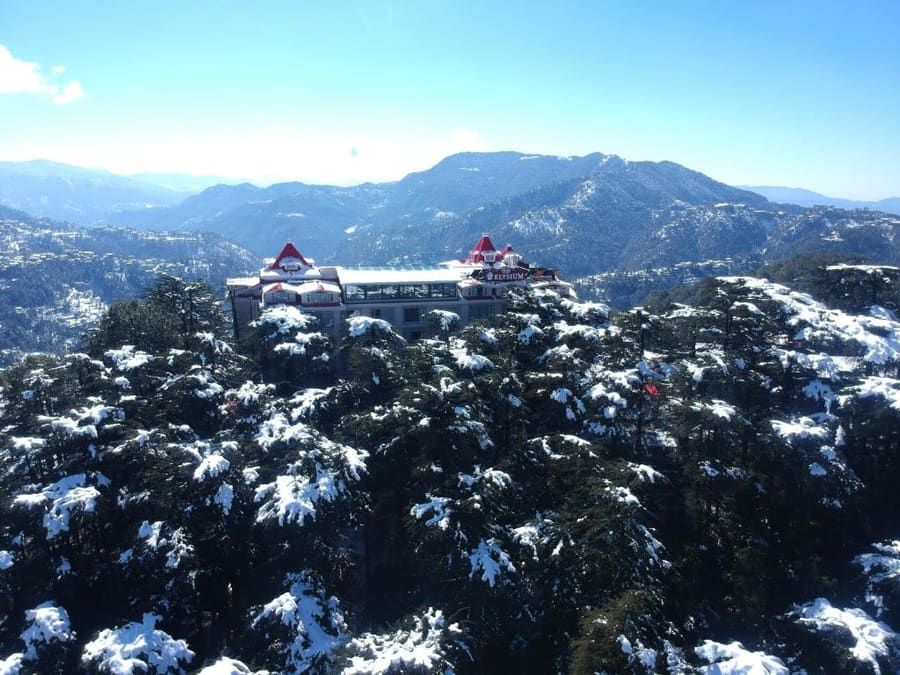
Choose your base by your willingness to walk steep slopes. If you want car-free access to shops and sites, stay on Mall Road or the Ridge. For quiet pine views without foot traffic, choose Chotta Shimla or Mashobra.
Live rates, matched to the areas above.
/322c8e660f94.jpg)
transport
Central Shimla is divided into pedestrian upper zones and traffic-heavy lower roads. Taxis cannot drive into Mall Road or the Ridge. To move between the lower vehicle stand and Mall Road, take the two-stage HPTDC public lift.
From Chandigarh Airport (IXC) / Kalka Railway Station (KLK)
The Kalka–Shimla toy train climbs 96 km. Book seats months in advance on IRCTC.
Prepaid taxis from Kalka station or Chandigarh airport run directly to the Shimla lift stand.
HRTC Volvo buses operate daily from Chandigarh ISBT 43 to ISBT Tutikandi.
The two-stage public lift connects Cart Road to Mall Road for ₹20 per ride, saving a 20-minute steep stair climb.
Shimla operates a strict local taxi union with fixed rates posted at the main stands.
Expect severe congestion around Victory Tunnel and Cart Road between 16:00 and 19:00.
The aerial ropeway from Ridge to Jakhu Temple takes 6 minutes and costs ₹500 round-trip.
cost
Shimla is pricier than surrounding Himachali towns due to heavy tourist demand. Expect higher hotel and food prices during peak summer months and around Christmas-New Year.
A plate of siddu or a local thali at Lower Bazaar eateries costs under ₹300.
One-way ride on the public elevator between Cart Road and Mall Road.
Round-trip ticket per adult on the ropeway to Jakhu Hanuman Temple.
Fares range from standard unreserved coaches to the Shivalik Deluxe Express.
seasonality
MAR – JUN
Daytime temperatures run 15–28°C. Peak summer season brings crowded streets and high room rates.
JUL – SEP
Monsoon brings heavy rainfall and landslip risks. Hotel rates drop significantly but outdoor walking is wet.
OCT – NOV
Clear skies and sharp mountain views with temperatures between 10–20°C. Ideal walking weather.
DEC – FEB
Cold winter with temperatures dipping to -2°C. Snowfall attracts heavy weekend crowds in January.
practicalities
Keep glasses, hats, and food inside your bags when walking near Jakhu Temple. Local monkeys snatch loose items.
Walking is mandatory in central Shimla. Wear supportive shoes with non-slip soles for cobbles and stairs.
Shimla experiences water shortages during peak summer. Keep showers short and use water mindfully.
Small food vendors and tailors in Lower Bazaar accept cash or UPI payments, but international cards fail.
At 2,200 metres altitude, sun exposure is intense even on cool cloudy winter days. Wear sunscreen.