
landmark
Old Bazaar
Walk cobbled alleyways between Ottoman inns and tea shops. Most shops shut early on Sunday evenings.
North Macedonia
Ottoman bazaars, modern marble, and riverfront kafanas.
Skopje splits down the middle along the Vardar River. North of the water, stone alleyways of the hold 15th-century inns and tea shops. South of the river, broad avenues feature hundreds of newly erected neoclassical monuments and public plazas. You cross between centuries in a five-minute walk across the central .
Debar Maalo — Tree-lined residential streets packed with local taverns and relaxed cafes.
Centar — Monuments, government buildings, and wide pedestrian shopping avenues.
Aerodrom — Late-socialist residential blocks with wide avenues and neighborhood pubs.
Freshly grilled kebapi served with somun flatbread and raw onions in the Old Bazaar.
01
landmark
Walk cobbled alleyways between Ottoman inns and tea shops. Most shops shut early on Sunday evenings.
landmark
Connects the Ottoman north bank to modern Macedonia Square. Cross on foot at dusk for clear city lights.
landmark
Sixth-century stone ramparts overlooking the Vardar river. Entry is free but footpaths lack lighting at night.
landmark
A 66-metre steel cross on Mount Vodno. Take the cable car from Middle Vodno for sweeping city views.
landmark
Centerpiece of the Skopje 2014 architectural project. Open paved space surrounded by oversized bronze statues.
02
03
Craft shops, tea houses, and traditional grill joints along stone alleys.
NearbyKale Fortress and Bit Pazar market.
Ask ParleyTree-lined residential streets packed with local taverns and relaxed cafes.
NearbyCity Park and the Zoo.
Ask ParleyMonuments, government buildings, and wide pedestrian shopping avenues.
NearbyStone Bridge and Macedonia Street.
Ask ParleyLate-socialist residential blocks with wide avenues and neighborhood pubs.
NearbyMain Railway and Bus Station.
Ask Parley04
Skopje dining centers on the local kafana, where long meals revolve around shared grilled meats and cold salads. You order small plates of gravče na tavče alongside spiced minced meat kebapi in the . Meal service moves unhurriedly, and tables stay occupied for hours.
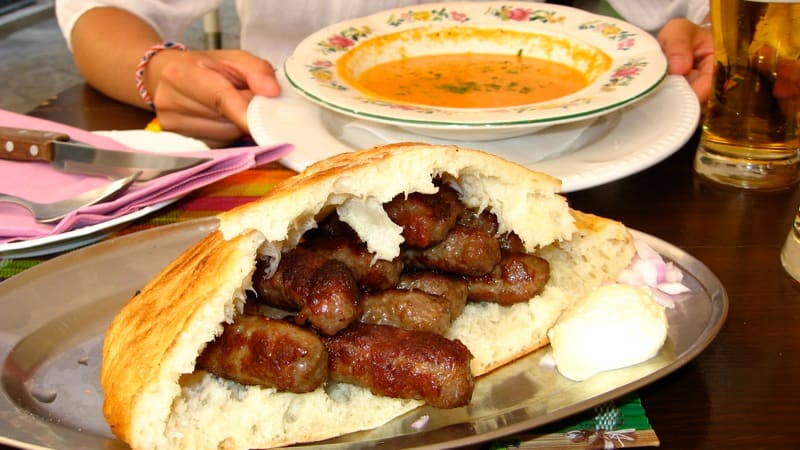
Freshly grilled kebapi served with somun flatbread and raw onions in the Old Bazaar.
Start with fresh šopska salad and cold rakija before ordering main meat dishes.
Grill houses in Stara Čaršija prepare fresh flatbread daily but close early in the evening.
Smaller tea shops and bakery counters in the bazaar accept cash payments only.
05
Skopje grew as a vital Ottoman trading hub before mid-century disasters reshaped its urban layout. A devastating earthquake in 1963 destroyed eighty percent of the city structure. Japanese architect Kenzo Tange led a modernist rebuilding effort, followed decades later by a state-driven neoclassical construction drive.
Ottoman Rule Begins
Skopje becomes an important regional trade hub, giving rise to the inns and mosques of the Old Bazaar.
End of Ottoman Era
The city shifts control during the Balkan Wars, eventually joining the Kingdom of Serbs, Croats, and Slovenes.
The Great Earthquake
A magnitude 6.1 earthquake strikes Skopje, prompting an international architectural rebuilding campaign.
Skopje 2014 Project
The government launches an urban overhaul, erecting hundreds of classical monuments and new bridge facades.
06
Choose your location based on your evening habits. Centar puts modern hotels and wide shopping streets right outside your door. Debar Maalo suits travelers who want lively evenings near local taverns, as it is Skopje's primary nightlife district. The offers boutique stays inside historic stone buildings.
Highly rated hotels in Skopje.


07
Central Skopje is entirely walkable. Red double-decker public buses run by JSP connect outer residential districts to the central core. Taxis are common and inexpensive compared to Western European standards, provided the meter is running.
From Skopje International Airport (SKP)
Vardar Express buses depart according to flight arrivals and stop at the main transit hub.
Official airport taxis charge a fixed rate listed on the terminal exit sign board.
Buy a Skopska smartcard at green JSP kiosks before boarding city buses. Drivers do not sell single cash tickets.
Route 2 and Route 5 run frequently along the east-west axis past main sight hubs.
Ensure the driver turns on the meter upon starting the trip to avoid inflated fixed estimates.
City bus frequencies drop sharply after 23:00. Rely on licensed street taxis for late journeys.
08
Skopje remains one of the most affordable capital cities in Southeast Europe. Meals out and short taxi rides carry low price points. You will spend money primarily on dining, day trips, and entrance fees for specialty museums.
Served with hot flatbread and raw onions at traditional grill spots.
Covers multiple shared appetizer plates, grilled meat mains, and local wine.
Paid using a pre-loaded Skopska transit card.
Standard price for draft Zlaten Dab or Skopsko in neighborhood bars.
09
MAR – MAY
Mild daytime temperatures around 18°C make this season ideal for urban walking.
JUN – AUG
Summer heat often exceeds 35°C in the Vardar valley. Plan outdoor walks for early morning.
SEP – NOV
Pleasant autumn days paired with clear air. Outdoor kafana seating stays open through October.
DEC – FEB
Cold weather with frequent valley fog and smog. Mount Vodno offers clearer air above the inversion layer.
10
Most traditional shops in the lock up by 18:00, though restaurants stay open later.
Bit Pazar produce vendors and street kiosks deal exclusively in Macedonian Denar cash.
Large retail stores and supermarkets close on Sundays by national regulation.
Younger residents and hospital staff speak fluent English. Older drivers appreciate clear address notes.
The cable car to the does not operate on Mondays or during high wind conditions.
Contents
Your trip
Going to Skopje?
Tell Parley when you’re going and what you enjoy, and it plans the days around this guide.
Plan with Parley


