
landmark
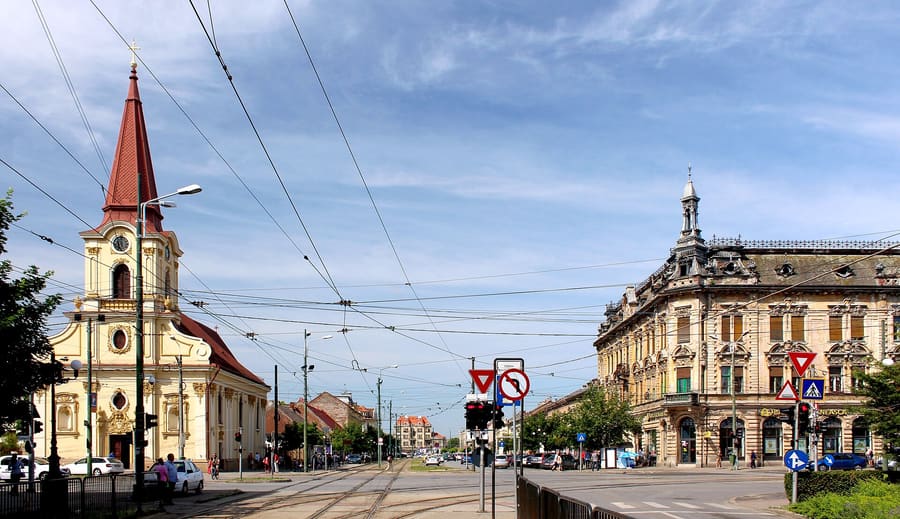
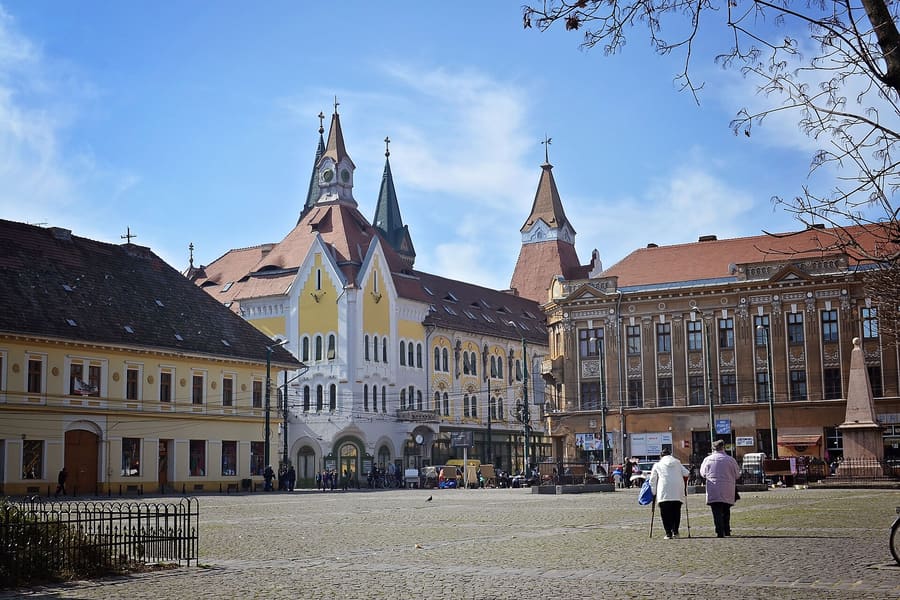
Piața Unirii
The city's main Baroque square, flanked by the Roman Catholic Dome and the Serbian Orthodox Vicarage.
Romania
Secessionist squares, river transit, and Europe's 1989 spark.
Timișoara is defined by three interconnected pedestrian squares and the canalised Bega River. Built on Habsburg fortifications, the central Cetate district keeps traffic on its perimeter, leaving the core to walkers and tram lines. Expect Hungarian and Austrian Secessionist facades rather than medieval sprawl, with a cultural tempo shaped by its university population.
Iosefin — Industrial heritage zone west of the centre, featuring Art Nouveau housing blocks and river access.
Fabric — Former manufacturing hub east of Cetate, centered around Piața Traian and historic synagogues.
Elisabetin — Low-rise residential district south of the river with quiet streets and local bakeries.
Traditional grilled pork dishes served with local condiments.
01
landmark
The city's main Baroque square, flanked by the Roman Catholic Dome and the Serbian Orthodox Vicarage.
landmark
Boulevard-style square where citizens gathered during the 1989 uprising. Anchored by the Opera House.
landmark
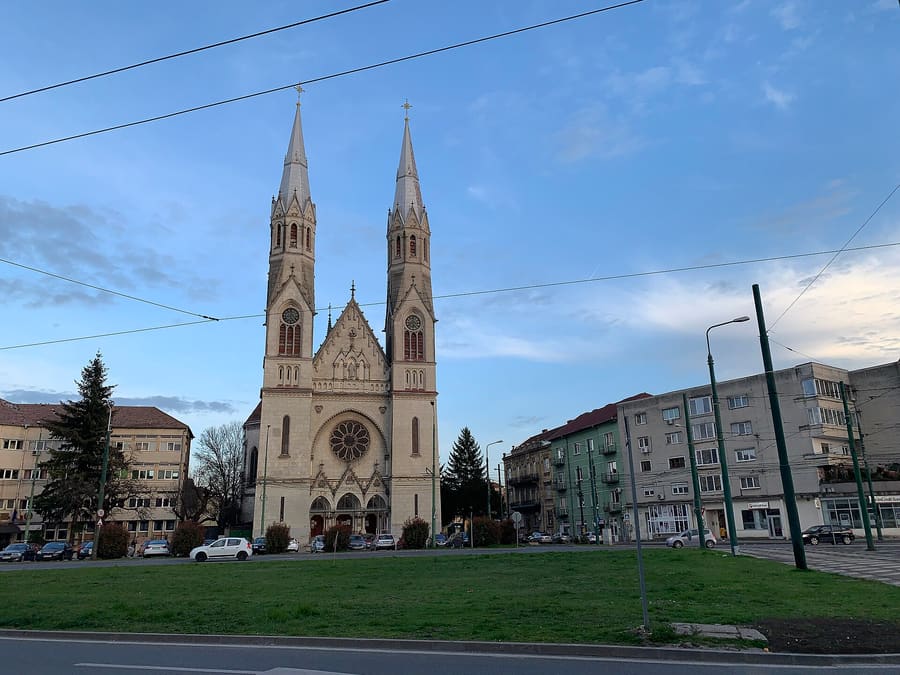
Striking 11-tower cathedral blending Moldavian and Byzantine styles. Free admission daily.
landmark
Open red-brick square linking Unirii and Victoriei, featuring the Old Town Hall and Garrison Command.
landmark
Timișoara's oldest surviving structure, built in the 14th century and modified after 1849.
02
03
Pedestrian historic core containing three primary plazas, restored townhouses, and terrace dining.
NearbyPiața Unirii, Piața Victoriei, Art Museum
Ask ParleyIndustrial heritage zone west of the centre, featuring Art Nouveau housing blocks and river access.
NearbyGara de Nord, Bega River docks
Ask ParleyFormer manufacturing hub east of Cetate, centered around Piața Traian and historic synagogues.
NearbyPiața Traian, Water Tower
Ask ParleyLow-rise residential district south of the river with quiet streets and local bakeries.
NearbyCentral Park, Politehnica University
Ask Parley04
Timișoara's culinary traditions reflect the Banat region's history, combining Romanian, Hungarian, German, and Serbian elements. Pork and paprikas play central roles on traditional menus, alongside regional pastries like schwaebische strudels.Speciality coffee shops cluster heavily around and Strada Alba Iulia. For traditional regional fare, step away from the primary tourist squares into side streets near Piața Traian or Elisabetin.
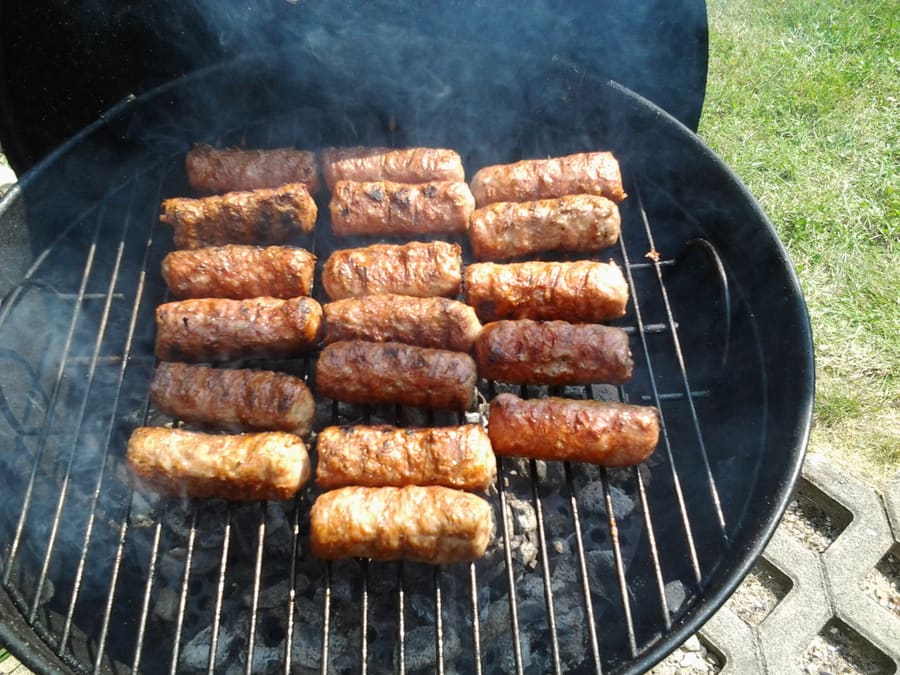
Traditional grilled pork dishes served with local condiments.
Look for Tochitură Bănățeană on menus: pork cooked in garlic lard sauce, served with polenta and fried egg.
Local roasters open early around 07:30. Most independent coffee shops take contactless card payments.
Square dining spots in Piața Unirii fill completely between 19:00 and 21:00 from May through September.
05
First documented in the 12th century as a fortress, Timișoara developed into an Ottoman administrative centre before fell under Habsburg rule in 1716. The Austrian empire fortified the city and engineered the Bega Canal, creating a trade hub.In December 1989, public opposition to the forced relocation of pastor László Tőkés escalated into mass protests in , triggering the Romanian Revolution.
Habsburg Conquest
Prince Eugene of Savoy captures the fortress from Ottoman control, inaugurating two centuries of Austrian urban planning.
Electric Street Lighting
Timișoara becomes the first mainland European city to introduce electric street lighting, installing 731 lamps.
Electric Trams
The city launches its electric tram service, replacing horse-drawn carriages across central quarters.
The Revolution Begins
Demonstrations starting on 16 December expand into full anti-communist protests, freeing the city on 20 December.
06
Choose your base depending on your daily reliance on walking versus public transit. Staying inside Cetate puts sights directly at your doorstep, while staying south of the Bega River offers quieter surroundings and lower hotel prices.
Highly rated hotels in Timișoara.
See more Timișoara hotels07
Timișoara's public transit system (STPT) consists of trams, buses, trolleybuses, and water buses. The historic centre Cetate is almost entirely pedestrianised, making foot travel the primary choice within the core.
From Traian Vuia International Airport (TSR)
Express line E4 connects airport directly to Cetate (Piața 7 Pescom).
Use official airport dispatch screens or app cabs to prevent unmetered overcharges.
Uber and Bolt pick up in designated lanes outside the arrival terminal.
Buy a single ride ticket for 4 RON or tap a contactless credit card at the yellow validators inside the vehicle.
Vaporettos operate daily along 9 stops between Mihai Viteazul bridge and Ardealul bridge for 1 RON per leg.
A day pass costs 15 RON and covers unlimited rides on trams, buses, and trolleybuses across all city zones.
Watch for bicycles and electric scooters sharing paths in and along the Bega embankments.
08
Romania uses the Romanian Leu (RON). Cards are accepted at nearly all restaurants, hotels, and retail stores in Timișoara, though carrying small cash notes is useful for street kiosks and outdoor markets.
Price for a single espresso in independent cafés around .
Average cost per person for a main course and soft drink in Cetate restaurants.
Valid for one journey on trams, buses, or trolleybuses within city limits.
Standard adult ticket for the National Art Museum or Banat Museum exhibitions.
09
MAR – MAY
Mild temperatures around 15–22°C. Parks along the Bega River bloom, making this an ideal walking window.
JUN – AUG
Summer heat often exceeds 32°C. Outdoor terraces operate until midnight, though afternoon walking can feel oppressive.
SEP – NOV
Cooler days between 12–20°C. University sessions resume, bringing lively evening crowds back to central squares.
DEC – FEB
Cold conditions with occasional snow, averaging 0–4°C. Piața Victoriei hosts the city Christmas market throughout December.
10
Supermarkets and major pharmacies operate seven days a week, though smaller boutiques close on Sunday afternoons.
Contactless card payment is universal in cafes and cabs. Keep 20 RON in cash for small market stalls.
English and German are widely spoken by service staff, hotel personnel, and younger residents.
Tap water in Timișoara is safe to drink, though mineral content gives it a distinct taste.
and surrounding historic alleys feature uneven stone paving. Flat walking shoes are recommended.
Contents
Your trip
Going to Timișoara?
Tell Parley when you’re going and what you enjoy, and it plans the days around this guide.
Plan with Parley


