
landmark
Schonbrunn Palace
Book timed tickets online days ahead. Walk up to the Gloriette structure for free panoramic park views.
Austria
Imperial grand architecture and quiet coffeehouse culture.
Vienna moves at two speeds: imperial grandeur along the Ringstraße and slow leisure inside traditional coffeehouses. The public transit network renders cars unnecessary, connecting royal palaces to modern gallery districts in minutes. Expect structured etiquette, precise service, and straightforward access to world-class art collections.
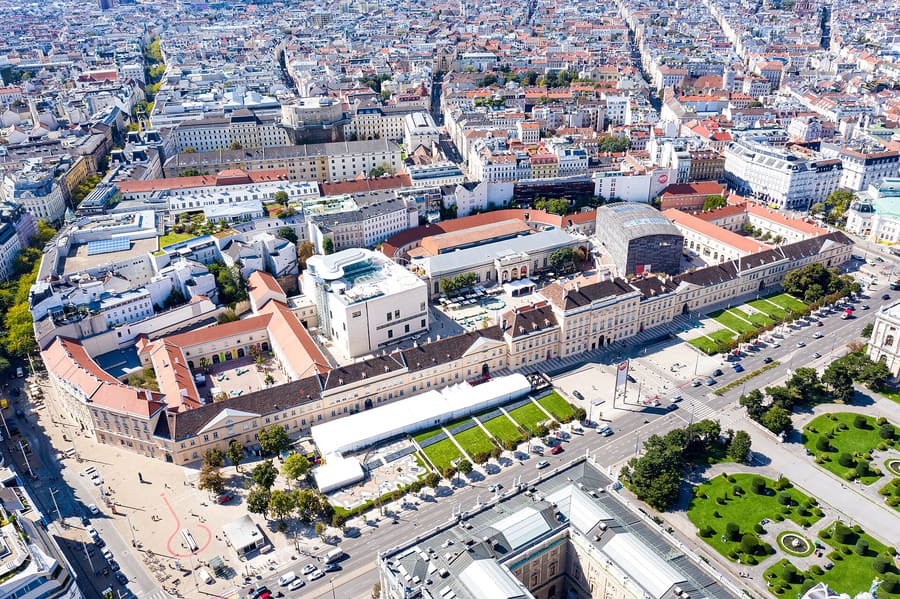
neubau — Independent boutiques, contemporary galleries, and courtyard cafes behind the MuseumsQuartier.
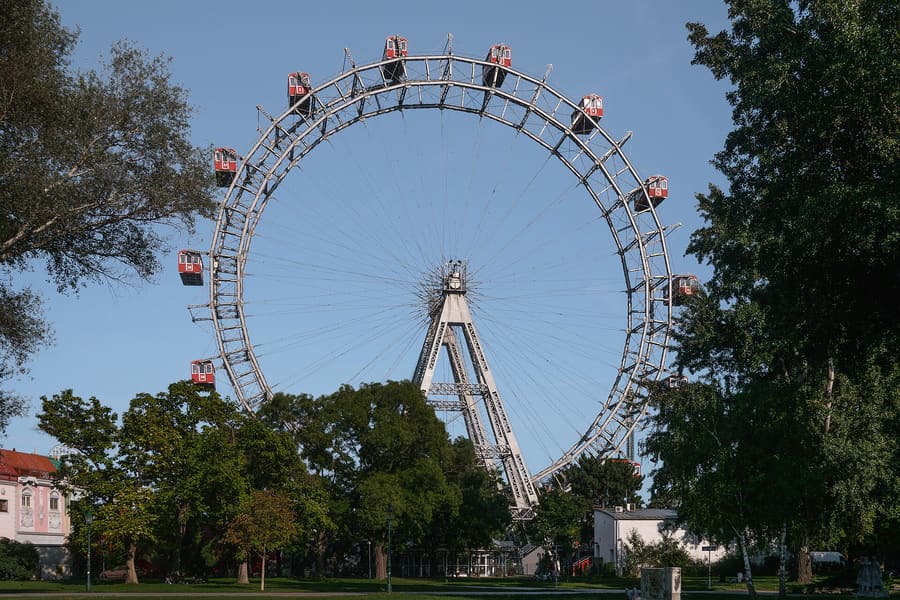
Leopoldstadt — Former Jewish quarter turned creative hub, anchored by the Prater park and Karmelitermarkt.
Mariahilf — Bustling shopping artery fading into quiet residential side streets with traditional coffeehouses.
An original Sachertorte served with unsweetened whipped cream.
01
landmark
Book timed tickets online days ahead. Walk up to the Gloriette structure for free panoramic park views.
museum
Houses the world's largest Bruegel collection. Visit on Thursday evenings when crowds disperse and doors stay open late.
landmark
Klimt's The Kiss hangs in the Upper Belvedere. Buy a single-palace ticket if you only want the major nineteenth-century works.
landmark
Stretches a kilometer along Linke Wienzeile. Eat at the permanent food stalls on weekday afternoons to avoid Saturday gridlock.
02
03
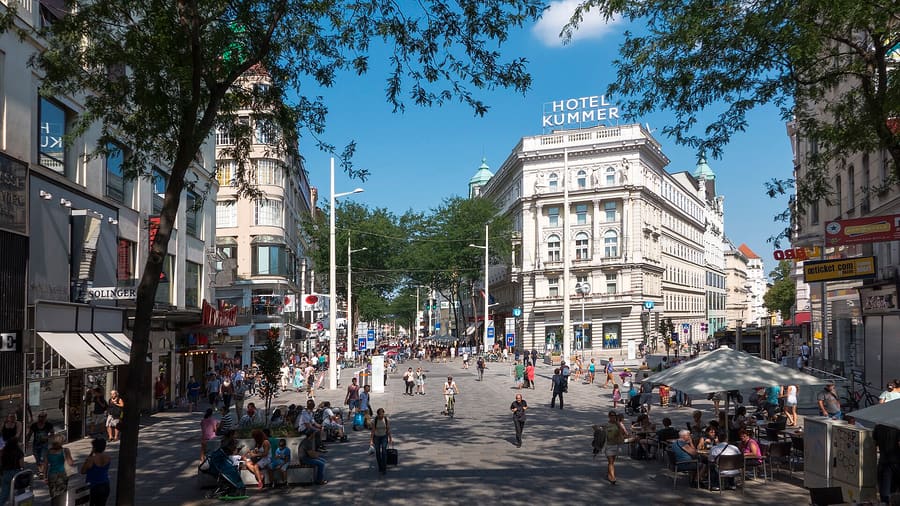
Imperial grandeur, cobblestone pedestrian zones, and high-end retail framed by the Ringstraße.
NearbyStephansdom, Hofburg Palace, State Opera
Ask ParleyIndependent boutiques, contemporary galleries, and courtyard cafes behind the MuseumsQuartier.
NearbyMuseumsQuartier, Volkstheater, Spittelberg
Ask ParleyFormer Jewish quarter turned creative hub, anchored by the Prater park and Karmelitermarkt.
NearbyPrater, Augarten, Karmelitermarkt
Ask ParleyBustling shopping artery fading into quiet residential side streets with traditional coffeehouses.
NearbyNaschmarkt, Westbahnhof, MuseumsQuartier
Ask Parley04
Viennese food revolves around hearty meat dishes and distinct cafe rituals. The Wiener Schnitzel must be pan-fried in butter oil or lard, using hammered veal cutlets. Traditional coffeehouses treat guests as patrons of time, where a single espresso order permits hours of reading without pressure from waiters.
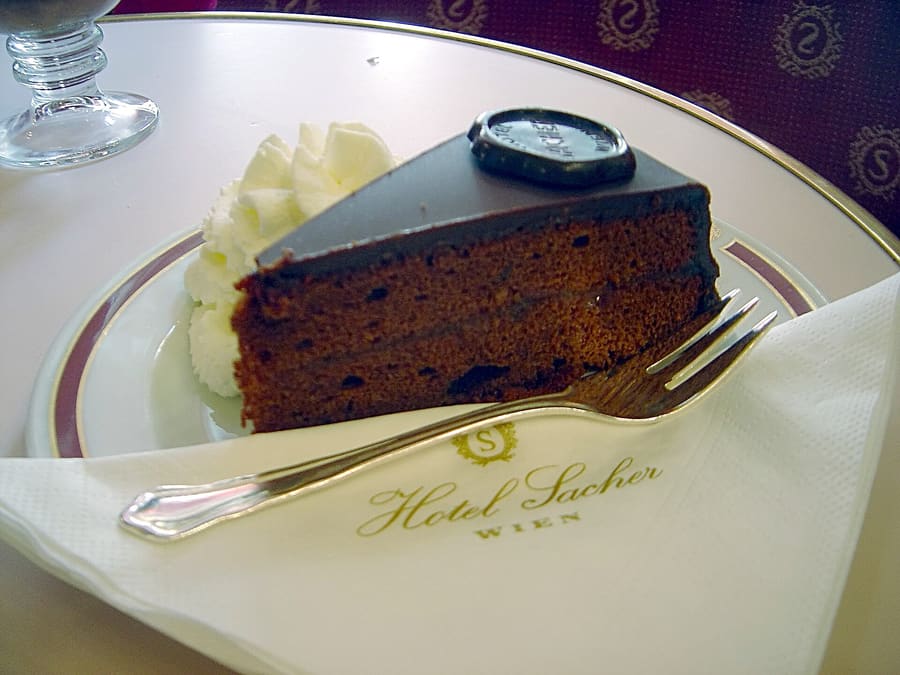
An original Sachertorte served with unsweetened whipped cream.
Order a Melange for espresso with steamed milk and foam. Every coffee comes served on a silver tray alongside a glass of tap water topped with a spoon.
Look for traditional corner taverns called Beisln for Tafelspitz (boiled beef with horseradish) or Gulasch. Reservations are essential on weekend evenings.
Take tram 38 to Grinzing in late afternoon to visit local wine taverns. Look for a bunch of pine twigs hung over the doorway to confirm they are open.
05
Vienna evolved from a Roman border fort into the political center of the Habsburg dynasty. For six centuries, the empire directed Central Europe from the Hofburg complex. The city walls fell in 1857, making way for the grand Ringstraße boulevard that now defines the central district layout.
Siege of Vienna
Ottoman forces besiege the city. Relief forces break the siege, marking the end of Ottoman expansion in Central Europe.
Ringstraße Construction
Emperor Franz Joseph orders the removal of medieval fortifications, replacing them with a monumental grand boulevard.
Modernist Movement
Vienna becomes an epicenter for modern art, psychoanalysis, and philosophy under Klimt, Freud, and Wagner.
Austrian State Treaty
Allied occupation ends after WWII. Austria declares permanent neutrality, establishing Vienna as a global diplomatic hub.
06
Choose your base by transit access and evening atmosphere. First-time visitors benefit from staying within the Ringstraße or one district out along the U-Bahn lines. Inner districts offer walkability, while western districts like Neubau deliver better local dining and lower nightly rates.
Highly rated hotels in Vienna.
See more Vienna hotels07
Vienna operates one of Europe's most efficient public transit networks, covering U-Bahn subways, trams, and S-Bahn commuter trains under one fare system. Physical turnstiles do not exist; validate your paper ticket at the blue machines before boarding platforms to avoid €105 spot fines.
From Vienna Airport (VIE)
S-Bahn line S7 runs every 30 minutes straight to Wien Mitte station.
CAT express train goes non-stop to Wien Mitte with free onboard Wi-Fi.
Vienna Airport Lines buses run direct to Hauptbahnhof central rail station.
Fixed rates apply when booked in advance online or via dispatch desks.
A 24-hour pass costs €8.00 and a 72-hour pass costs €17.10. Single trips cost €2.40, making a day pass profitable after four rides.
U-Bahn lines run continuously 24 hours a day on Friday and Saturday nights at 15-minute intervals.
Passes purchased on the Wiener Linien mobile app are auto-validated. Paper single tickets must be stamped before entering platforms.
08
Vienna sits in the upper-middle price tier for European capitals. Tap water is crisp mountain spring water straight from the Alps, eliminating bottled water costs entirely. Museum entry fees add up quickly, but public parks and city gardens cost nothing to explore.
Traditional coffeehouse prices include table service and unlimited tap water.
Authentic calf-meat schnitzel in central restaurants. Pork versions cost around €16.00.
Covers all trams, subways, and buses within the central Vienna core zone.
Standard adult admission for state collections like Kunsthistorisches or Belvedere.
09
MAR – MAY
Mild temperatures and blooming garden paths. Ideal for walking tours before peak summer tour buses arrive.
JUN – AUG
Warm days and outdoor film festivals on Rathausplatz. Humidity peaks and non-air-conditioned boutique hotels get warm.
SEP – NOV
Crisp autumn weather, grape harvesting in suburban vineyards, and manageable queue times across major galleries.
DEC – FEB
Christmas markets fill major squares until late December. Cold temperatures clear out park crowds but museum lines increase.
10
All regular supermarkets and retail shops close on Sundays by Austrian law. Station stores at Praterstern and Hauptbahnhof remain open.
Cards are widely accepted, but traditional coffeehouses and market stalls frequently enforce cash-only policies.
City drinking fountains spout pure alpine spring water directly from lower Austria. Refill bottles anywhere across the city.
Residential quiet hours start strictly at 22:00. Keep balcony conversations and courtyard noise quiet after this time.
The 21-kilometer artificial island on the Danube offers clean, free swimming access with dedicated family and nudist zones.
Contents
Your trip
Going to Vienna?
Tell Parley when you’re going and what you enjoy, and it plans the days around this guide.
Plan with Parley


