landmark
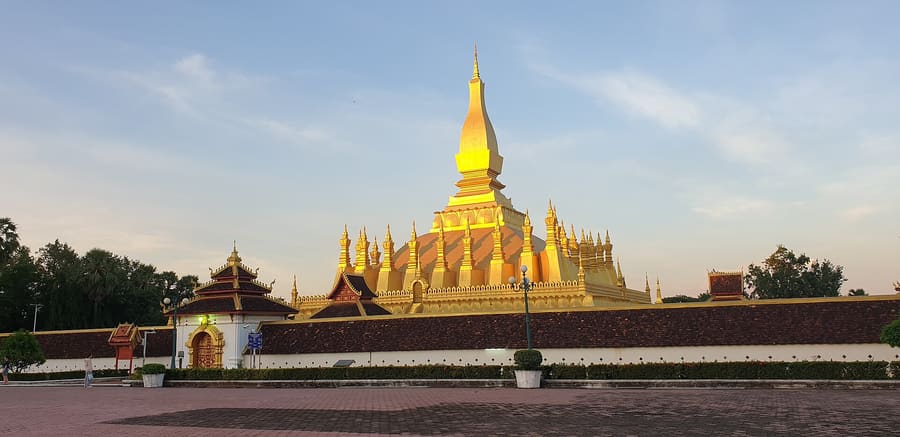
Pha That Luang
The national gold stupa. Go before 09:00 to dodge tour buses and mid-morning heat.
Ask ParleyLaos
Southeast Asia's slowest capital on the banks of the Mekong.
introduction
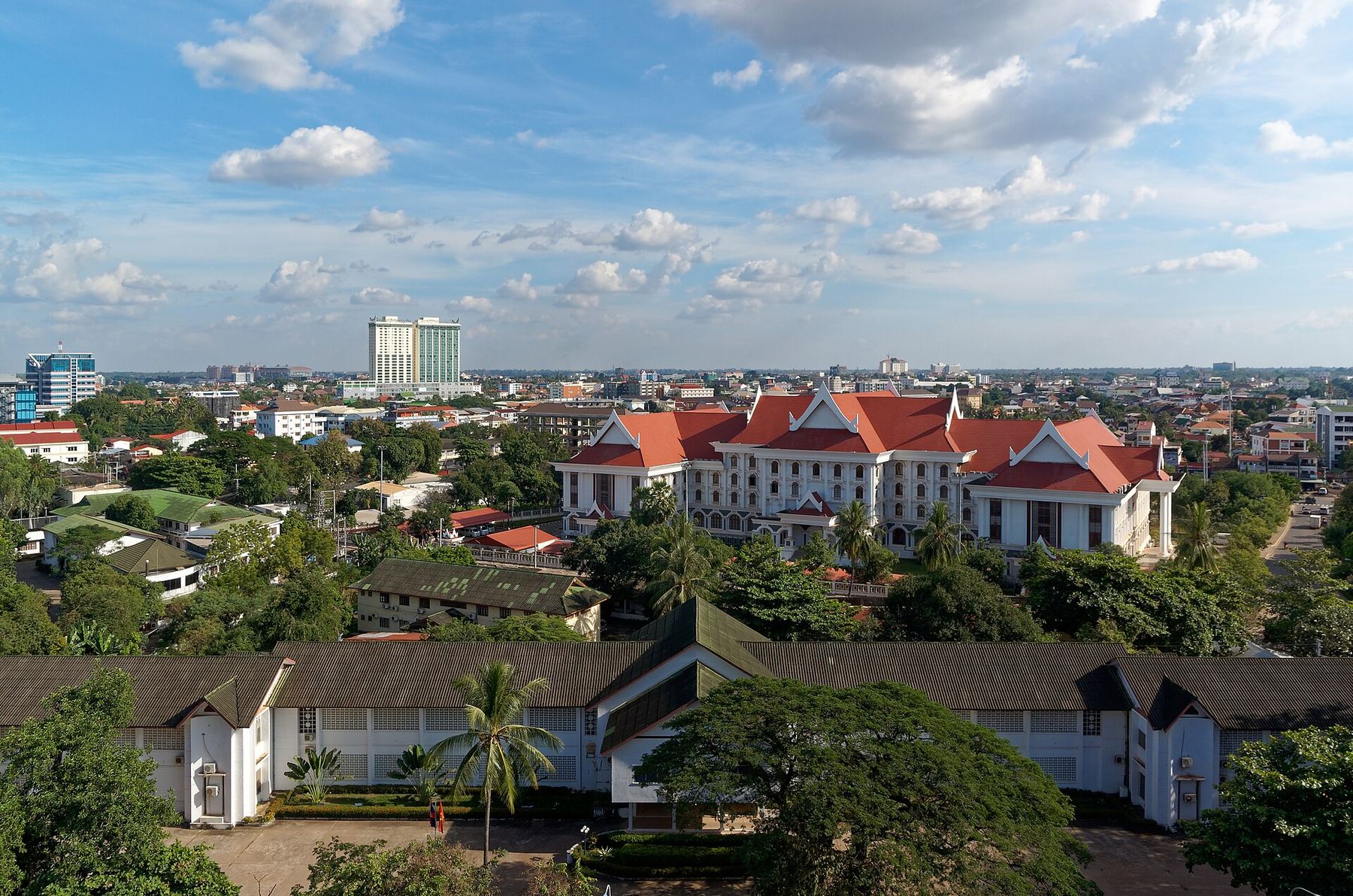
Vientiane operates at a pace that surprises first-time visitors expecting a busy national capital. You can walk across the central district in thirty minutes. Motorbike traffic is light compared to Hanoi or Bangkok, and low-rise French colonial shopfronts still outnumber modern towers. Life centers on the riverbank, where locals gather every evening as heat recedes.
Airport arrival
Wattay Airport sits 3 km west of downtown. Take the airport shuttle bus or use the Loca ride-hailing app to save half the price of airport taxis.
National symbol
Pha That Luang is Laos' central national monument. The golden stupa dates to 1566 and holds the country's most important religious festival every November.
Train booking
China-Laos Railway tickets sell out days in advance. Buy tickets three days prior on the LCR app or at the station using your passport.
Vientiane
Mx. Granger · CC0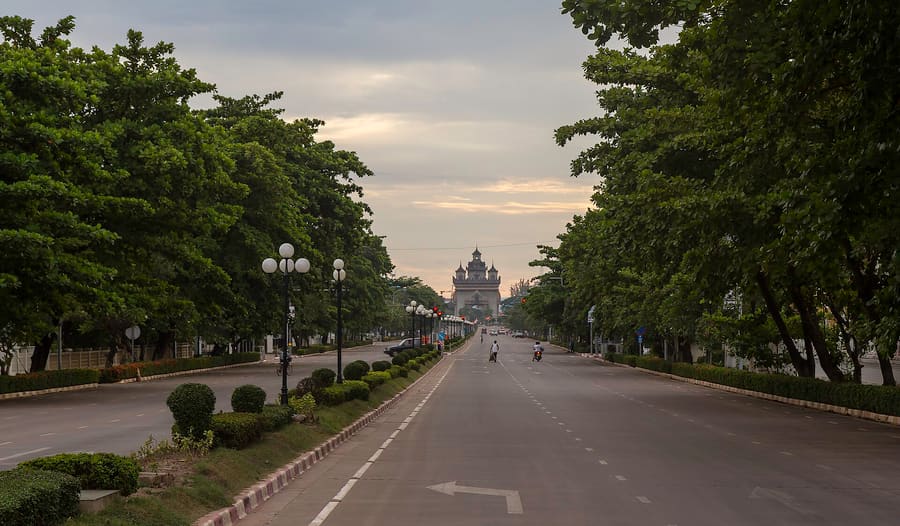
Ban Phonxay — Wide government avenues surrounding the Patuxai victory arch, dotted with embassies.
Stefan Fussan · CC BY-SA 3.0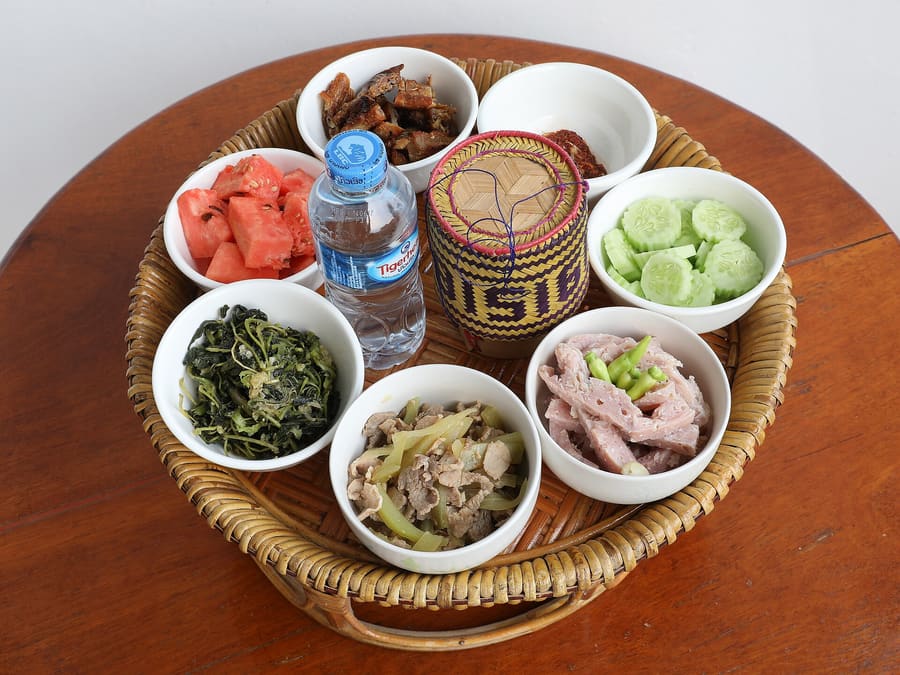
A classic Lao spread featuring laap, sticky rice in bamboo baskets, and fresh herbs.
Basile Morin · CC BY-SA 4.0highlights
landmark
The national gold stupa. Go before 09:00 to dodge tour buses and mid-morning heat.
Ask Parley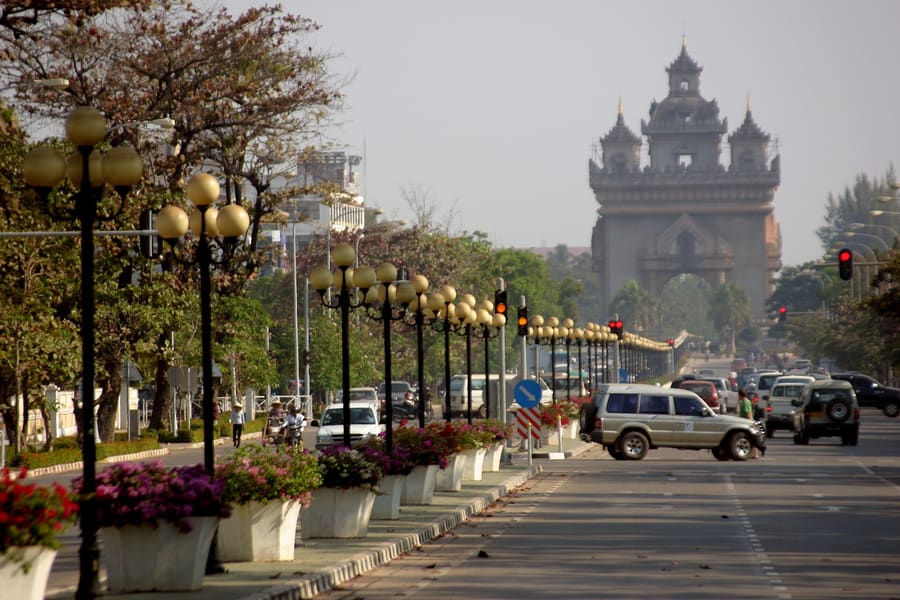
landmark
Laos' concrete arch modeled on Paris. Climb the staircases inside for clear city views.
Ask Parley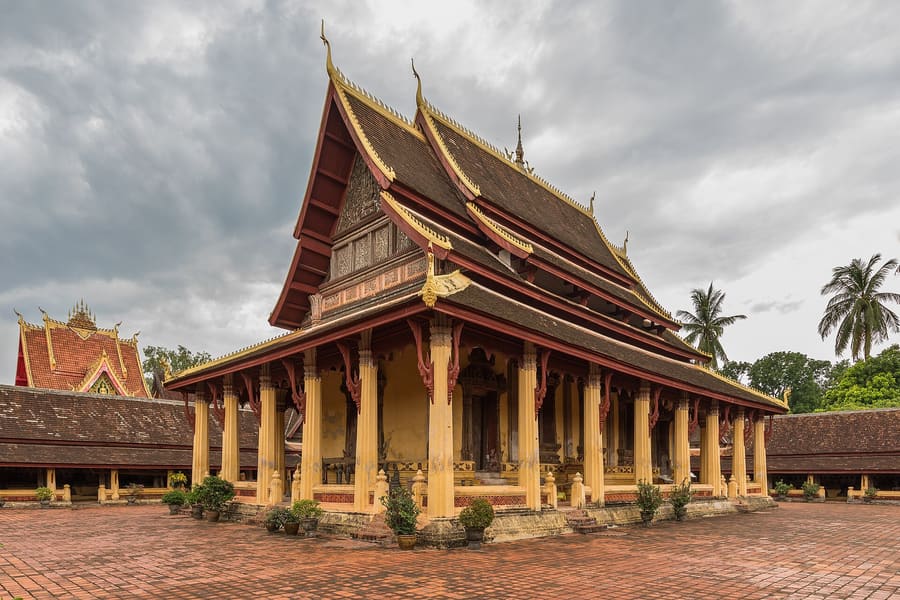
landmark
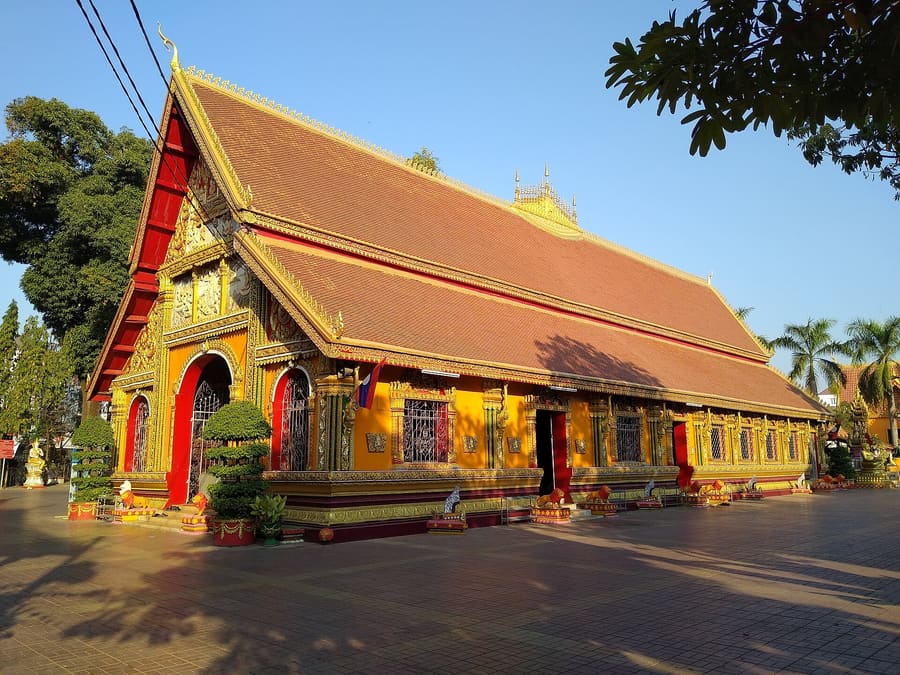
Vientiane's oldest surviving temple. Its cloisters house over 2,000 ceramic and silver Buddha images.
Ask Parley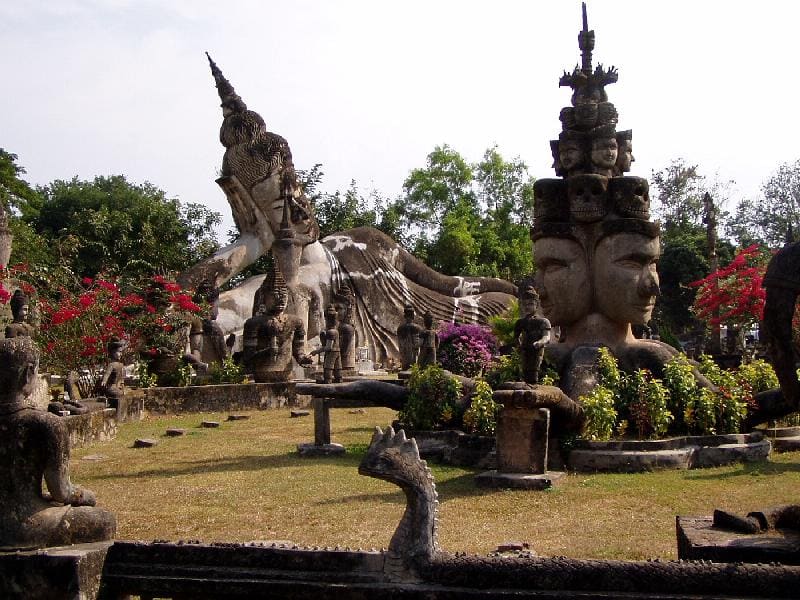
landmark
Over 200 concrete religious sculptures built in 1958. Bus 14 runs directly from Morning Market.
Ask Parley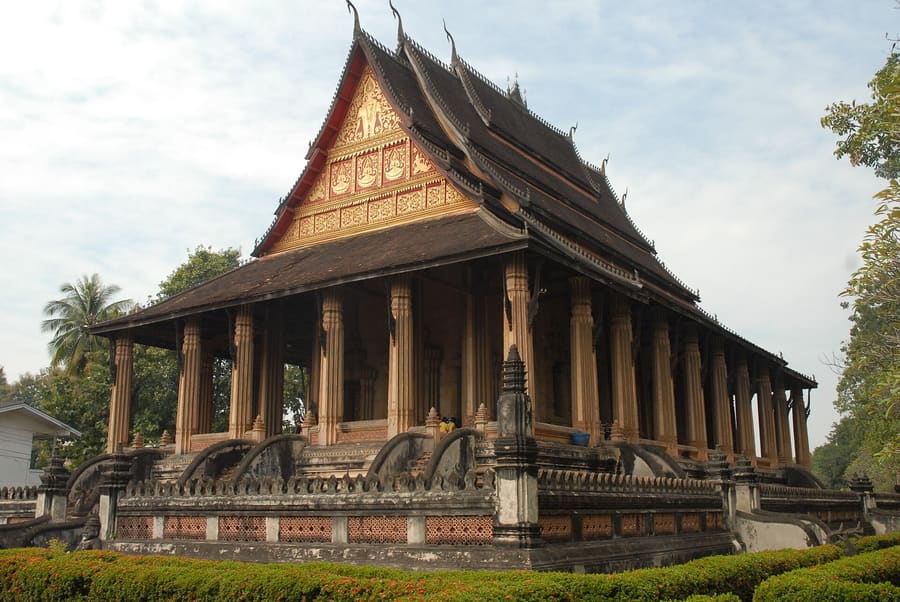
landmark
Former royal temple that once held the Emerald Buddha. Now a museum of Lao sacred art.
Ask Parleyattractions
areas
Wide government avenues surrounding the Patuxai victory arch, dotted with embassies.
NearbyPatuxai Arch, Prime Minister Office, Morning Market
Ask ParleyCentral street grid with bakeries, craft shops, and sunset views over Thailand across the Mekong.
NearbyWat Si Saket, Haw Phra Kaew, Mekong promenade
Ask ParleySuburban district surrounding Pha That Luang with local noodle shops and family guesthouses.
NearbyPha That Luang, That Luang Marsh, local fresh markets
Ask ParleyUpscale residential quarter south of downtown filled with embassies and restored French villas.
NearbyCOPE Visitor Centre, Australian Embassy, boutique hotels
Ask Parleyfood
Vientiane's food scene reflects two distinct culinary traditions. Local meals revolve around sticky rice served in woven baskets, paired with minced meat salads called laap and sour papaya salad known as tam mak hoong. The city also maintains a strong French baking tradition, offering fresh baguettes and croissants that match European standards at a fraction of the cost.Noodle soups dominate morning dining across the city. Khao piak sen, a thick rice noodle soup with chicken or pork broth, is consumed at simple street stalls before noon. For dinner, head to Fa Ngum Road, the central tourist strip of Vientiane, to find local grills serving whole grilled tilapia coated in salt.
A classic Lao spread featuring laap, sticky rice in bamboo baskets, and fresh herbs.
Basile Morin · CC BY-SA 4.0Khao piak sen stalls near Khouvient Road open by 06:30 and often sell out by 10:00.
Lao meals use sticky rice as an utensil. Roll a small ball with your fingers to scoop up laap and sauces.
Places like Le Banneton on Rue Nokeokoummane bake fresh baguettes twice daily.
history
Vientiane became the capital of the Lan Xang kingdom in 1560 under King Setthathirath, who moved the seat of power from Luang Prabang to avoid Burmese invasions. The city grew into a major Buddhist learning center until internal disputes split the kingdom in 1707.In 1827, Siamese forces destroyed Vientiane following an uprising led by King Anouvong. The city lay abandoned in thick jungle for six decades until French colonial administrators rebuilt it in 1893 as the administrative capital of French Laos. The current street grid dates from this era.
Capital relocated
King Setthathirath moves the Lan Xang capital south to Vientiane and orders construction of Pha That Luang.
Siamese sack
Siamese troops burn Vientiane to the ground following King Anouvong's revolt. Wat Si Saket is the only major temple spared.
French protectorate
France integrates Laos into Indochina and establishes Vientiane as the administrative capital, building modern avenues.
Republic established
The Pathet Lao takes control, ending the monarchy and establishing the Lao People's Democratic Republic.
where to stay
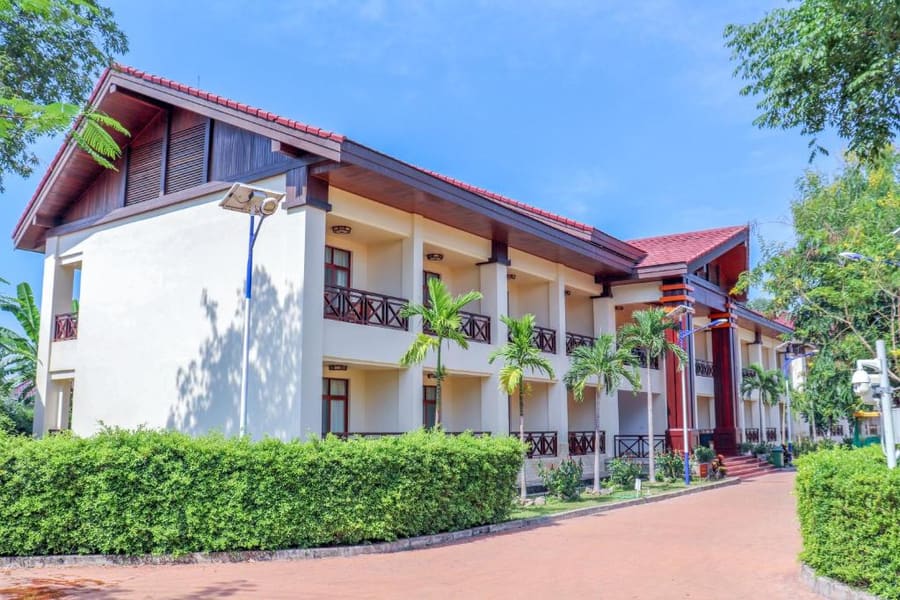
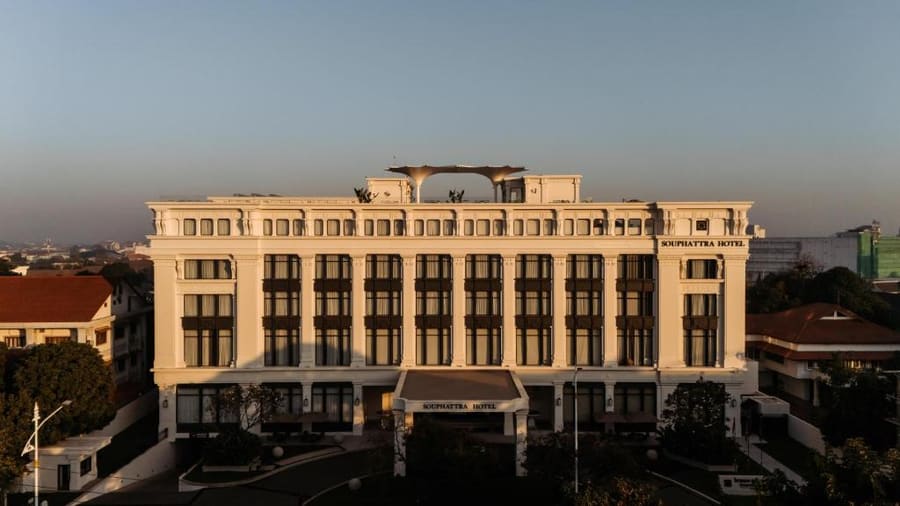
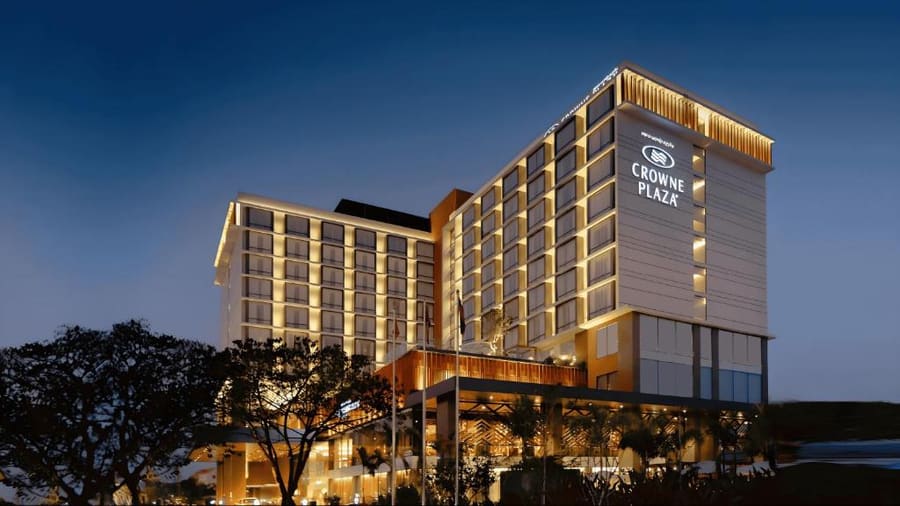
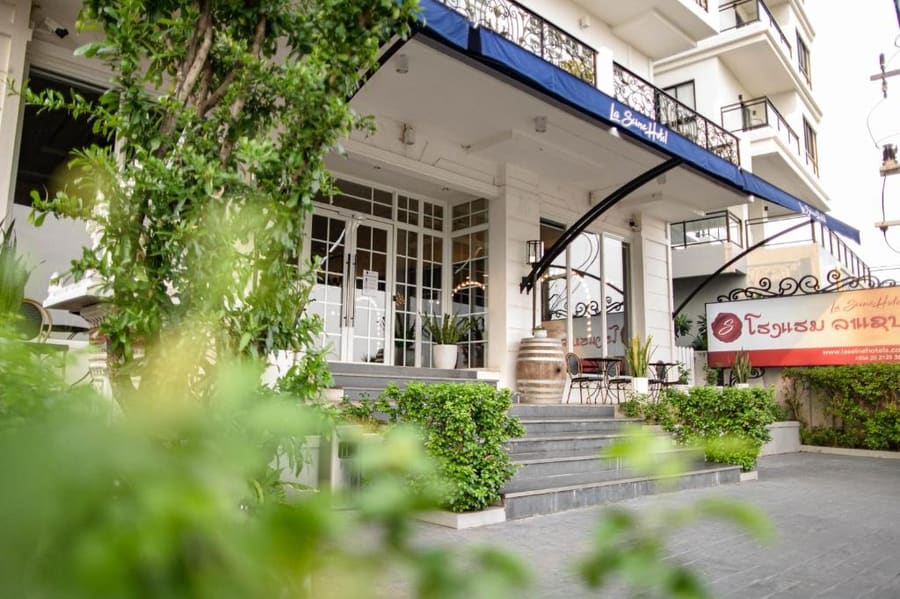
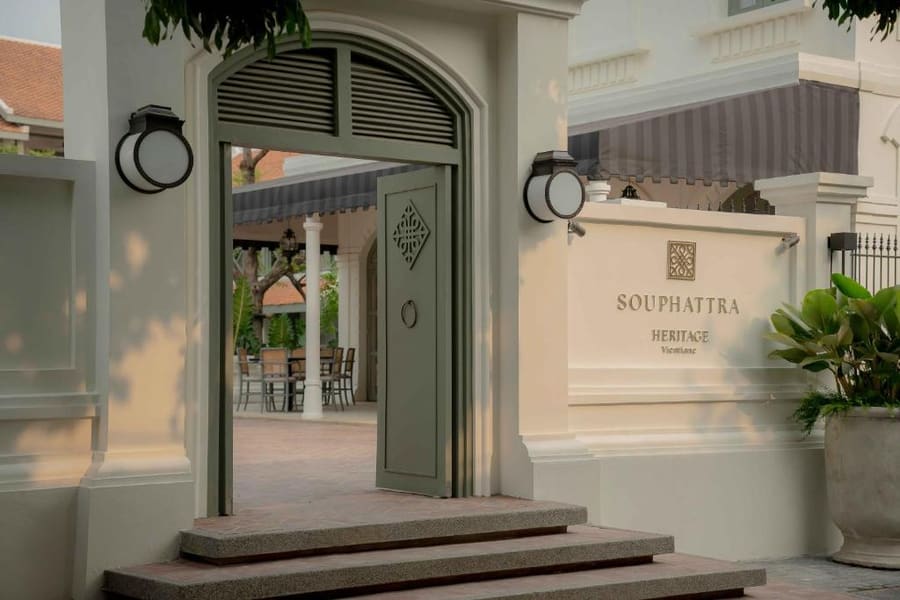
Choose your location based on how you plan to travel through the city. Riverside offers walking access to sights and dining, while outer districts require transport but offer quiet gardens and lower rates.
Live rates, matched to the areas above.
transport
Vientiane lacks an underground or skytrain system. Most travelers move around on foot inside the Chanthabouly district and use ride-hailing apps or tuk-tuks for longer journeys across town.
From Wattay International Airport (VTE)
Book via Loca app to avoid haggling at the taxi desk.
Runs every 30 minutes from international arrivals to central hotels.
Fixed rate coupons sold at the official arrival hall desk.
Loca is Laos' local ride-hailing app. It links to foreign credit cards and prevents driver fare markups.
Bus 14 leaves Khua Din bus station every 20 minutes for Buddha Park and the Thai border bridge.
Tuk-tuks do not use meters. Negotiate and confirm the total price before stepping inside.
Central guesthouses rent city bicycles for flat-terrain cycling along the river road.
cost
Laos uses the Lao Kip (LAK). While high-end hotels quote prices in US Dollars, daily transactions like meals, bus fares, and entrance fees require local cash.
Standard price at local neighborhood noodle shops across Chanthabouly.
Standard ticket price per adult at Wat Si Saket, Haw Phra Kaew, and Pha That Luang.
One-way fare on green public buses from Morning Market station.
Price at French bakeries in central Vientiane.
seasonality
NOV – FEB
Cool dry season. Daytime temperatures average 28°C with low humidity. Peak tourist arrivals.
MAR – APR
Hot season. Temperatures exceed 38°C. Pi Mai Lao New Year water festival happens in mid-April.
MAY – SEP
Wet season. Heavy afternoon downpours clear air pollution and lower hotel rates across town.
OCT
Transition month. Rains decline, countryside is green, and river boat races take place.
practicalities
Shoulders and knees must be covered at active temples. Women wearing shorts can rent a traditional sinh skirt at the entrance.
ATMs dispense maximums of 2,000,000 to 3,000,000 LAK per transaction with hefty foreign card fees. Carry cash reserves.
Most temples close their gates to visitors at 16:00 or 17:00. Plan sightseeing for the morning.
The Mekong dries significantly in March and April, exposing wide sandbars along Chao Anouvong Park.
Located 2 km south of central Vientiane, COPE details unexploded ordnance history in Laos. Entry is free.