landmark
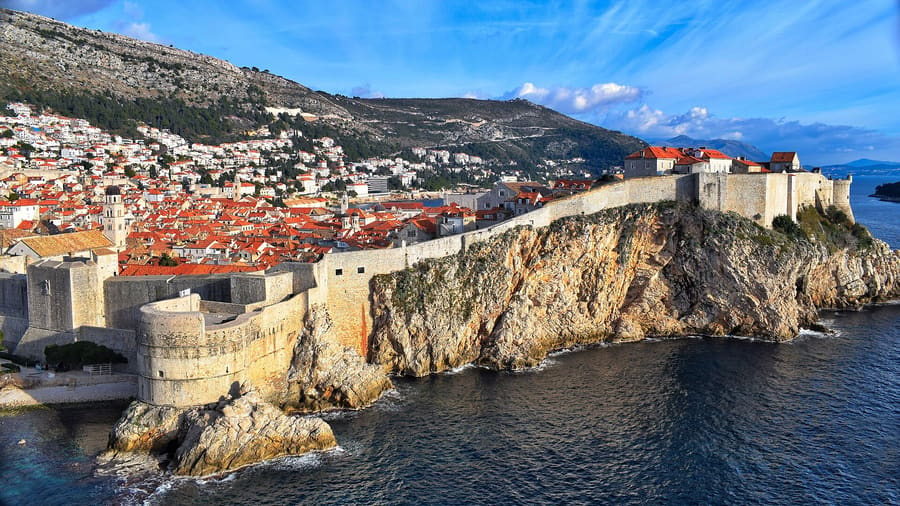
Walls of Dubrovnik
A 2 km loop on intact 16th-century ramparts. Enter at Pile Gate at 08:00 to avoid heat and cruise crowds.
Pregunta a ParleyCroacia
A stone fortress where sea meets medieval policy.
introduction
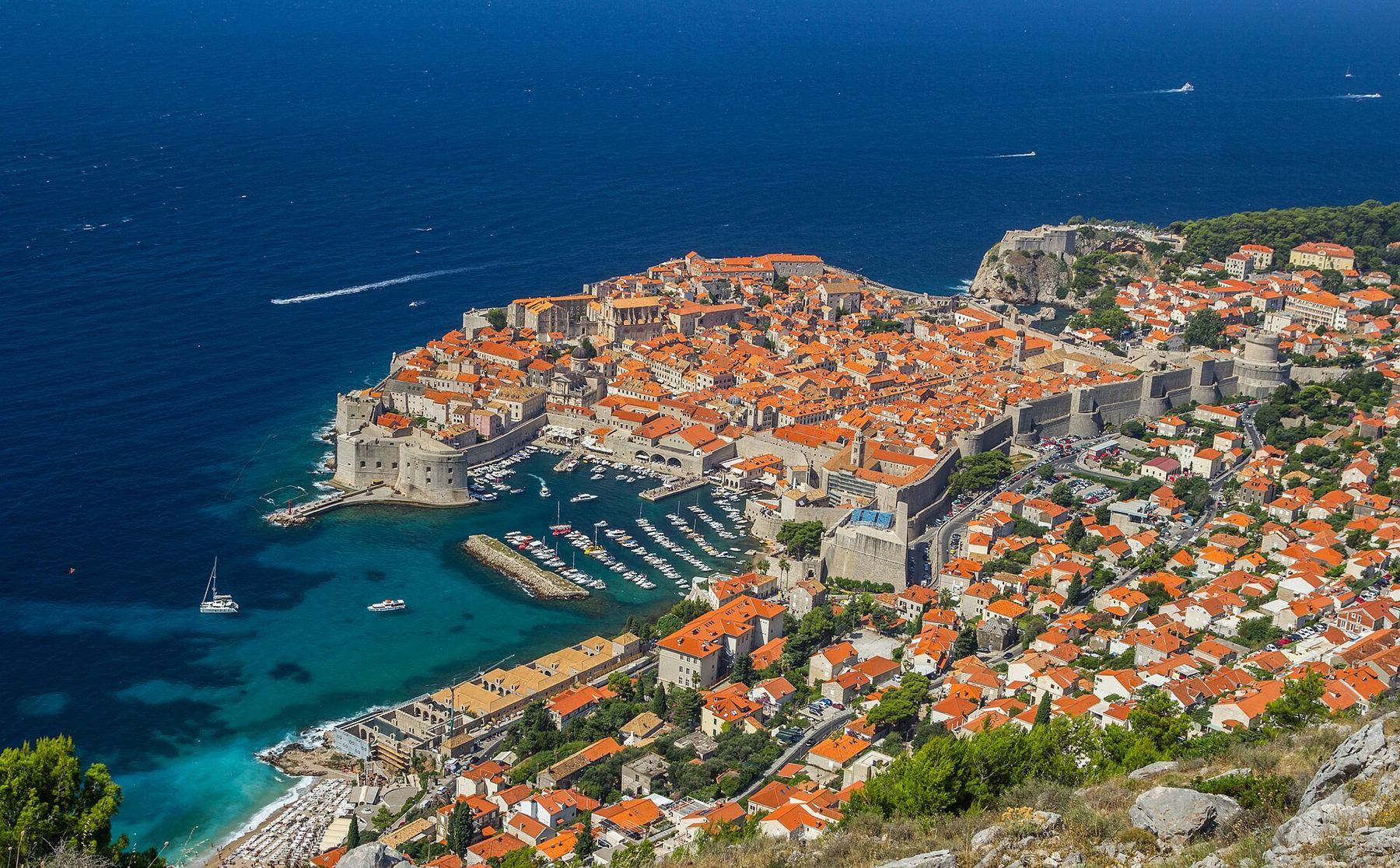
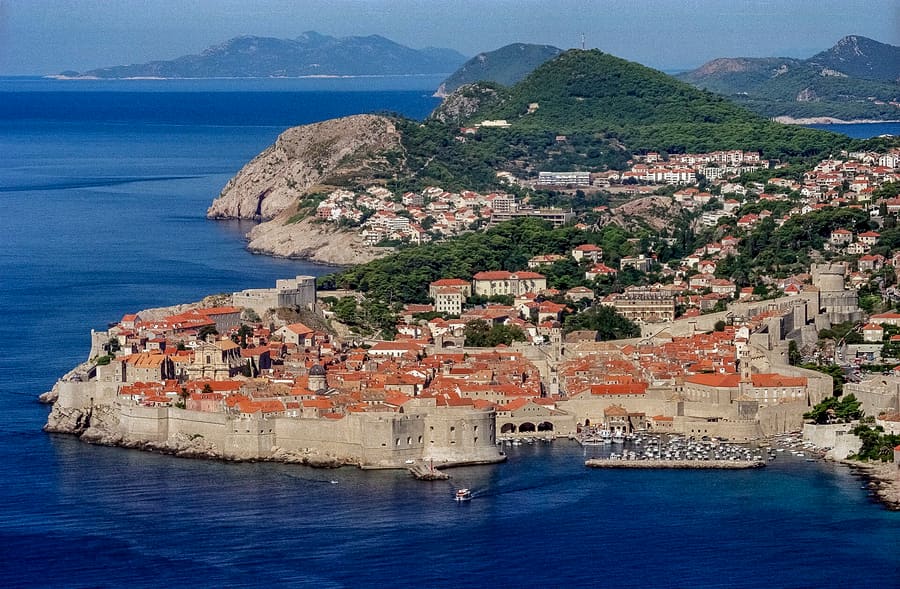
Dubrovnik is a pedestrian stone fortress set directly above the Adriatic Sea. You navigate the city primarily on foot across thousands of stone steps. Massive 16th-century walls enclose the historic center, while suburban bays curve along the coastline outside. Expect heavy cruise crowds between 10:00 and 15:00 in peak summer months.
UNESCO status
UNESCO listed the Old Town in 1979. The status protects the entire medieval stone city perimeter.
Wall walk timing
Buy the Dubrovnik Pass online to skip ticket lines at the city walls. Walk the perimeter at 08:00 or after 17:00 to avoid cruise crowds.
Dubrovnik
Jerzy Strzelecki · CC BY 3.0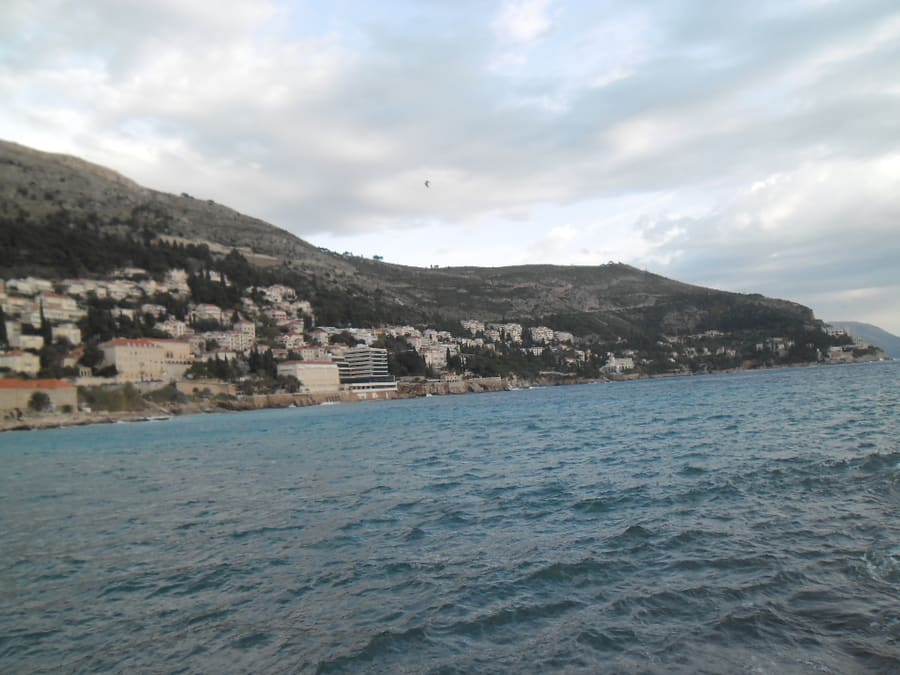
Ploče — Cliffside villas, high-end hotels, and sweeping views back toward the walled city.
August Dominus · CC BY-SA 3.0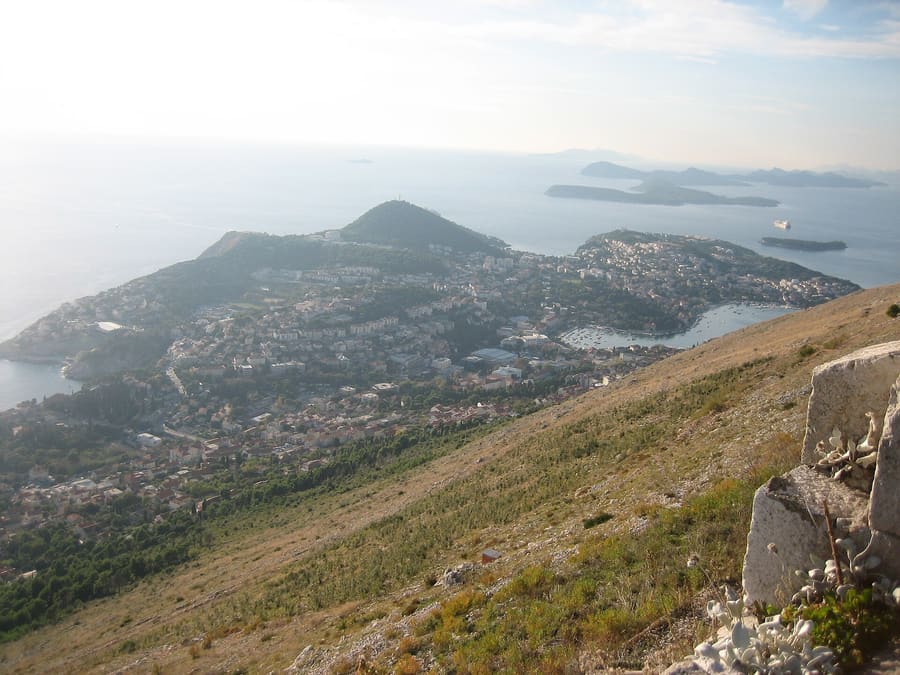
Lapad — A leafy green peninsula with modern resorts, pedestrian promenades, and calm coves.
Bracodbk · CC BY-SA 3.0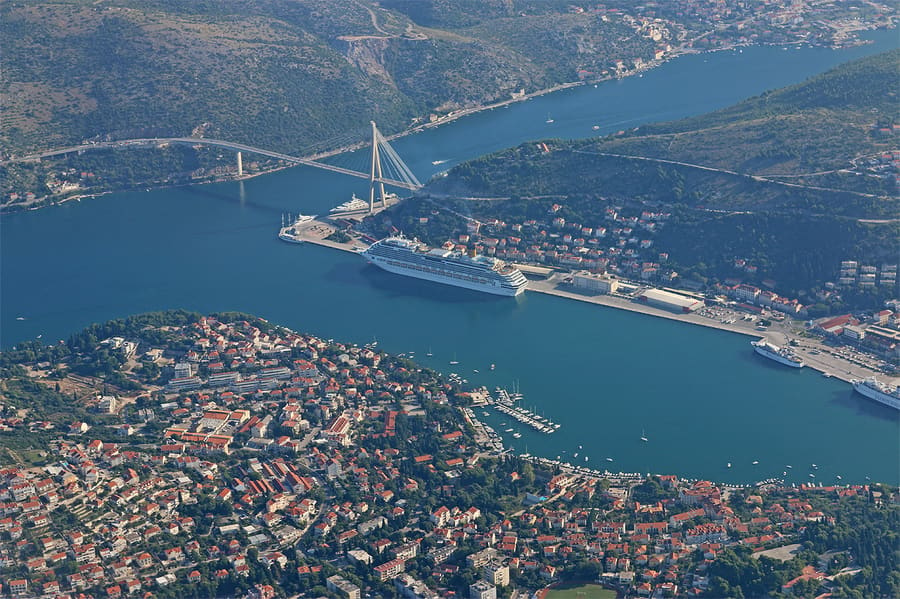
Gruž — A functional port district with working markets, ferry hubs, and realistic local prices.
Jola Sik · CC BY 3.0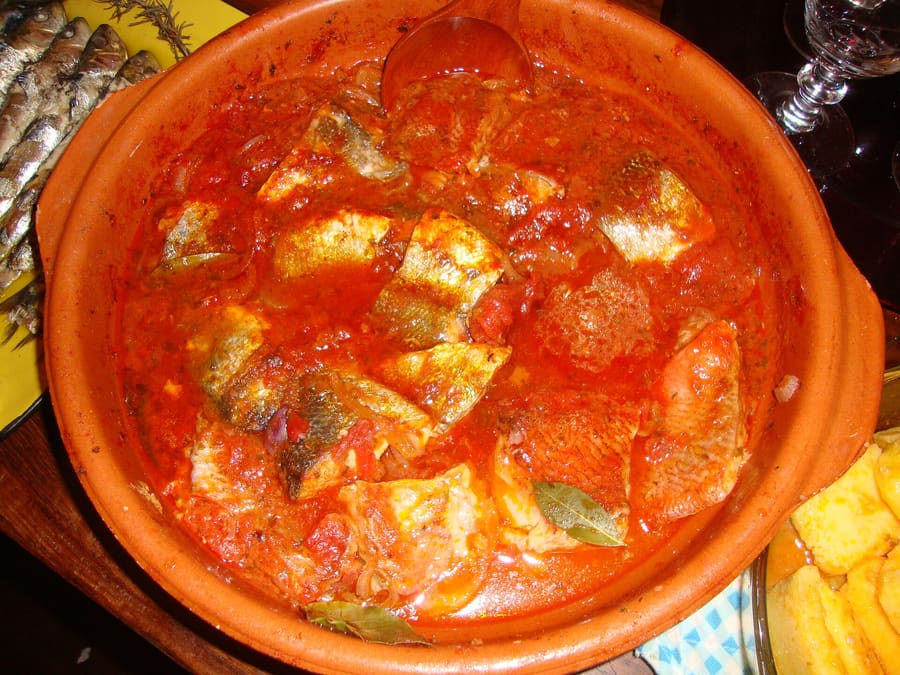
Fresh seafood cooked with garlic, wine, and local olive oil.
Chiqui Teo · Public domainhighlights
landmark
A 2 km loop on intact 16th-century ramparts. Enter at Pile Gate at 08:00 to avoid heat and cruise crowds.
Pregunta a Parley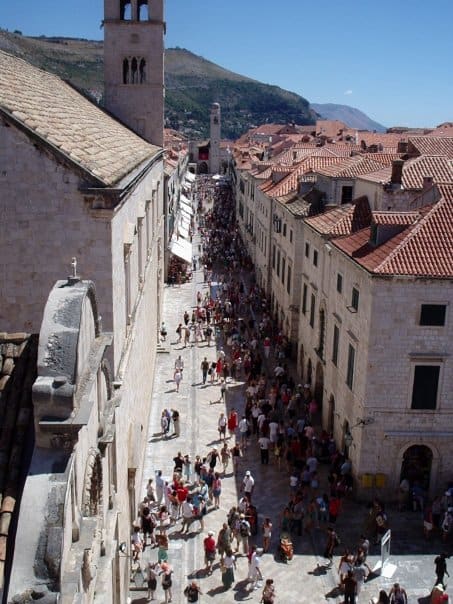
landmark
The main limestone street bisecting the Old Town. Walk it early in the morning before shops open to see the polished stone.
Pregunta a Parley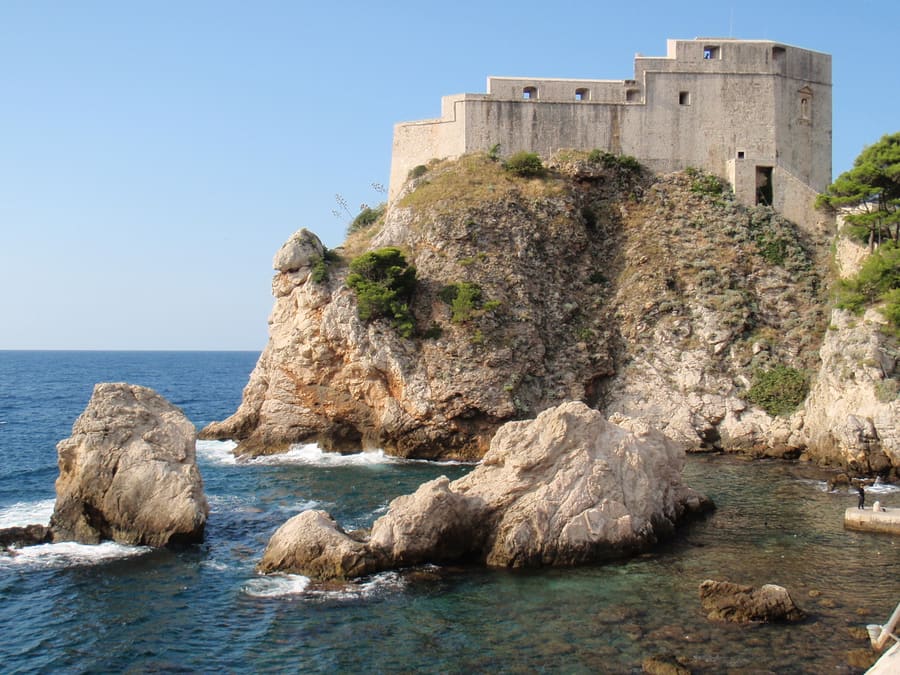
landmark
A detached fortress on a 37-meter cliff outside the walls. Your city walls ticket includes admission within three days.
Pregunta a Parley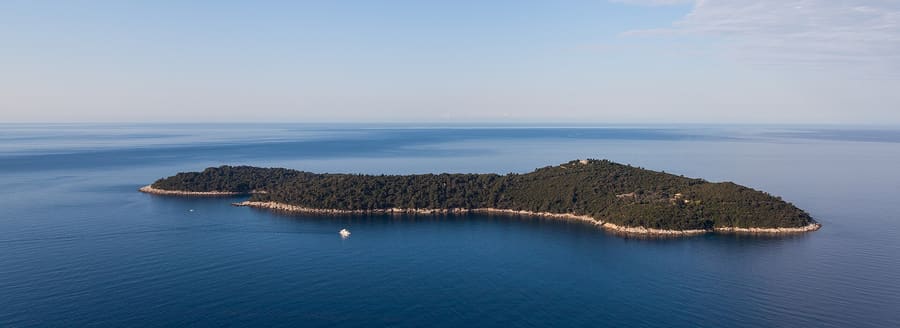
landmark
A forested island ten minutes by ferry from the Old Port. Pack water and swim off the rocky flat ledges.
Pregunta a Parleyattractions
areas
Cliffside villas, high-end hotels, and sweeping views back toward the walled city.
CercaBanje Beach, Ploče Gate
Pregunta a ParleyA leafy green peninsula with modern resorts, pedestrian promenades, and calm coves.
CercaSunset Beach, Uvala promenade
Pregunta a ParleyA functional port district with working markets, ferry hubs, and realistic local prices.
CercaGruž market, main ferry terminal
Pregunta a Parleyfood
Dubrovnik dining centres on seafood from the South Dalmatian coast. Black risotto gets its dark shade from cuttlefish ink. Ston oysters arrive daily from the Pelješac peninsula, served raw with fresh lemon. Local restaurants prefer simple grilled fish dressed in local olive oil and garlic.
Fresh seafood cooked with garlic, wine, and local olive oil.
Chiqui Teo · Public domainOrder raw oysters sourced from Mali Ston bay, served cold over crushed ice.
Eat cuttlefish risotto at Konoba Lokanda near the Old Port for classic preparation.
Try rozata, a traditional medieval egg custard baked with rose liqueur.
history
Dubrovnik flourished for centuries as the independent Republic of Ragusa. Maritime trade funded massive stone fortifications and skilled diplomacy maintained autonomy between major empires. The city survived a major earthquake in 1667 and modern warfare in 1991.
Republic of Ragusa
Ragusa gains independence from Venice and establishes a self-governing maritime merchant republic.
Abolition of slavery
The Republic bans slave trading, becoming an early European state to outlaw the practice.
Great Earthquake
A massive earthquake destroys much of the city, leading to baroque rebuilding efforts.
Siege of Dubrovnik
The city endures an eight-month military siege, causing damage later restored by UNESCO.
where to stay
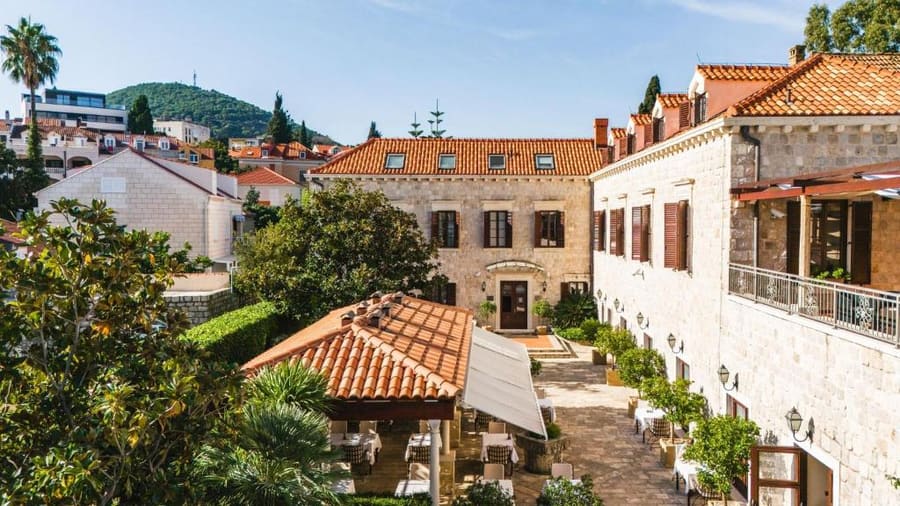
Choose your neighbourhood based on how many steps you want to climb each day. Stari Grad puts you inside the historic core but demands carrying bags up stone flights. Ploče offers immediate sea views at higher prices. Lapad provides quiet resort stays away from day-trippers.
Live rates, matched to the areas above.




transport
The historic Old Town is completely pedestrianized. Outside the walls, Libertas city buses connect key neighbourhoods and port hubs quickly.
Desde Dubrovnik Airport (DBV)
Timed with flight arrivals; drops at Pile Gate (Old Town) and Gruž harbor bus station.
Uber and Bolt available; pick-up zone is located outside the main terminal exit.
Ranks located directly outside arrivals. Generally more expensive than rideshare apps.
Libertas Line 11 runs a few times daily; less frequent than the official shuttle.
Bus lines 1A, 1B, and 3 link Gruž harbor and Pile Gate in 10 minutes.
A single bus ticket costs €1.73 at Tisak kiosks or €2.50 directly from the driver.
Traverse the Old Town from Pile Gate to Ploče Gate on foot in under 10 minutes.
cost
Dubrovnik carries higher daily costs than the rest of the Croatian coast. Staying outside the stone walls cuts lodging expenses significantly.
Covers wall access and Fort Lovrijenac within three days.
Includes city walls, top museums, and 24 hours of local bus transit.
Drinking coffee directly on Stradun costs double the side-alley rate.
Includes round-trip boat transfer and Lokrum nature reserve entrance.
seasonality
APR – MAY
Mild weather with light crowds. Sea temperatures remain brisk for swimming.
JUN – AUG
Warm sea and long sunny days. Peak cruise ship crowds fill the main street.
SEP – OCT
Warm sea with shrinking crowd numbers. Excellent conditions for outdoor walking.
NOV – MAR
Cool, quiet months. Many seasonal restaurants and boat lines close completely.
practicalities
Wear shoes with good grip on polished limestone streets, which get slippery when wet.
Fill water bottles for free at Onofrio's Fountain near Pile Gate.
A 1-Day Dubrovnik Pass costs the same as a single walls ticket and adds bus rides.
Drop bags at the storage office near Pile Gate before attempting stairs.
Walk the marked zigzag path up Srđ hill in 45 minutes to save cable car fares.