landmark
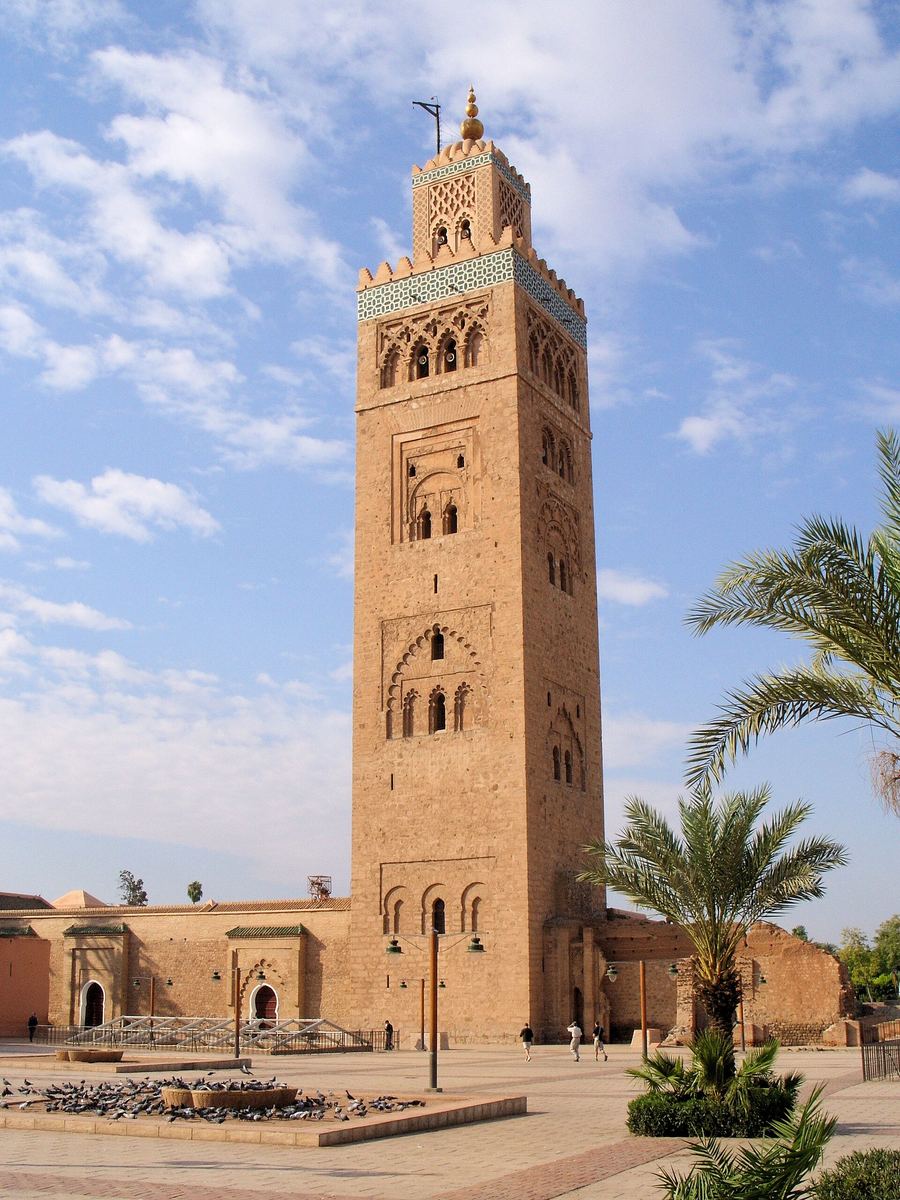
Koutoubia Mosque
Twelfth-century minaret that acts as the Medina's primary navigational anchor. Non-Muslims cannot enter, but the outer gardens stay open.
Pregunta a ParleyMarruecos
A walled pink maze where slow braises outlast midday heat.
introduction
Marrakech splits cleanly between its eleventh-century walled Medina and the French-built grid of Guéliz. You navigate the old city on foot through narrow alleys designed to block the desert sun. Street vendors and mopeds share the same tight lanes, so staying alert replaces relaxed strolling. Expectations shift once you step behind unadorned clay walls into quiet interior courtyards.
Airport transport fix
Take Bus 19 from Menara Airport directly to Jemaa el-Fnaa for 30 MAD. Taxi drivers outside the terminal routinely demand five times the official meter rate.
UNESCO Medina status
The entire Medina became a UNESCO World Heritage site in 1985. Its 19-kilometer rammed-earth wall system has protected the historic urban grid since the Almoravid era.
Navigating alley mapping
Offline GPS apps fail inside covered souks. Use permanent landmarks like Koutoubia Mosque's 77-meter minaret to reorient when satellite signals drop.
Marrakech
Boris Macek · CC BY-SA 3.0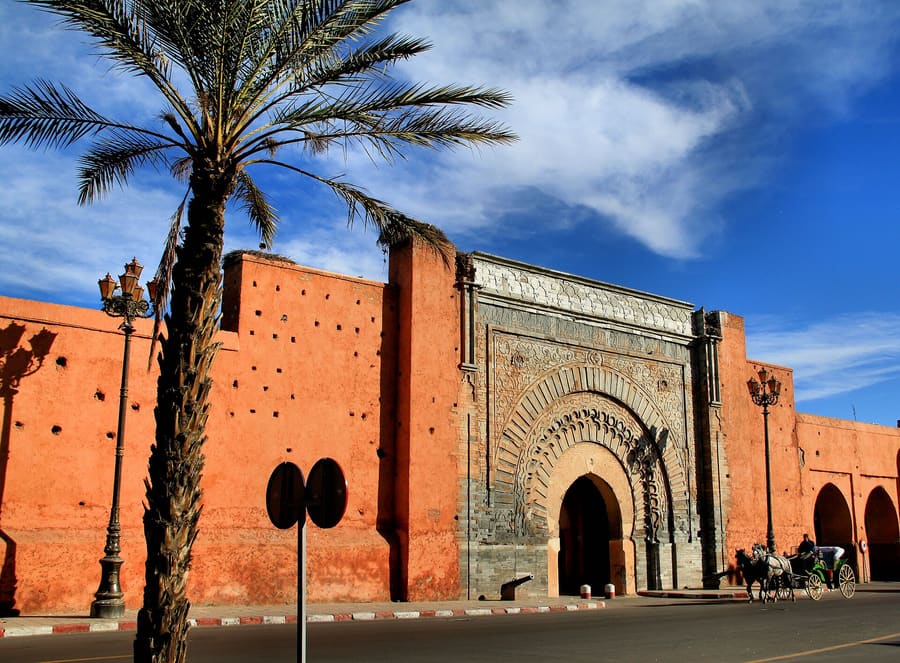
Kasbah — A calmer royal district at the southern edge of the Medina with local food stalls and wide lanes.
Lionel Leo · CC BY-SA 3.0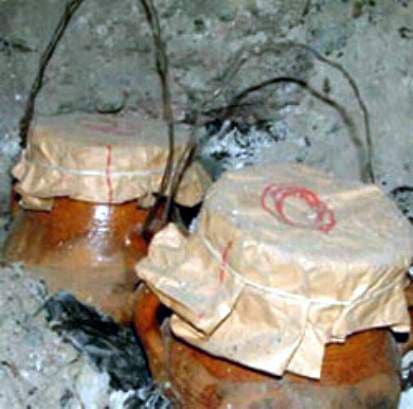
Slow-cooked tanjia clay pots roasting in communal ash furnaces.
VraieMarocaine · Public domainhighlights
landmark
Twelfth-century minaret that acts as the Medina's primary navigational anchor. Non-Muslims cannot enter, but the outer gardens stay open.
Pregunta a Parley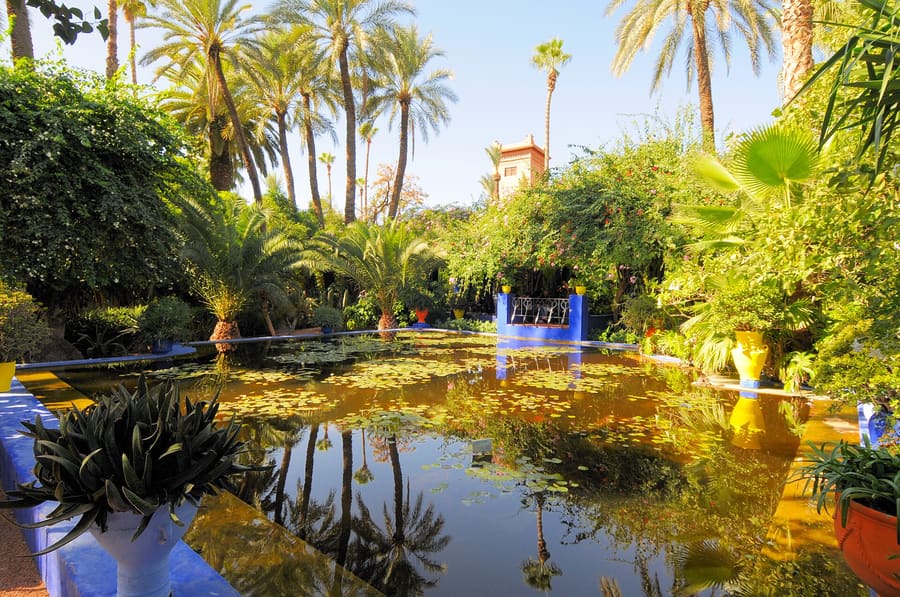
landmark
Cobalt-blue botanical garden created by Jacques Majorelle and later bought by Yves Saint Laurent. Buy timed tickets online days ahead.
Pregunta a Parley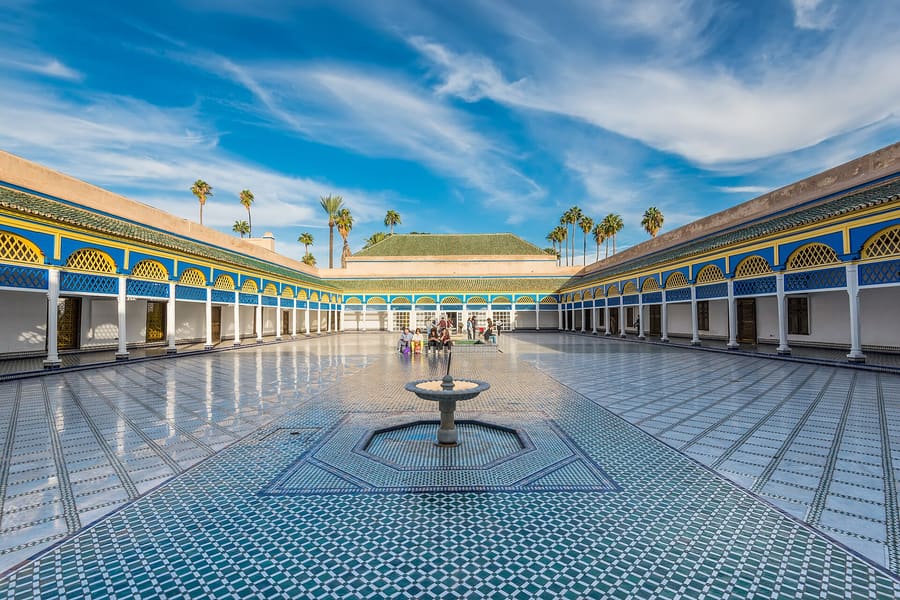
landmark
Nineteenth-century grand residence featuring intricate zellij tilework and painted cedar ceilings. Arrive at 09:00 opening to beat tour buses.
Pregunta a Parley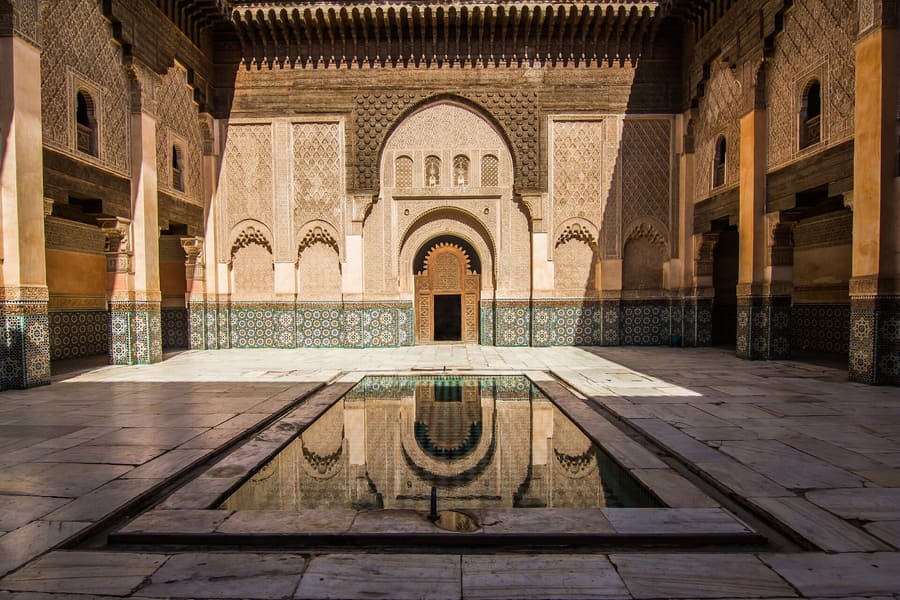
landmark
A former Islamic college displaying master-level stucco carving and marble courtyards. The upper student dormitory cells offer quiet views.
Pregunta a Parleyattractions
areas
A calmer royal district at the southern edge of the Medina with local food stalls and wide lanes.
CercaSaadian Tombs and Bab Agnaou
Pregunta a ParleyA dense medieval maze of alleyways, riads, and artisan workshops inside ancient ramparts.
CercaJemaa el-Fnaa and major souks
Pregunta a ParleyWide colonial avenues lined with French bistros, art galleries, and modern clothing boutiques.
CercaJardin Majorelle and train station
Pregunta a ParleyTree-lined boulevards hosting luxury resorts, high-end cocktail bars, and international clubs.
CercaMenara Gardens and Royal Theatre
Pregunta a Parleyfood
Marrakech cooking centers on slow heat and deep spices. The signature dish is tanjia marrakchia, a spiced beef or lamb stew packed into an amphora-shaped clay pot. Local cooks seal the jar with parchment and bring it to the neighborhood farnatchi—the communal bathhouse furnace—where it buries in hot ash for six hours until the meat slides off the bone.Unlike coastal tagines, authentic tanjia is distinct to Marrakech and historically prepared by bachelor tradesmen. For street dining, night stalls at Jemaa el-Fnaa serve grilled merguez sausage, boiled sheep head, and steaming bowls of spiced snail broth (babouche) served in clay bowls.
Slow-cooked tanjia clay pots roasting in communal ash furnaces.
VraieMarocaine · Public domainHead to Souk Abla near Jemaa el-Fnaa by 12:30 for slow-roasted lamb shank and authentic tanjia before popular stalls sell out.
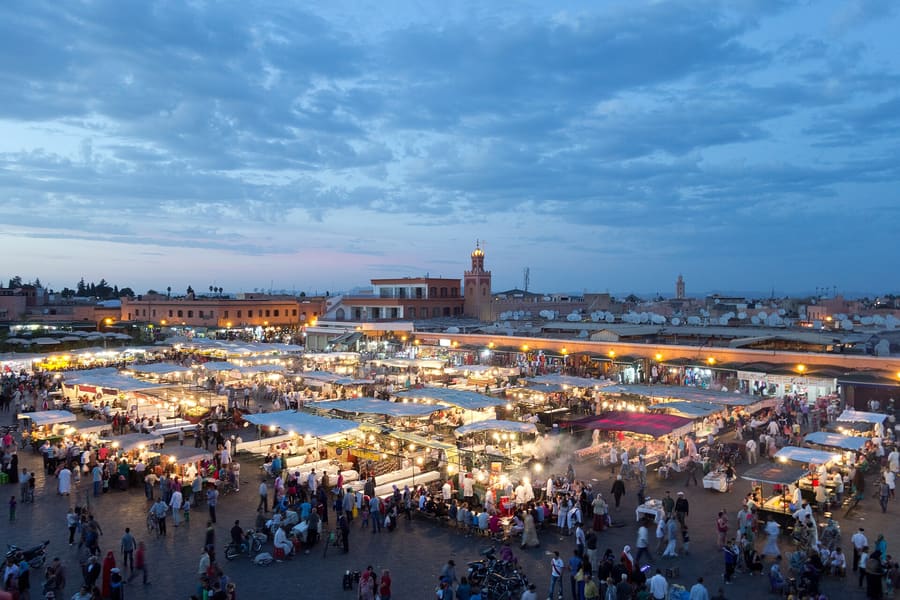
Stall 14 on Jemaa el-Fnaa serves fresh fried fish and squid with clear, printed price menus that avoid disputed bills.
history
Founded in 1070 by the Almoravid leader Abu Bakr ibn Umar, Marrakech became the capital of an empire stretching from Senegal to Andalusia. The city took its color from local red mud used to construct clay walls and buildings. Successive dynasties left their architectural signatures, from the Almohad minaret of Koutoubia to the Saadian Tombs and El Badi Palace.
Almoravid Foundation
Abu Bakr ibn Umar establishes Marrakech as a military camp, digging irrigation channels that transform the dry Haouz plain.
Almohad Conquest
Almohad rulers seize the city, rebuild major mosques, and erect the towering Koutoubia minaret as a model for Andalusian design.
Saadian Golden Era
Sultan Ahmad al-Mansur uses sugar trade wealth to construct El Badi Palace and lavish marble tombs for his dynasty.
French Protectorate
French urban planner Henri Prost builds Guéliz outside the ancient walls, creating the dual layout that defines Marrakech today.
where to stay
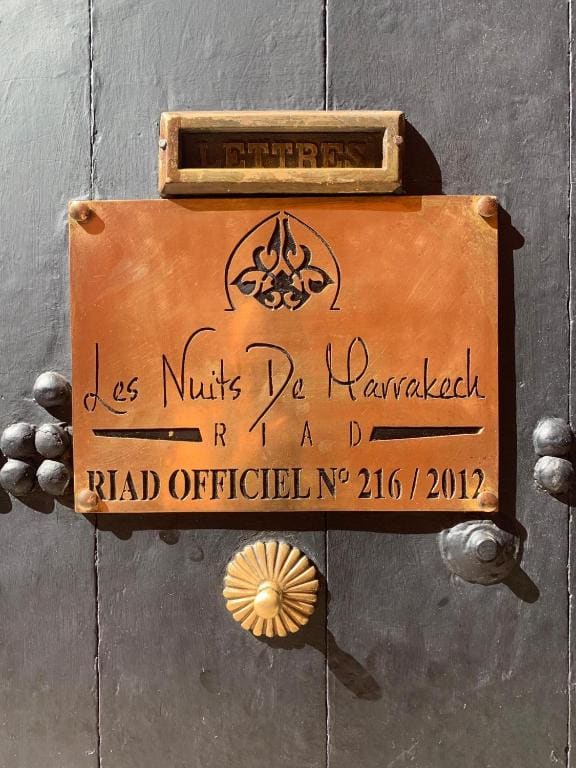
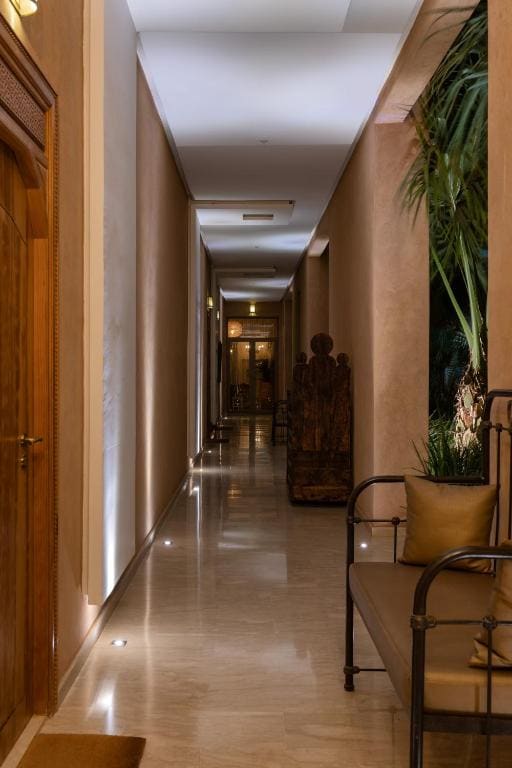
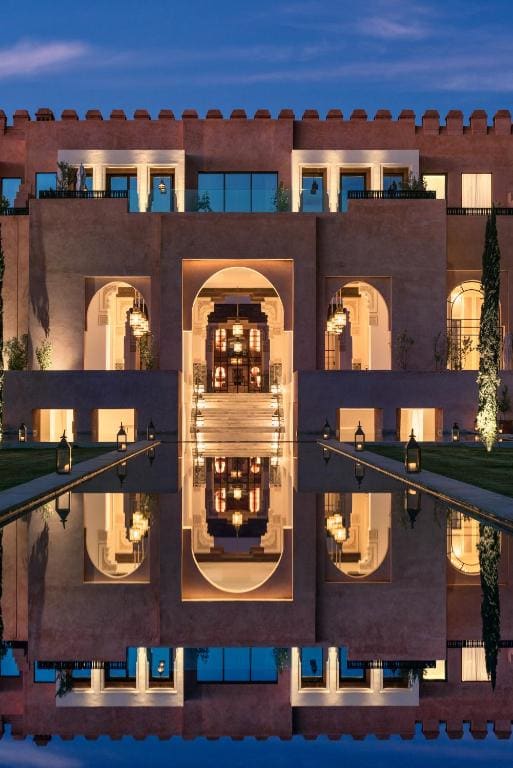
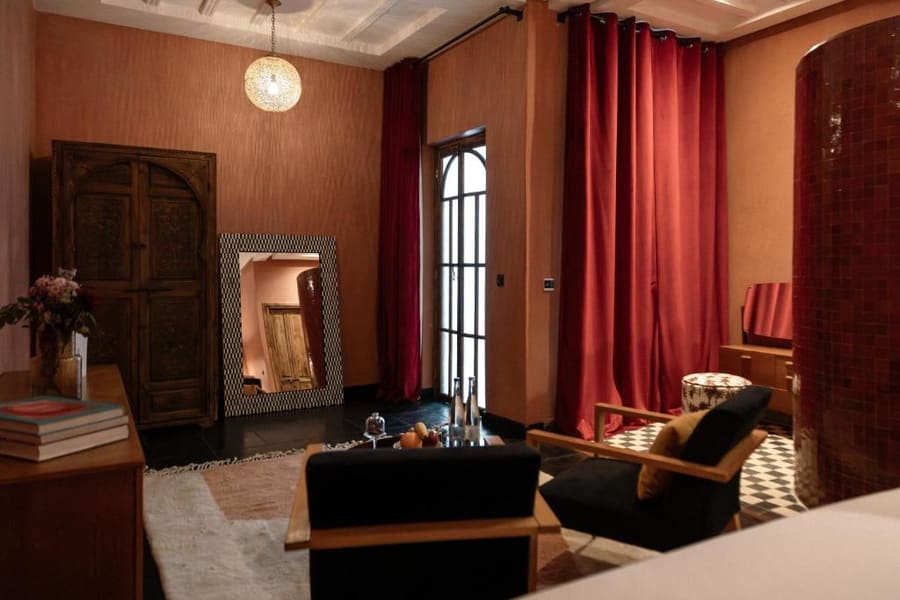
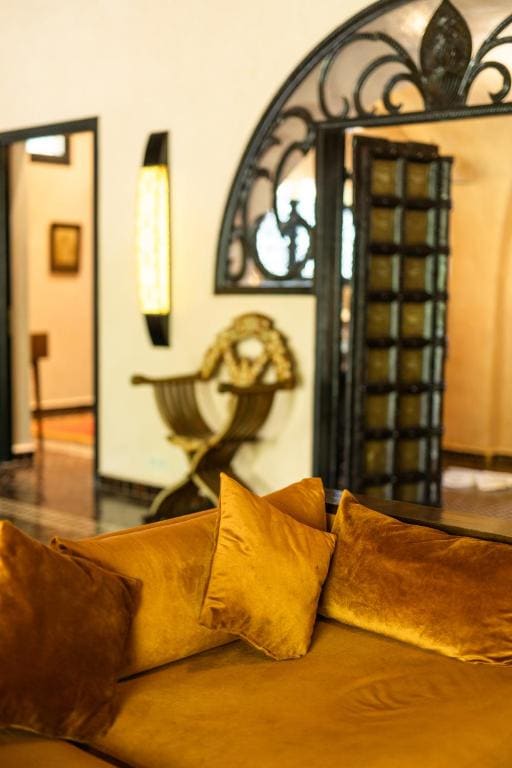
Choose your stay based on how you handle noise and navigation. Inside the Medina, traditional riads offer courtyard tranquil sanctuaries, but you must carry luggage down pedestrian alleys. Guéliz and Hivernage provide modern hotel facilities, swimming pools, and taxi access directly to the lobby front desk.
Live rates, matched to the areas above.
transport
Marrakech is best navigated using your feet inside the old city and small ochre Petit Taxis for trips between the Medina and modern districts. Mopeds dominate narrow alleys, so stick to the right side when walking.
Desde Marrakech Menara Airport (RAK)
ALSA Bus 19 runs every 20 minutes directly to Jemaa el-Fnaa and the train station.
Official rates are posted on a panel outside arrivals; negotiate firmly before entering.
Riad drivers meet you at the terminal and handle luggage transport through pedestrian alleys.
Petit Taxi fares legally increase by 50% after 20:00. Verify the meter adjusts to night mode at kickoff.
cost
Cash remains essential in Marrakech. Souks, small cafes, and taxi drivers almost exclusively operate in Moroccan Dirham (MAD). Keep small bills ready to pay exact amounts and avoid missing change disputes.
Pressed directly in front of you at numbered juice carts across Jemaa el-Fnaa square.
Three-course set menu featuring salad assortments, tagine, and fruit desserts.
Standard entry rate for major heritage sites like Bahia Palace and Medersa Ben Youssef.
Mid-range spa treatment including black soap scrub, rhassoul clay, and argan oil massage.
seasonality
MAR – MAY
Warm days averaging 25°C and blooming flora. Book riads three months early for peak spring season.
JUN – AUG
Extreme heat often exceeds 40°C. Walking after 11:00 is punishing; seek hotels with courtyard plunge pools.
SEP – NOV
Temperatures drop to pleasant 28°C levels. Excellent conditions for desert excursions and souk shopping.
DEC – FEB
Crisp sunny days at 18°C, but unheated riad rooms get very cold at night. Pack thermal layers.
practicalities
Young men offering directions in souks will demand money at your destination. A firm 'Non, merci' keeps them moving.
ATMs usually limit withdrawals to 2,000 MAD per transaction. Banque Populaire and Attijariwafa offer reliable cash machines.
Many souk shops and family businesses close between 12:00 and 15:00 on Fridays for congregational prayers.
During holy month, shops open late morning, close around sunset for Iftar break, and stay open late into the night.
Cover shoulders and knees in public Medina areas to respect local cultural norms, especially near religious sites.