landmark
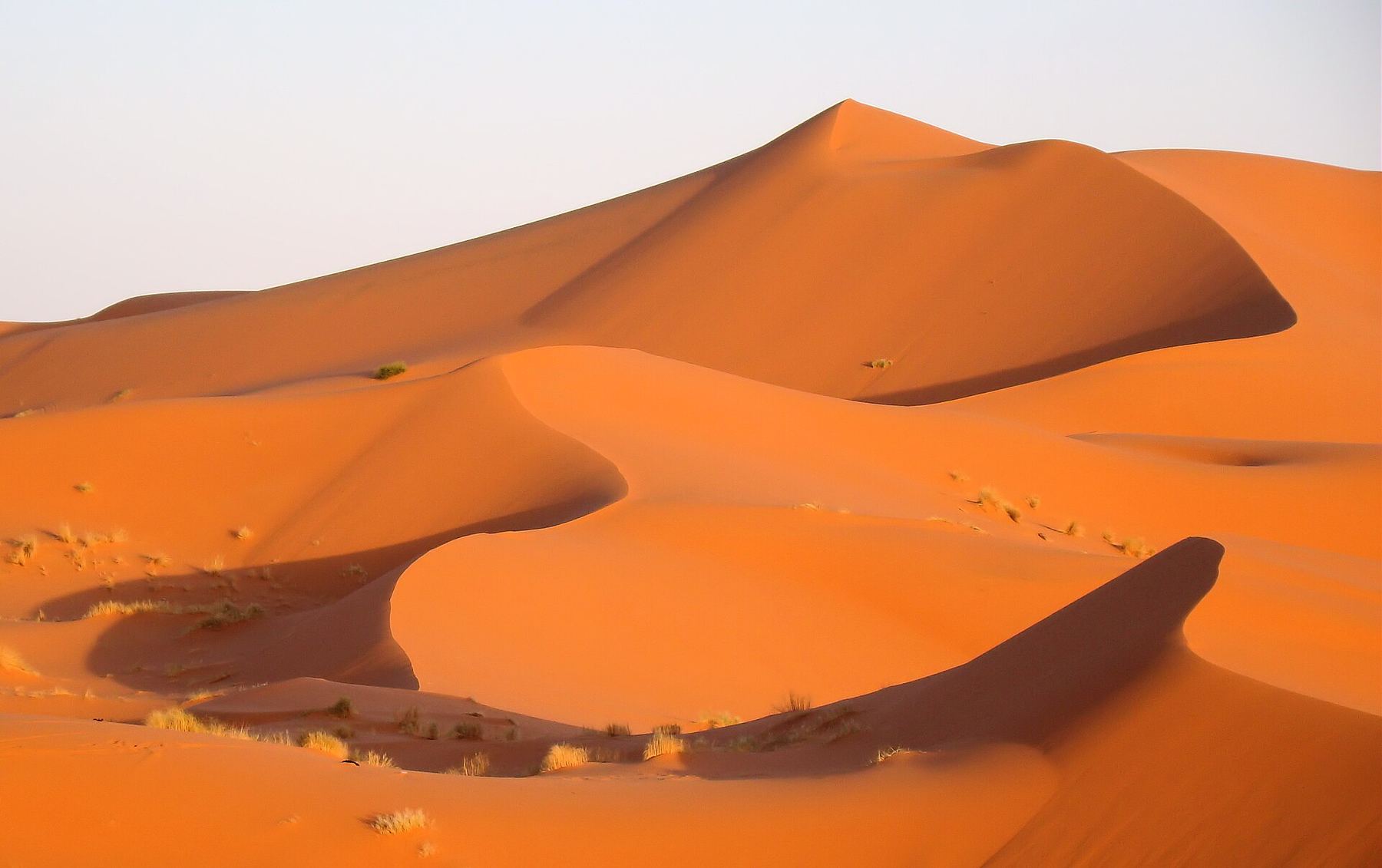
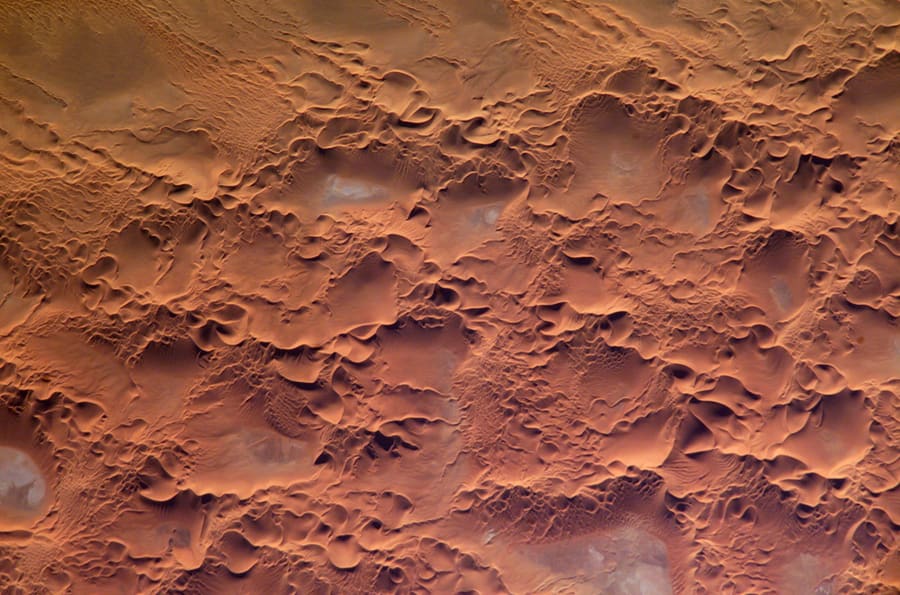
Erg Chebbi Dunes
A 28-kilometer field of wind-sculpted sand dunes reaching 150 meters. Climb before sunrise to avoid hot sand and daytime tour groups.
Pregunta a ParleyMarruecos
Orange dunes, Gnawa rhythms, and the Tafilalet edge.
introduction
Merzouga sits at the edge of Erg Chebbi, a massive field of wind-blown sand dunes reaching up to 150 meters high. Life here revolves around the boundary where concrete roads end and open desert begins. You come for quiet desert nights, local Berber culture, and direct access to the dunes without requiring multi-day expeditions. The village itself is functional rather than scenic, serving as a launchpad for desert stays.
Supratours arrival
The night bus from Marrakech drops you on the main road at dawn. Book your return ticket at the office upon arrival to guarantee a seat.
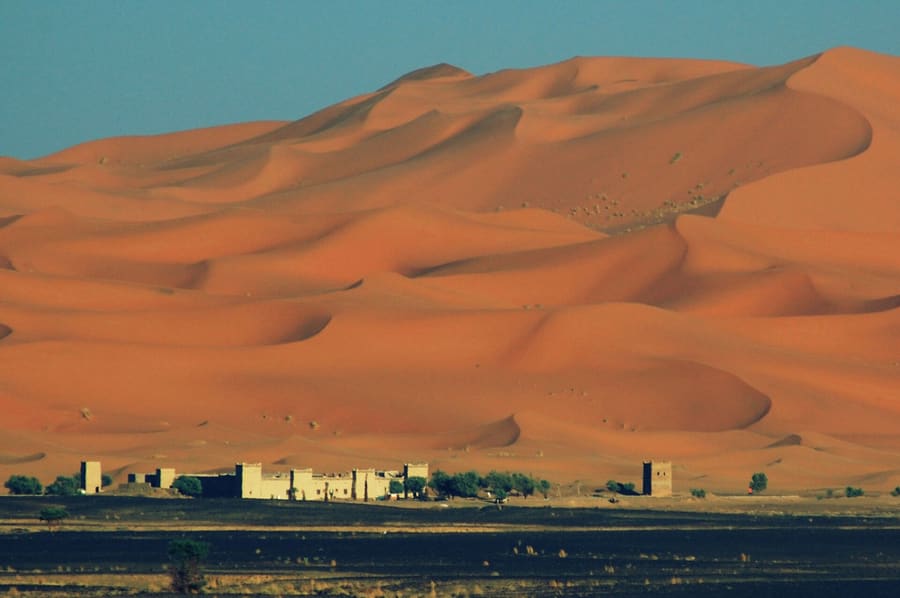
Merzouga
bachmont · CC BY 2.0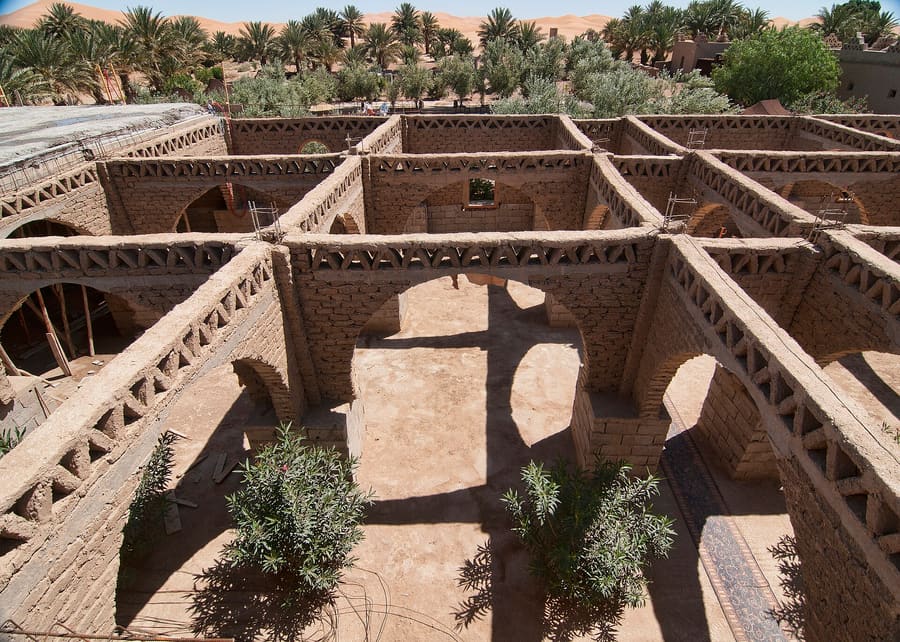
Merzouga Village — Dusty main street with basic supply shops, cafes, and tour offices.
Haven La Chance · CC BY-SA 3.0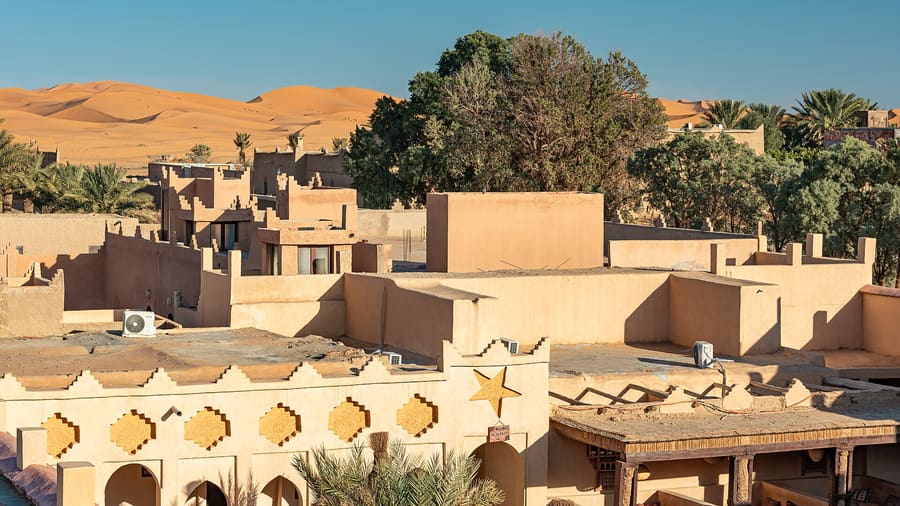
Hassilabied — A tranquil village bordering palm groves and direct high dunes.
Jorge Franganillo · CC BY 2.0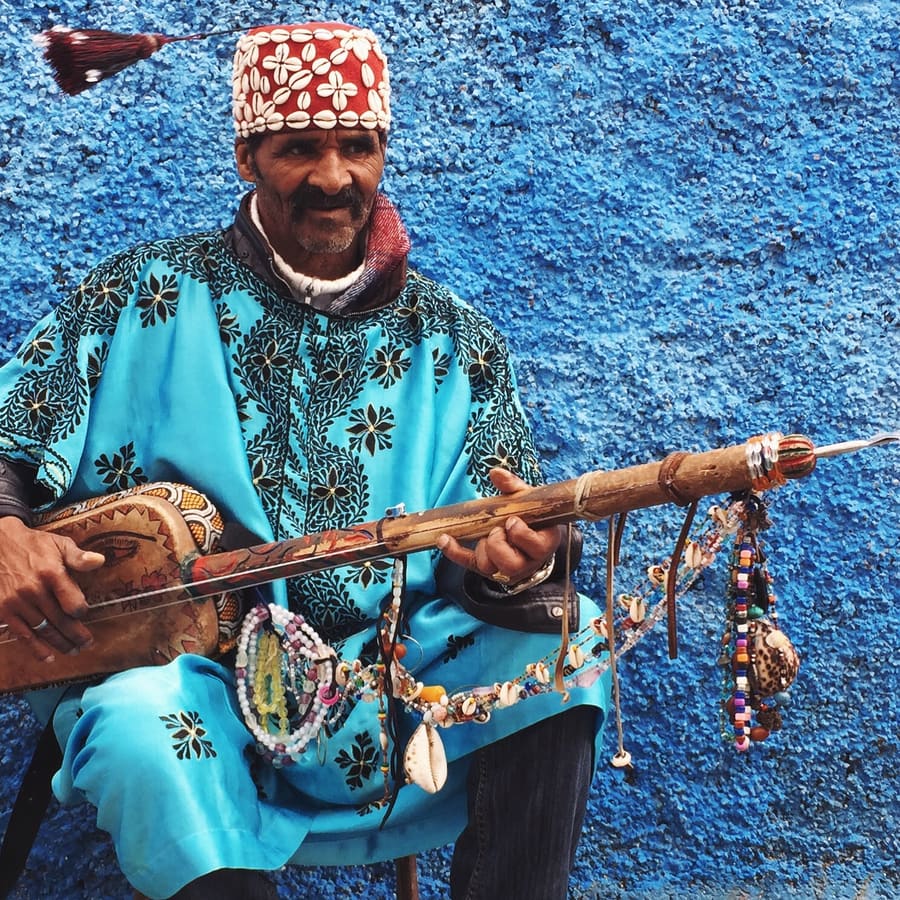
Khamlia — A small desert community known for Gnawa music traditions.
Sambasoccer27 · CC BY-SA 4.0highlights
landmark
A 28-kilometer field of wind-sculpted sand dunes reaching 150 meters. Climb before sunrise to avoid hot sand and daytime tour groups.
Pregunta a Parley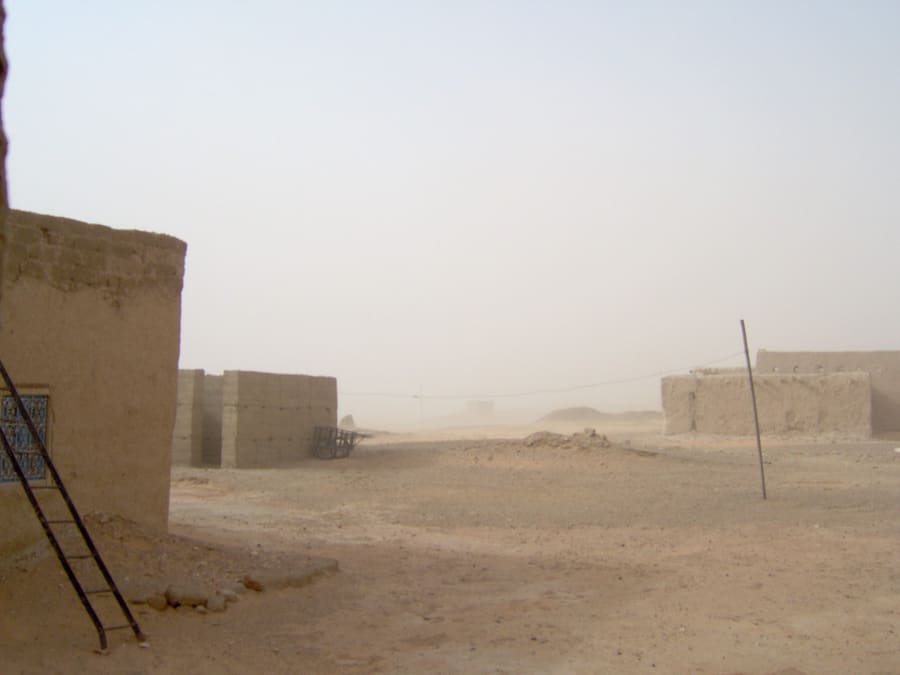
landmark
A village populated by descendants of formerly enslaved sub-Saharan Africans. Visit Dar Gnaoua to hear traditional spiritual drumming.
Pregunta a Parley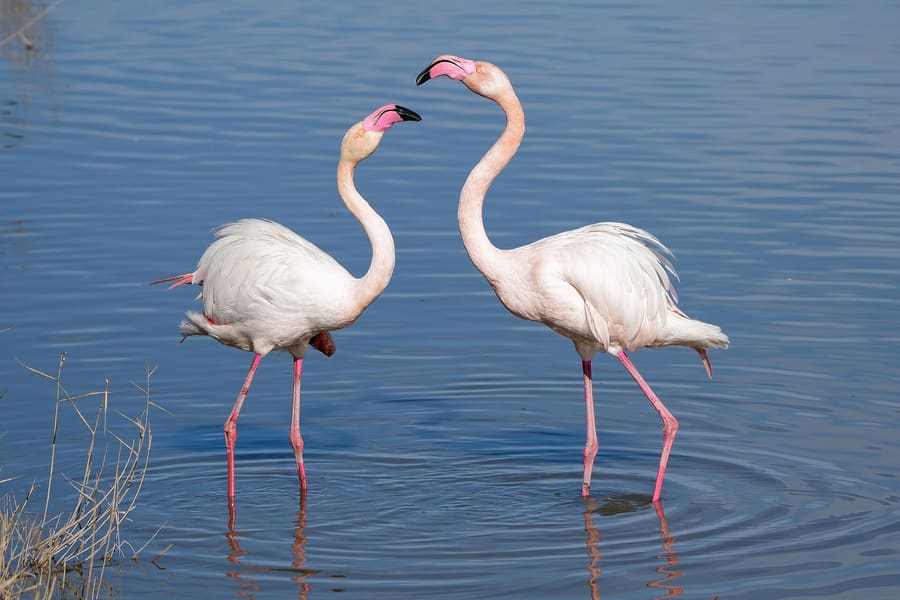
landmark
A seasonal salt lake west of Merzouga that fills after winter rains. Flamingos gather here between November and March when water remains.
Pregunta a Parley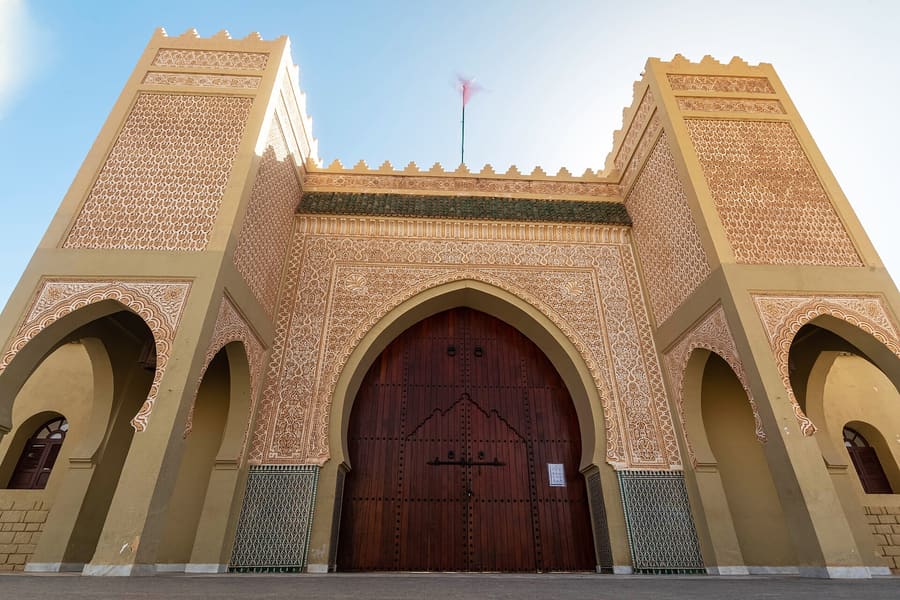
landmark
The historic market town serving surrounding desert communities. Visit on Tuesday, Thursday, or Sunday for the active livestock market.
Pregunta a Parleyattractions
areas
Dusty main street with basic supply shops, cafes, and tour offices.
CercaSupratours bus stop and Erg Chebbi southern edge.
Pregunta a ParleyA tranquil village bordering palm groves and direct high dunes.
CercaHassilabied oasis and northern Erg Chebbi dunes.
Pregunta a ParleyA small desert community known for Gnawa music traditions.
CercaDayet Srji lake and southern gravel desert tracks.
Pregunta a ParleyTented bivouacs pitched inside the dune field under dark night skies.
CercaDeep sand dunes and camel routes.
Pregunta a Parleyfood
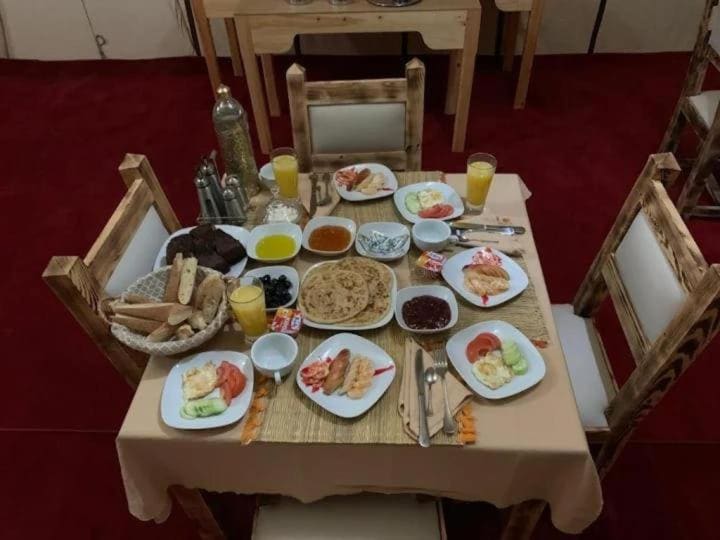
Dining in Merzouga centres on hearty regional dishes suited to desert conditions. The defining local specialty is madfouna, often called Berber pizza, which consists of double-layered flatbread stuffed with minced beef, eggs, almonds, and cumin baked inside a traditional clay oven. Standard Moroccan tagines are widely available, but local desert versions lean heavily on slow-cooked mutton, dates, and local spices.
Bakeries require two hours of advance notice to prepare fresh madfouna dough and bake it in charcoal ovens.
Village restaurants prepare limited portions daily. Eat lunch around 13:00 to avoid long waits.
Tap water is heavily mineralized and unpalatable. Buy bottled water in five-liter jugs at village shops.
history
Merzouga developed as a permanent settlement relatively recently. For centuries, the Tafilalet oasis region served as the northern terminus for trans-Saharan camel caravans carrying gold, salt, and spices from West Africa. Nomadic Amazigh tribes moved through Erg Chebbi following seasonal grazing routes rather than building permanent houses. Fixed mudbrick settlement expanded in the mid-twentieth century under French colonial border patrols and subsequent post-independence stabilization.
Caravan Hub
Nearby Sijilmasa functions as a crucial trade capital connecting Sub-Saharan trade routes with Northern Africa.
Colonial Outposts
French authorities establish military outposts across Tafilalet to monitor desert border areas.
Sedentary Transition
Severe droughts force former nomadic pastoralists to establish permanent mudbrick homes around Merzouga oasis.
Tourism Growth
Paved roads reach the desert edge, turning a remote border outpost into Morocco's primary dune access point.
where to stay
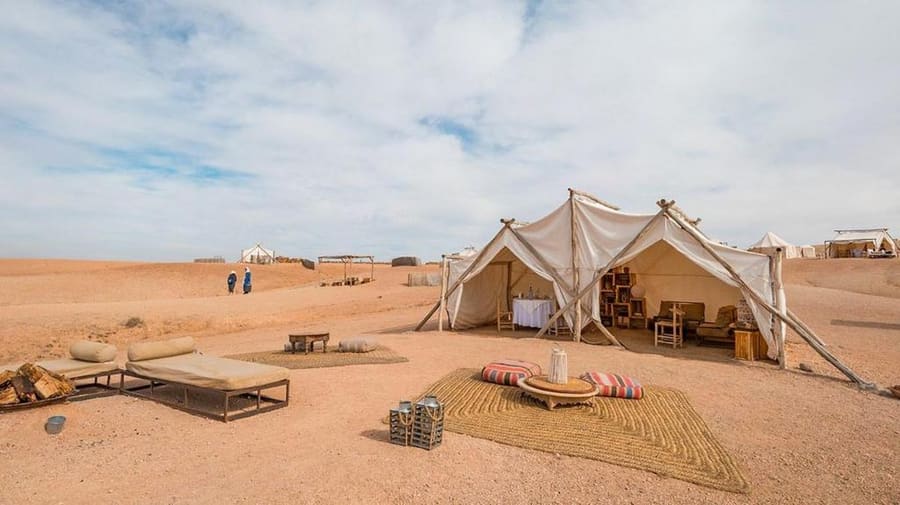
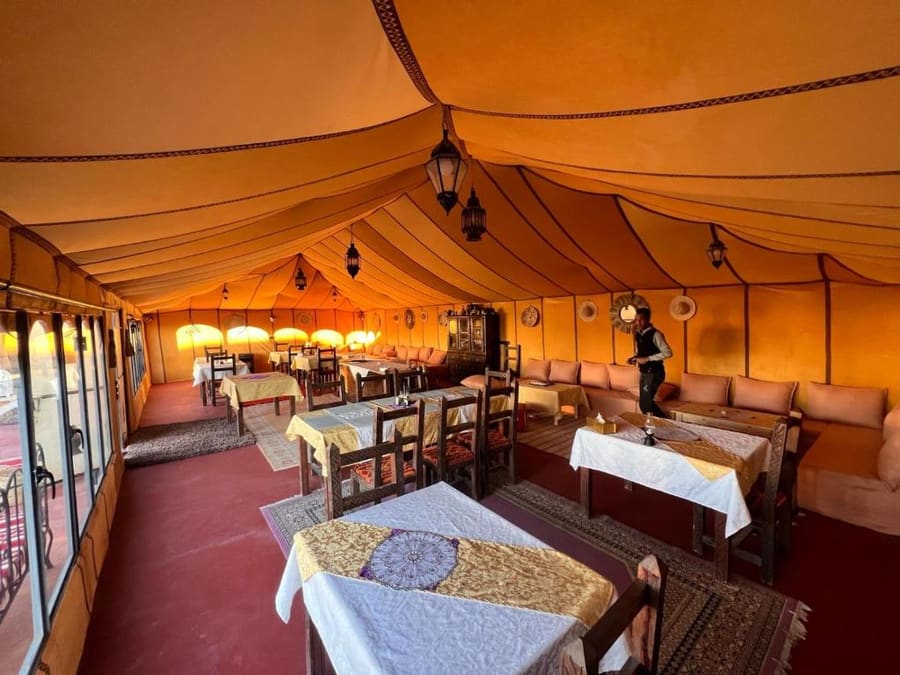
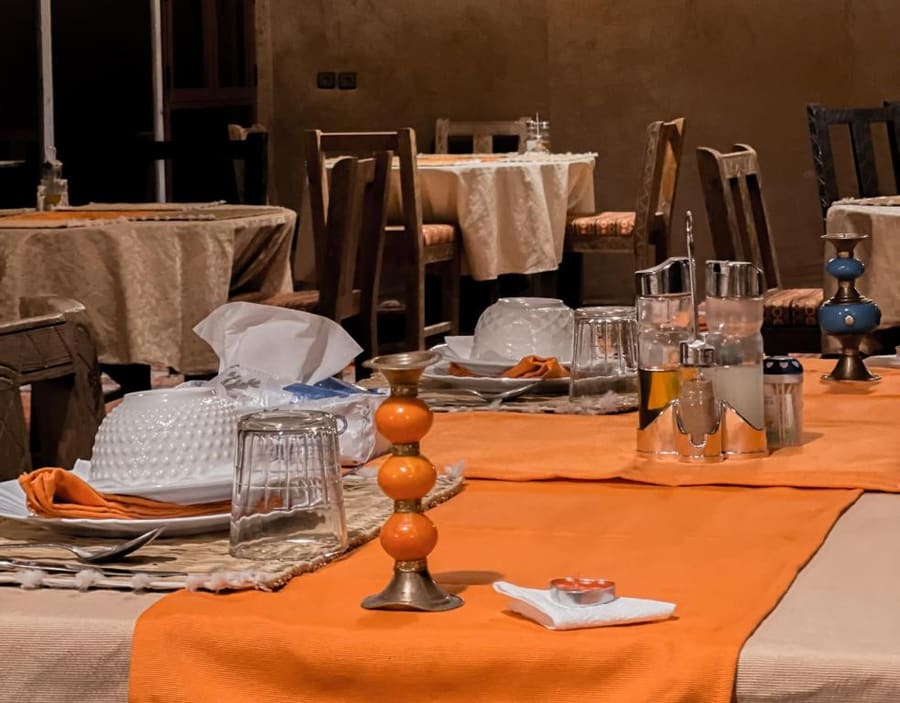
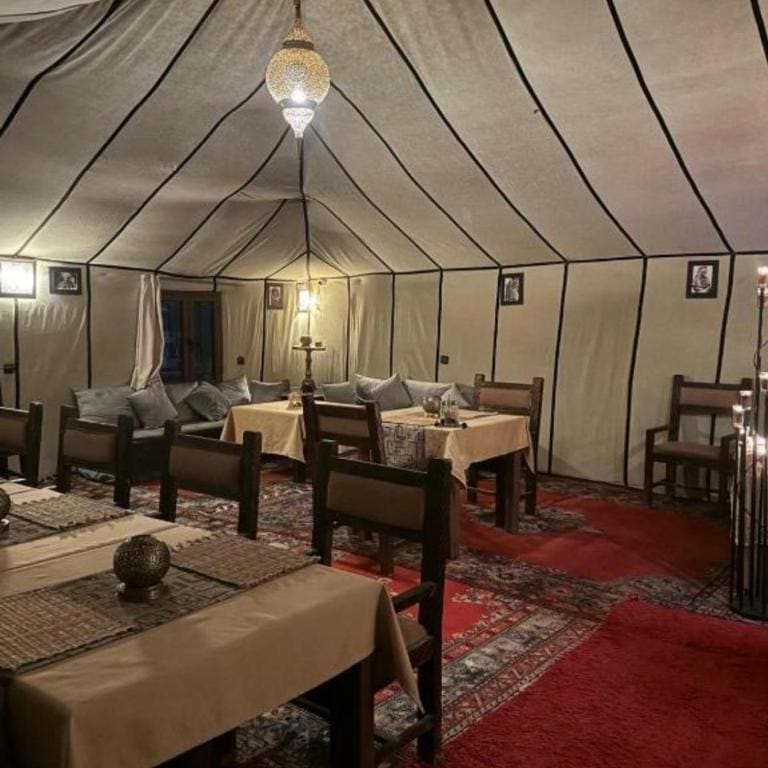
Choosing where to stay depends on how much comfort you require and how close to the sand dunes you wish to wake up. Village riads offer electricity, reliable plumbing, and air conditioning. Desert camps provide immediate access to the dunes but involve trade-offs in water conservation and thermal insulation during winter nights.
Live rates, matched to the areas above.
transport
Route N13 does not end at Merzouga, as the paved road continues south to Taouz. Navigation in the village is simple on foot, but visiting surrounding dunes, lakes, and villages requires local taxis, camels, or high-clearance vehicles.
Desde Errachidia Moulay Ali Cherif Airport (ERH)
Private charter from Errachidia airport directly to Merzouga village.
CNE or CTM bus from Errachidia town centre to Rissani, then local transfer.
Arranged by desert camps for direct hotel drop-off.
The Supratours bus stops directly on the main street in Merzouga and Hassilabied. Confirm your exact stop with the driver.
Shared grand taxis from Rissani cost 15 MAD per seat. If you charter the entire taxi, pay no more than 90 MAD.
Standard cars cannot navigate deep sand. Hotel transfers to desert camps use 4x4 vehicles or camels.
Buses to Marrakech and Fes fill up days in advance. Buy your departure ticket as soon as you arrive.
cost
Merzouga operates almost exclusively on cash in Moroccan Dirhams (MAD). Prices for activities are generally standard, but camel treks and 4x4 tours vary depending on group size and bargaining.
Includes dinner, breakfast, tent accommodation, and camel transfer.
Freshly baked stuffed flatbread at local village bakeries.
Two-hour guided camel ride into the Erg Chebbi dunes.
Per seat in a shared Mercedes grand taxi from Rissani station.
seasonality
OCT – NOV
Daytime temperatures hover around 25°C. Warm days and cool nights make this the prime trekking season.
DEC – FEB
Crisp clear skies and daytime highs of 18°C. Nights drop near freezing; unheated tents get very cold.
MAR – MAY
Pleasant spring heat with blooming desert flora. High winds can occasionally cause sandstorms in April.
JUN – SEP
Extreme heat often exceeds 42°C. Desert camps close or operate minimally; daytime activity is impossible.
practicalities
Desert temperatures drop rapidly after dark. Winter nights require thermals, wool socks, and heavy jackets.
Carry a scarf or cloth turban and wrapped protective cases for cameras to shield electronics from fine sand.
Water is piped long distances across arid ground. Keep showers short at guesthouses and desert camps.
Gnawa musical performances in Khamlia are free to enter, but leaving 20–50 MAD in the tip box is expected.