landmark
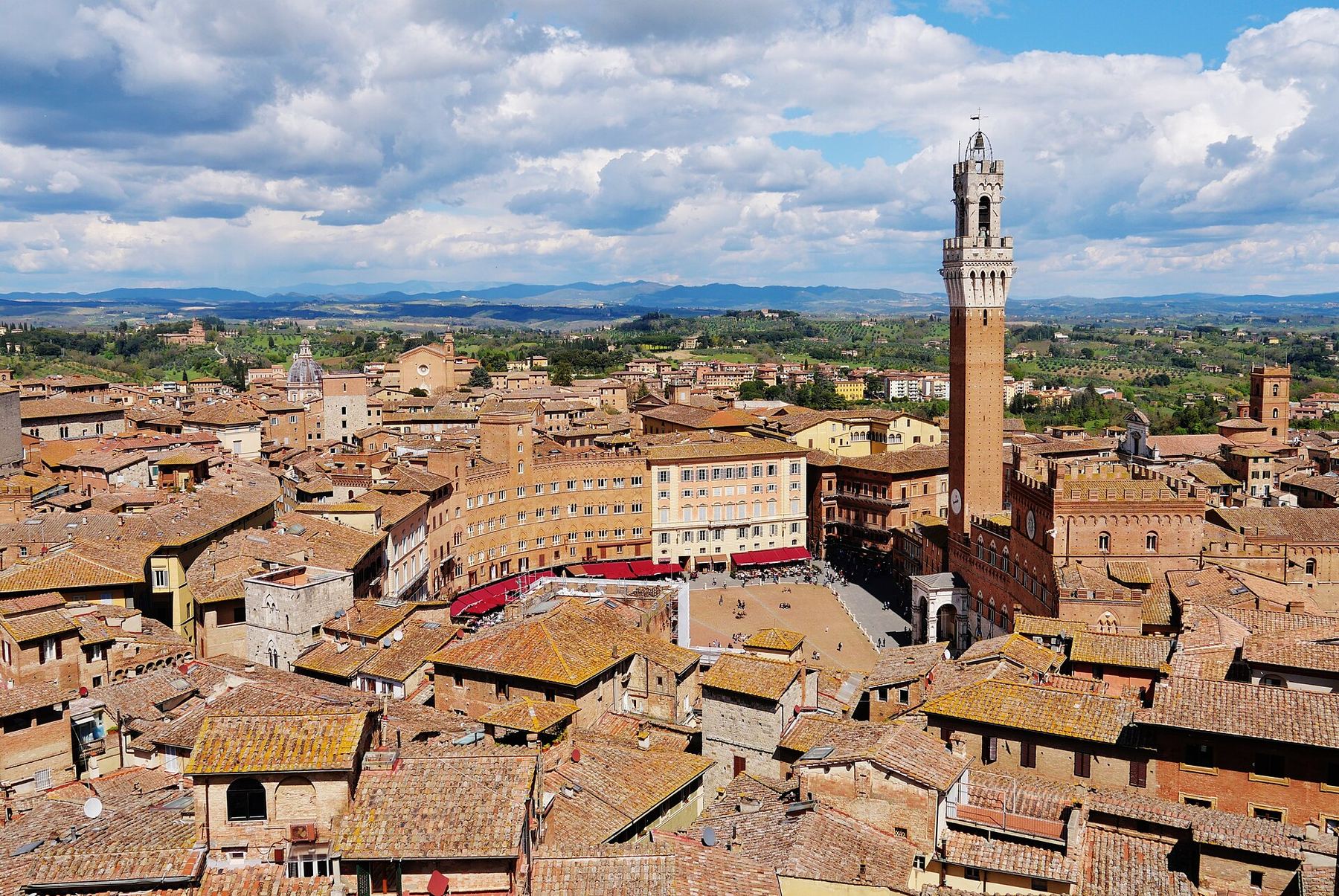
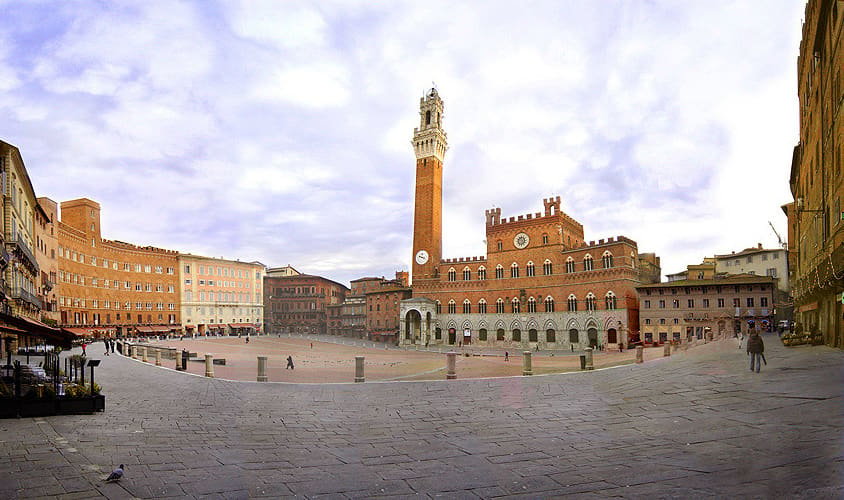
Piazza del Campo
Shell-shaped red-brick square where all nine sectors slope toward the Palazzo Pubblico. Sit on the pavement brick without buying a coffee.
Pregunta a ParleyItalia
A ridge-top Gothic fortress built around seventeen contrade.
introduction
Siena sits across three steep clay ridges inside intact 14th-century brick walls. You navigate it on foot via stone alleys that plunge into ravines and open into sloped plazas. Every street belongs to one of seventeen rival neighbourhood districts called contrade. Expect steep climbs, preserved Gothic monuments, and strict vehicle bans.
Arrival from Florence
Take the 131R rapid bus from Florence SMN over the train. It drops you at Piazza Gramsci inside the wall, avoiding the uphill trek from the valley station.
UNESCO Historic Centre
Siena's medieval core became a UNESCO site in 1995. Its gothic cityscape remains preserved within 14th-century brick walls.
The OPA Si Pass
Buy the OPA Si Pass to access the Duomo, Crypt, Baptistery, and the Facciatone viewpoint. It costs less than buying three separate entry tickets.
Siena
Photojournalist Roberto Vicario · CC BY-SA 3.0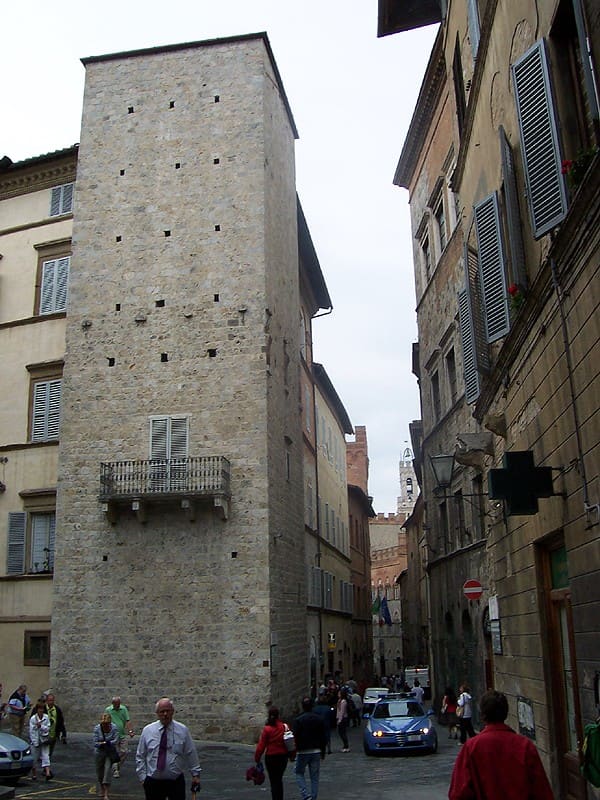
Terzo di Città — High-altitude medieval core holding the Duomo and major museum complexes along narrow stone crests.
MarkusMark · Public domain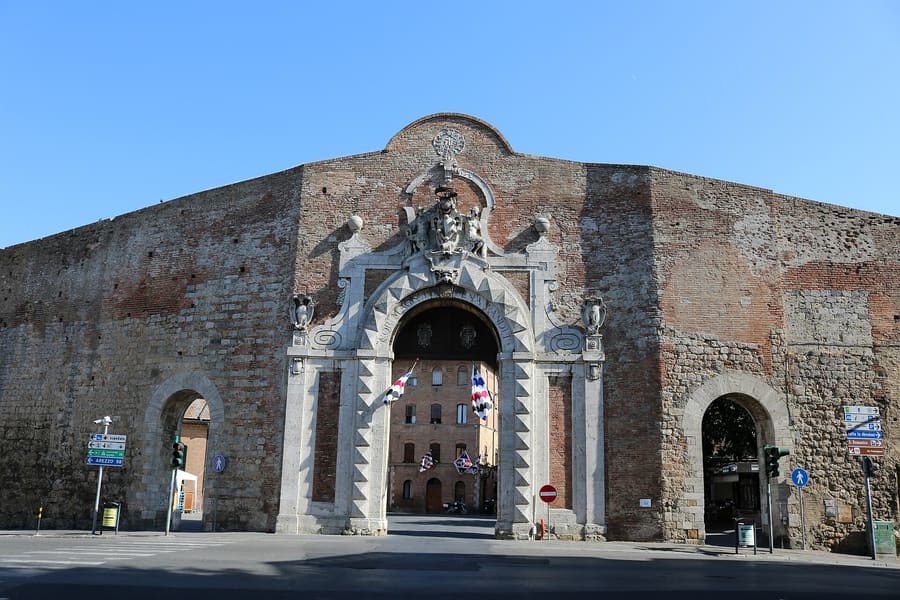
Terzo di Camollia — Northern spine around Via Camollia packed with local bakeries, wine shops, and residential life.
Mongolo1984 · CC BY-SA 4.0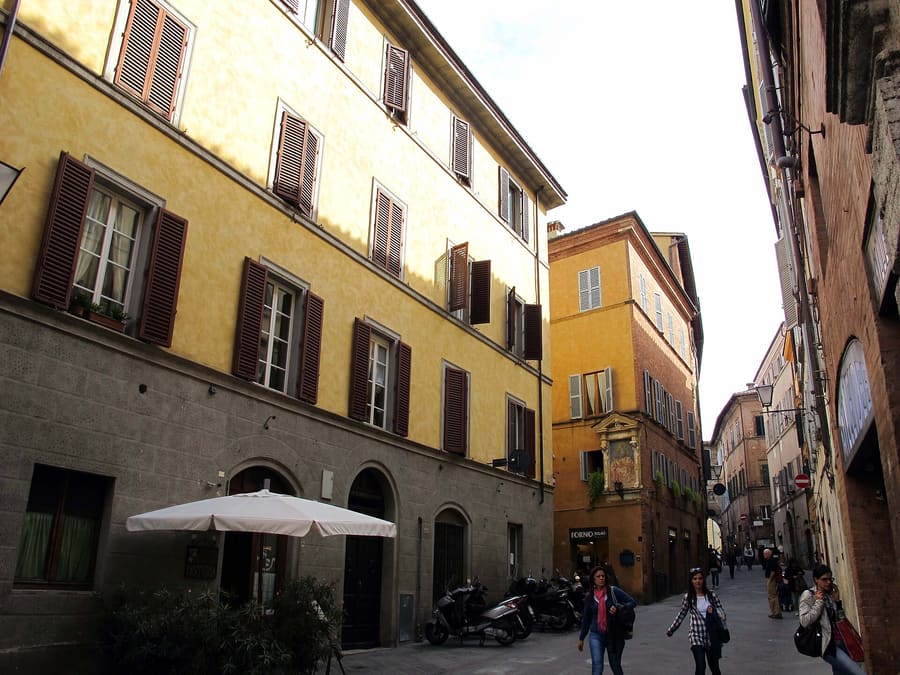
Terzo di San Martino — South-eastern ridge anchoring Via de' Pispini, filled with contrada fountains and neighborhood trattorias.
Sailko · CC BY 3.0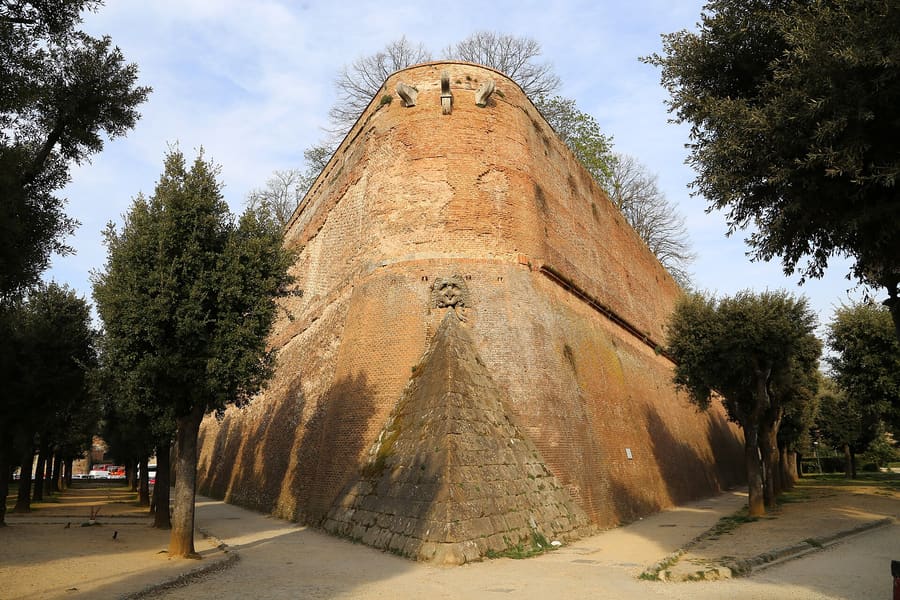
San Prospero — Leafy 20th-century residential district setting outside the western gate near the Medici fortress.
Sailko · CC BY 3.0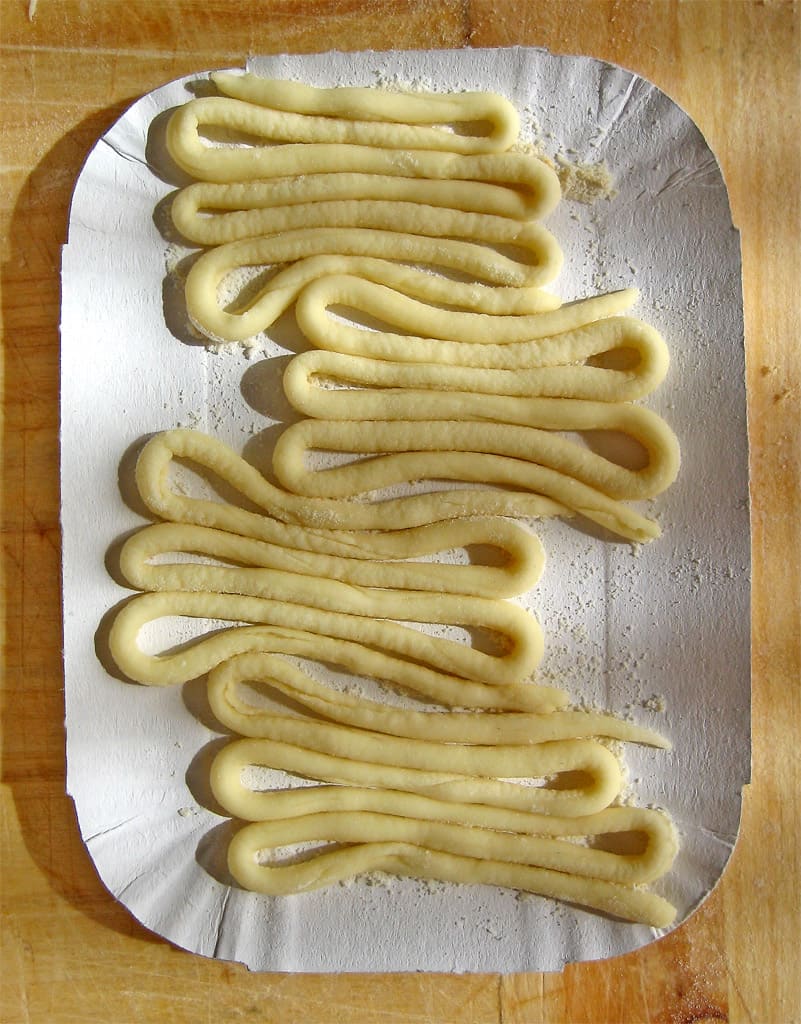
Hand-rolled pici pasta served with traditional aglione garlic sauce
fugzu from Pistoia, Italia · CC BY 2.0highlights
landmark
Shell-shaped red-brick square where all nine sectors slope toward the Palazzo Pubblico. Sit on the pavement brick without buying a coffee.
Pregunta a Parley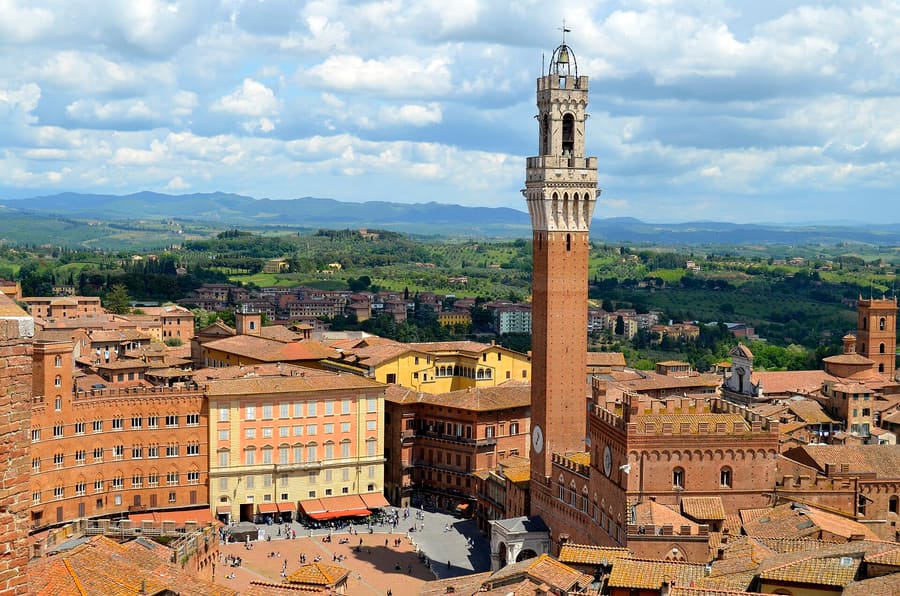
landmark
Vertical 88-metre brick tower overlooking the plaza. Climb 400 narrow steps for the city view; tickets require set timed slots.
Pregunta a Parley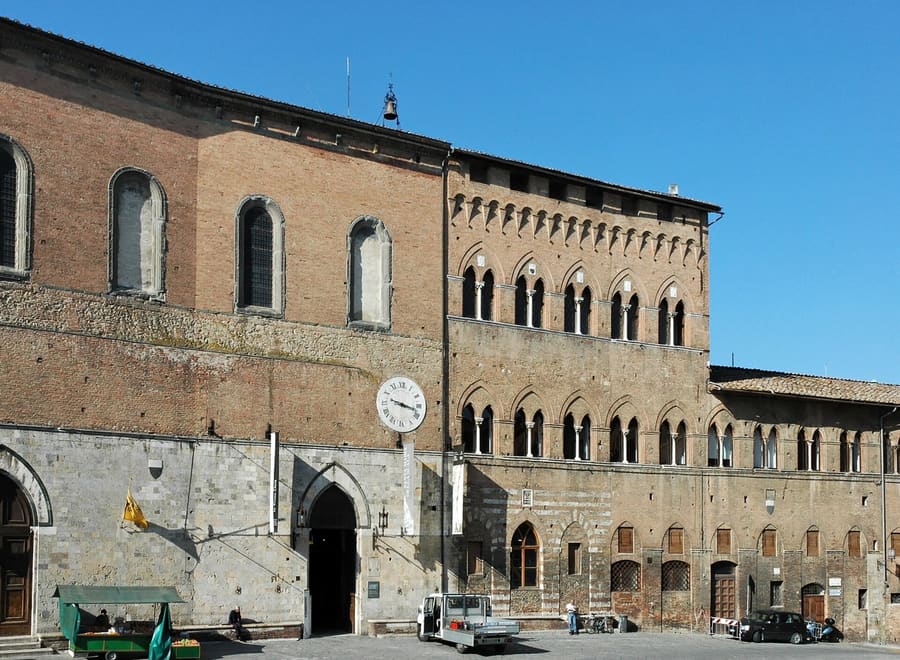
landmark
A 1,000-year-old hospital turned museum directly opposite the Duomo. Walk subterranean medieval vaulted levels cut straight into bedrock.
Pregunta a Parley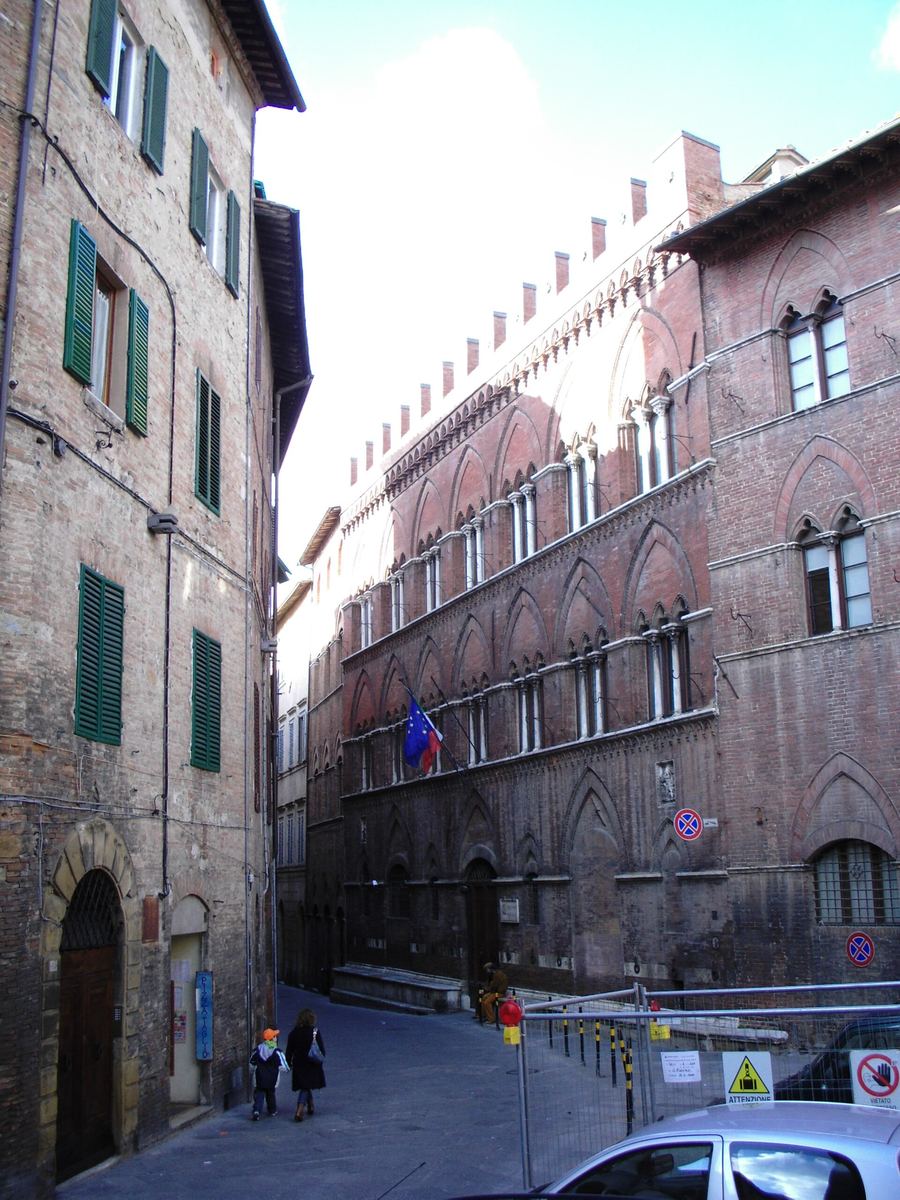
landmark
Housed in Palazzo Buonsignori, holding the premier collection of Sienese gold-ground Gothic masterworks. Visit in early afternoon for empty rooms.
Pregunta a Parley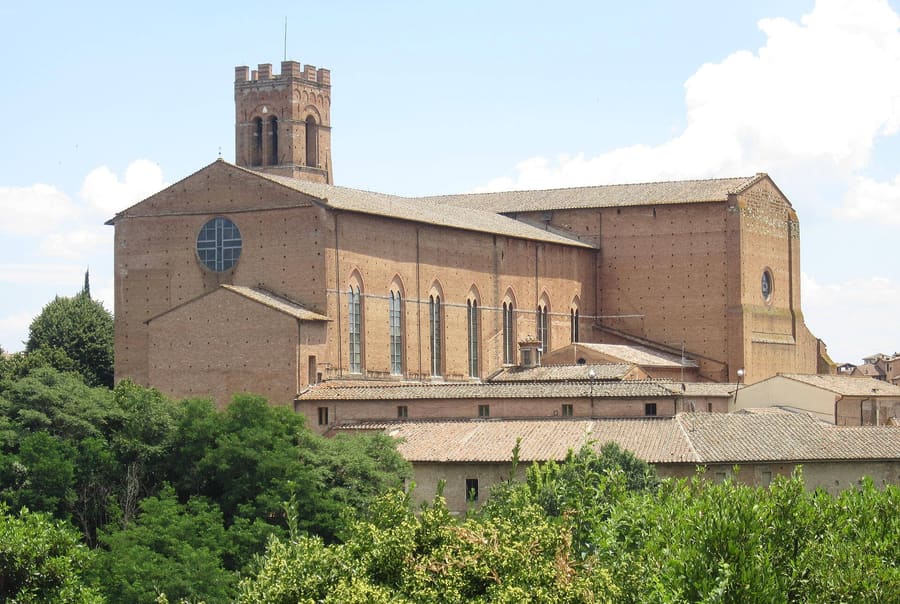
landmark
Massive brick Gothic basilica housing the relic chapel of Saint Catherine. The western terrace offers direct views across the ravine to the Duomo.
Pregunta a Parleyattractions
areas
High-altitude medieval core holding the Duomo and major museum complexes along narrow stone crests.
CercaDuomo, Santa Maria della Scala, Pinacoteca Nazionale
Pregunta a ParleyNorthern spine around Via Camollia packed with local bakeries, wine shops, and residential life.
CercaPorta Camollia, Galleria Portasiena escalators
Pregunta a ParleySouth-eastern ridge anchoring Via de' Pispini, filled with contrada fountains and neighborhood trattorias.
CercaPiazza del Mercado, Via di Pantaneto
Pregunta a ParleyLeafy 20th-century residential district setting outside the western gate near the Medici fortress.
CercaFortezza Medicea, Stadio Artemio Franchi
Pregunta a Parleyfood
Sienese cuisine relies on thick hand-rolled wheat pasta, game meats from the surrounding hills, and medieval spice trades. Pici pasta comes tossed in aglione—a sweet local giant-garlic tomato sauce—or ragù di cinghiale (wild boar). Pastries remain distinctly Sienese: ricciarelli are soft almond flour cookies dusted in powdered sugar, while panforte is a dense dense cake packed with nuts, candied peel, and black pepper.
Hand-rolled pici pasta served with traditional aglione garlic sauce
fugzu from Pistoia, Italia · CC BY 2.0Order pici at neighbourhood spots like Osteria degli Svitati or La Taverna di San Giuseppe. Avoid restaurants directly lining the outer perimeter of Piazza del Campo.
Buy panforte Nero and ricciarelli by weight at Panificio Il Magnifico rather than in pre-packaged tourist boxes.
Look for cured meats explicitly labelled Cinta Senese, an ancient breed of white-belted Sienese pig raised in local oak forests.
history
Siena grew as an independent medieval republic sitting on the Via Francigena pilgrimage route. Its rivalry with Florence peaked at the Battle of Montaperti in 1260. The Black Death of 1348 killed over half the population, halting construction on a massive cathedral extension and preserving the 14th-century Gothic core intact.
Battle of Montaperti
Sienese Ghibellines defeat Florentine Guelphs, establishing Siena's peak regional dominance.
Rule of the Nine
A council of merchant governors commissions the Palazzo Pubblico and shapes the current cityscape.
The Black Plague
Plague strikes Siena, killing two-thirds of residents and freezing medieval urban expansion permanently.
Fall to Florence
After a fifteen-month siege, Siena surrenders to Duke Cosimo I de' Medici and loses independence.
where to stay
Choose by transit mode and hill tolerance. If arriving without a car, stay inside the wall in Terzo di Camollia or Terzo di Città. If driving a rental vehicle, stay in San Prospero or outside the walls to avoid automatic low-emission zone traffic fines.
Live rates, matched to the areas above.
transport
Siena's historic centre is strictly pedestrianized. Motorized transport inside the walls is limited to electric Pollicino micro-buses, taxis, and resident cars. Be prepared to walk steep stone inclines.
Desde Siena Railway Station (SNA)
Enter Galleria Portasiena mall across tracks; take 6 sets of escalators up to Porta Camollia.
Buses run to Piazza Gramsci. Buy tickets at station newsstand or via app before boarding.
Ranks outside main exit. Taxis can enter the ZTL to drop off directly at central hotels.
Siena train station sits in the valley. Walk into the Galleria Portasiena shopping center across from the tracks and take six sets of escalators up to Porta Camollia.
The entire walled center is a ZTL driving zone with camera enforcement. Driving past the wall gate incurs an immediate €110 fine unless your hotel registers your license plate.
If parked at Parcheggio Santa Caterina, ride the free covered public escalators up the cliff directly to Via di Vallepiatta near the Duomo.
cost
Siena is less expensive than Florence, but museum fees and prime plaza dining add up quickly.
Includes Cathedral, Piccolomini Library, Crypt, Baptistery, and Facciatone terrace view.
Standard price for fresh pasta in neighbourhood trattorias outside Piazza del Campo.
Flat admission fee to climb the tower; must book a timed slot at the box office.
seasonality
MAR – MAY
Mild temperatures and green countryside. Ideal walking conditions before summer heat arrives.
JUN – AUG
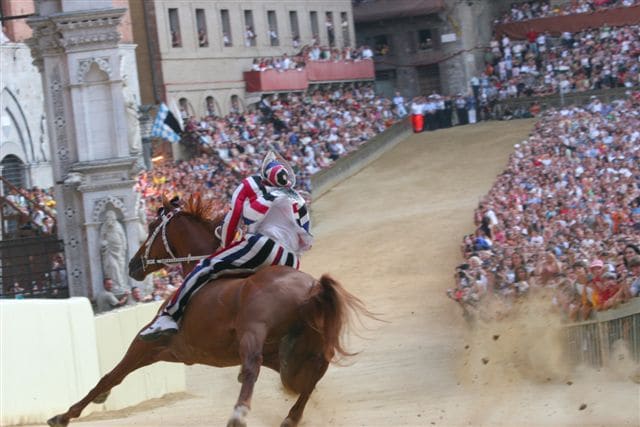
High heat and maximum crowds. Palio horse races run July 2 and August 16; Campo closes for packed spectator crowds.
SEP – OCT
Warm autumn days and wine harvest season. Duomo floor mosaics uncovered through mid-October.
NOV – FEB
Chilly and quiet. Short daylight hours but empty museums and lower hotel room rates.
practicalities
On July 2 and August 16, Piazza del Campo seals off by late afternoon. Standing inside the square is free but lacks shade or toilets for hours.
Each district flies flags showing its animal emblem. During contrada feasts, street tables set up for residents; respect marked private dining areas.
The narrow staircase up the unfinished cathedral facade allows only 30 visitors at a time. Go right at opening at 10:00.
There is no official left luggage service at Siena train station. Use private lockers near Piazza Gramsci inside the wall.
Walking up from the medieval basin of Fontebranda to the Duomo is extremely steep; use the public escalator inside Santa Caterina parking complex.