landmark
Piața Unirii
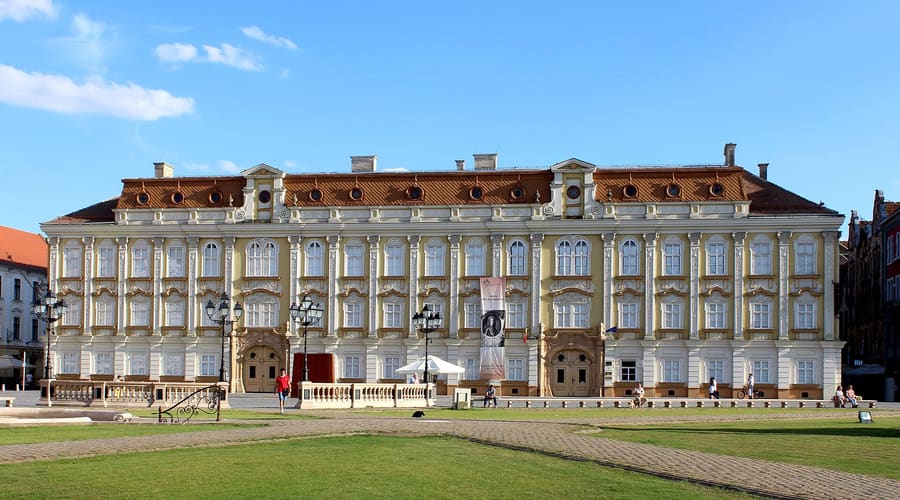
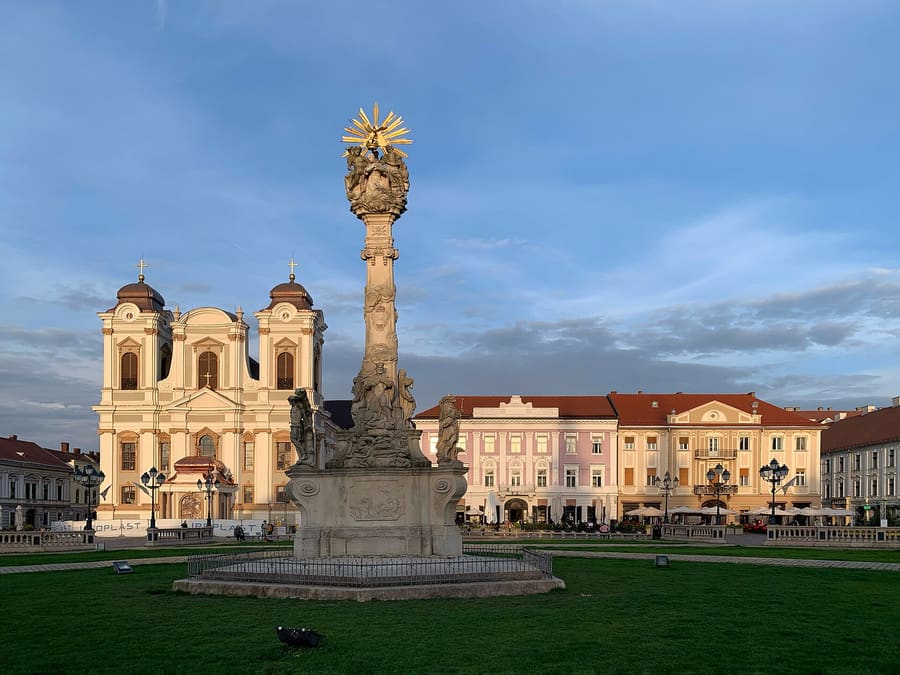
The city's main Baroque square, flanked by the Roman Catholic Dome and the Serbian Orthodox Vicarage.
Pregunta a ParleyRumanía
Secessionist squares, river transit, and Europe's 1989 spark.
introduction
Timișoara is defined by three interconnected pedestrian squares and the canalised Bega River. Built on Habsburg fortifications, the central Cetate district keeps traffic on its perimeter, leaving the core to walkers and tram lines. Expect Hungarian and Austrian Secessionist facades rather than medieval sprawl, with a cultural tempo shaped by its university population.
Airport transport trick
Express bus E4 runs directly from Traian Vuia Airport to the city centre in 25 minutes for 4 RON. Buy tickets at the kiosk or via contactless payment on board.
1989 Revolution milestone
Timișoara was declared Romania's first free city on 20 December 1989, starting the revolution that overthrew the Ceaușescu regime.
Water transit shortcut
Public vaporettos operate along the Bega Canal for 1 RON per ride, providing a fast transit route between Iosefin and the city centre.
Timișoara
Chainwit. · CC BY-SA 4.0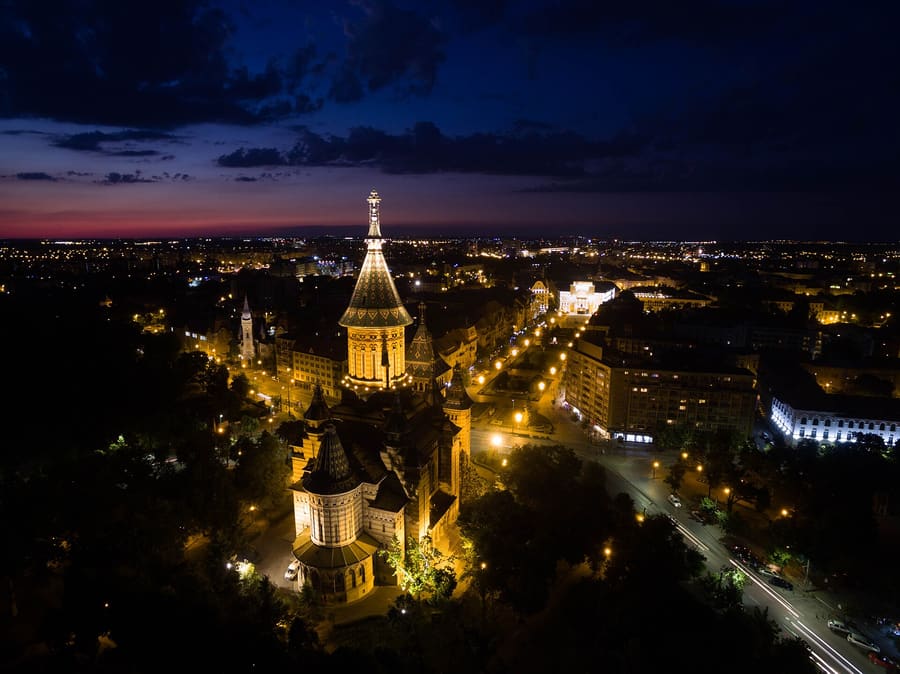
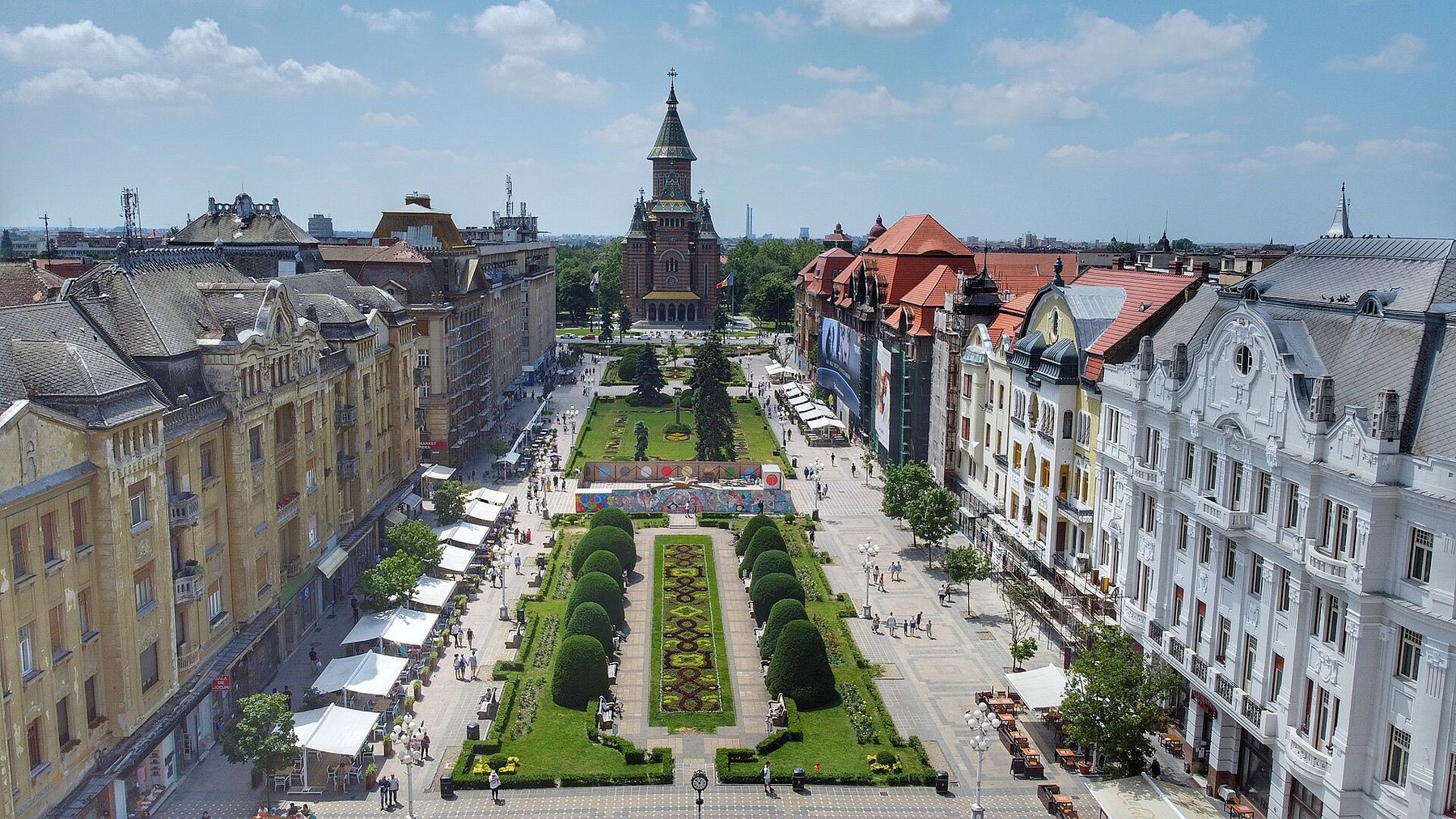
Cetate — Pedestrian historic core containing three primary plazas, restored townhouses, and terrace dining.
Corneliu Adrian · CC BY-SA 4.0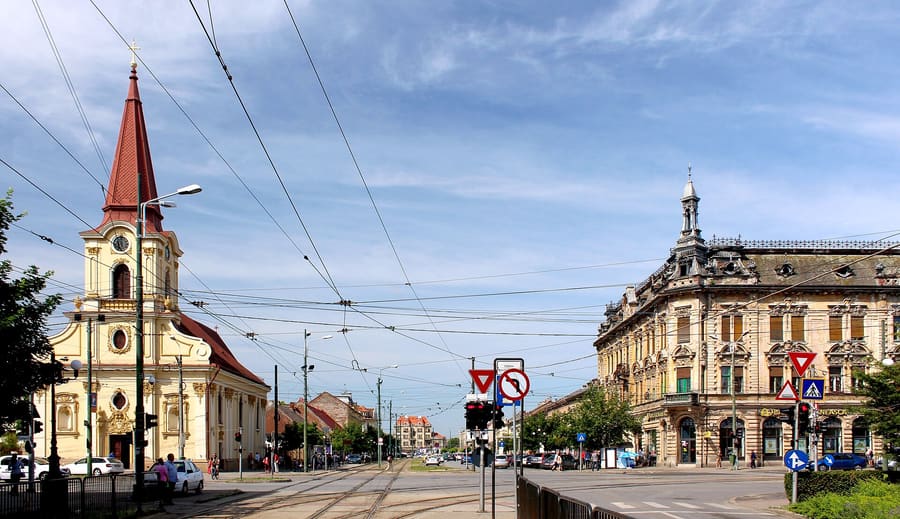
Iosefin — Industrial heritage zone west of the centre, featuring Art Nouveau housing blocks and river access.
Turbojet · CC BY-SA 4.0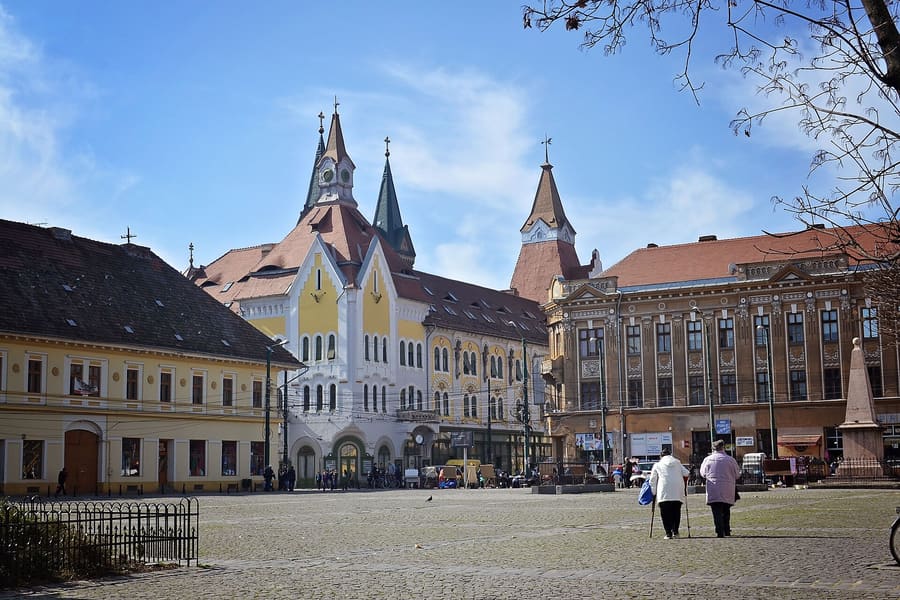
Fabric — Former manufacturing hub east of Cetate, centered around Piața Traian and historic synagogues.
Gratziela Ciortuz · CC BY-SA 4.0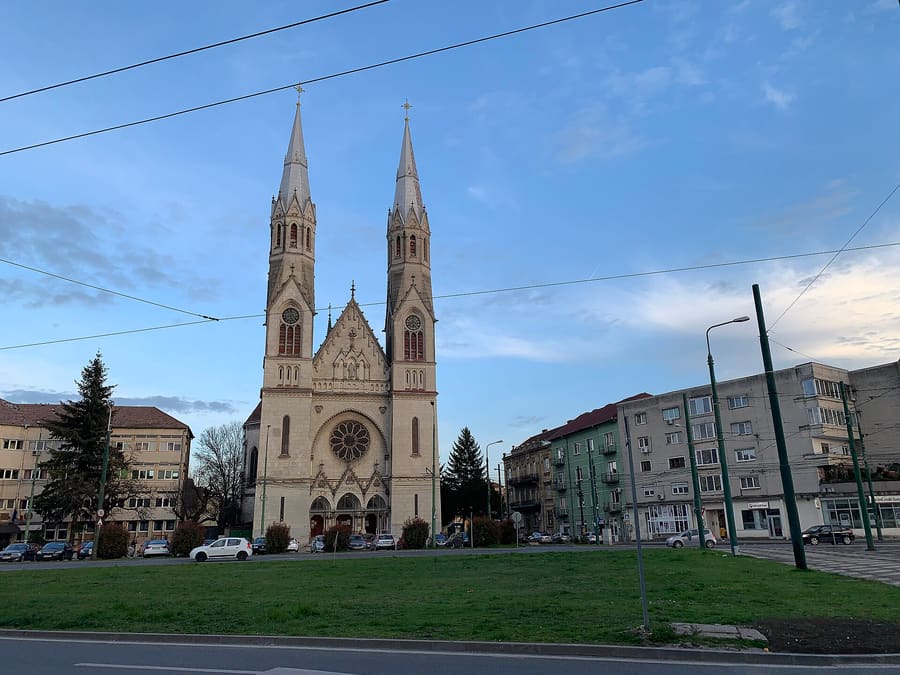
Elisabetin — Low-rise residential district south of the river with quiet streets and local bakeries.
Chainwit. · CC BY-SA 4.0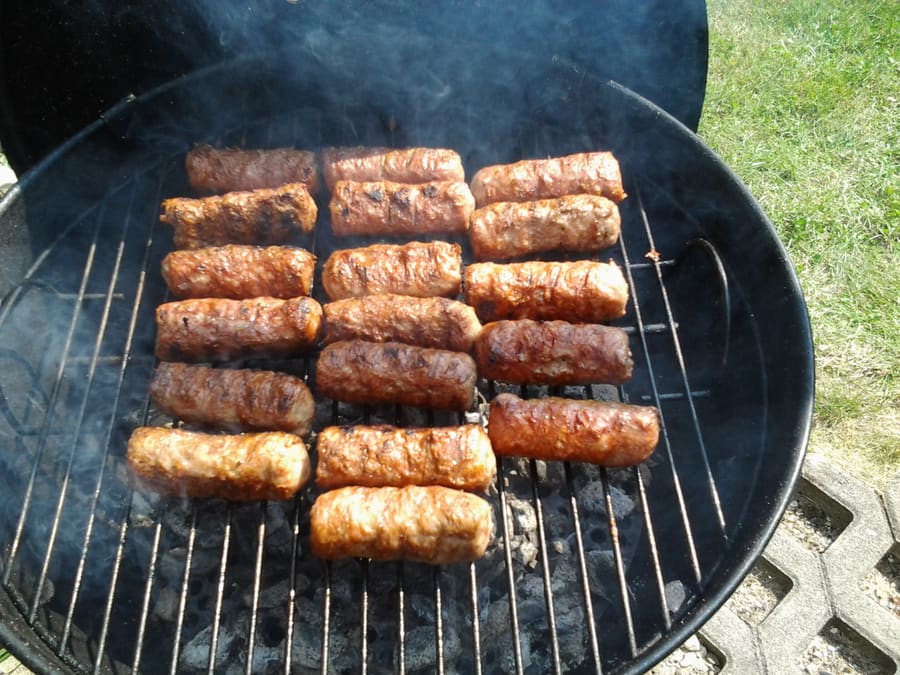
Traditional grilled pork dishes served with local condiments.
Stoschmidt · CC BY 3.0highlights
landmark
The city's main Baroque square, flanked by the Roman Catholic Dome and the Serbian Orthodox Vicarage.
Pregunta a Parley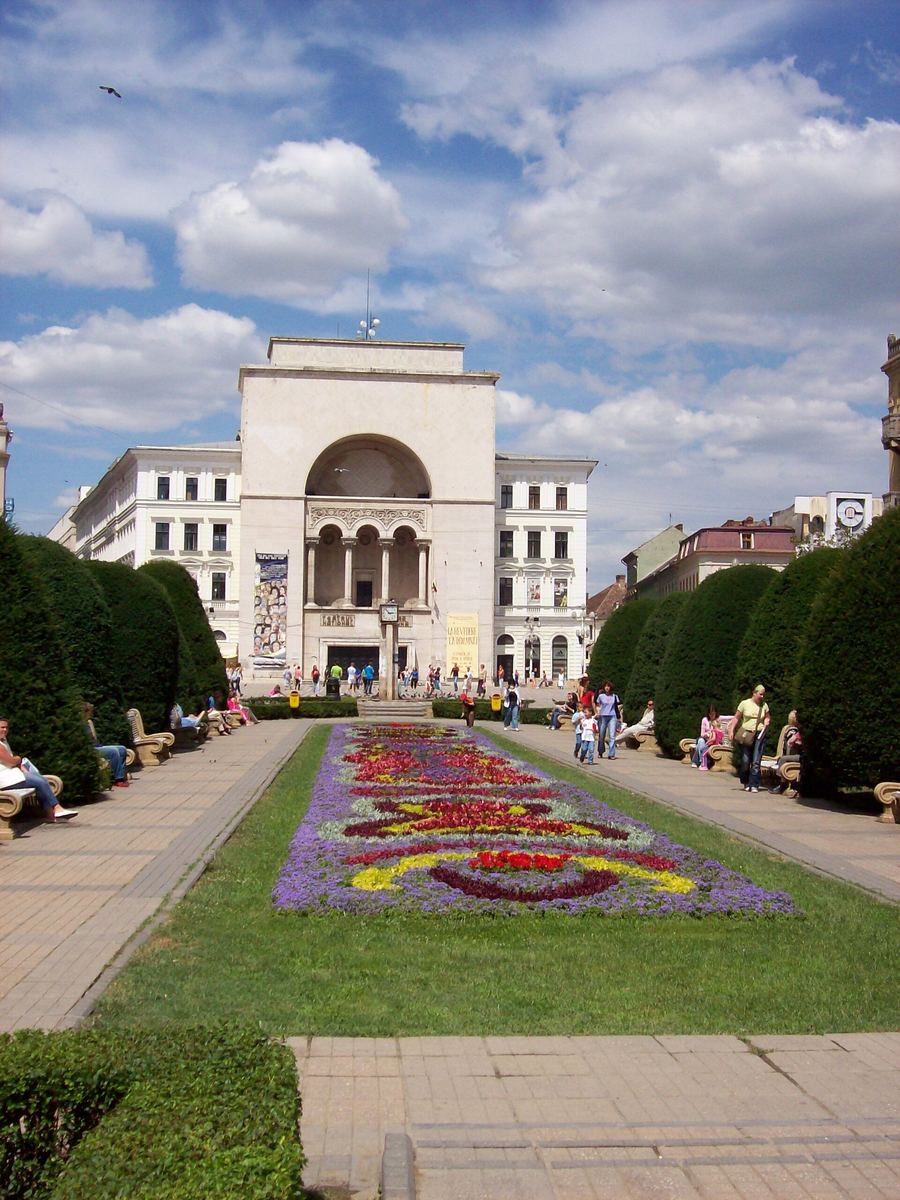
landmark
Boulevard-style square where citizens gathered during the 1989 uprising. Anchored by the Opera House.
Pregunta a Parley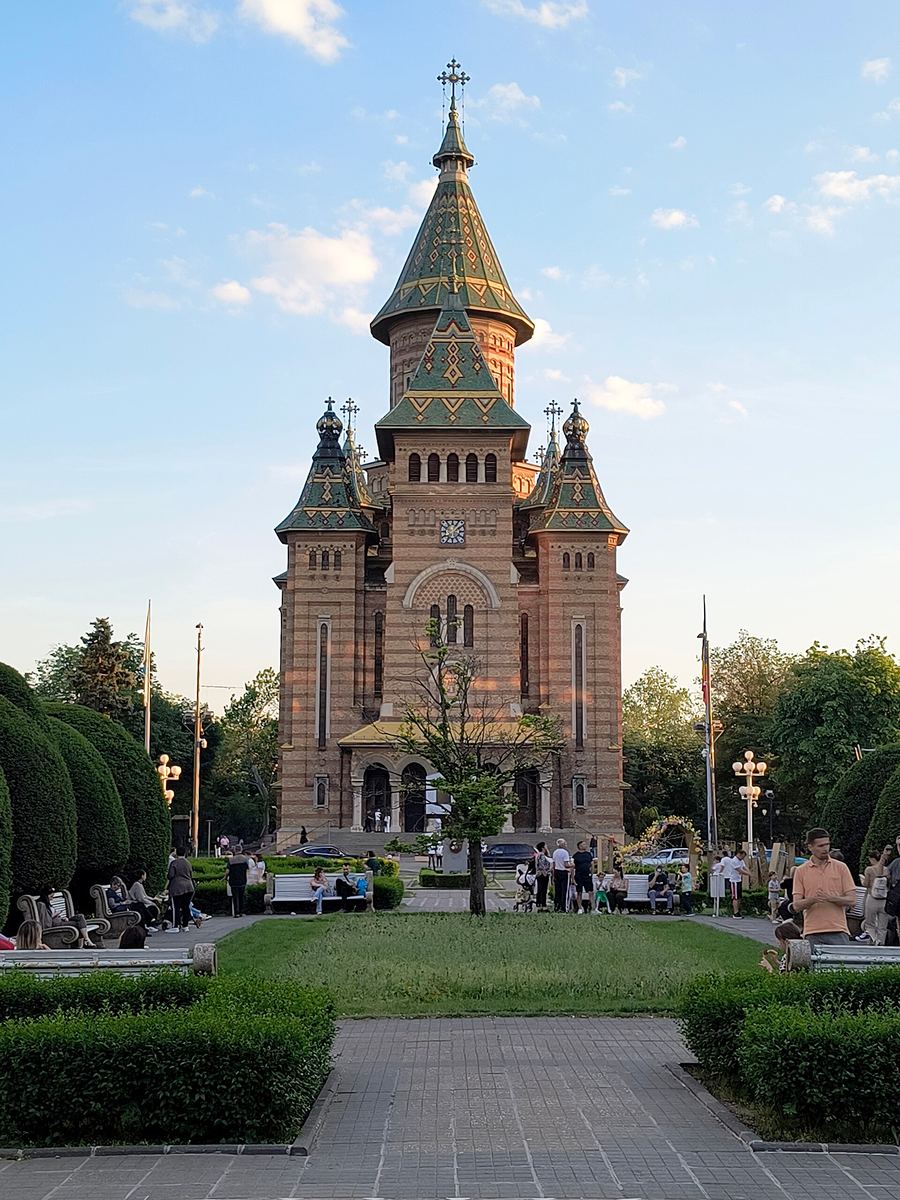
landmark
Striking 11-tower cathedral blending Moldavian and Byzantine styles. Free admission daily.
Pregunta a Parley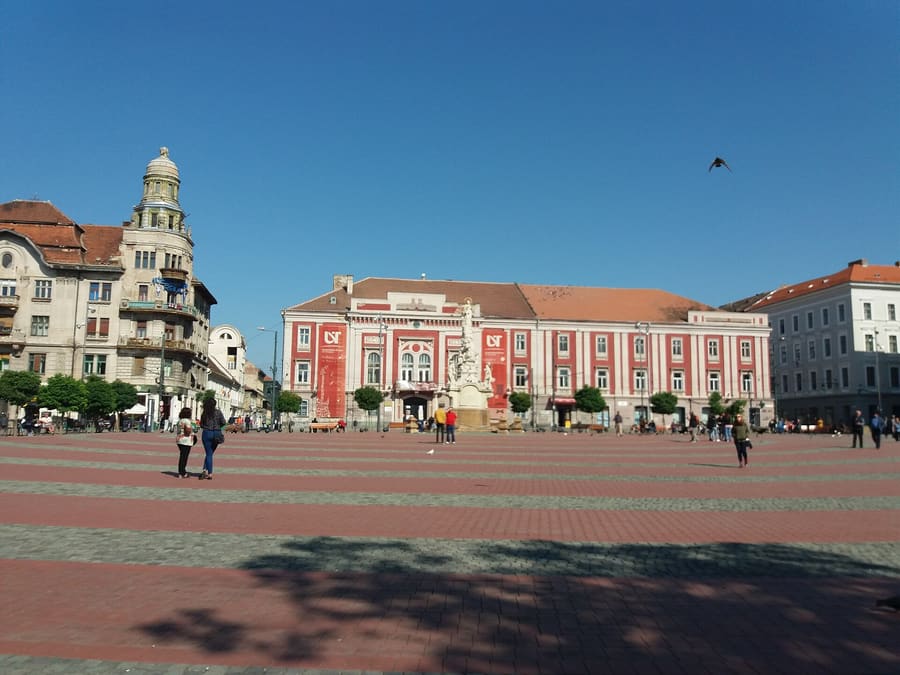
landmark
Open red-brick square linking Unirii and Victoriei, featuring the Old Town Hall and Garrison Command.
Pregunta a Parley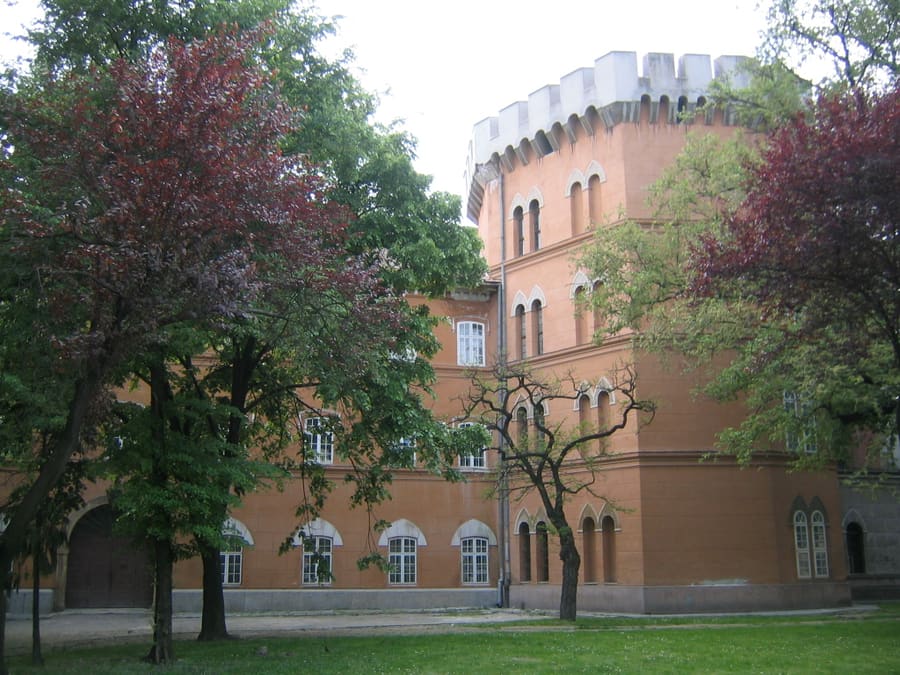
landmark
Timișoara's oldest surviving structure, built in the 14th century and modified after 1849.
Pregunta a Parleyattractions
areas
Pedestrian historic core containing three primary plazas, restored townhouses, and terrace dining.
CercaPiața Unirii, Piața Victoriei, Art Museum
Pregunta a ParleyIndustrial heritage zone west of the centre, featuring Art Nouveau housing blocks and river access.
CercaGara de Nord, Bega River docks
Pregunta a ParleyFormer manufacturing hub east of Cetate, centered around Piața Traian and historic synagogues.
CercaPiața Traian, Water Tower
Pregunta a ParleyLow-rise residential district south of the river with quiet streets and local bakeries.
CercaCentral Park, Politehnica University
Pregunta a Parleyfood
Timișoara's culinary traditions reflect the Banat region's history, combining Romanian, Hungarian, German, and Serbian elements. Pork and paprikas play central roles on traditional menus, alongside regional pastries like schwaebische strudels.Speciality coffee shops cluster heavily around Piața Unirii and Strada Alba Iulia. For traditional regional fare, step away from the primary tourist squares into side streets near Piața Traian or Elisabetin.
Traditional grilled pork dishes served with local condiments.
Stoschmidt · CC BY 3.0Look for Tochitură Bănățeană on menus: pork cooked in garlic lard sauce, served with polenta and fried egg.
Local roasters open early around 07:30. Most independent coffee shops take contactless card payments.
Square dining spots in Piața Unirii fill completely between 19:00 and 21:00 from May through September.
history
First documented in the 12th century as a fortress, Timișoara developed into an Ottoman administrative centre before fell under Habsburg rule in 1716. The Austrian empire fortified the city and engineered the Bega Canal, creating a trade hub.In December 1989, public opposition to the forced relocation of pastor László Tőkés escalated into mass protests in Piața Victoriei, triggering the Romanian Revolution.
Habsburg Conquest
Prince Eugene of Savoy captures the fortress from Ottoman control, inaugurating two centuries of Austrian urban planning.
Electric Street Lighting
Timișoara becomes the first mainland European city to introduce electric street lighting, installing 731 lamps.
Electric Trams
The city launches its electric tram service, replacing horse-drawn carriages across central quarters.
The Revolution Begins
Demonstrations starting on 16 December expand into full anti-communist protests, freeing the city on 20 December.
where to stay
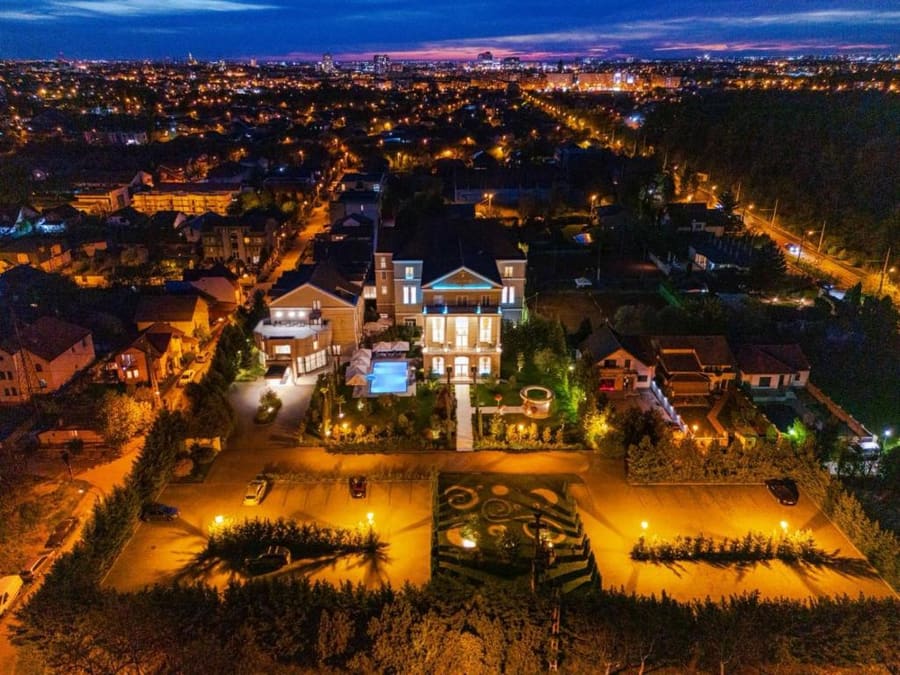
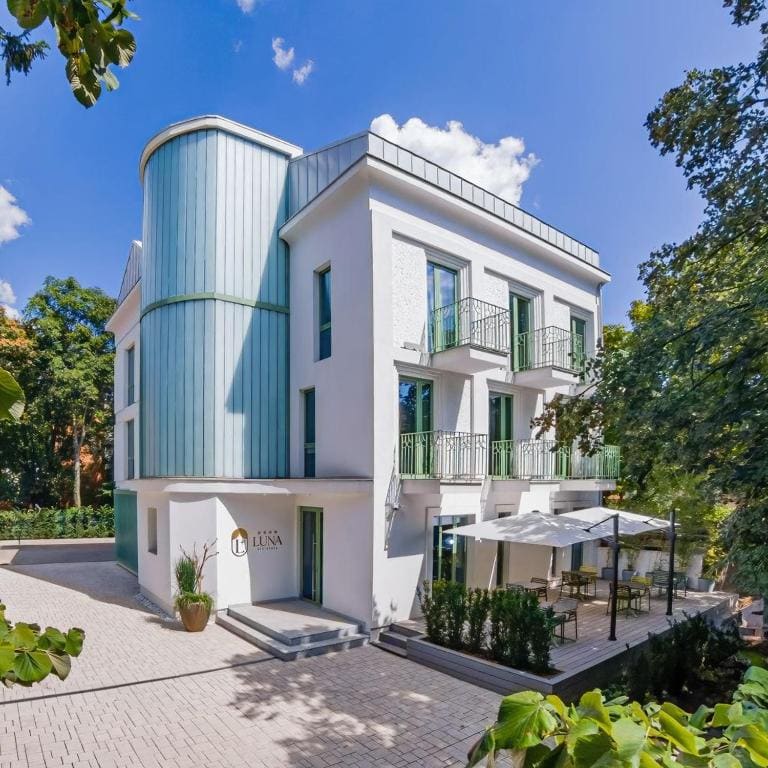
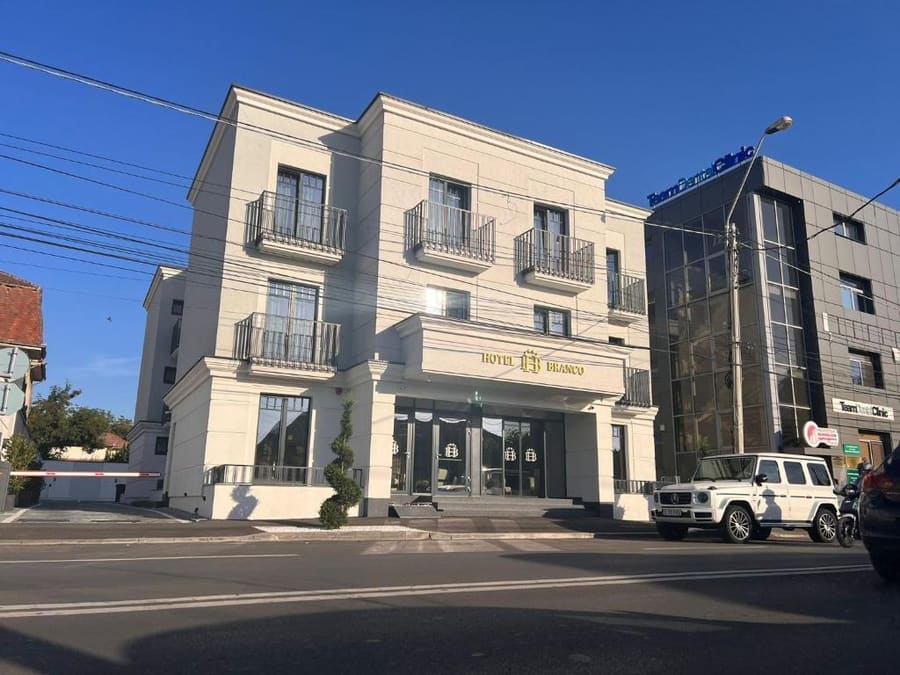
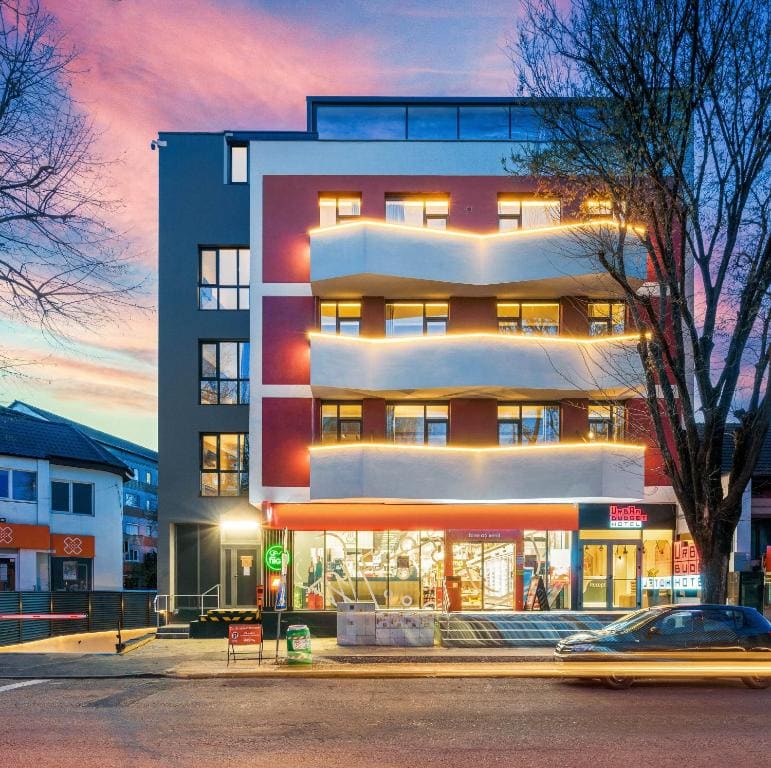
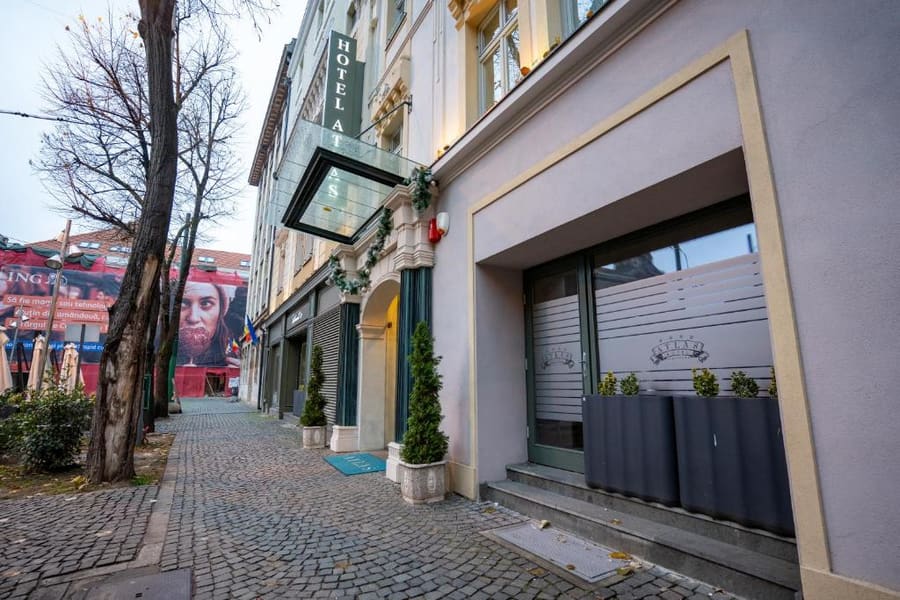
Choose your base depending on your daily reliance on walking versus public transit. Staying inside Cetate puts sights directly at your doorstep, while staying south of the Bega River offers quieter surroundings and lower hotel prices.
Live rates, matched to the areas above.
transport
Timișoara's public transit system (STPT) consists of trams, buses, trolleybuses, and water buses. The historic centre Cetate is almost entirely pedestrianised, making foot travel the primary choice within the core.
Desde Traian Vuia International Airport (TSR)
Express line E4 connects airport directly to Cetate (Piața 7 Pescom).
Use official airport dispatch screens or app cabs to prevent unmetered overcharges.
Uber and Bolt pick up in designated lanes outside the arrival terminal.
Buy a single ride ticket for 4 RON or tap a contactless credit card at the yellow validators inside the vehicle.
Vaporettos operate daily along 9 stops between Mihai Viteazul bridge and Ardealul bridge for 1 RON per leg.
A day pass costs 15 RON and covers unlimited rides on trams, buses, and trolleybuses across all city zones.
Watch for bicycles and electric scooters sharing paths in Piața Libertății and along the Bega embankments.
cost
Romania uses the Romanian Leu (RON). Cards are accepted at nearly all restaurants, hotels, and retail stores in Timișoara, though carrying small cash notes is useful for street kiosks and outdoor markets.
Price for a single espresso in independent cafés around Piața Unirii.
Average cost per person for a main course and soft drink in Cetate restaurants.
Valid for one journey on trams, buses, or trolleybuses within city limits.
Standard adult ticket for the National Art Museum or Banat Museum exhibitions.
seasonality
MAR – MAY
Mild temperatures around 15–22°C. Parks along the Bega River bloom, making this an ideal walking window.
JUN – AUG
Summer heat often exceeds 32°C. Outdoor terraces operate until midnight, though afternoon walking can feel oppressive.
SEP – NOV
Cooler days between 12–20°C. University sessions resume, bringing lively evening crowds back to central squares.
DEC – FEB
Cold conditions with occasional snow, averaging 0–4°C. Piața Victoriei hosts the city Christmas market throughout December.
practicalities
Supermarkets and major pharmacies operate seven days a week, though smaller boutiques close on Sunday afternoons.
Contactless card payment is universal in cafes and cabs. Keep 20 RON in cash for small market stalls.
English and German are widely spoken by service staff, hotel personnel, and younger residents.
Tap water in Timișoara is safe to drink, though mineral content gives it a distinct taste.
Piața Unirii and surrounding historic alleys feature uneven stone paving. Flat walking shoes are recommended.