landmark
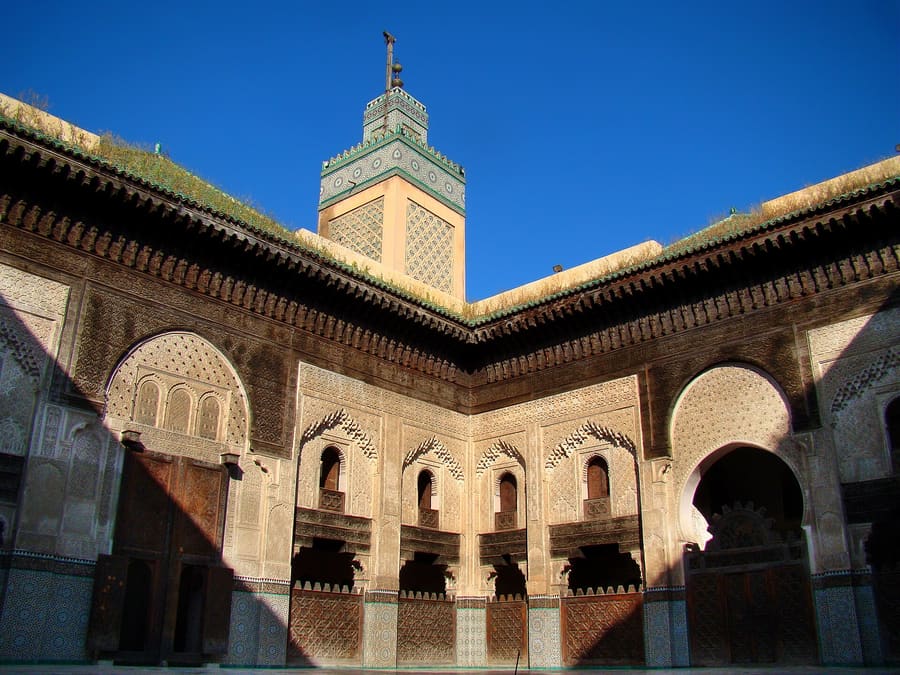
Bou Inania Madrasa
A 14th-century Islamic school featuring intricate cedar carving and zellij tilework. Non-Muslim visitors may enter outside prayer times.
Parley से पूछेंमोरक्को
The medieval engine of Moroccan artisan craft.
introduction
Fes El Bali is a dense urban maze of nine thousand car-free alleys. You navigate by slope, landmarks, and street signs rather than smartphone mapping apps. It functions as a working city of crafts rather than a themed open-air museum. Expect tight physical spaces, persistent shopkeepers, and deep historic architecture.
Arrival from the airport
Grand taxis wait outside FEZ terminal and charge a fixed rate of 150 MAD to Bab Bou Jeloud. Agree on the price before putting luggage in the trunk.
Car-free medieval urban zone
Fes El Bali is the world's largest contiguous car-free urban region. Donkeys and handcarts carry all goods through its nine thousand alleys.
Medina navigation rule
Follow the downhill slope to walk deeper into the medina toward R'cif. Walk uphill to return toward Bab Bou Jeloud and taxi ranks.
Fes El Bali
Bachmont · CC BY 2.0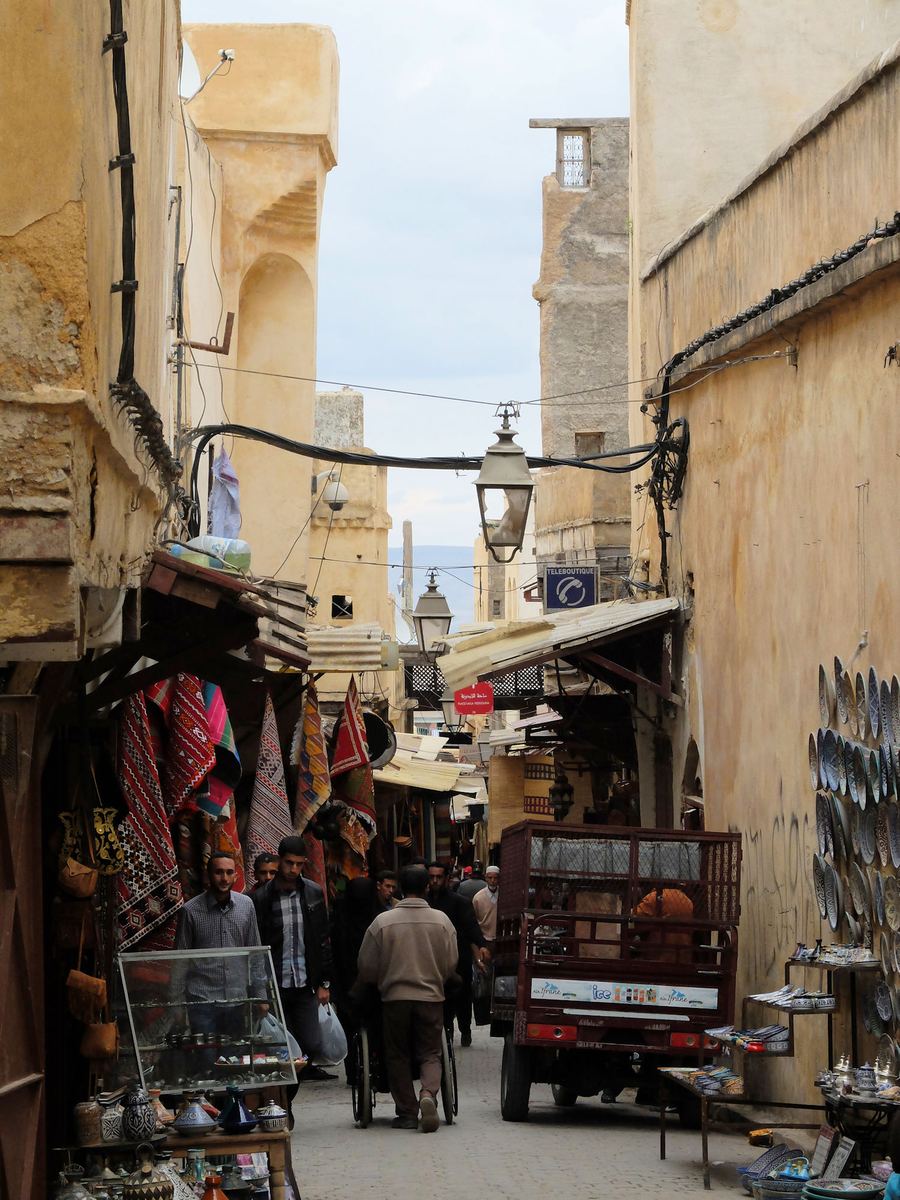
Talaa Kebira — The main upper spine of the medina filled with butcher stalls, bakeries, and street food.
Robert Prazeres · CC BY-SA 4.0
Talaa Seghira — A slightly quieter parallel artery lined with textile workshops, spice vendors, and guesthouses.
Yamen · CC BY-SA 4.0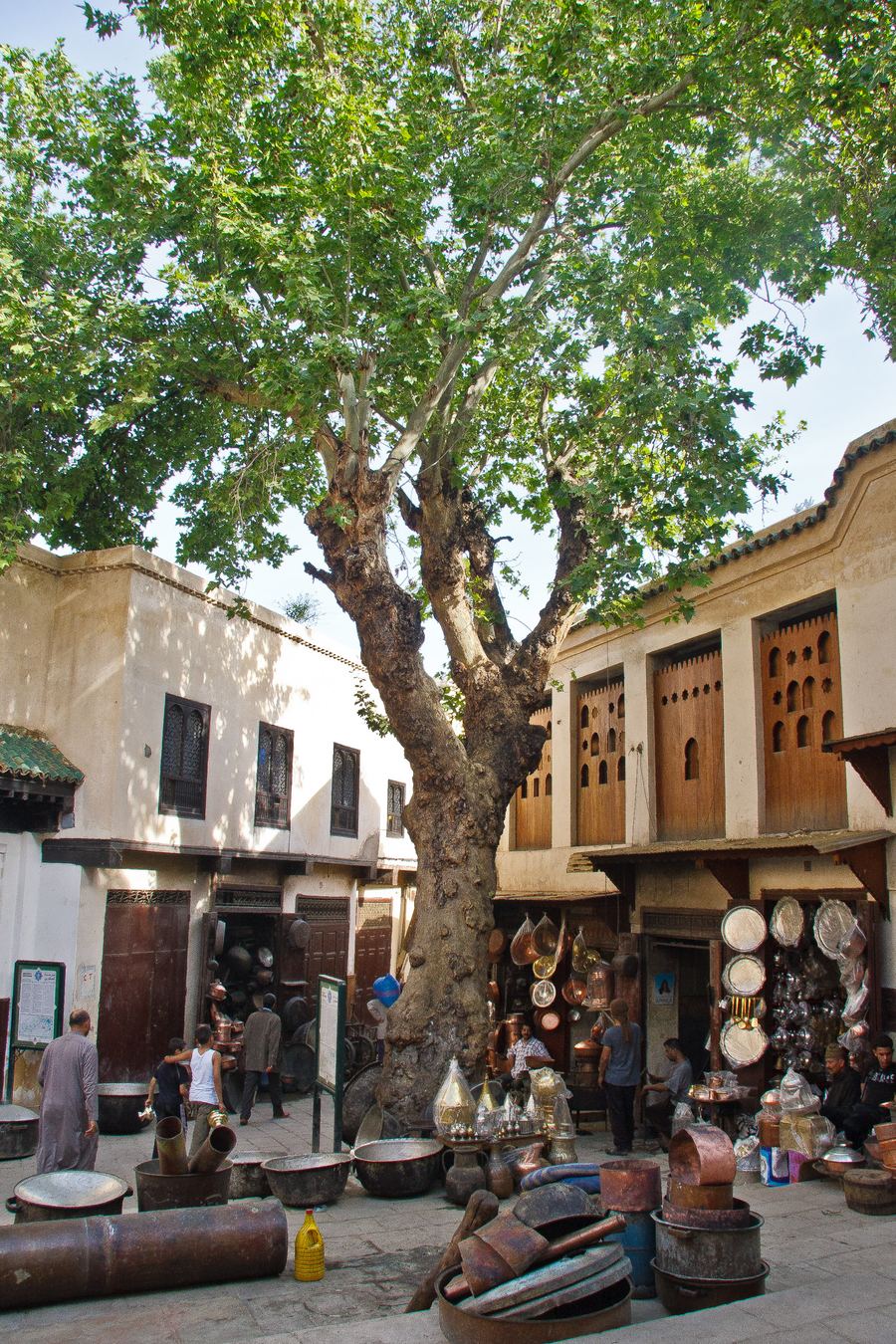
Place Seffarine — A metallic square where coppersmiths hammer brass pans and teapots by hand.
Mike Prince from Bangalore, India · CC BY 2.0
Place R'cif — The open lower plaza where the medina meets vehicle traffic and local bus routes.
Yamen · CC BY-SA 4.0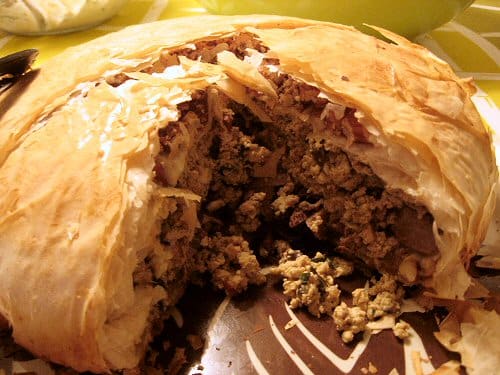
Traditional pigeon pastilla dusted with cinnamon and sugar.
Krista · CC BY 2.0highlights
landmark
A 14th-century Islamic school featuring intricate cedar carving and zellij tilework. Non-Muslim visitors may enter outside prayer times.
Parley से पूछें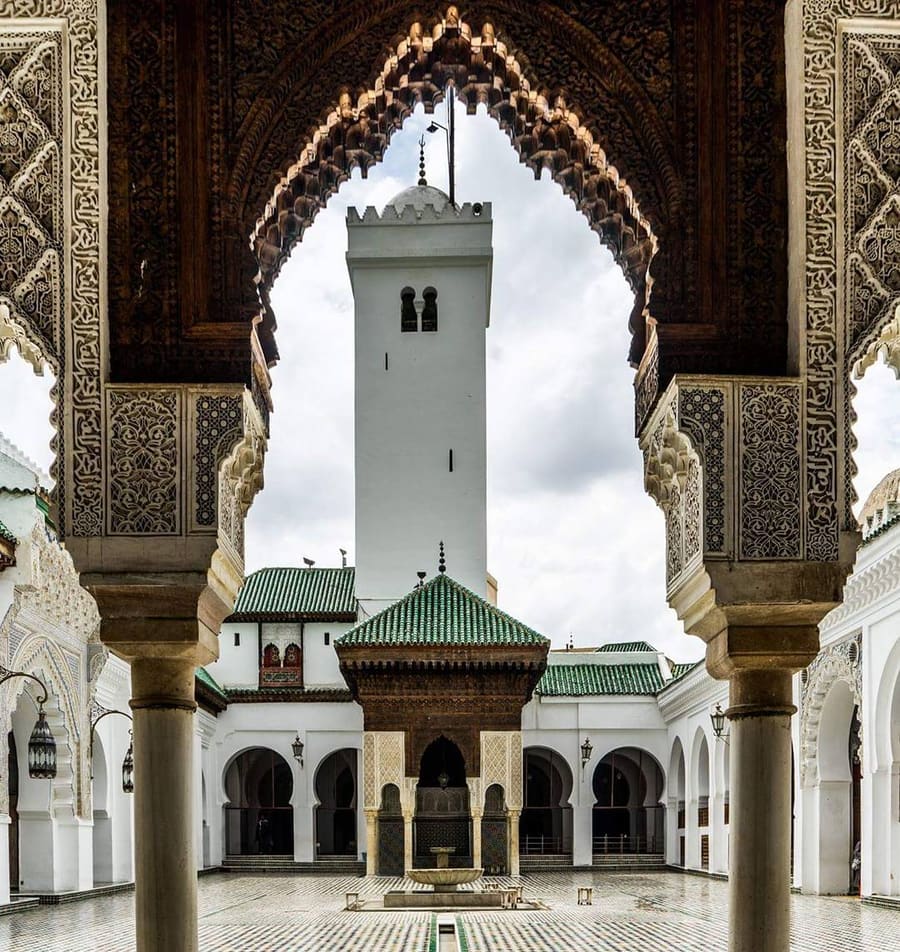
landmark
Founded in 859 AD, it operates as the world's oldest continuously operating university. Non-Muslims view the interior courtyard from outer doorways.
Parley से पूछें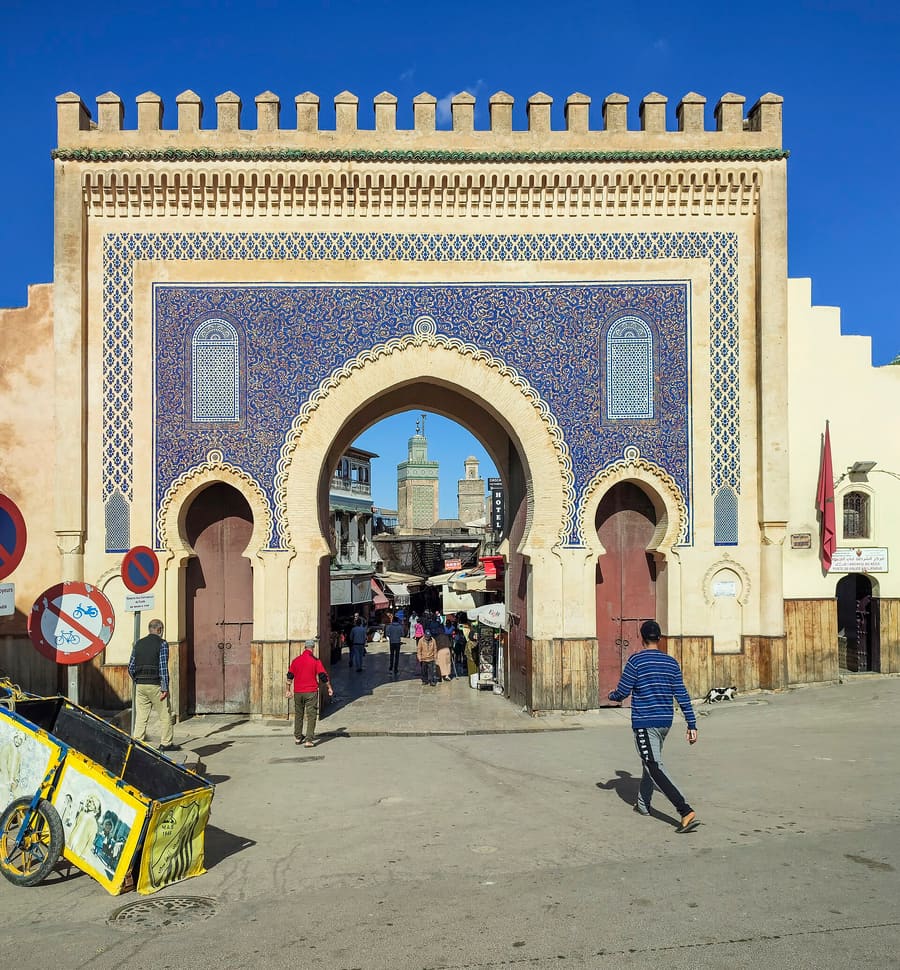
landmark
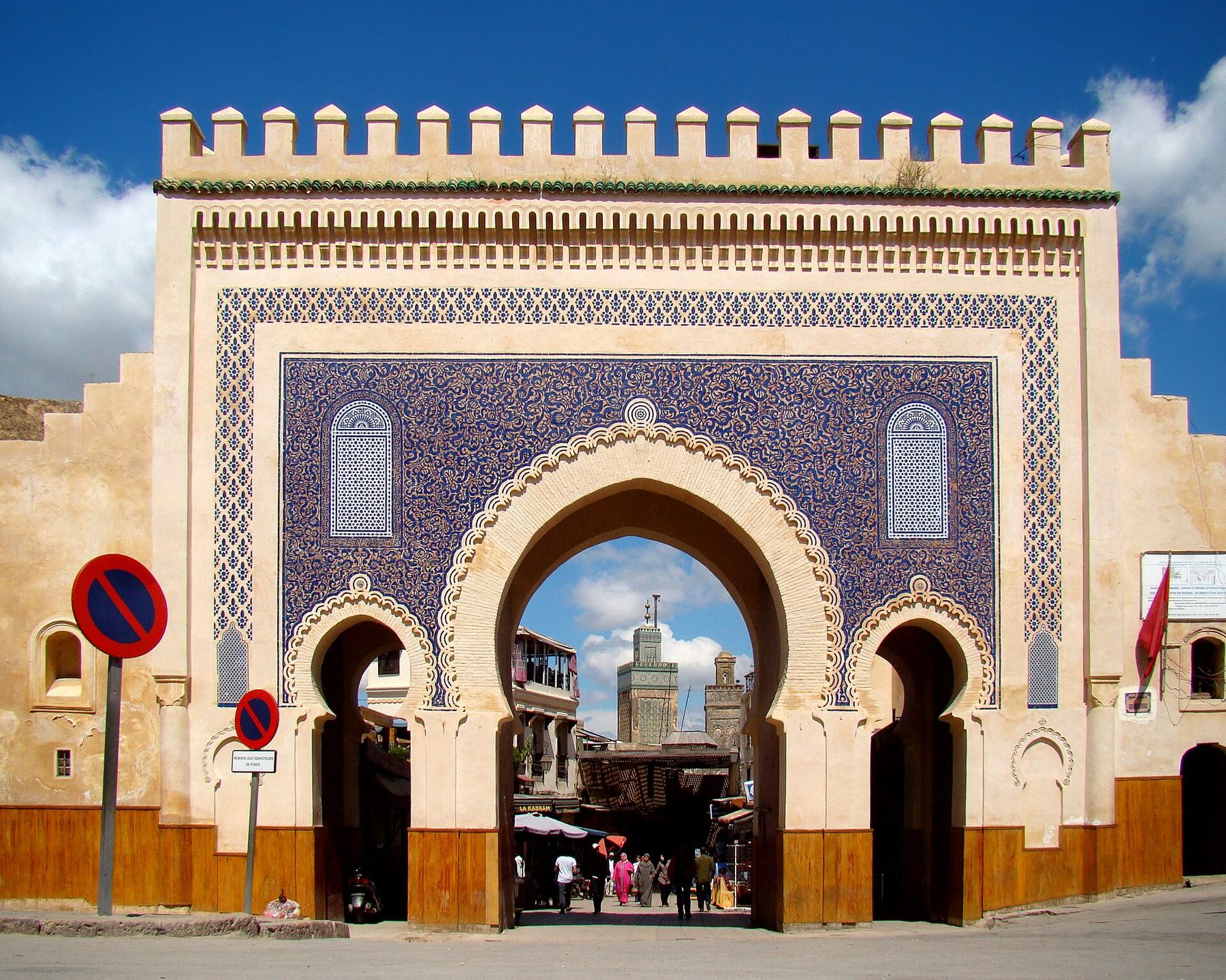
The grand blue gate marks the main western entry into Fes El Bali. The outer face is blue tiles; the inner face is green.
Parley से पूछें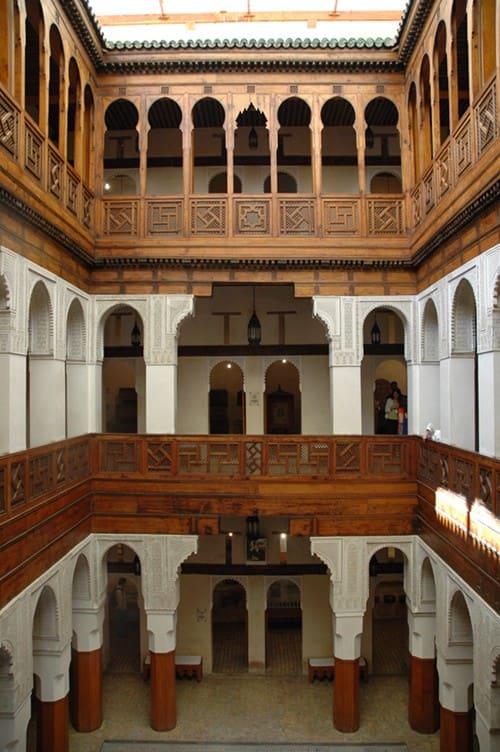
landmark
A restored 18th-century caravanserai dedicated to traditional woodworking crafts. The rooftop cafe offers clear views across medina rooftops.
Parley से पूछें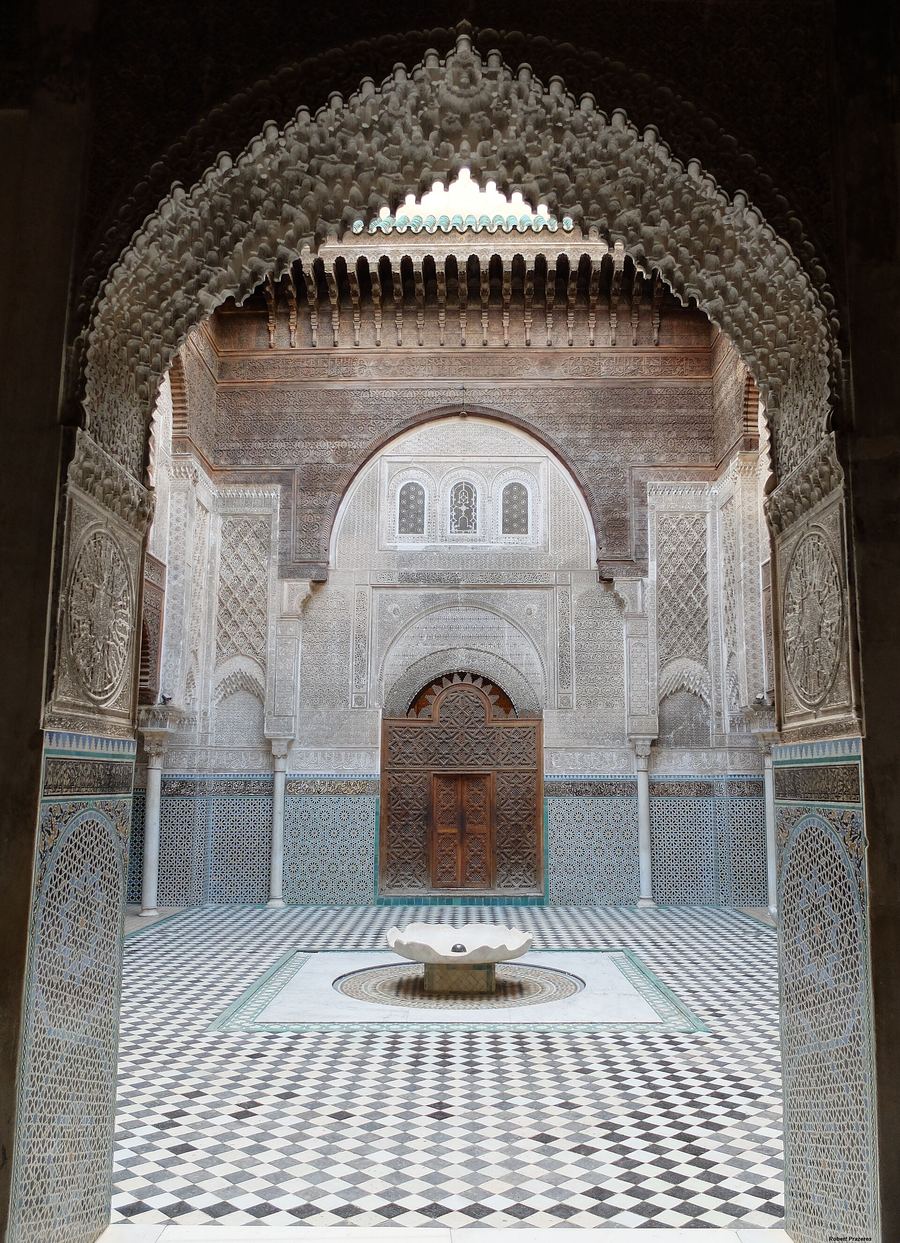
landmark
Built in 1325 near the spice market with exquisite stucco and tile detail. Upper floor student cells overlook the central marble courtyard.
Parley से पूछेंattractions
areas
The main upper spine of the medina filled with butcher stalls, bakeries, and street food.
पास मेंBab Bou Jeloud and Bou Inania Madrasa
Parley से पूछेंA slightly quieter parallel artery lined with textile workshops, spice vendors, and guesthouses.
पास मेंWestern gates and quiet side alleys
Parley से पूछेंA metallic square where coppersmiths hammer brass pans and teapots by hand.
पास मेंAl-Qarawiyyin and the spice souk
Parley से पूछेंThe open lower plaza where the medina meets vehicle traffic and local bus routes.
पास मेंEastern medina entry and river bed
Parley से पूछेंfood
Fes produces Morocco's most complex traditional cuisine. Pastilla is the city's signature dish: thin layers of warqa pastry filled with slow-cooked pigeon or chicken, almonds, cinnamon, and powdered sugar. Local communal ovens (ferran) still bake dough brought daily by neighborhood families.Food stalls near Bab Bou Jeloud grill spiced lamb sausages (kefta) and camel meat over glowing charcoal. For slow-cooked stew, look for clay pots cooked in the embers of hammam furnaces.
Traditional pigeon pastilla dusted with cinnamon and sugar.
Krista · CC BY 2.0Bring dough or ask your riad host to point out the local ferran to taste fresh flatbread.
Buy saffron in the spice souk near El-Attarine where vendors weigh threads on brass scales.
Riad dining rooms require morning reservations because ingredients are bought fresh from market stalls daily.
history
Fes El Bali was founded in 789 AD by Idris I on the eastern bank of the Jawhar river. His son Idris II expanded the city to the western bank in 809 AD, bringing Arab families fleeing Cordoba and Kairouan.Under the Marinid dynasty in the 13th and 14th centuries, Fes reached its golden age. The rulers built madrasas, palaces, and public baths, establishing Fes as the intellectual capital of North Africa.
City Foundation
Idris I establishes the settlement on the eastern bank of the river.
Al-Qarawiyyin Founded
Fatima al-Fihri founds the mosque and school that becomes a renowned seat of learning.
Marinid Expansion
Marinid rulers build Fes El Jdid and construct the medina's finest madrasas.
Colonial Era
The French protectorate moves the political capital to Rabat, preserving Fes El Bali.
UNESCO Listing
Fes El Bali is designated a UNESCO World Heritage site to preserve its medieval street layout.
where to stay
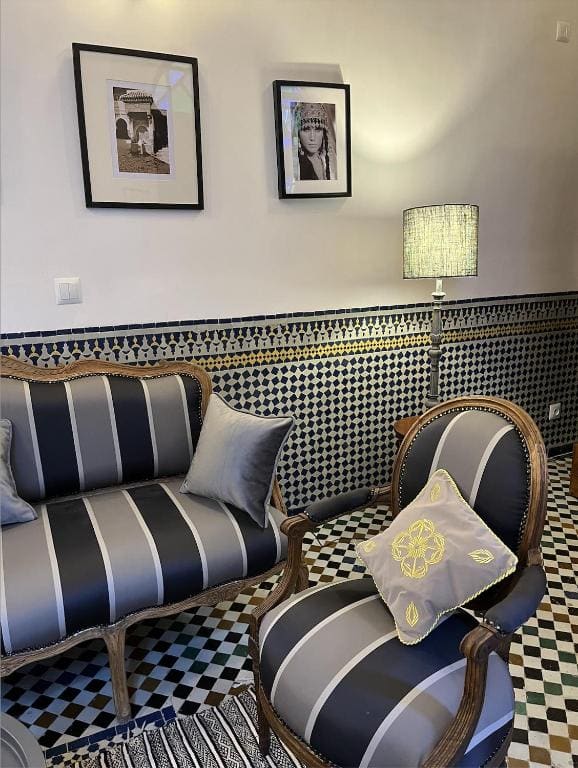
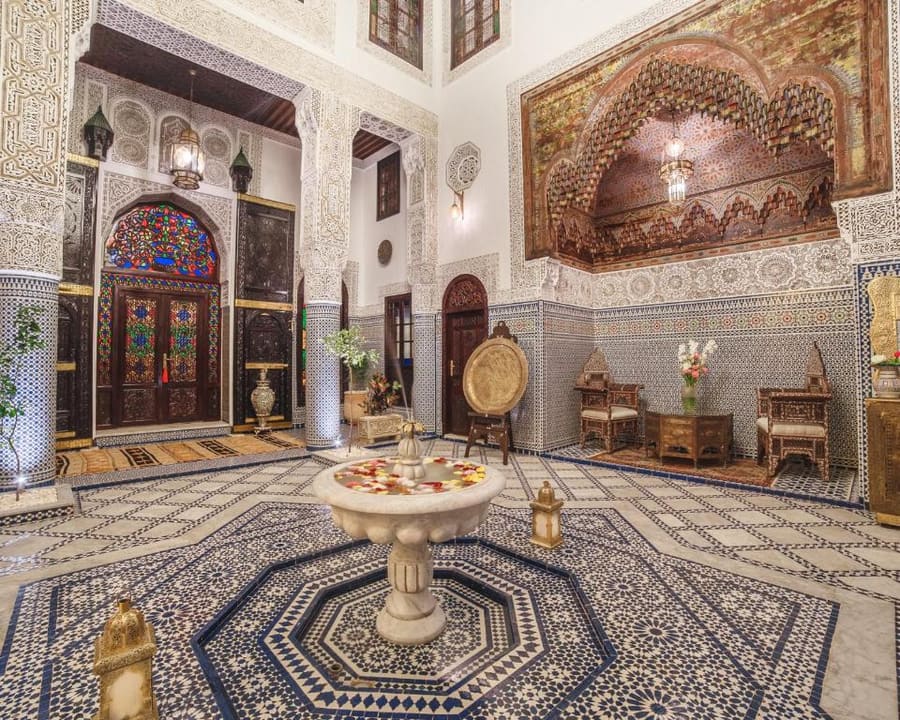
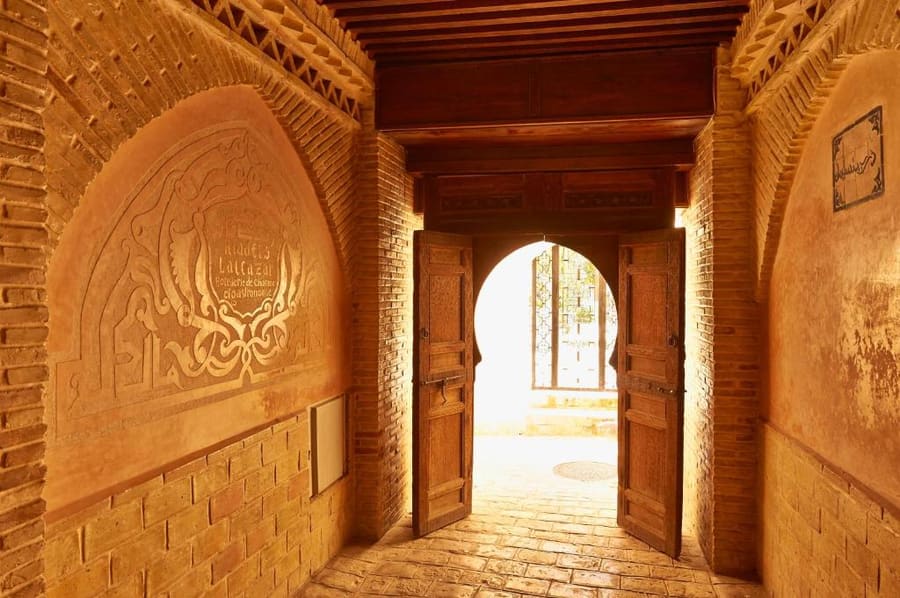
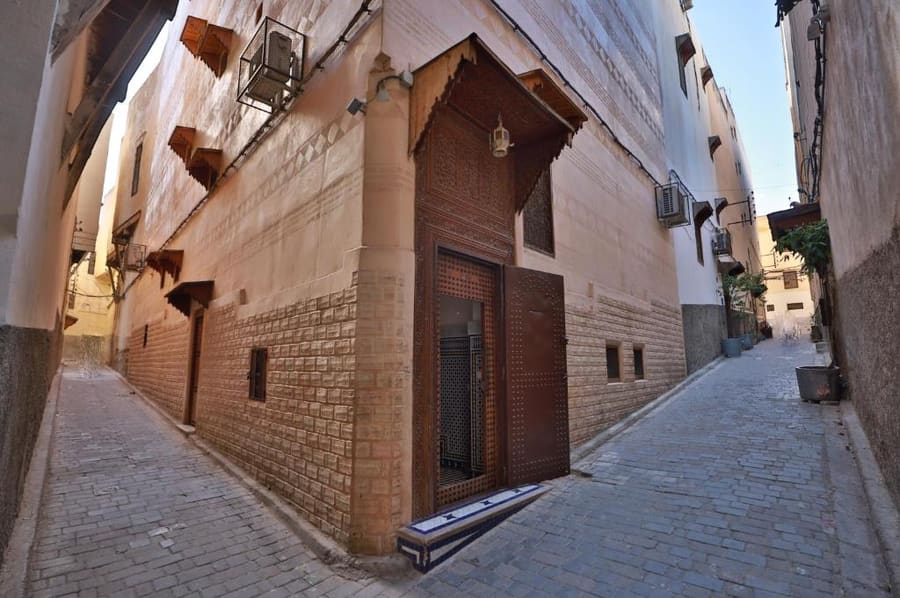
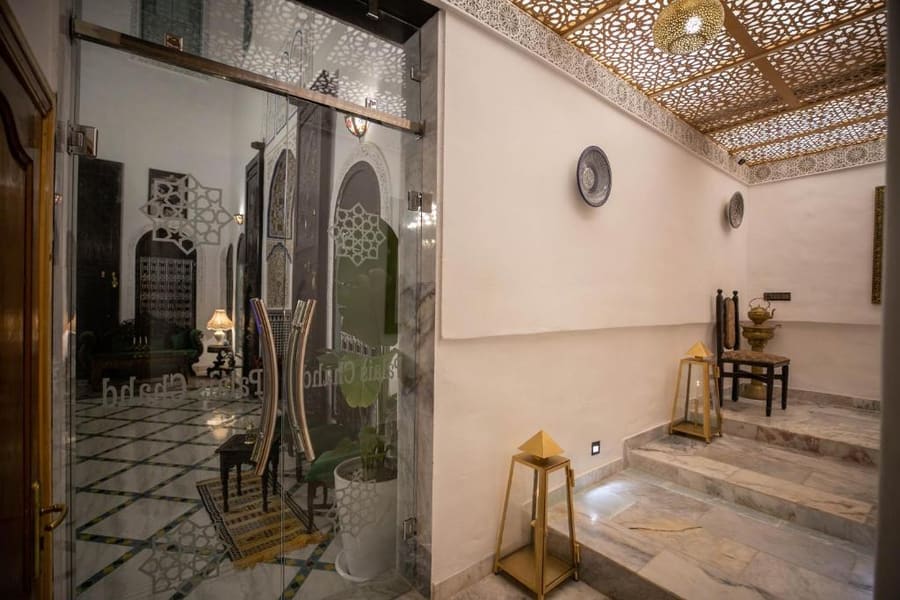
Choose your location based on luggage mobility. Staying near Bab Bou Jeloud or Place R'cif means short walks with bags from taxi drop-offs. Deeper medina riads offer total quiet but require luggage porter services.
Live rates, matched to the areas above.
transport
Fes El Bali contains no motorized vehicle traffic. You enter the medina through outer stone gates and travel entirely on foot. Donkeys and handcarts have the right of way in narrow passages.
Fes–Saïss Airport (FEZ) से
Fixed official rate from airport to Bab Bou Jeloud or Place R'cif.
Bus line 16 connects the airport terminal to Fes Railway Station.
Red Petit Taxis carry up to 3 passengers inside city limits using meters. White Grand Taxis run fixed routes to the airport.
Porters with handcarts wait at medina gates. Agree on a price (usually 20-30 MAD) before loading bags.
Petit taxis can be scarce around dusk when drivers shift rotations. Flag taxis on major ring roads.
cost
Fes El Bali uses the Moroccan Dirham (MAD). Cash is necessary inside the medina; credit cards are accepted only at higher-end riads and established craft cooperatives.
Standard price at medina cafes; higher at rooftop viewpoints.
Price varies between traditional lunch spots and riad dining rooms.
Mid-range renovated riad including courtyard breakfast.
seasonality
MAR – MAY
Mild temperatures and blooming flora make spring ideal for walking narrow stone alleys.
JUN – AUG
Midday heat regularly exceeds 40°C. Walking the stone medina feels furnace-like between 12:00 and 16:00.
SEP – NOV
Autumn brings comfortable walking weather and active trade after summer heat subsides.
DEC – FEB
Cold nights in unheated stone riads. Daytime temperatures are crisp and pleasant for sightseeing.
practicalities
Fridays are holy days. Many souk stalls and artisan workshops close around midday prayer.
Persistent youths offer directions then demand payment. Firmly state 'no thank you' and keep walking.
Al-Qarawiyyin and local mosques are restricted to Muslims. Respect closed doorway signs.
ATMs line Bab Bou Jeloud and Place R'cif. Very few exist deeper inside the maze.
Balconies overlooking Chouara are inside leather shops. Expect a sales pitch after viewing the vats.