landmark
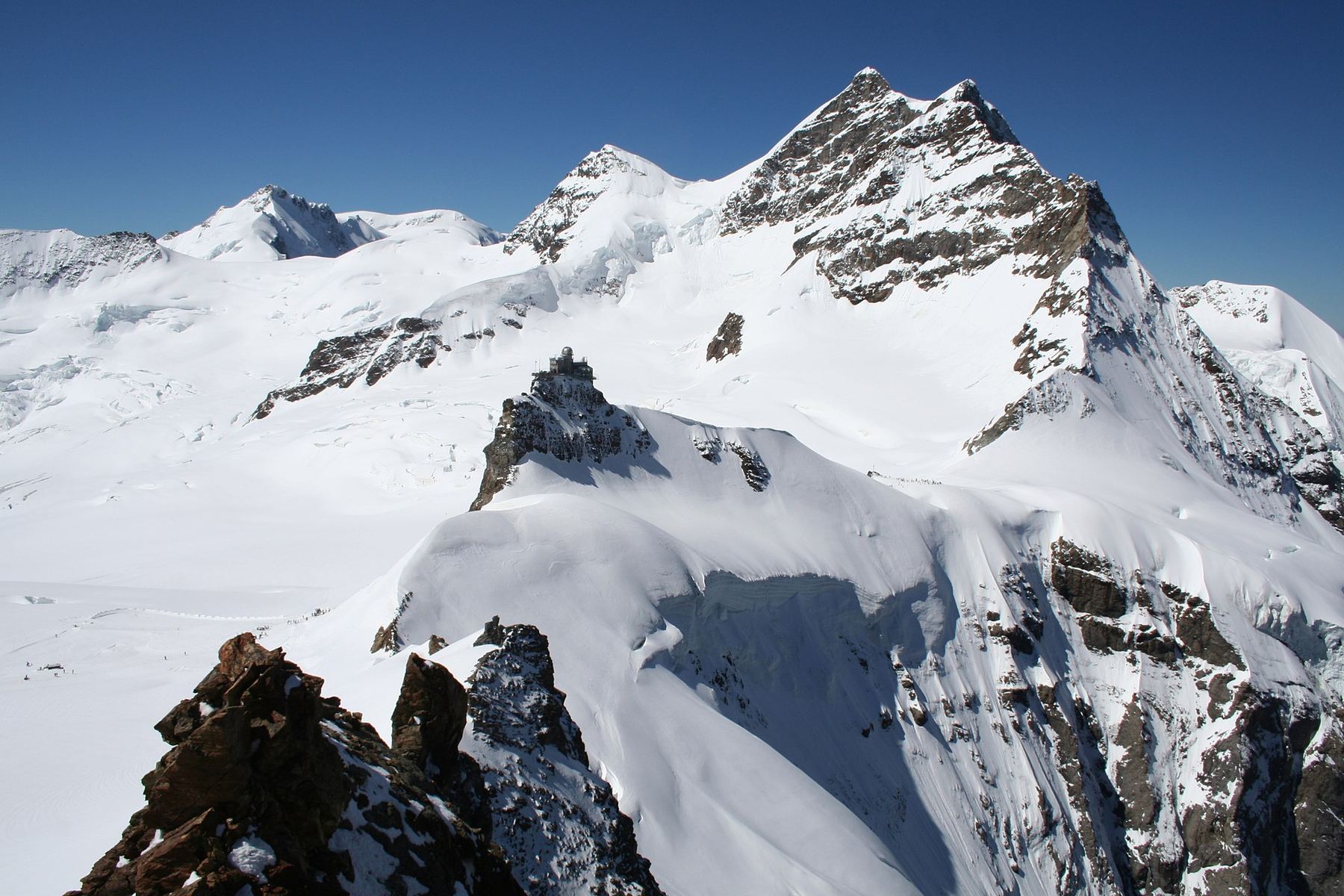
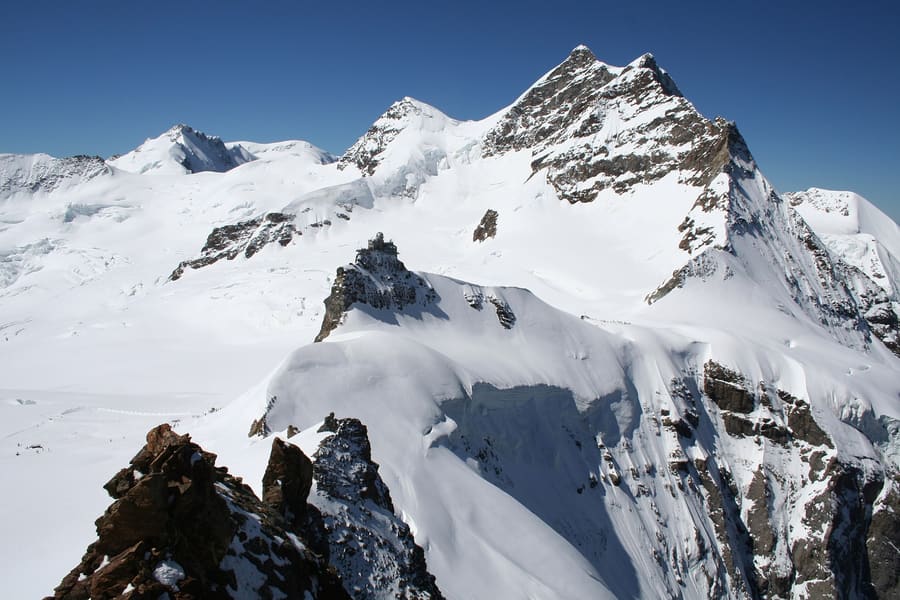
Jungfraujoch
High-altitude train station and ice palace at 3,454 metres. Take the early morning train to avoid long queues at the top.
Parley से पूछेंस्विट्ज़रलैंड
High peaks, vertical valley walls, and cog railways.
introduction
The Jungfrau region centres on three high peaks and two contrasting valleys in the Bernese Oberland. You travel mostly by cog train and cable car, as car access ends at valley bases like Lauterbrunnen and Grindelwald. Car-free villages sit on high shelf ledges above sheer cliffs. Expect high transport costs and dense summer crowds around major rail terminals.
Arrival trick
Fly into Zurich or Bern, then take SBB trains via Interlaken Ost. Boarding the right rail sector at Interlaken is essential because trains split at Zweilütschinen.
UNESCO status
The Swiss Alps Jungfrau-Aletsch region became a UNESCO World Heritage site in 2001. It contains the longest glacier in Europe.
Planning trick
Buy the Jungfrau Travel Pass if staying three days or more. It covers local trains and cable cars, though the final peak stretch requires a top-up.
Jungfrau
Terra3 · CC BY-SA 3.0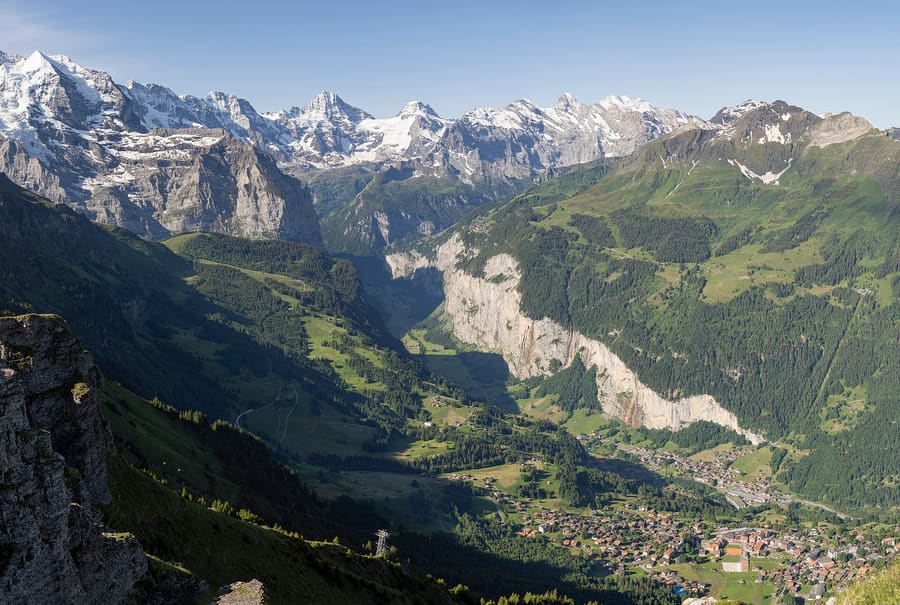
Lauterbrunnen — Transit-heavy valley hub with steep rock walls, waterfalls, and continuous bus movements.
Chensiyuan · CC BY-SA 4.0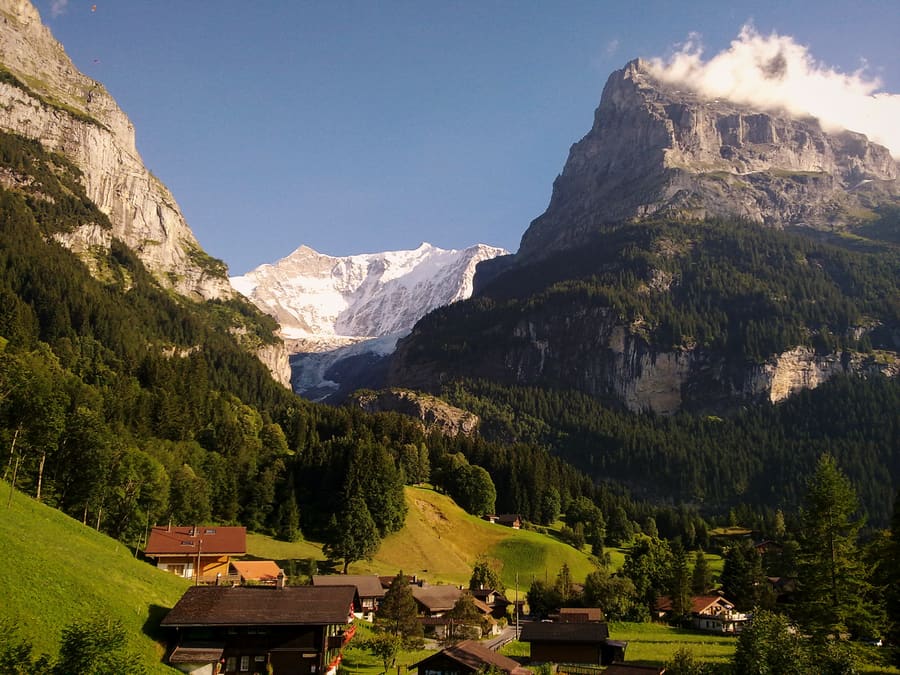
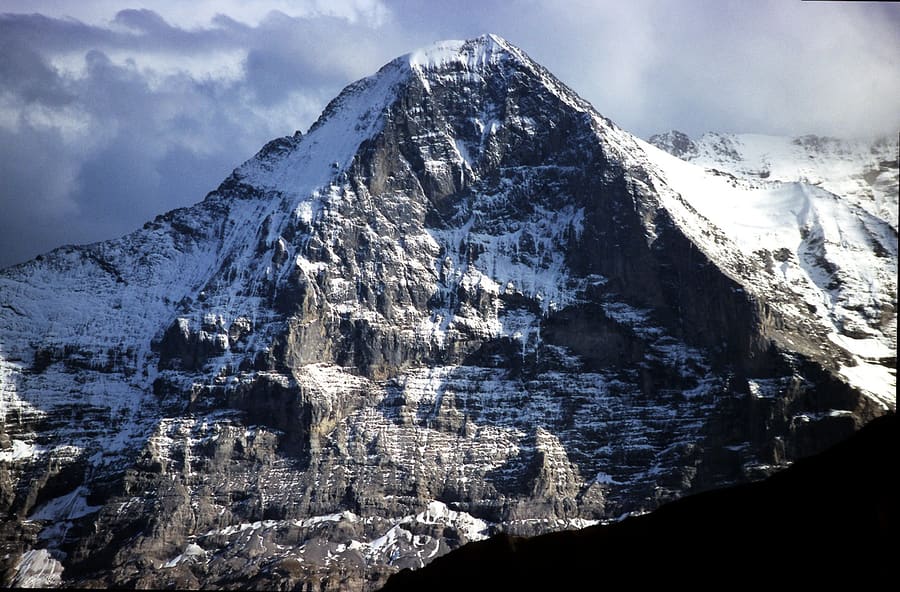
Grindelwald — Sprawling alpine resort village beneath the Eiger, filled with hotels and sports shops.
Cristo Vlahos · CC BY-SA 3.0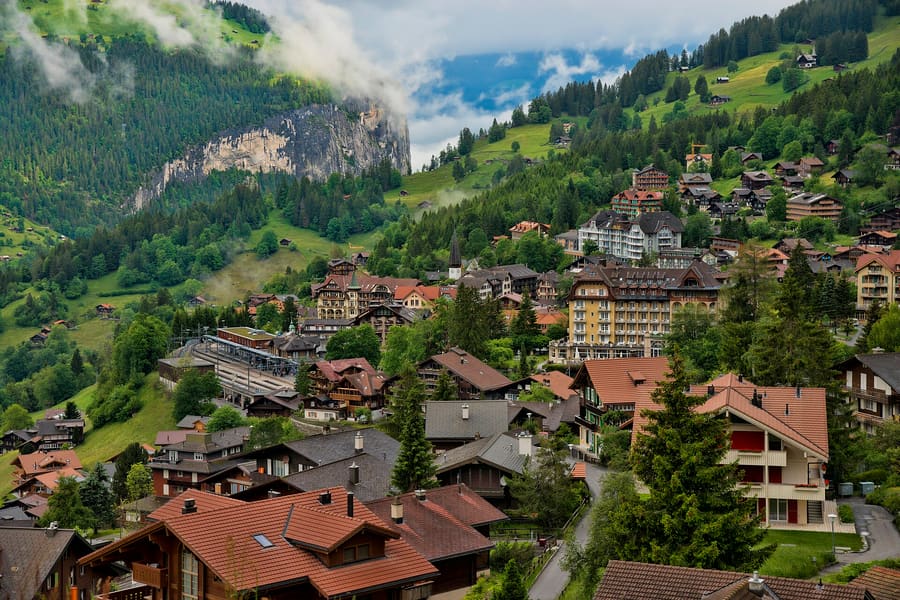
Wengen — Car-free shelf village offering wide valley vistas and quiet evening streets.
chensiyuan · CC BY-SA 4.0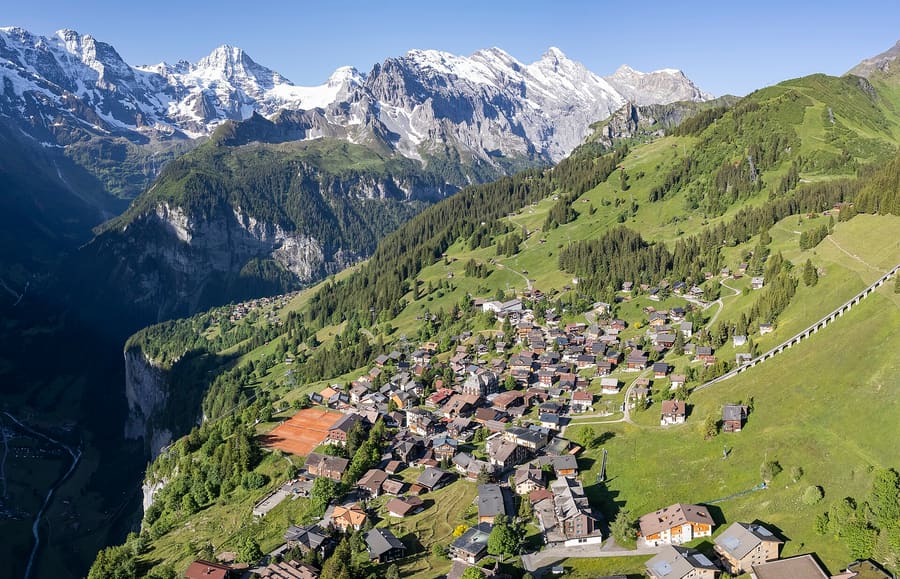
Mürren — High mountain village perched above a cliff edge with direct views of the high peaks.
Chensiyuan · CC BY-SA 4.0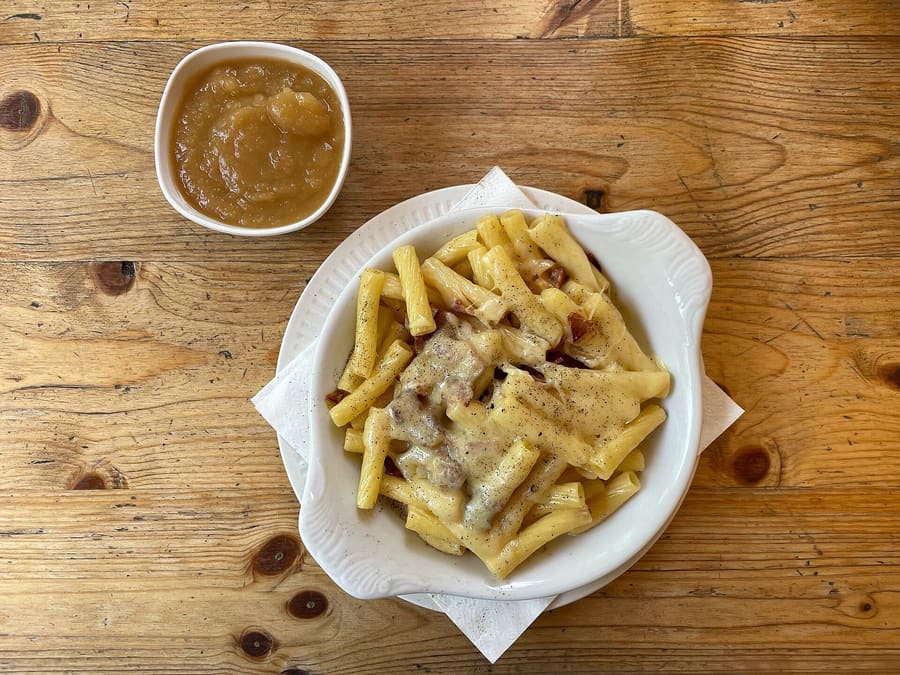
Älplermagronen served with warm applesauce in a mountain hut.
Adrian Michael · CC BY-SA 4.0highlights
landmark
High-altitude train station and ice palace at 3,454 metres. Take the early morning train to avoid long queues at the top.
Parley से पूछें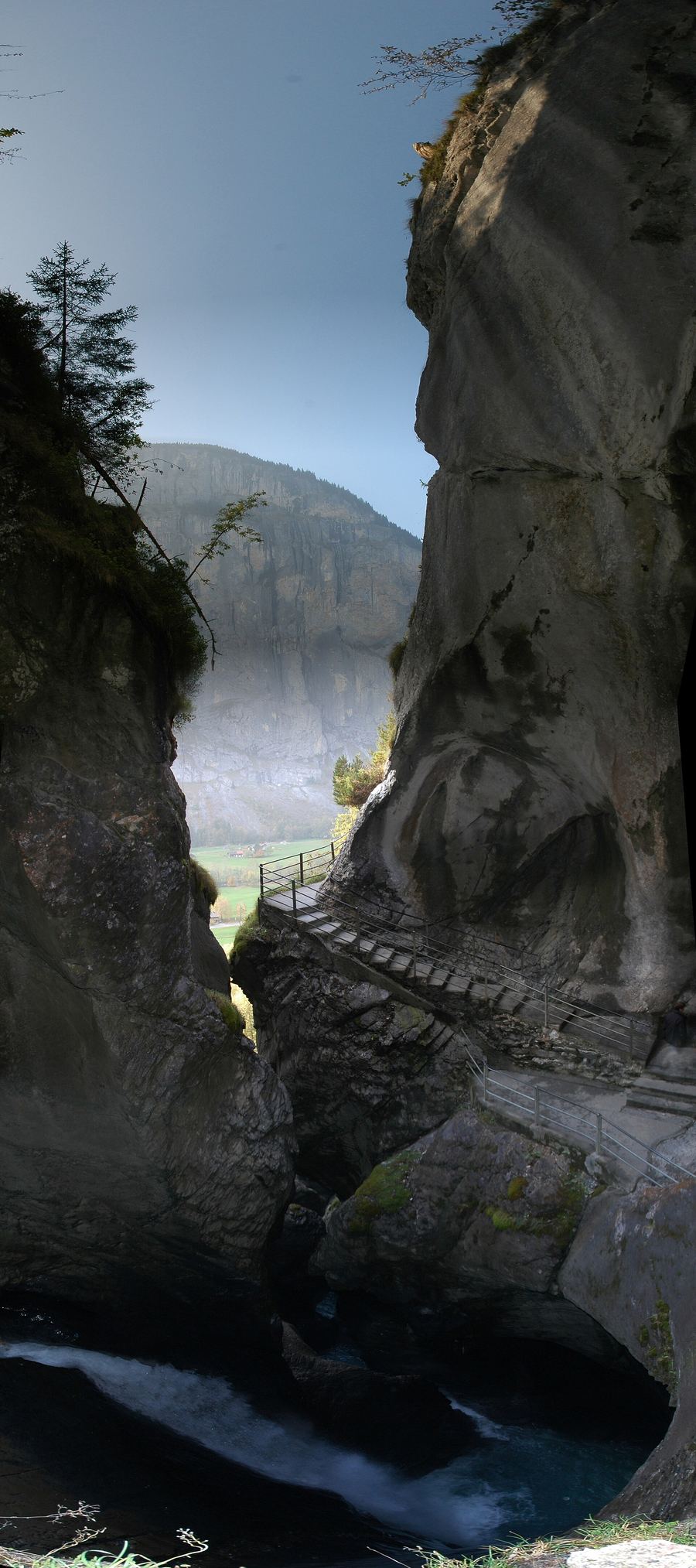
landmark
Ten glacial waterfalls hidden inside a mountain rock cavern. Wear a waterproof jacket due to heavy mist inside.
Parley से पूछें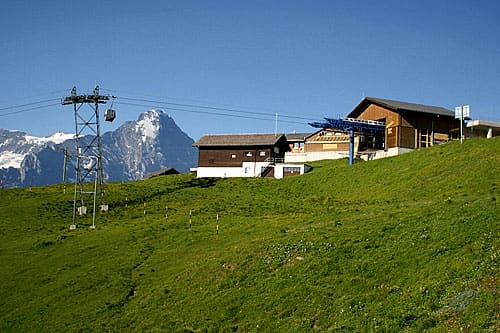
landmark
Activity hub offering a cliff walkway and mountain cart descents. Hike 50 minutes past the station to reach Lake Bachalpsee.
Parley से पूछें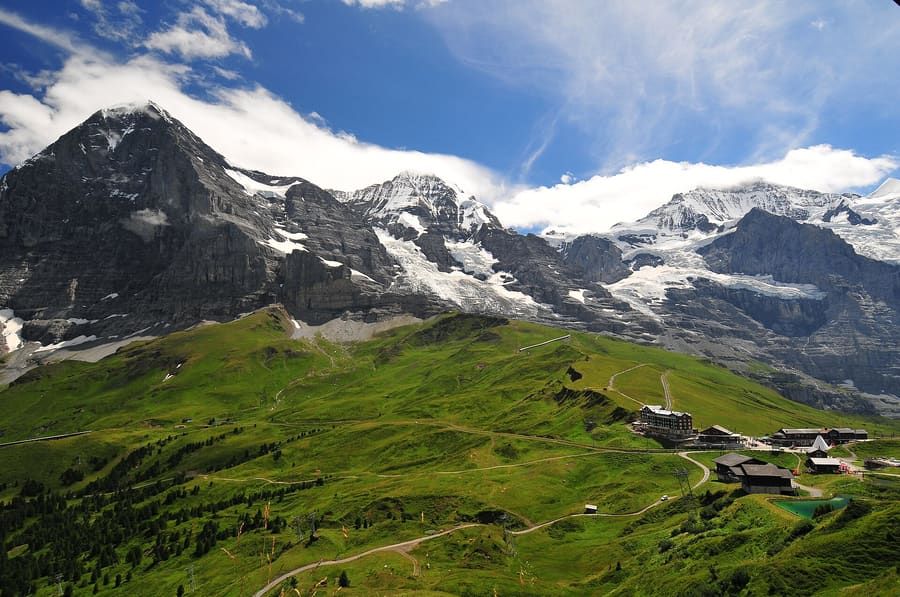
landmark
Rail junction at the base of the Eiger north face. It serves as the primary transfer point for high-peak trains.
Parley से पूछें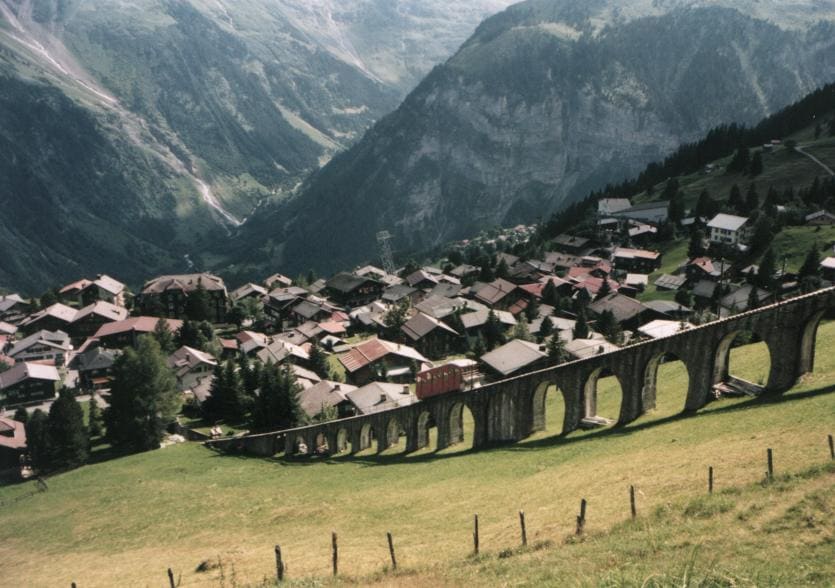
landmark
A short funicular ride above Mürren leads to quiet walking paths. Ideal for avoiding crowded valley floors.
Parley से पूछेंattractions
areas
Transit-heavy valley hub with steep rock walls, waterfalls, and continuous bus movements.
पास मेंTrümmelbach Falls and trains to Wengen.
Parley से पूछेंSprawling alpine resort village beneath the Eiger, filled with hotels and sports shops.
पास मेंEiger Express terminal and First cable car.
Parley से पूछेंCar-free shelf village offering wide valley vistas and quiet evening streets.
पास मेंMännlichen cable car and Kleine Scheidegg train.
Parley से पूछेंHigh mountain village perched above a cliff edge with direct views of the high peaks.
पास मेंSchilthorn cable car station.
Parley से पूछेंfood
Dining in the Jungfrau region relies heavily on Bernese Oberland alpine cheese and hearty carbohydrates designed for hikers and skiers. Restaurant prices at summit stations reflect the difficulty of hauling ingredients up by cable car. Valley towns offer traditional gasthof menus, while high mountain huts focus on simple one-plate meals.
Älplermagronen served with warm applesauce in a mountain hut.
Adrian Michael · CC BY-SA 4.0This mountain mac-and-cheese pairs pasta, potatoes, and local cheese with warm applesauce on the side.
Try this local street snack of melted regional cheese scraped over toasted sourdough bread at valley bakeries.
history
Isolation gave way to early alpine tourism in the 19th century as European writers and climbers documented the valley landscape. The construction of cog railways transformed farming communities into global resort hubs.
Byron visits Lauterbrunnen
Lord Byron visits Staubbach Falls, inspiring his poem Manfred and drawing early British travellers.
Wengernalpbahn opens
The continuous rack railway connecting Lauterbrunnen, Kleine Scheidegg, and Grindelwald begins operation.
Jungfrau Railway completed
Engineers finish blasting the tunnel through the Eiger rock to open Europe's highest railway station.
where to stay
Base selection dictates your daily transit flow. Grindelwald offers road access and quick connections to First. Lauterbrunnen keeps you on the valley floor with easy rail access to both sides. Choose Wengen or Mürren if you prefer car-free silence and high-altitude views after the last day-train departs.
transport
The transit system blends cog railways, cable cars, and funiculars into an integrated grid. Timetables sync closely across modes at transfer stations. Tickets are expensive individually, so rail passes are usually necessary.
Zurich Airport (ZRH) से
Train via Bern or Spiez to Interlaken Ost. Swiss Travel Pass or Half Fare Card recommended.
Drops at Grindelwald or Lauterbrunnen; upper mountain villages like Wengen are car-free.
Subject to driver acceptance for long-distance travel into the Bernese Oberland.
Covers unmetered travel on mountain trains and cable cars across the region for 3 to 8 days.
Departs from Grindelwald Terminal directly to Eigergletscher station, bypassing the slower cog train.
Recommended for the Jungfraujoch sector during summer peak hours to guarantee a specific train time.
Mountain lifts stop running between 17:00 and 18:00. Missing the last car forces long down-mountain hikes.
cost
Transport costs represent the single largest travel expense in the region, often exceeding accommodation costs on a daily basis. Dining prices sit at a standard high tier throughout the Bernese Oberland.
Prices fluctuate based on seasonal demand and ticket discounts.
Single dishes at alpine station dining halls.
Standard price for espresso or café au lait.
Price varies depending on whether you hold a Swiss Travel Pass.
seasonality
DEC – MAR
Full winter season. High ski traffic in Grindelwald and Wengen; high hiking trails stay closed.
APR – MAY
Low shoulder season. Many cable cars shut down for routine maintenance; trails melt out slowly.
JUN – AUG
Peak summer hiking window. High trails are open, but train stations experience heavy congestion.
SEP – NOV
September offers clear air and lower crowds. Cable cars close down sequentially starting late October.
practicalities
Jungfraujoch sits at 3,454 metres. Walk slowly upon arrival to avoid headaches from thin air.
Check summit webcams at train stations before paying for top-peak cable car tickets.
Credit cards and mobile pay work everywhere, including automated mountain ticket booths.
SBB offers station-to-station luggage shipping so you do not carry bags on mountain trains.
Public village fountains provide safe drinking water unless marked with a non-potable sign.