landmark
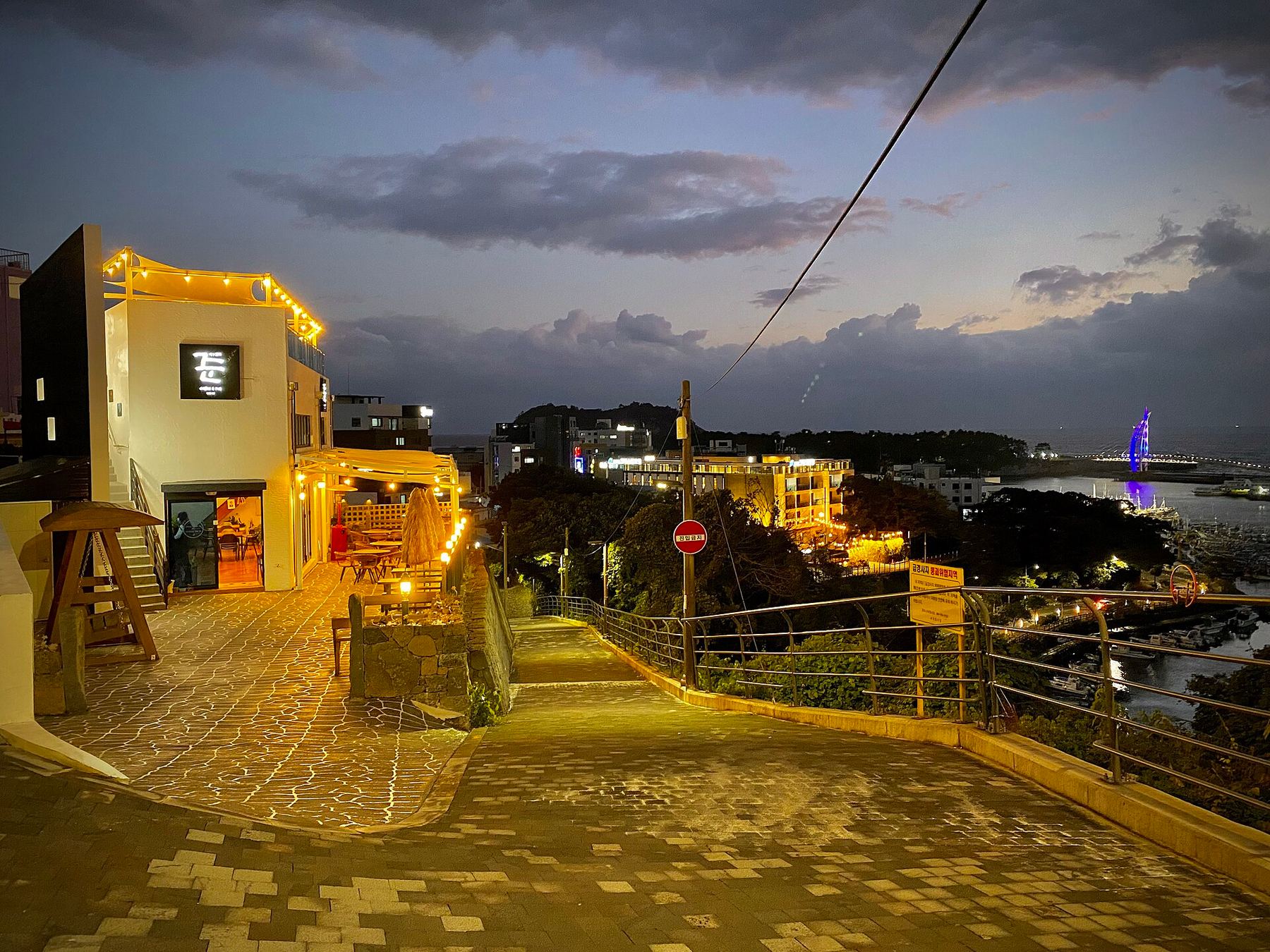
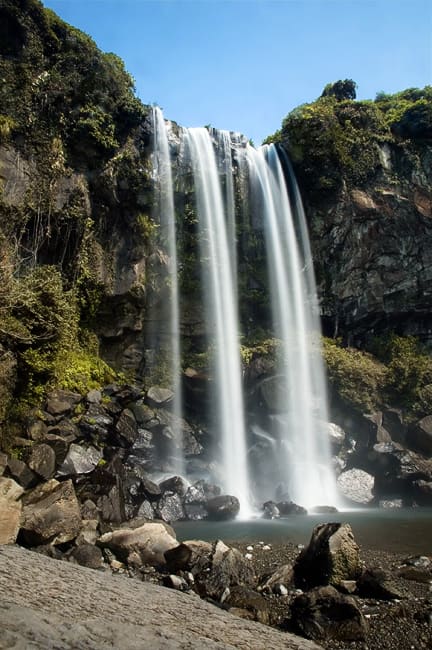
Jeongbang Waterfall
A waterfall pouring directly into the sea. Buy tickets at the entrance and descend the stone steps early to avoid tour groups.
Tanya ParleyKorea Selatan
Volcanic cliffs, tangerine groves, and deep-sea tradition.
introduction
Seogwipo occupies the southern half of Jeju Island, sheltered from northern wind by Mount Hallasan. Volcanic cliffs drop straight into the sea, framed by orange orchards and calm fishing harbors. Public buses link the oceanfront districts, but driving gives you immediate access to remote coastal trails.
Airport bus trick
Limousine Bus 600 runs from Jeju Airport directly to Jungmun and downtown Seogwipo in 80 minutes. Tap a T-money card when boarding and exiting.
UNESCO volcanic park
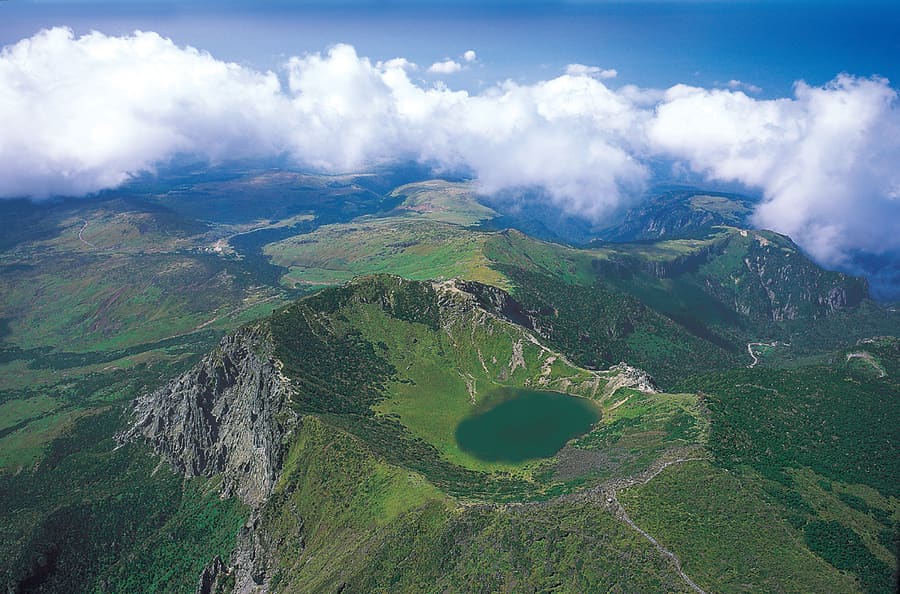
Seogwipo forms part of Jeju's UNESCO Global Geopark. Its coastal rock formations and lava structures show distinct volcanic strata.
Seogwipo
LG전자 · CC BY 2.0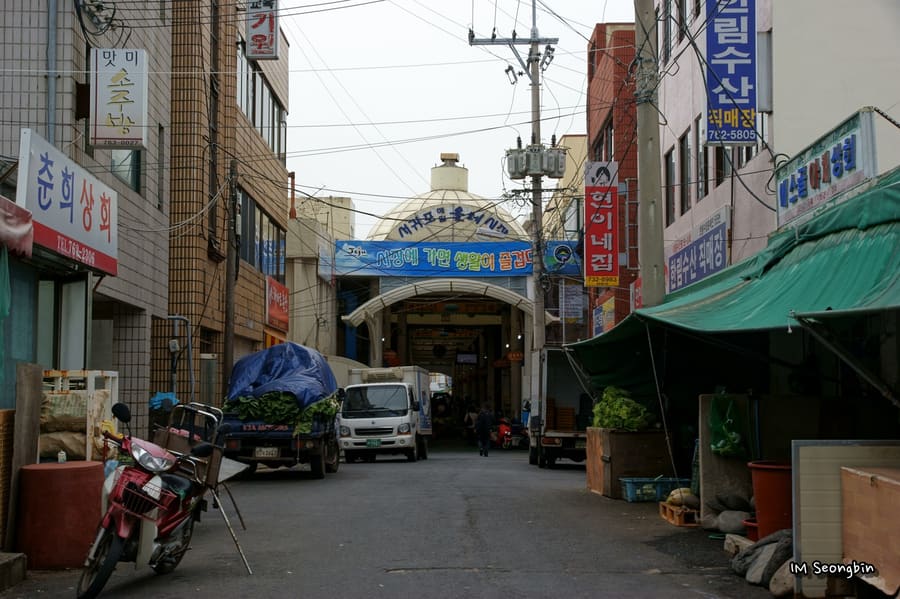
Downtown Seogwipo — Compact urban grid packed with market stalls, local bakeries, and traditional seafood restaurants.
골뱅이 · CC BY-SA 3.0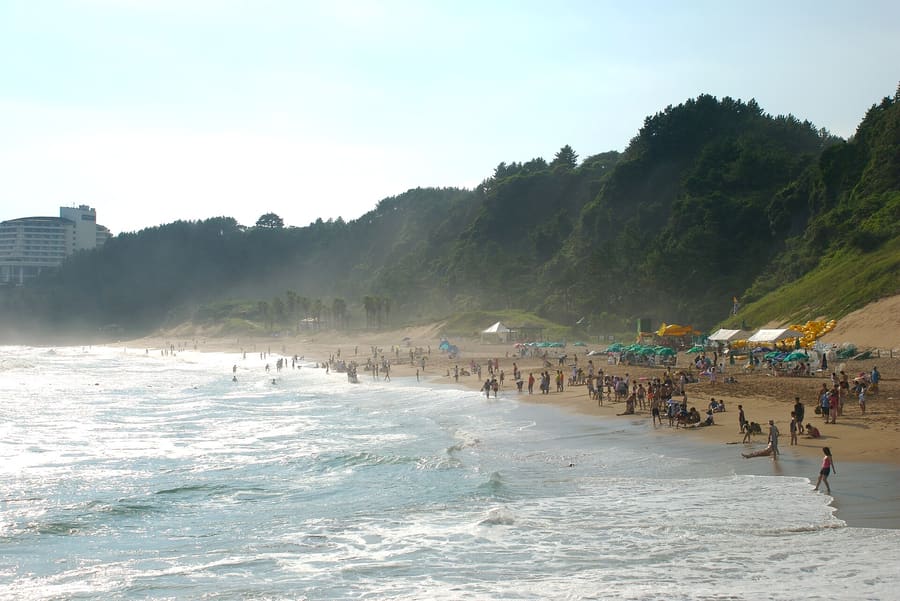
Jungmun — Manicured resort strip featuring major hotels, manicured cliff gardens, and surf beaches.
Yoo Chung · CC BY-SA 3.0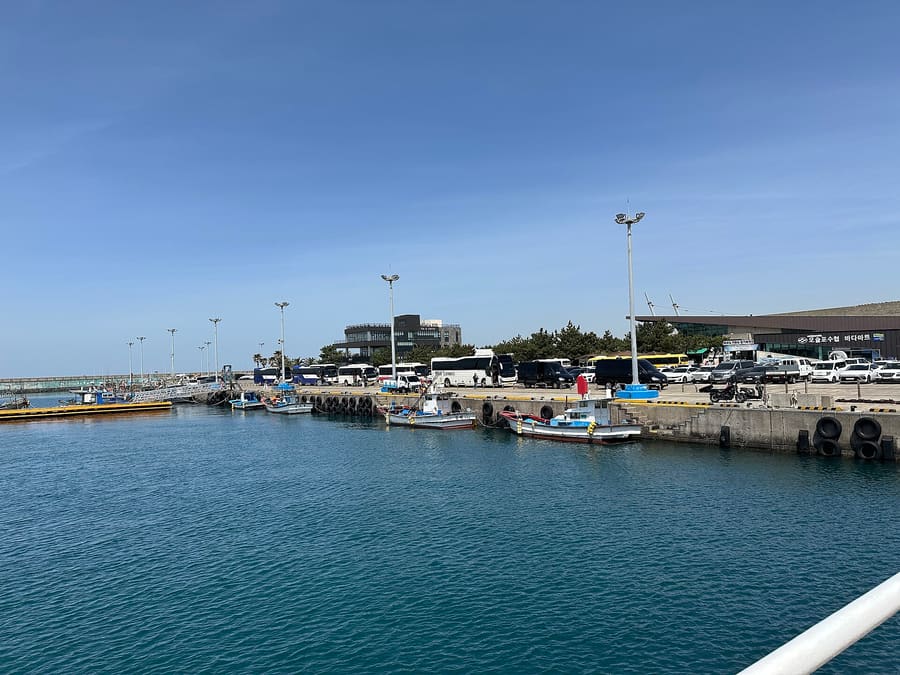
Daejeong & Moseulpo — Quiet western harbour district famous for yellowtail fish and island ferry connections.
Grapesurgeon · CC BY-SA 4.0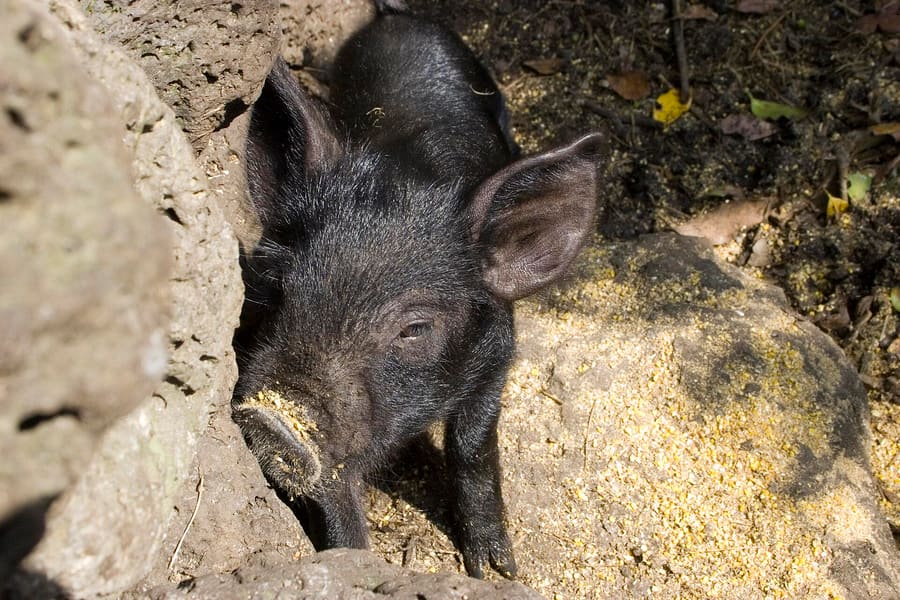
Thick cuts of Jeju black pork sizzle on charcoal grills across Seogwipo's specialty restaurants.
A____ R__ · CC BY-SA 2.0highlights
landmark
A waterfall pouring directly into the sea. Buy tickets at the entrance and descend the stone steps early to avoid tour groups.
Tanya Parley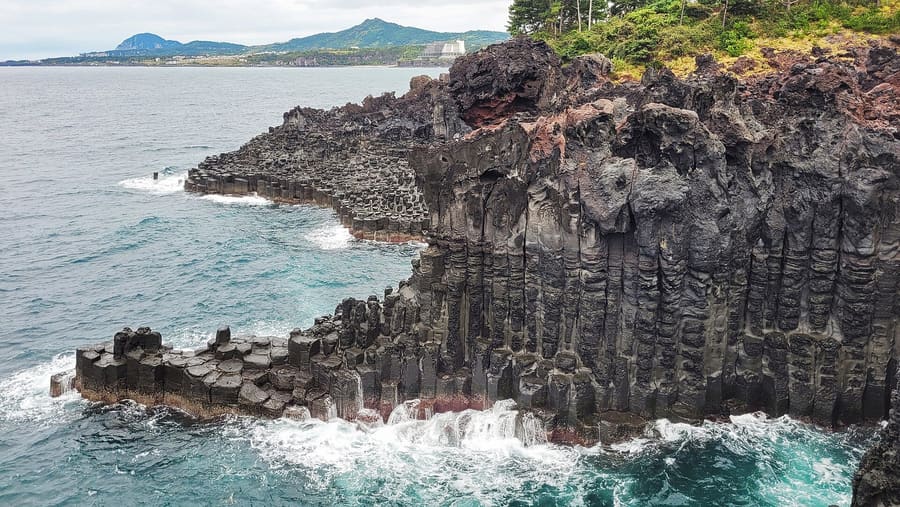
landmark
Hexagonal basalt columns formed by cooling lava along the Jungmun coast. Wooden boardwalks offer clear views down the rock faces.
Tanya Parley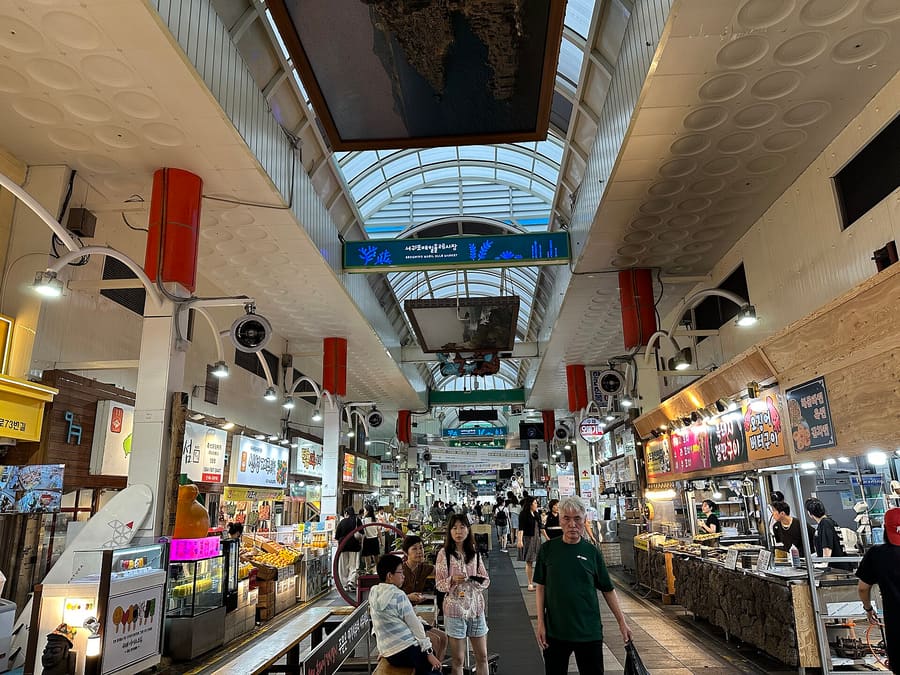
landmark
A covered central market packed with grilled pork skewers, citrus stalls, and fresh seafood vendors. Open late every night.
Tanya Parley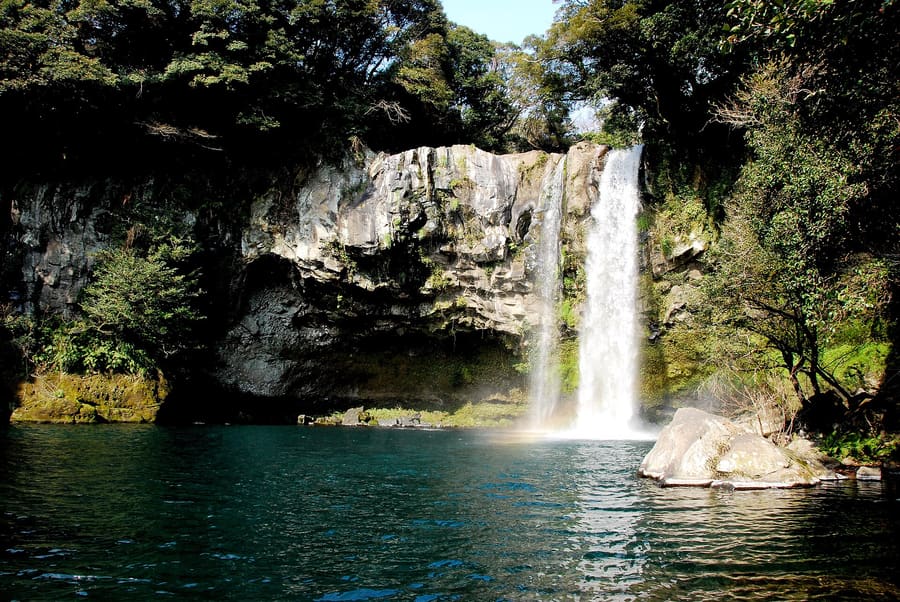
landmark
A wide waterfall framed by subtropical forest. Illuminated pathways stay open until 22:00 for evening walks.
Tanya Parley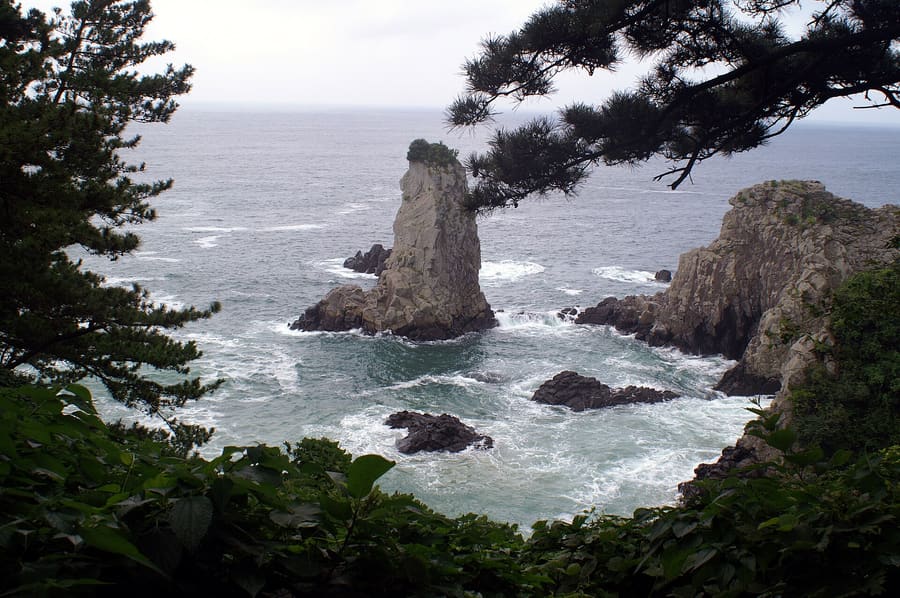
landmark
A twenty-meter sea stack standing off the coastline. Follow Jeju Olle Trail Route 7 past the rock for ocean overlooks.
Tanya Parleyattractions
areas
Compact urban grid packed with market stalls, local bakeries, and traditional seafood restaurants.
DekatJeongbang Waterfall, Olle Market, Port
Tanya ParleyManicured resort strip featuring major hotels, manicured cliff gardens, and surf beaches.
DekatJusangjeolli Cliff, Jungmun Beach
Tanya ParleyQuiet western harbour district famous for yellowtail fish and island ferry connections.
DekatSanbangsan, Mara-do ferry, Gapa-do ferry
Tanya ParleySprawling eastern coast with a massive tidal sand bar and low-rise seaside pensions.
DekatJeju Folk Village, Pyoseon Beach
Tanya Parleyfood
Dining in Seogwipo resolves around two staples: grilled black pork belly cooked over hot charcoal and fresh sea catches from local divers. Downtown restaurants cluster around Seogwipo Maeil Olle Market, where vendors roast pork rolled with garlic chives. Seafood places along the port serve tilefish grilled whole with sea salt.
Thick cuts of Jeju black pork sizzle on charcoal grills across Seogwipo's specialty restaurants.
A____ R__ · CC BY-SA 2.0Specialty barbecue spots sell meat by 600g servings intended for two people. Extra portions are sold in 300g increments.
Okdom-gui (salted grilled tilefish) is best ordered at small harbor eateries around Seogwipo Port during lunch.
Maeil Olle Market street food counters run daily from 10:00 until 20:00. Arrive by 18:00 for the freshest pork rolls.
history
Seogwipo grew as an isolated agricultural and fishing settlement on Jeju's southern coast. Its warm climate allowed citrus farming long before tourism arrived. In 1981, the city merged with surrounding districts to become the administrative counterweight to Jeju City in the north.
Wartime refuge
Painter Lee Jung-seop took refuge in Seogwipo during the Korean War, producing masterworks in a small rented room.
Jungmun development
Construction began on the Jungmun Tourist Complex, transforming coastal farmland into a resort zone.
World Cup venue
Seogwipo World Cup Stadium opened, hosting major matches and accelerating local transit infrastructure.
UNESCO designation
Jeju Volcanic Island and Lava Tubes received UNESCO World Heritage status, protecting key sites in Seogwipo.
where to stay
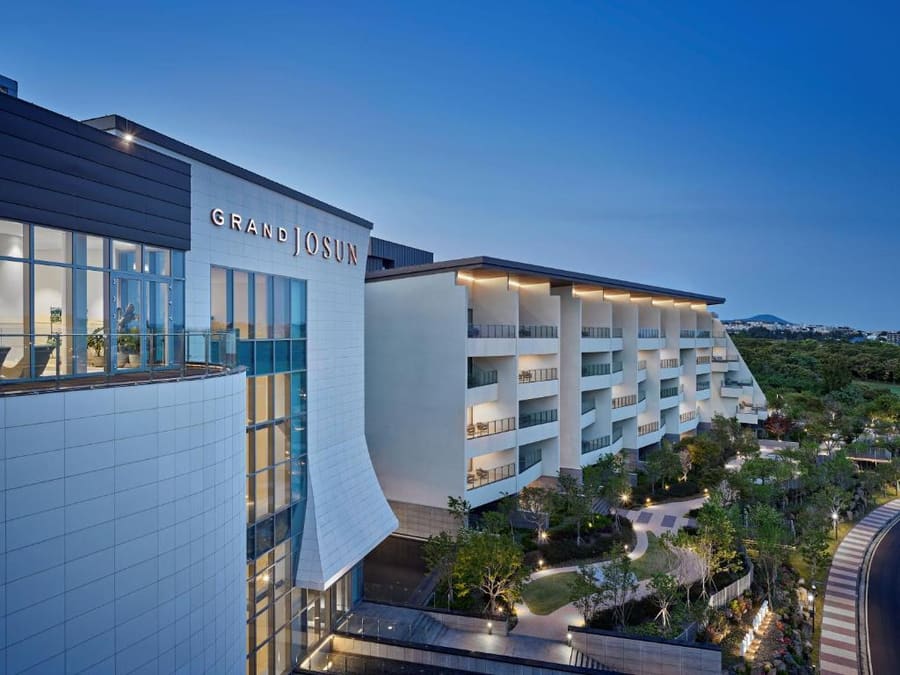
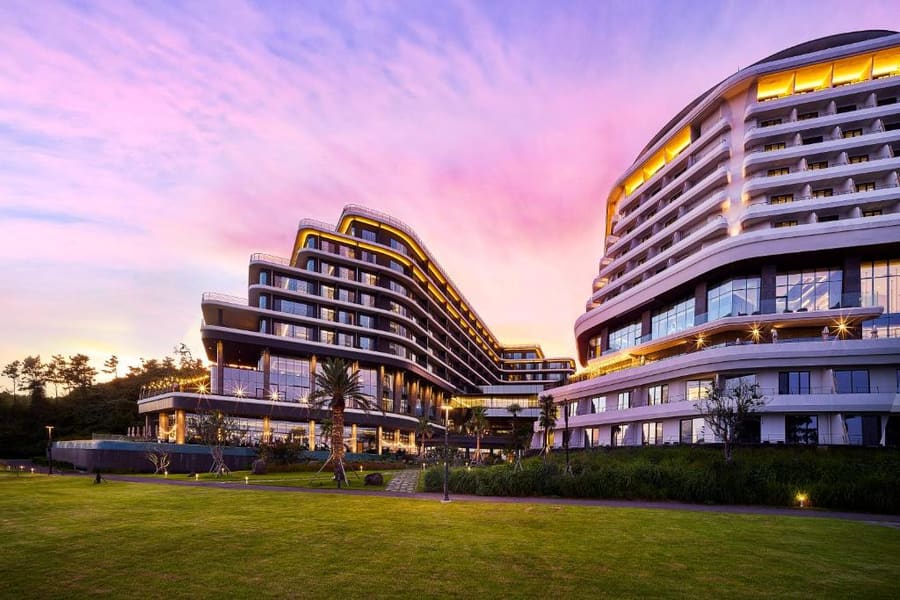
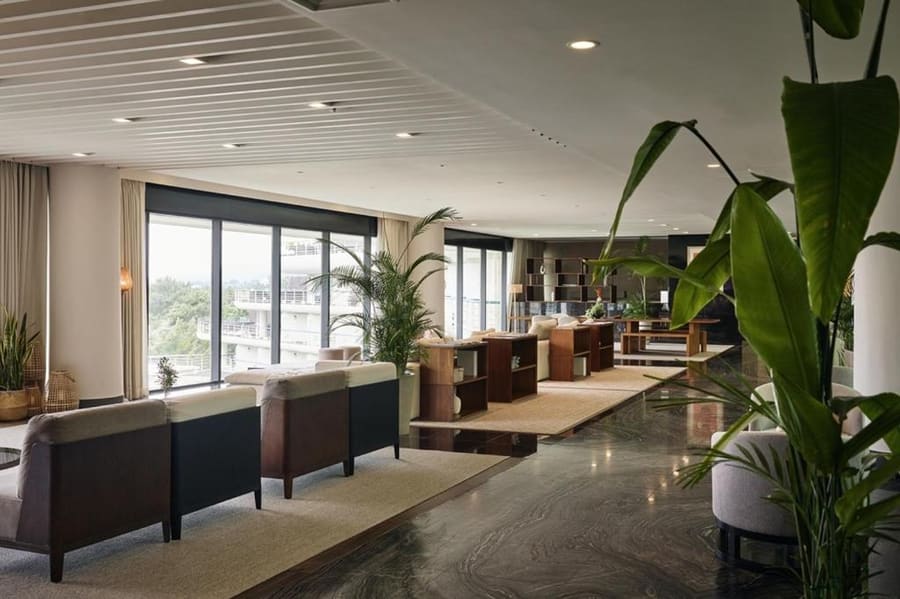
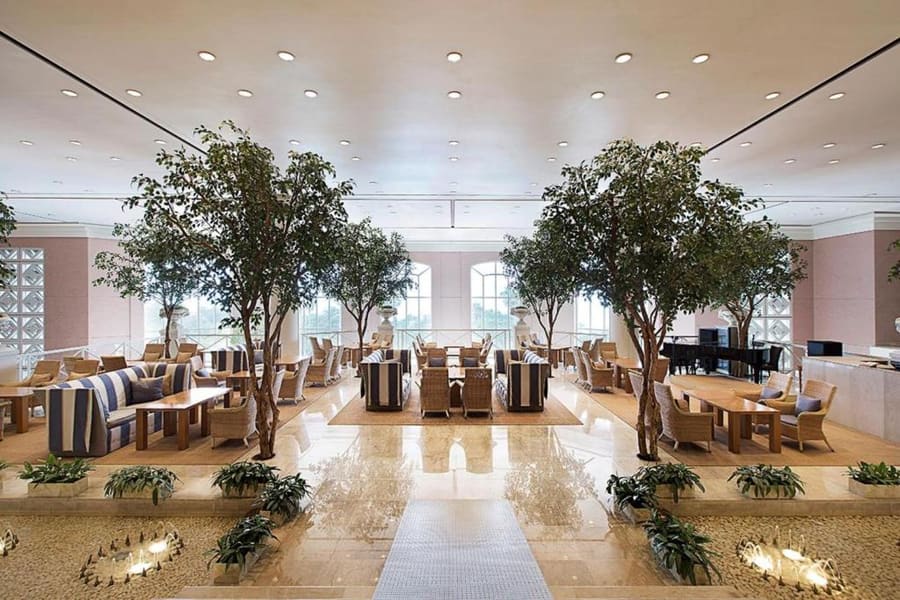
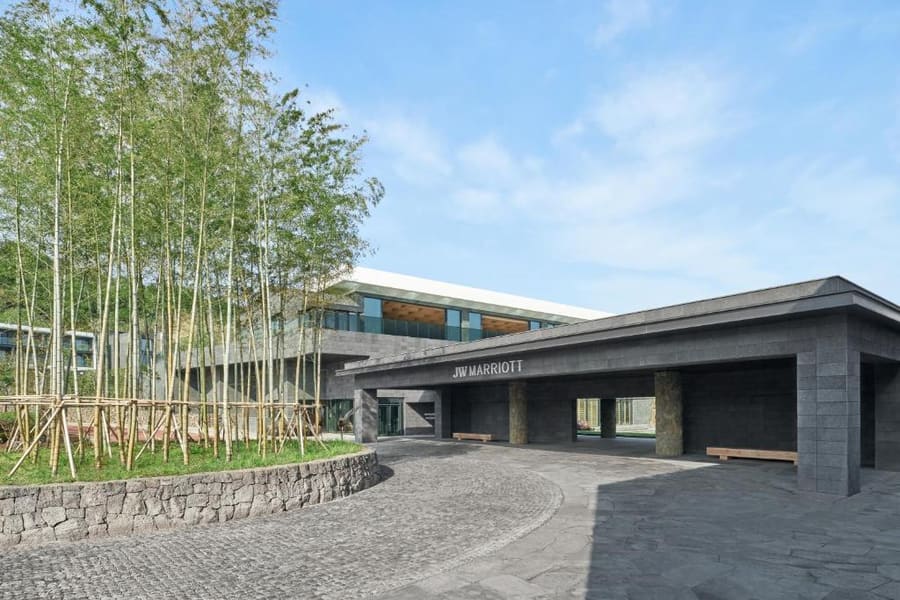
Choose your base by your transit style: stay downtown for walkable dining and bus access, or pick Jungmun for beach access and luxury amenities.
Live rates, matched to the areas above.
transport
Seogwipo has no rail service. Travel relies entirely on public buses, rental cars, and taxis. Bus 600 bridges Jeju Airport and Seogwipo's southern hotel strips, while local trunk buses run east-west along the coast.
Dari Jeju International Airport (CJU)
Limousine Bus 600 departs every 15–20 minutes outside Gate 5.
Express Bus 181 runs direct through the mountain highway to Seogwipo Bus Terminal.
Pick up at the official taxi queue outside arrival gate 3.
Tap your T-money card when boarding and exiting all buses to calculate correct distance-based fares.
Bus 201 links downtown Seogwipo east to Seongsan. Bus 202 runs west toward Daejeong and Hallim.
Rural bus frequencies drop significantly after 20:00. Plan return trips from remote trails early.
Use KakaoMap instead of Google Maps for real-time bus arrivals and accurate pedestrian navigation.
cost
Seogwipo is generally more affordable than Seoul, though resort dining in Jungmun carries premium pricing. Cash is handy for small market stalls, but cards work everywhere else.
Standard price for a 600g portion serving two people at local barbecue joints.
Entry fees for Jeongbang and Cheonjiyeon waterfalls are fixed per adult.
Price for a 1kg bag of fresh Jeju oranges at Olle Market stalls.
seasonality
MAR – MAY
Mild temperatures and blooming canola flowers make spring ideal for walking coastal Olle routes.
JUN – AUG
Hot and humid conditions bring peak swimming season, but monsoon rains strike in July.
SEP – NOV
Clear skies and comfortable warmth create prime hiking weather during the tangerine harvest.
DEC – FEB
Cool ocean winds prevail, but winter offers snow-capped Hallasan views and ripe citrus.
practicalities
Credit and debit cards are accepted almost universally, except at small rural market counters.
Download Papago for reliable Korean translation, especially when reading local restaurant menus.
Olle trails lack shade along cliff paths. Pack sun protection even during spring hikes.
Pyoseon Beach drains outward hundreds of meters at low tide. Check tide tables before visiting.
Kitchens in independent downtown eateries often close around 20:00 outside the tourist strip.