landmark
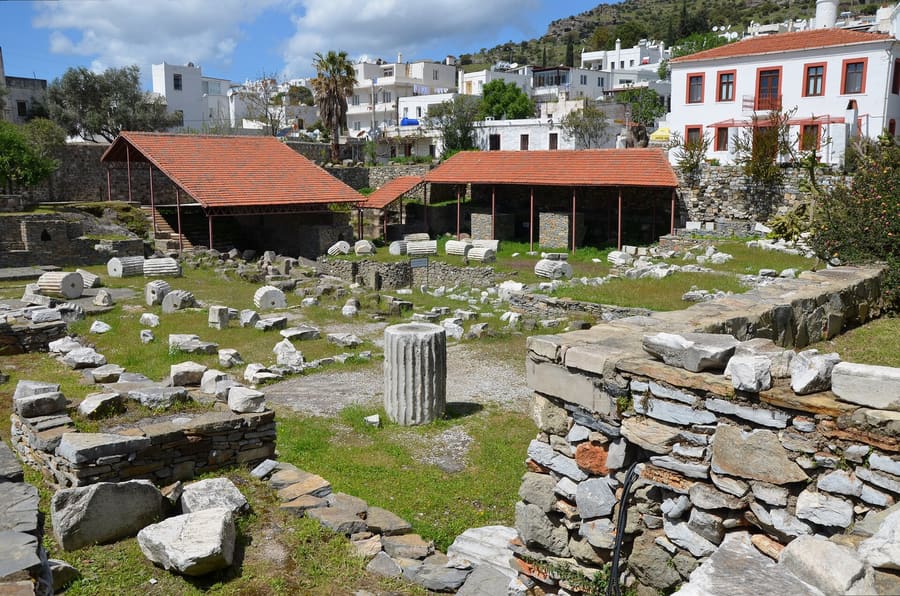
Mausoleum at Halicarnassus
Site of one of the Seven Wonders of the Ancient World. Little remains standing, but the scale models explain the original structure.
Chiedi a ParleyTurchia
Crusader stone, Aegean blue, and late-night marinas.
introduction
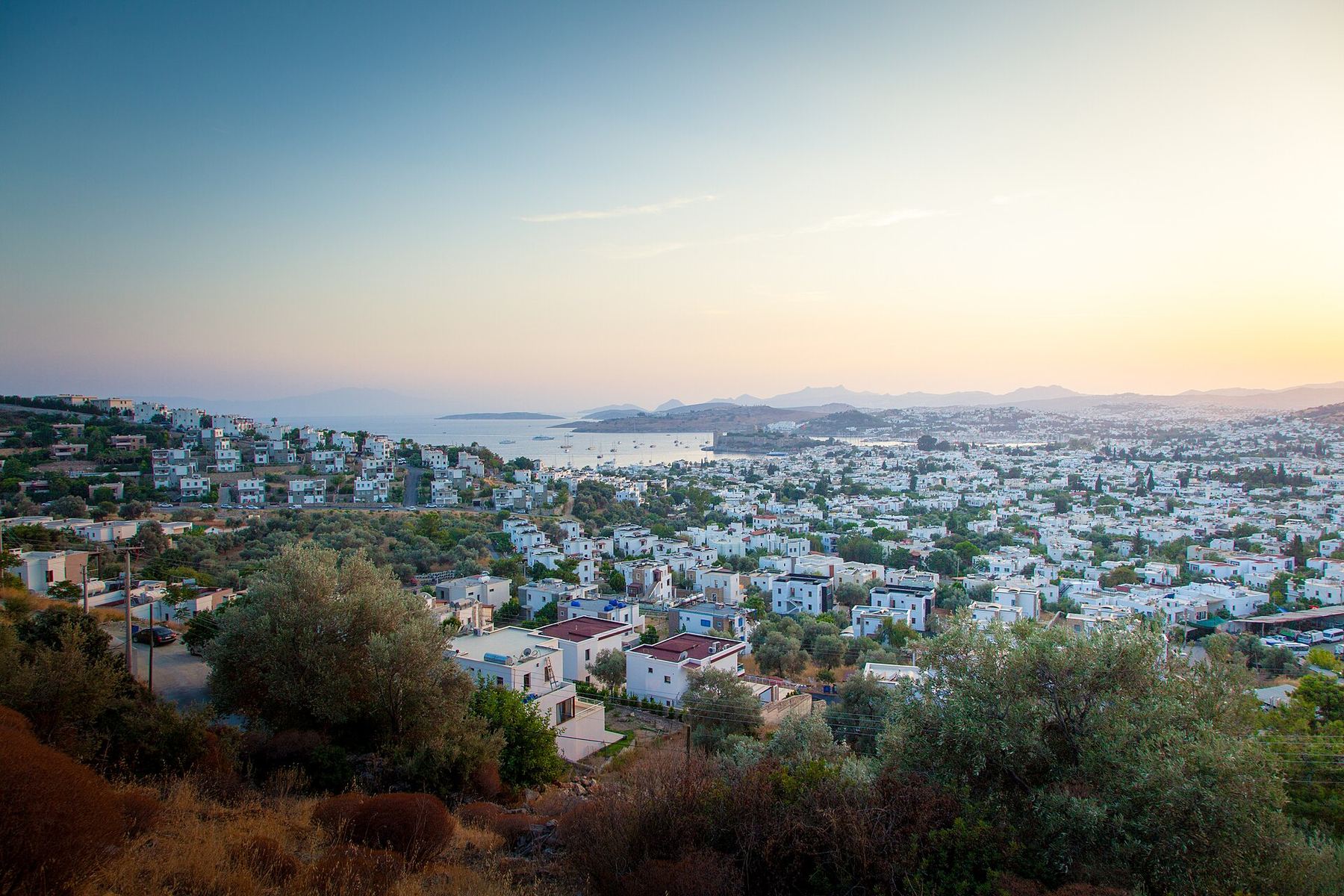
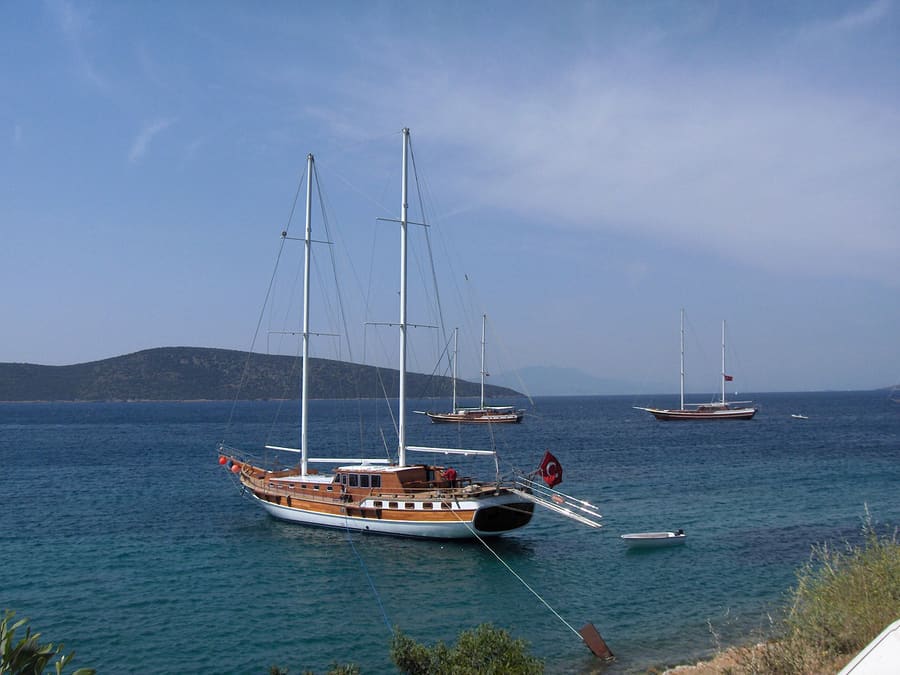
Bodrum City wraps around twin bays divided by a 15th-century Crusader castle. The eastern bay hosts a pebbled city shore with dining tables set directly at the water line. The western bay belongs to the marina, where traditional wooden gulets dock beside modern superyachts. You navigate the pedestrian old quarter on foot, moving between whitewashed stone houses and bougainvillea-draped alleys.
Airport shuttle
Milas–Bodrum Airport sits 36 kilometers northeast. Scheduled MUTTAŞ and HAVAŞ buses timed with arrivals take 45 minutes to reach the central bus station.
Crusader fortress
Bodrum Castle was built by the Knights Hospitaller starting in 1402. Its interior now houses the Museum of Underwater Archaeology.
Late dining timing
Waterfront meyhanes fill after 20:30. Booking ahead for tables on the shingle along Cumhuriyet Caddesi is essential in high summer.
Bodrum City
Georges Jansoone (JoJan · CC BY-SA 3.0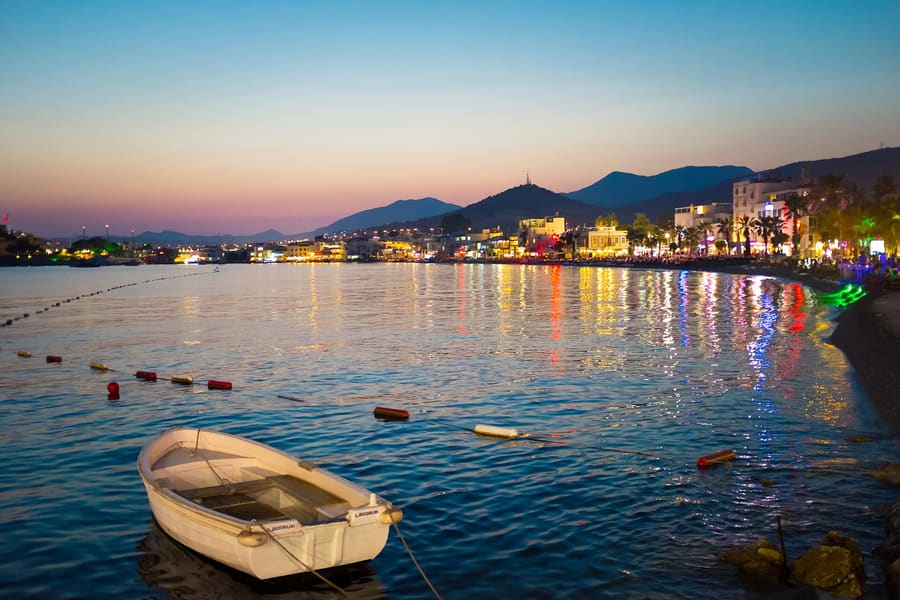
Kumbahçe — East bay pebbled beach, waterfront tavernas, and quiet whitewashed pedestrian lanes.
The 3B's · CC BY 2.0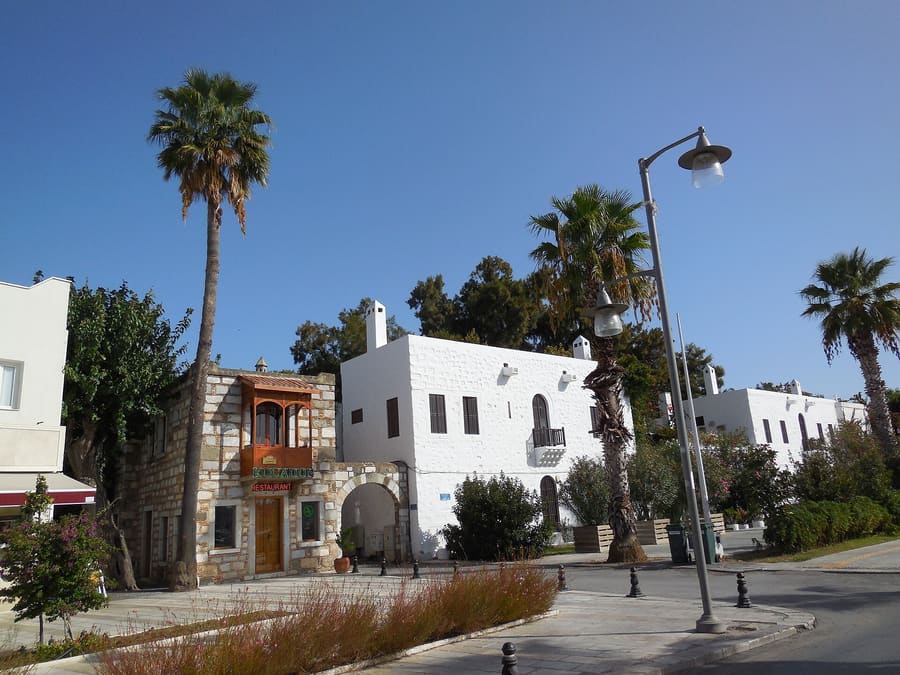
Marina District — Upmarket promenade lined with yacht berths, cafes, and international boutiques.
Tanya Dedyukhina · CC BY 3.0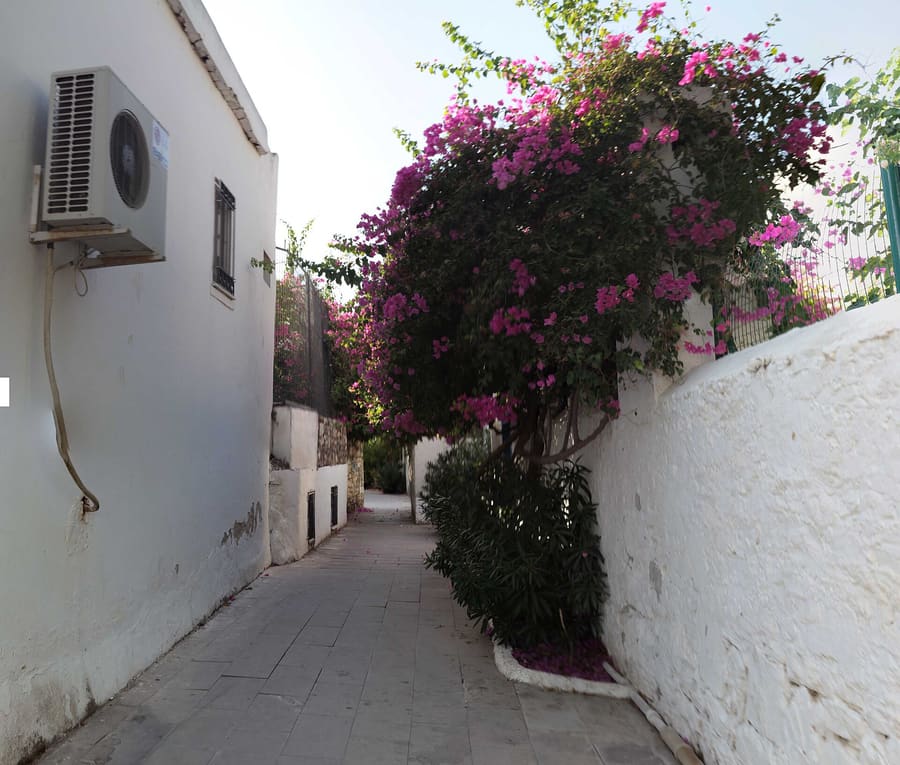
Tepecik — Central harbour square with local tea gardens, fish stalls, and daily ferries.
Mustafa DUMAN · CC BY 3.0highlights
landmark
Site of one of the Seven Wonders of the Ancient World. Little remains standing, but the scale models explain the original structure.
Chiedi a Parley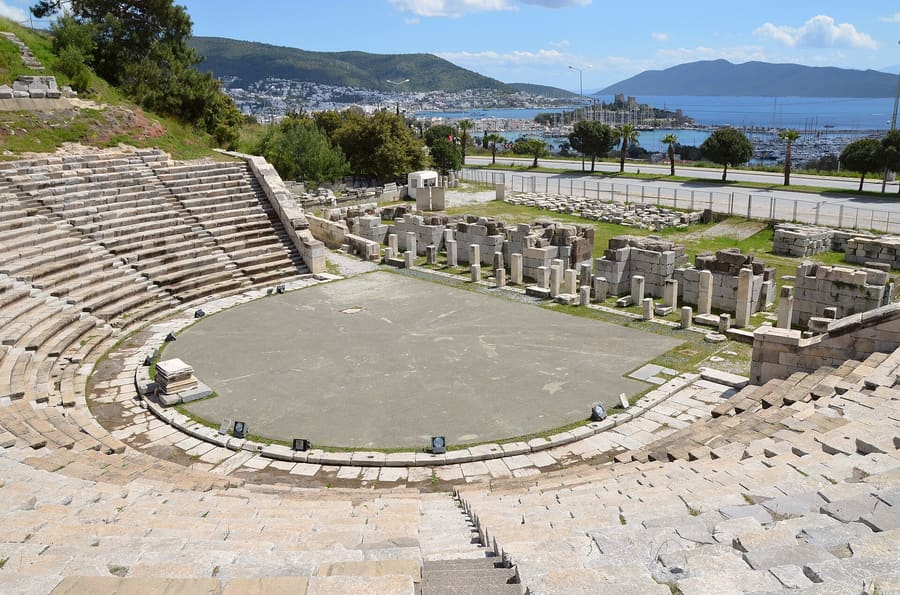
landmark
A 4th-century BC stone hillside theatre. Climb to the top row at sunset for direct views across the castle and harbour.
Chiedi a Parley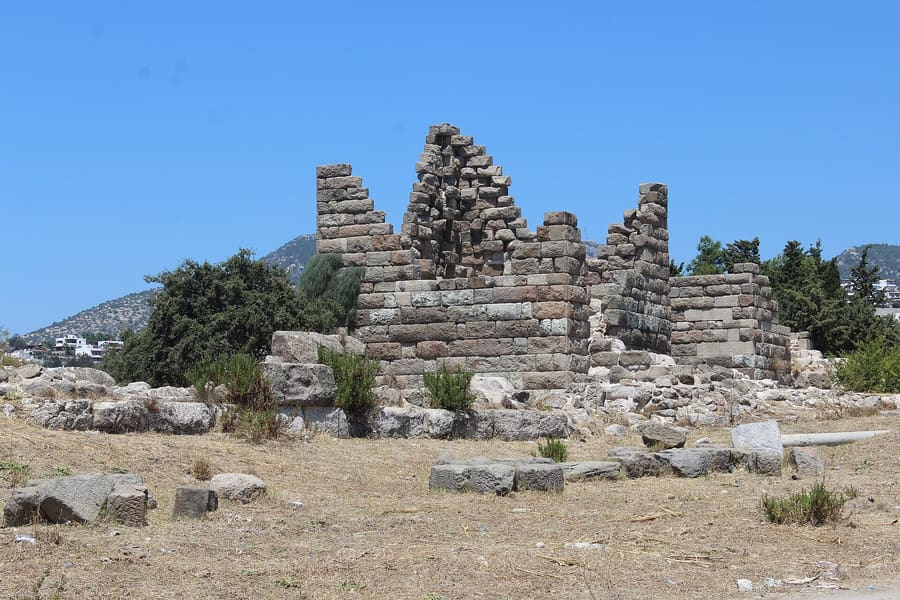
landmark
The western city gate where Alexander the Great breached the walls in 334 BC. Free to enter and quiet at any hour.
Chiedi a Parleyattractions
areas
East bay pebbled beach, waterfront tavernas, and quiet whitewashed pedestrian lanes.
Nei dintorniBodrum Castle and Zeki Müren Museum
Chiedi a ParleyUpmarket promenade lined with yacht berths, cafes, and international boutiques.
Nei dintorniMilta Bodrum Marina and Ottoman Shipyard
Chiedi a ParleyCentral harbour square with local tea gardens, fish stalls, and daily ferries.
Nei dintorniBodrum Castle and Central Bazaar
Chiedi a ParleyResidential hillside neighbourhood west of the marina with boutique guesthouses.
Nei dintorniBodrum Windmills and Myndos Gate
Chiedi a Parleyfood
Bodrum dining turns on local Aegean herbs and daily seafood. You order wild sea asparagus, kabak çiçeği dolması (stuffed squash blossoms), and grilled octopus at waterfront meyhanes. At the fish market behind the Tepecik harbour square, you pick your fish from stall counters, then take it to nearby cookshops to prepare for a small service fee.
Kabak çiçeği dolması appears on menus in late spring and early summer. Kitchens stuff morning-picked blossoms with seasoned rice and olive oil.
Meyhanes expect you to spend two to three hours over cold meze before ordering warm starters or a main fish course.
history
Known as Halicarnassus in antiquity, Bodrum was the capital of Carian ruler Mausolus in the 4th century BC. His massive tomb gave rise to the word mausoleum. In 1402, Knights Hospitaller built Castle of St Peter using salvaged marble from the tomb ruins. Exile writer Cevat Şakir Kabaağaçlı later transformed the sponge-diving village into a literary and yachting haven during the mid-20th century.
Tomb of Mausolus built
Ruler Mausolus dies, and his monumental tomb becomes one of the Seven Wonders of the Ancient World.
Siege of Halicarnassus
Alexander the Great breaches city defenses at Myndos Gate and burns the ancient city after a severe siege.
Crusader construction
The Knights of St John begin constructing Bodrum Castle, incorporating ancient marble blocks into its walls.
The Fisherman of Halicarnassus
Exiled author Cevat Şakir arrives, popularizing blue cruises on local wooden gulet fishing vessels.
where to stay
Choose your location based on sound levels and evening plans. Kumbahçe puts you right on the beach and close to nightlife. Marina District offers polished luxury hotels near sailing charters. Eskiçeşme suits travelers wanting residential calm within a ten-minute walk to the water.
transport
White minibuses display destination signs in their front window. Board at designated stops or wave them down along main roads.
Pay dolmuş fares using contactless credit cards or the Muğla Kentkart transport card.
Daily passenger catamarans cross to Kos, Greece in 20 minutes from Bodrum Cruise Port or central harbour pier.
Dr. Alim Bey Caddesi and Cumhuriyet Caddesi are fully pedestrianized during summer evenings.
cost
Bodrum City runs a double economy. Local lokantas in the bazaar offer inexpensive Turkish lunches, while waterfront meyhanes and marina steak houses charge Western European prices.
seasonality
APR – MAY
Wildflowers bloom and daytime temperatures hit 22°C. Sea water remains cool for swimming.
JUN – AUG
Peak summer heat hits 35°C. Water is warm, crowds peak, and nightlife operates at full capacity.
SEP – OCT
Ideal sea temperature around 24°C with reduced summer crowds. Restaurants stay open through October.
NOV – MAR
Cool and rainy winter window. Many waterfront venues close, but historical sites remain quiet and open.
practicalities
Credit cards are accepted nearly everywhere, including taxi terminals and small cafes.
The city beach in Kumbahçe consists of coarse pebble. Water shoes make entering the water far easier.
Midday sun during July and August is intense. Ancient stone sites offer almost no shade.
Ensure your passport is valid for EU entry if taking the 20-minute passenger ferry to Kos.
Tap water is safe for washing but unpalatable due to mineral content. Drink bottled water.