landmark
Dambulla Cave Temple
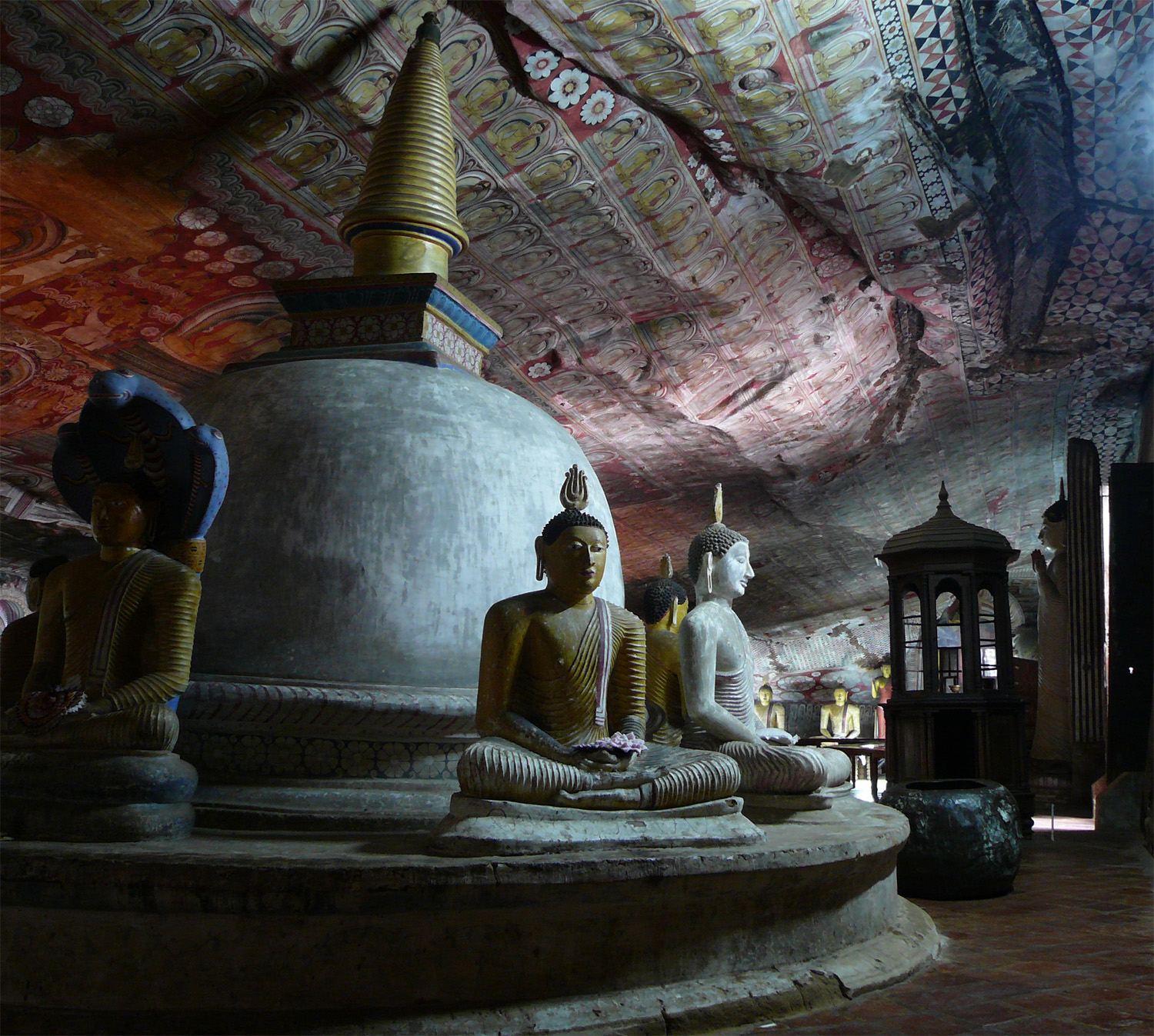
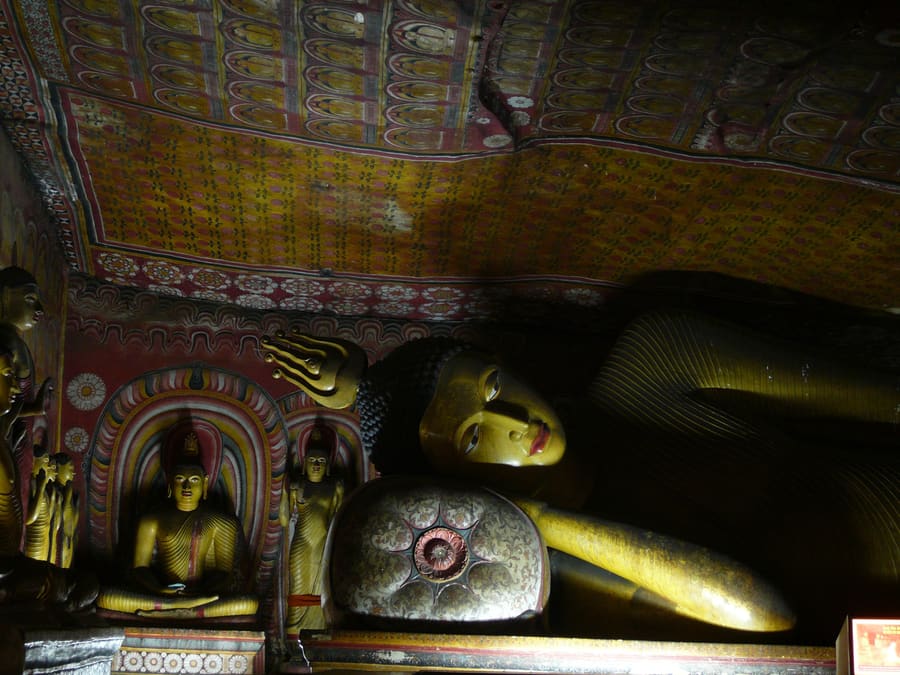
Five connected caves contain 153 Buddha statues. Buy your ticket at the bottom counter before climbing the stairs.
Chiedi a ParleySri Lanka
The wholesale heart and cave sanctuary of Sri Lanka.
introduction
Dambulla is the central supply node of Sri Lanka's dry zone. Wholesalers move tons of vegetables here every night while travellers stop for five cave shrines carved into a granite dome. The town operates as a functional crossroads rather than a tourist resort. You use it as a base to cross the Cultural Triangle or spend half a day exploring its ancient rock art.
Wholesale market pulse
Dambulla Dedicated Economic Centre handles the country's vegetable trade. Trucks unseal fresh harvests every night while buyers trade on concrete floors.
World Heritage caves
The cave complex holds 153 Buddha statues under painted rock ceilings. Monks converted the granite caverns into shrine rooms starting in the first century BC.
Ticket booth distance
Buy your cave entrance ticket at the bottom counter before climbing the stairs. Walking up without a paper ticket forces a complete descent to get one.
Dambulla
Wss ltd · CC BY-SA 4.0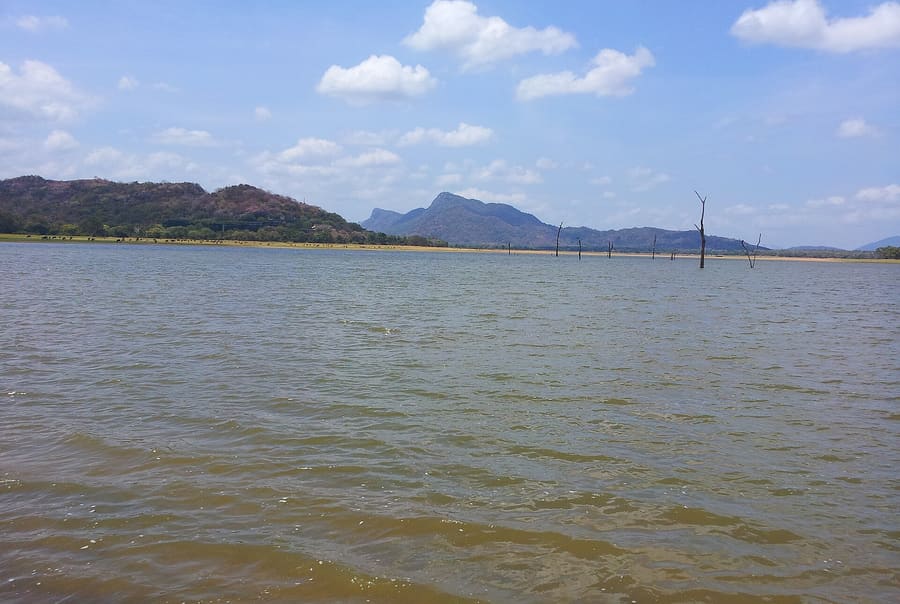
Kandalama Lake Shore — Quiet reservoir views, bird calls, and secluded resorts.
Gihan Jayaweera · CC BY-SA 3.0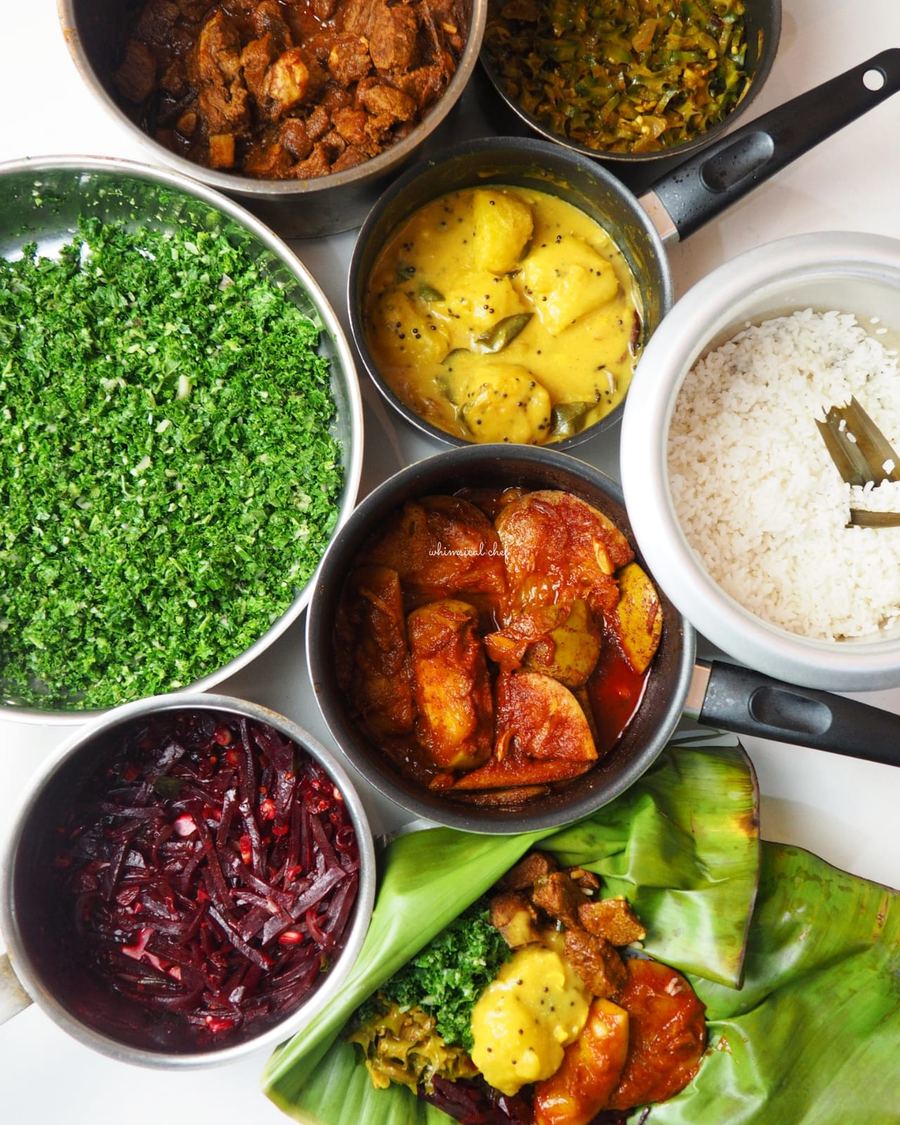
Fresh dry-zone vegetable curries served at a roadside eatery in Dambulla.
Lankan Foodie · CC BY-SA 4.0highlights
landmark
Five connected caves contain 153 Buddha statues. Buy your ticket at the bottom counter before climbing the stairs.
Chiedi a Parley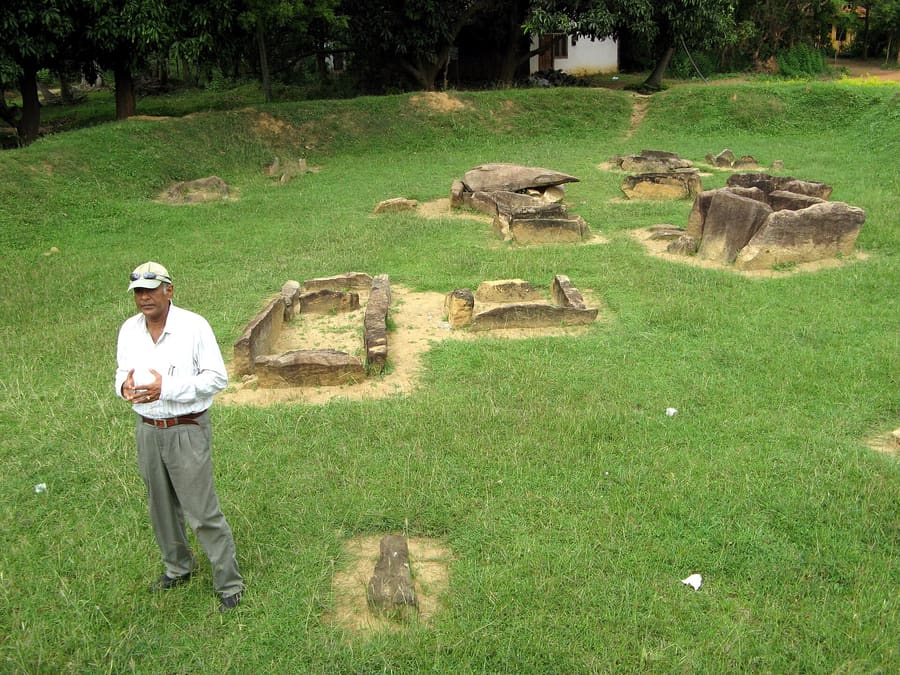
landmark
Cist graves from 700 BC sit 3 km west of town. Stone slabs enclose prehistoric burial chambers.
Chiedi a Parley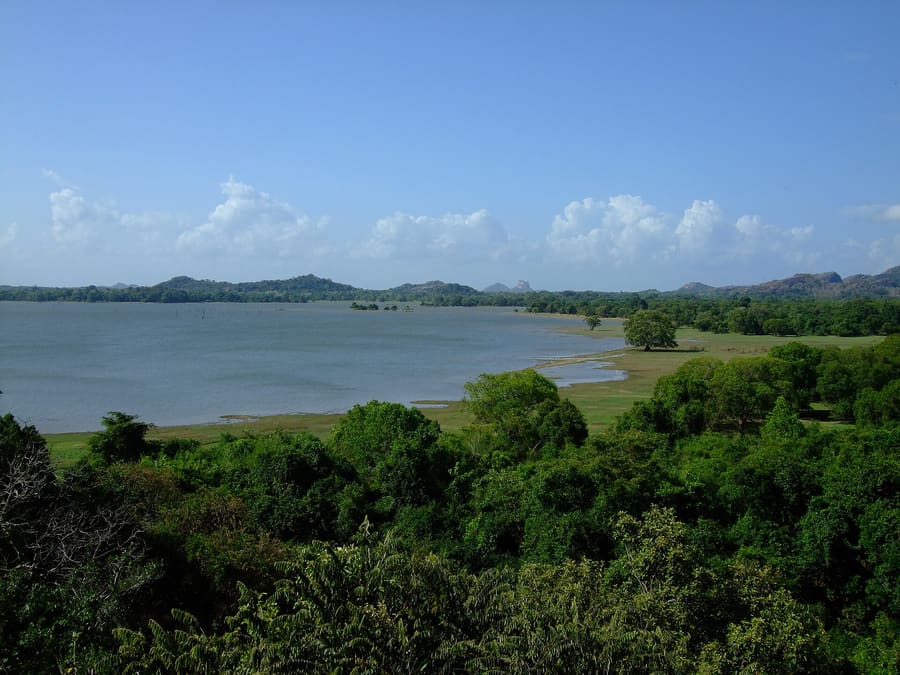
landmark
A fifth-century irrigation tank framed by forest. Wild elephants drink along the eastern banks at dusk.
Chiedi a Parley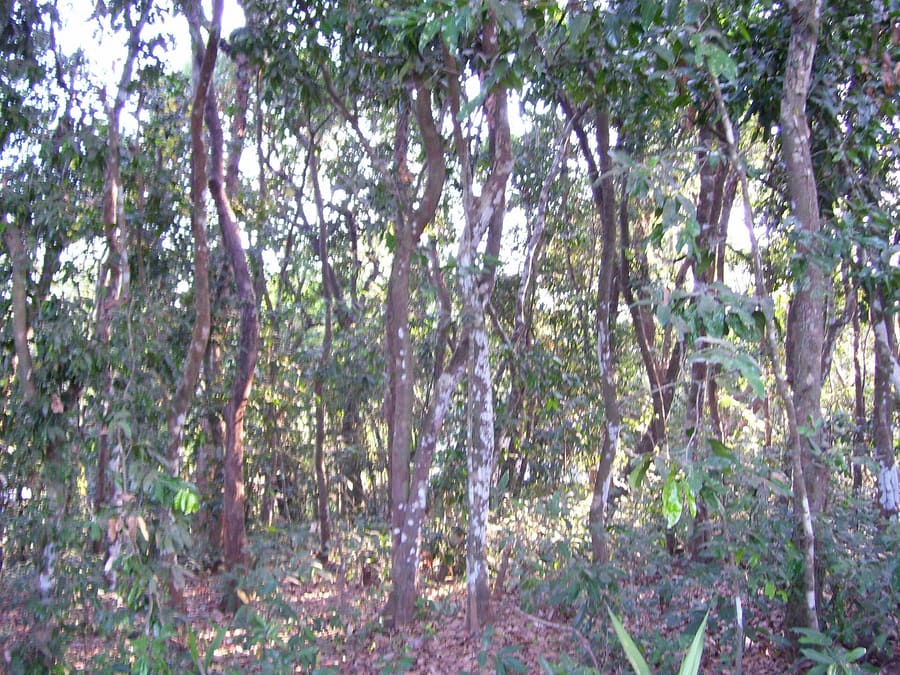
landmark
A restored dry-zone forest. Book a night tour to spot the nocturnal gray loris in the canopy.
Chiedi a Parleyattractions
areas
Quiet reservoir views, bird calls, and secluded resorts.
Nei dintorniKandalama Reservoir and Popham's Arboretum.
Chiedi a ParleyHighway noise, local bakeries, and busy bus bays.
Nei dintorniDambulla Dedicated Economic Centre and the main intercity bus terminal.
Chiedi a ParleyShaded rock slopes, flower stalls, and monk quarters.
Nei dintorniDambulla Cave Complex and the Golden Buddha Museum.
Chiedi a ParleyRoadside coconut stands and quiet guesthouses.
Nei dintorniThe road north to Sigiriya and Habarana.
Chiedi a Parleyfood
Dambulla feeds on its status as Sri Lanka's vegetable capital. Local rice and curry buffets near the market feature fresh lotus root, wing beans, and jackfruit cooked hours after leaving nearby farms. Night brings red-curry kottu roti stalls alive along the main junction, catering to truck drivers and long-distance commuters.
Fresh dry-zone vegetable curries served at a roadside eatery in Dambulla.
Lankan Foodie · CC BY-SA 4.0Eateries around the Dedicated Economic Centre serve noon rice and curry with 6 to 8 fresh vegetable dishes for LKR 400–600.
Crossroads stalls near the bus stand chop chicken and vegetable kottu on flat irons until 01:00.
Roadside vendors along Kandy Road slice fresh king coconuts (thambili) for LKR 100–150 per nut.
history
Dambulla's giant granite outcrop offered natural shelter long before it became a religious site. Prehistoric burials at Ibbankatuwa show active human settlement near the riverbanks by 700 BC. King Valagamba took refuge in these caves during an invasion in the first century BC, later converting them into a royal rock temple upon regaining his throne.
Megalithic Settlement
Inhabitants at Ibbankatuwa construct stone slab tombs and craft terracotta pottery near the river.
Royal Refuge
King Valagamba flees Anuradhapura and hides in the Dambulla caves for 15 years with Buddhist monks.
Gilded Caverns
King Nissankamalla gilds 73 Buddha statues and decorates the rock ceilings with gold leaf, earning it the name Golden Rock.
UNESCO Inscription
The Dambulla Cave Temple gains UNESCO World Heritage status for its preserved mural paintings and rock sculpture art.
where to stay
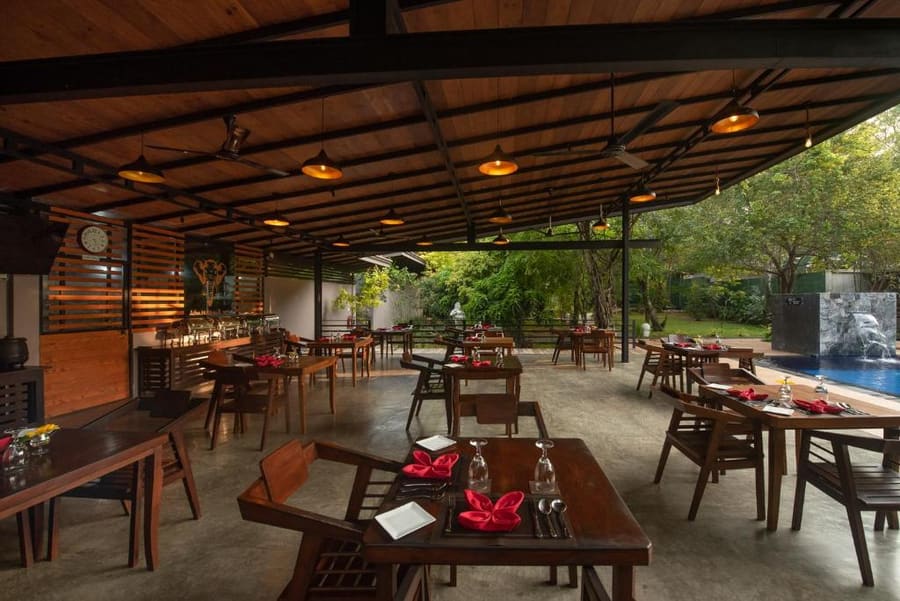
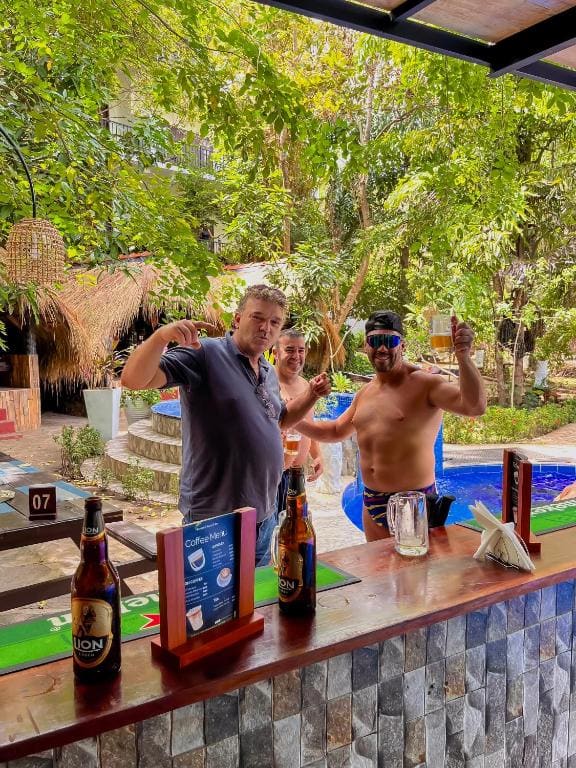
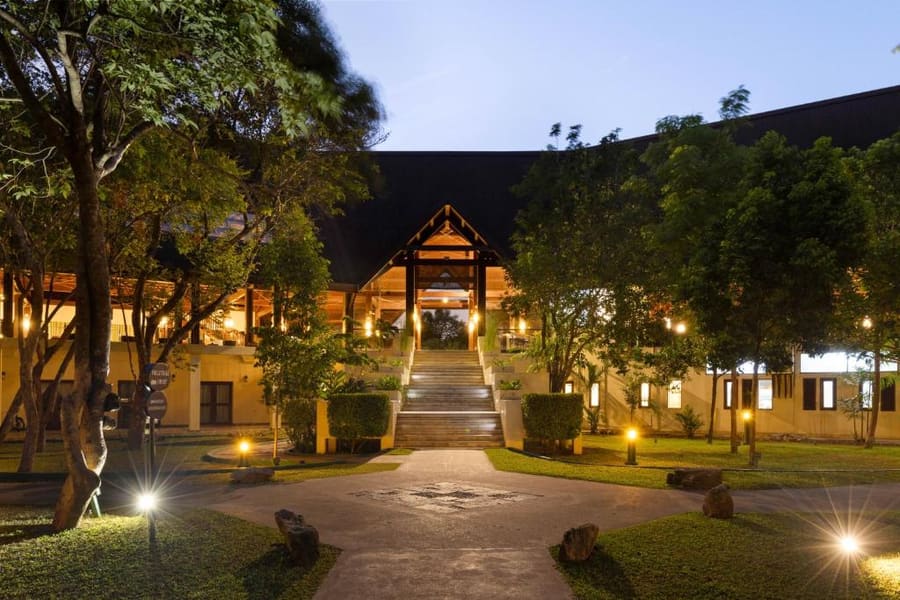
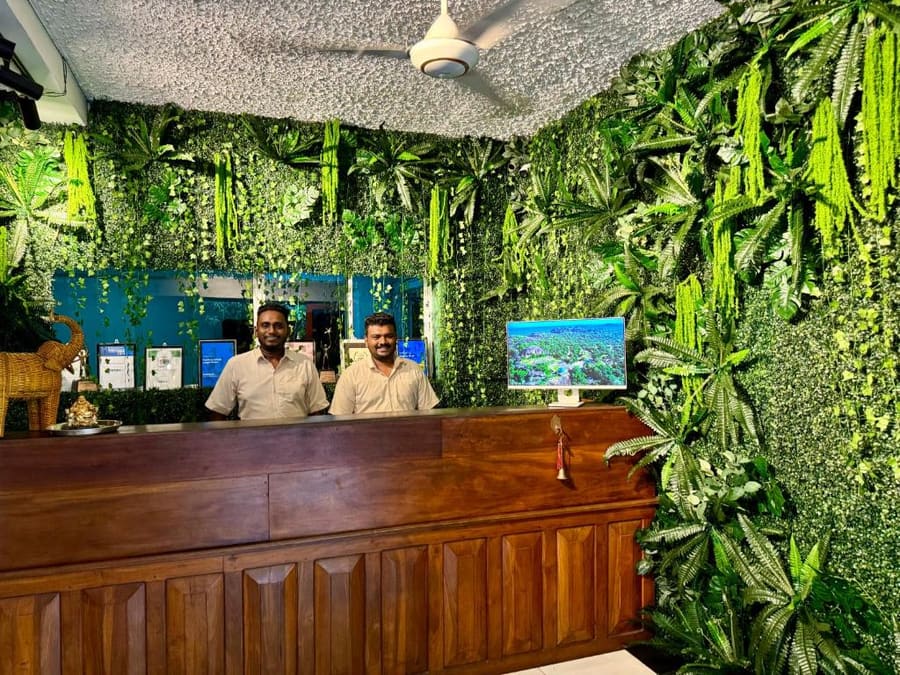
Choose your location based on your transport plan. Stay near the main junction if you depend on public buses to explore Sigiriya or Polonnaruwa. Choose the Kandalama Lake Shore if you have private transport and want forest surroundings away from highway noise.
Live rates, matched to the areas above.

transport
Dambulla is a road junction city. Long-distance buses run through the central terminal every few minutes, connecting Colombo, Kandy, Anuradhapura, and Trincomalee. Local three-wheelers (tuk-tuks) cover short trips within town and to nearby lake resorts.
Da Bandaranaike International Airport (CMB)
Fastest via the Expressway to Kurunegala, then A6 highway to Dambulla.
Take air-conditioned bus #48 or non-AC bus #15 from Colombo Fort station.
Local buses to Sigiriya leave from the Dambulla clock tower stand every 30 minutes between 06:30 and 18:00.
Negotiate tuk-tuk fares before getting in. A trip from town to the Cave Temple ticket counter costs LKR 300–400.
Intercity express buses stop at the main junction. Stand near the clock tower and signal the driver clearly.
Small shops near the main bus stand rent scooters for LKR 2,500–3,500 per day. Ensure your driving permit is valid.
cost
Dambulla is affordable compared to coastal beach resorts. Temple entrance fees are fixed for foreign travellers, while local food, produce, and short tuk-tuk rides cost very little.
Covers entrance to all five cave shrines. Cash in Sri Lankan Rupees is required at the counter.
A full plate of rice with multiple vegetable curries at local town eateries.
Covers 2–3 km trips between the town centre and local sites.
Fee to drop off footwear at the entrance terrace before entering the cave complex.
seasonality
JAN – MAR
Dry and clear weather. Ideal for climbing the temple stairs early in the morning.
APR – JUN
Hot and humid days. Climb the cave rock before 09:00 to avoid mid-day heat on open stone.
JUL – SEP
Inter-monsoon dry spell. Warm days with manageable afternoon cloud cover.
OCT – DEC
Northeast monsoon rains bring heavy afternoon showers. Granite steps become slippery.
practicalities
Cover shoulders and knees before entering the temple compound. Wraps are inspected at the security point.
You must remove shoes at the cave terrace. Black granite burns bare feet by noon; wear socks for heat protection.
Do not carry loose plastic bags or food items up the rock steps. Toque macaques will snatch exposed items.
The cave ticket office accepts cash in Sri Lankan Rupees only. ATMs are located in Dambulla town centre.
Never pose with your back turned to a Buddha statue. Photographing statues from the side is permitted.