landmark
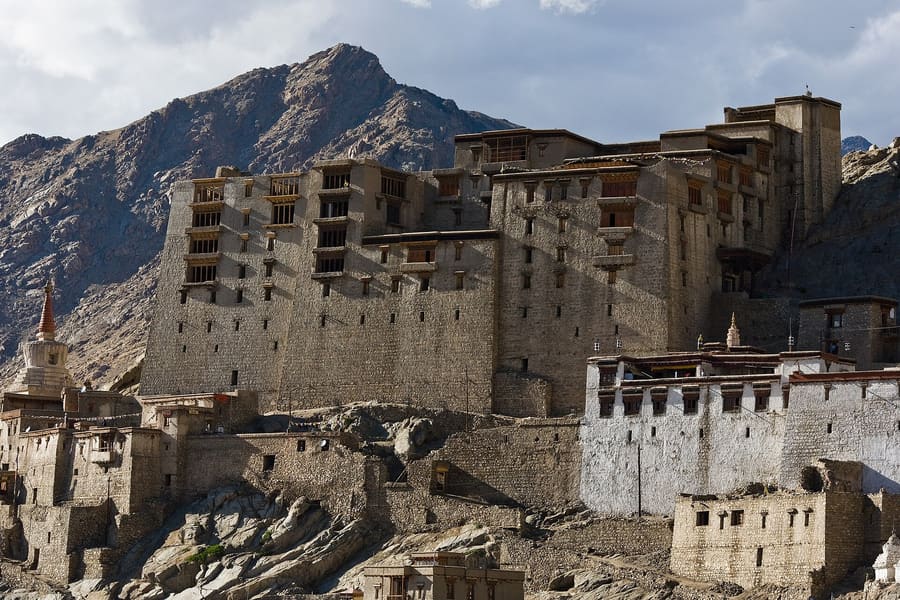
Leh Palace
A 17th-century nine-storey mud-brick royal residence. Climb early before midday heat warms the rooftop views.
Chiedi a ParleyIndia
High-altitude Himalayan hub of mud-brick alleys and passes.
introduction
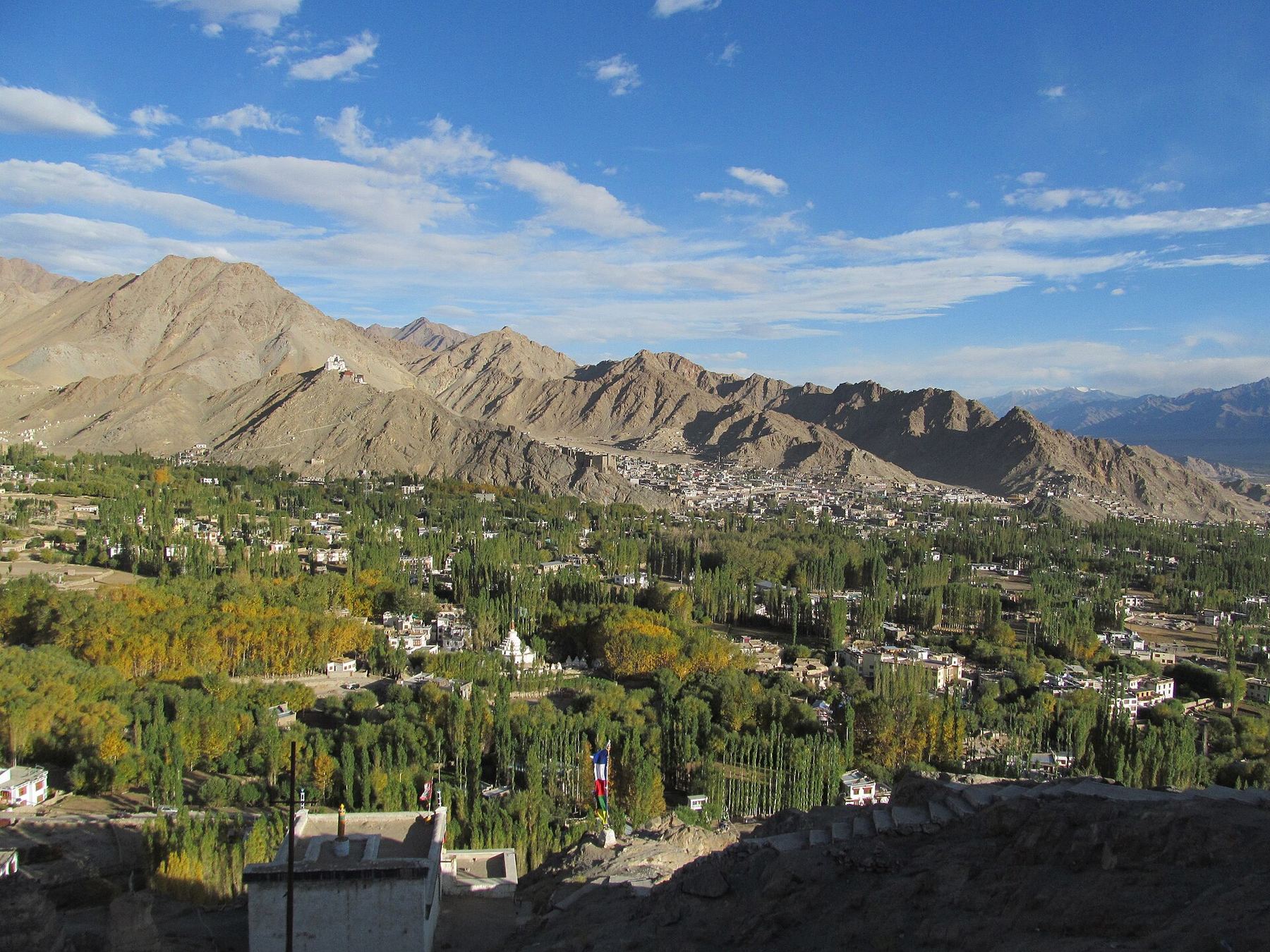
Leh sits at 3,500 metres in the high-desert Indus Valley. Life here slows down by necessity while your body adapts to thin air. You move between stone monasteries, steep alleyways, and quiet bakeries ringed by snowpeaks. Roads out lead over some of the highest motorable passes on earth.
Arrival acclimatisation mandatory
Fly into Kushok Bakula Rimpoche Airport at 3,500m elevation. Rest indoors for 24 hours to avoid severe altitude sickness.
Endangered mud-brick heritage
Leh Old Town sits on the World Monuments Watch list due to fragile earthen architecture dating to the 16th century.
Leh
Public domain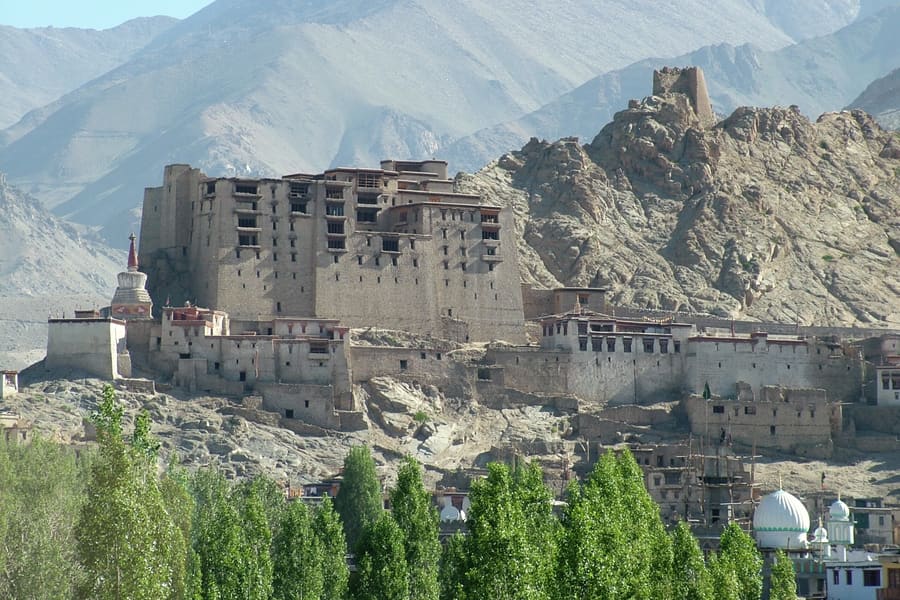
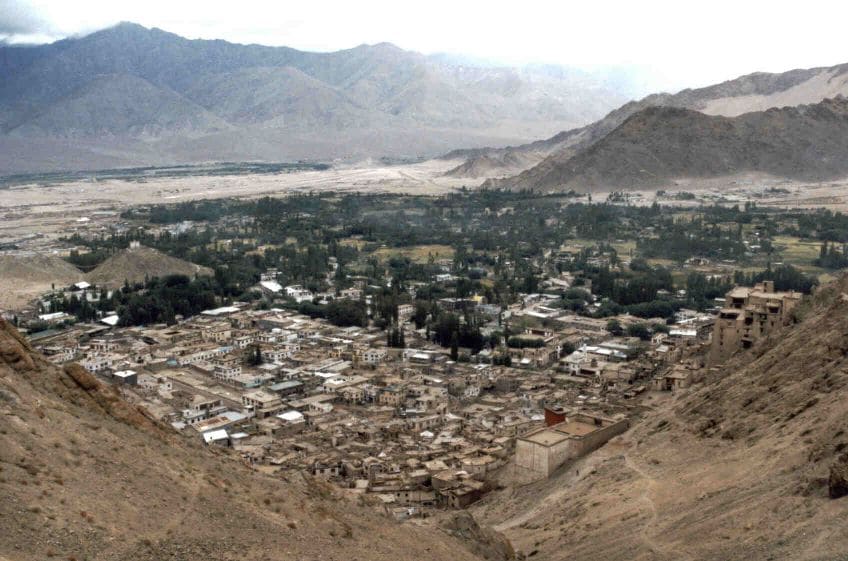
Main Bazaar & Old Town — Central, flat pedestrian stone concourse backed by mud-brick historic alleys.
Jiří Jindra · Public domain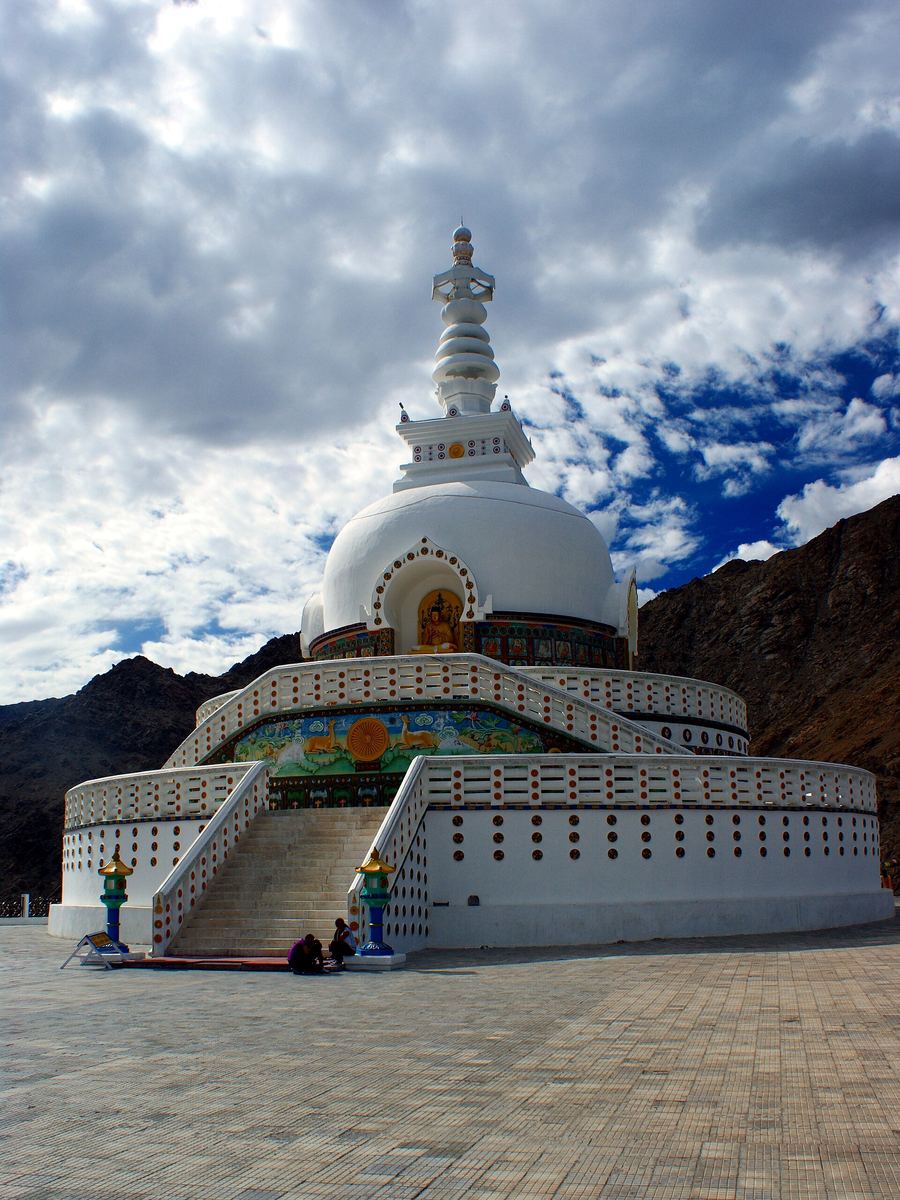
Changspa — Leafy garden lane popular with long-term travellers and trekkers.
Kondephy · CC BY-SA 3.0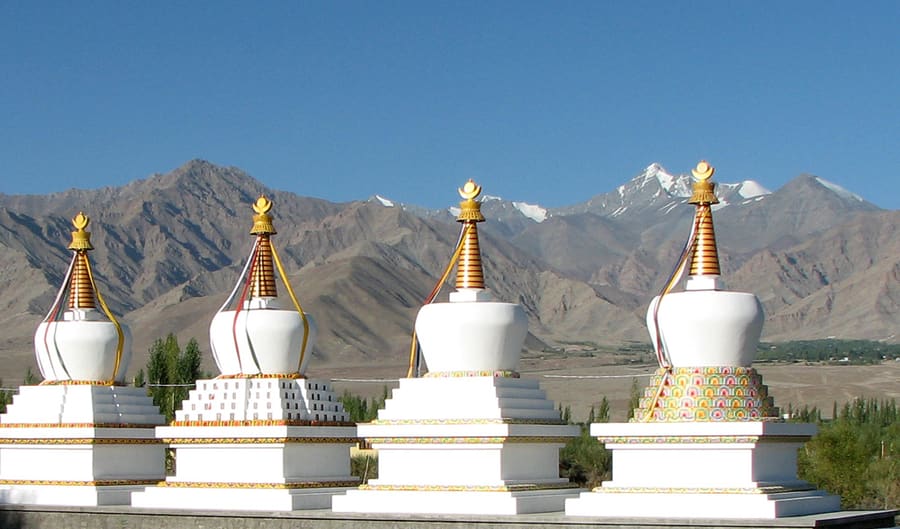
Choglamsar — Riverfront Tibetan refugee settlement south of the town core.
Karunakar Rayker · CC BY 2.0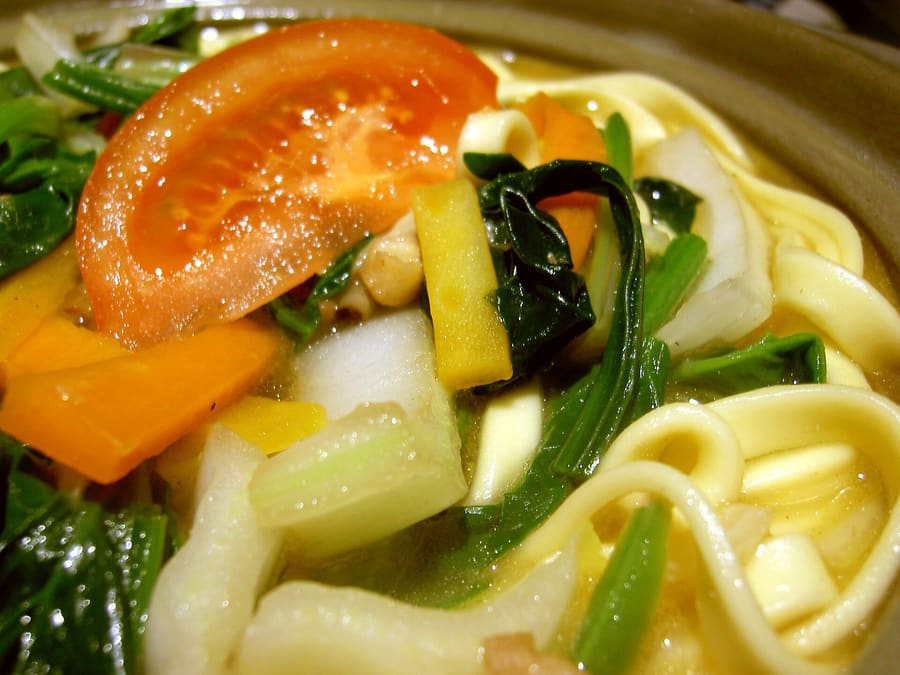
Thukpa noodle soup served in Old Town Leh.
m-louis from Osaka · CC BY-SA 2.0highlights
landmark
A 17th-century nine-storey mud-brick royal residence. Climb early before midday heat warms the rooftop views.
Chiedi a Parley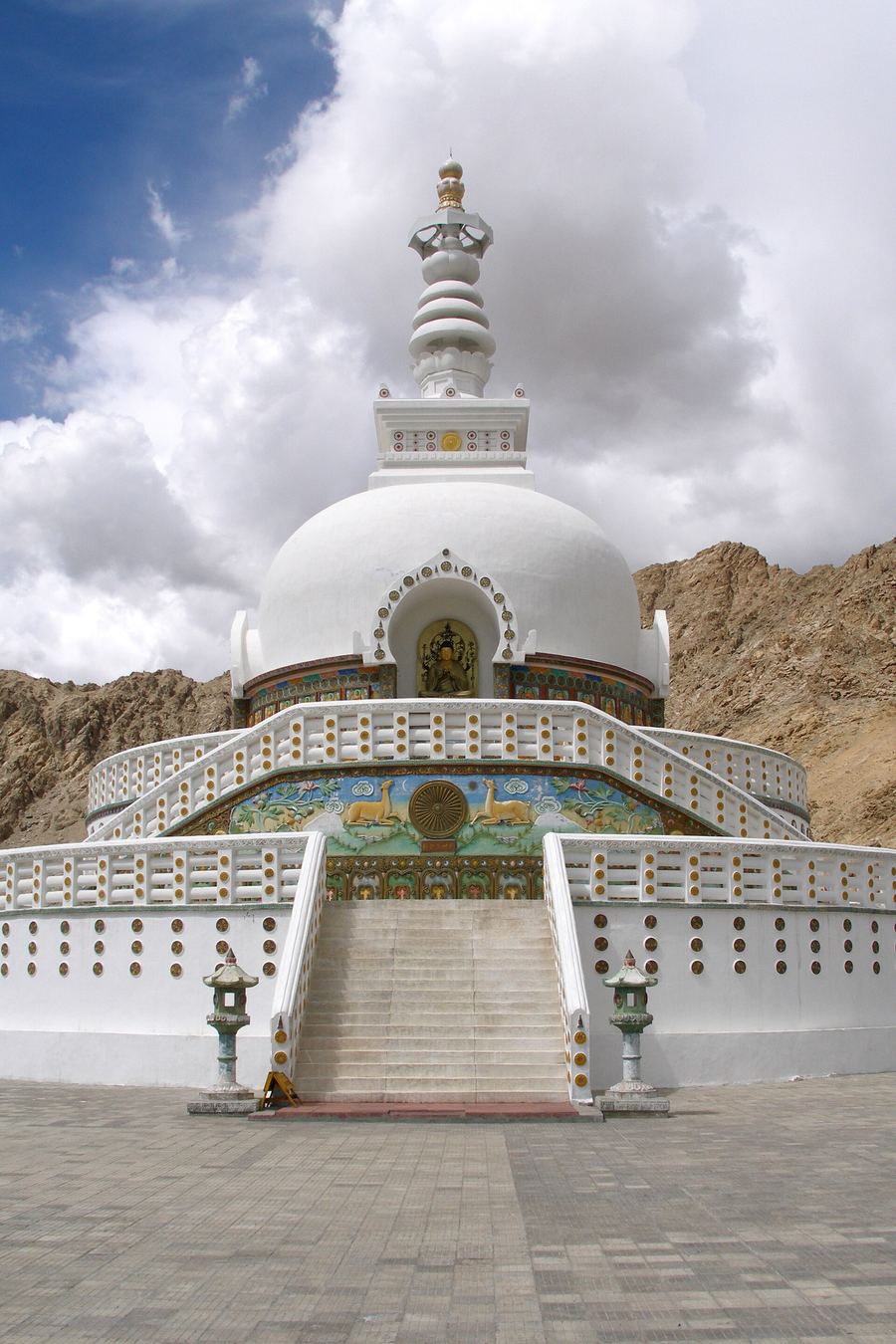
landmark
White hilltop dome built by Japanese and Ladakhi Buddhists. Arrive at dusk for orange light over the Stok range.
Chiedi a Parley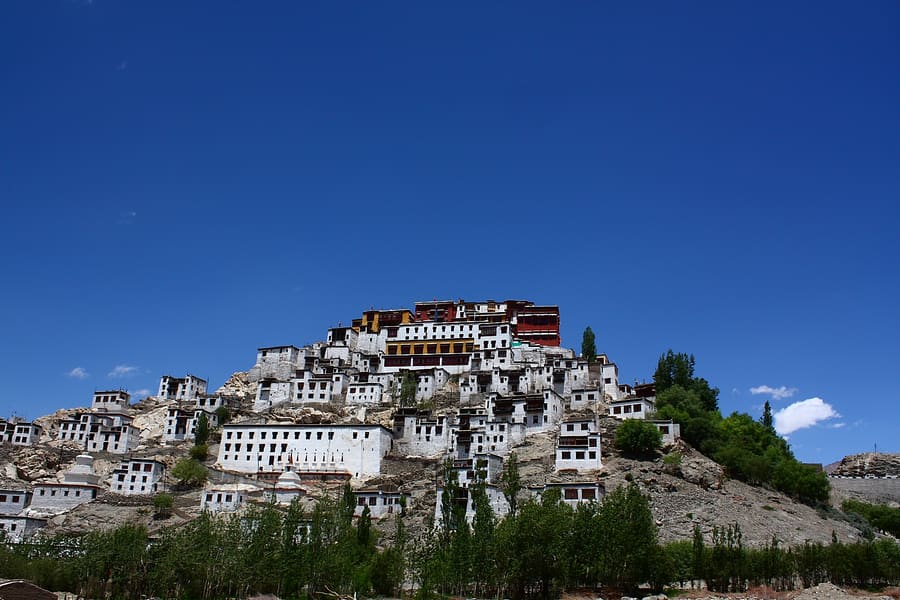
landmark
Twelve-storey complex resembles the Potala Palace. Morning prayers start at 06:30 with traditional horns.
Chiedi a Parley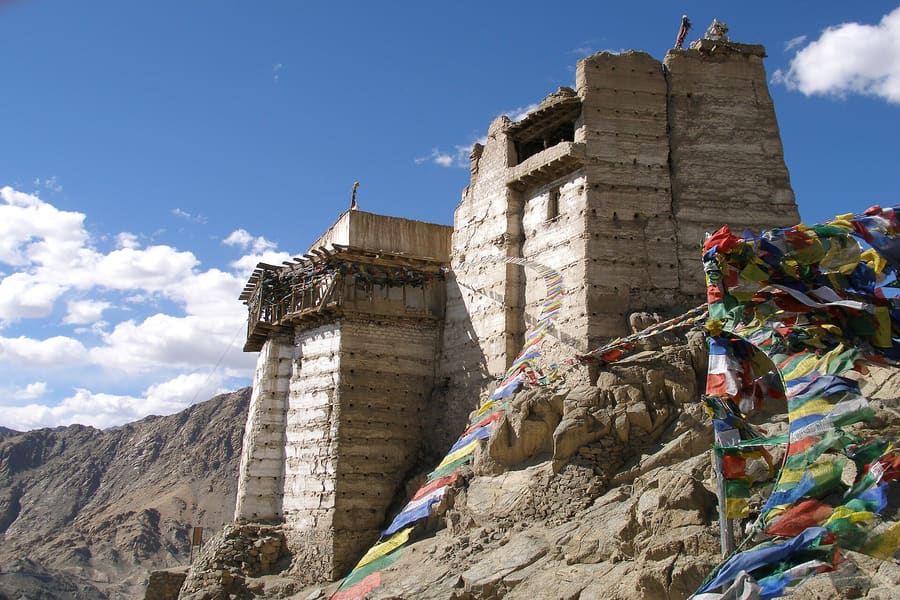
landmark
Peak fort housing a gold Maitreya Buddha. The steep dirt path demands rested lungs and solid shoes.
Chiedi a Parleyattractions
areas
Central, flat pedestrian stone concourse backed by mud-brick historic alleys.
Nei dintorniLeh Palace and Jama Masjid
Chiedi a ParleyLeafy garden lane popular with long-term travellers and trekkers.
Nei dintorniShanti Stupa trail
Chiedi a ParleyRiverfront Tibetan refugee settlement south of the town core.
Nei dintorniIndus River and Central Asian Museum
Chiedi a ParleyAgricultural residential district between Changspa and the main road.
Nei dintorniMain Bazaar walking path
Chiedi a Parleyfood
Ladakhi food relies on cold-climate staples: barley, wheat, mutton, and fermented dairy. Skyu is a thick pasta stew cooked with root vegetables. Chhutagi features bow-tie shaped dough pockets simmered in vegetable broth. Fresh sea buckthorn berries collected along the Indus river supply winter vitamin C.
Thukpa noodle soup served in Old Town Leh.
m-louis from Osaka · CC BY-SA 2.0Dzomsa on Fort Road fills reusable water bottles and serves fresh sea buckthorn juice.
Most local kitchens close by 21:00 as temperatures drop quickly after sunset.
Gur Gur Chai combines tea leaves, salt, and yak butter to keep skin hydrated in high desert air.
history
Leh grew as an essential trade stop along the Silk Road connecting Tibet, Kashmir, and Yarkand. Kings of the Namgyal dynasty built imposing fortresses to safeguard caravan tolls across mountain passes.
Palace built
King Sengge Namgyal constructs nine-storey Leh Palace, securing control over Silk Road trade.
Dogra invasion
Zorawar Singh leads Dogra forces into Ladakh, ending independent royal rule from Leh Palace.
Accession to India
Ladakh joins India. Leh evolves into a vital military forward outpost and regional administrative centre.
Union Territory status
Ladakh separates from Jammu and Kashmir to become an independent Union Territory governed directly by New Delhi.
where to stay
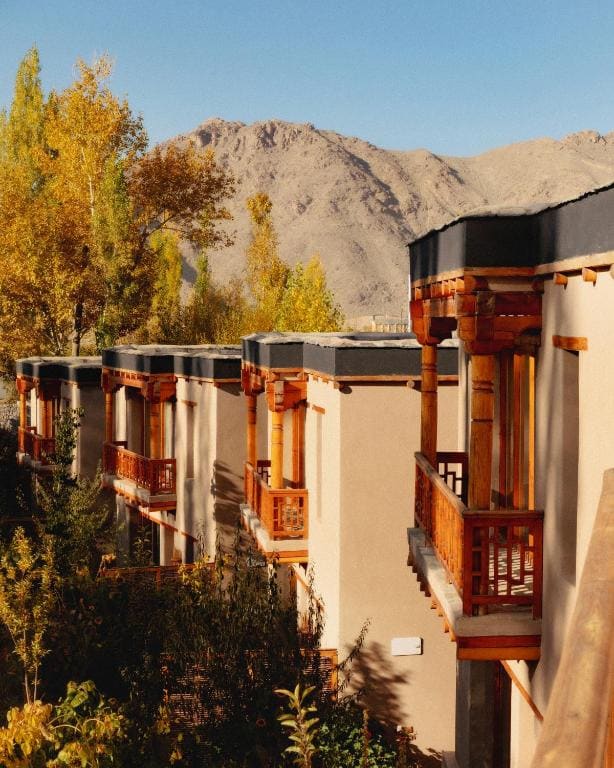
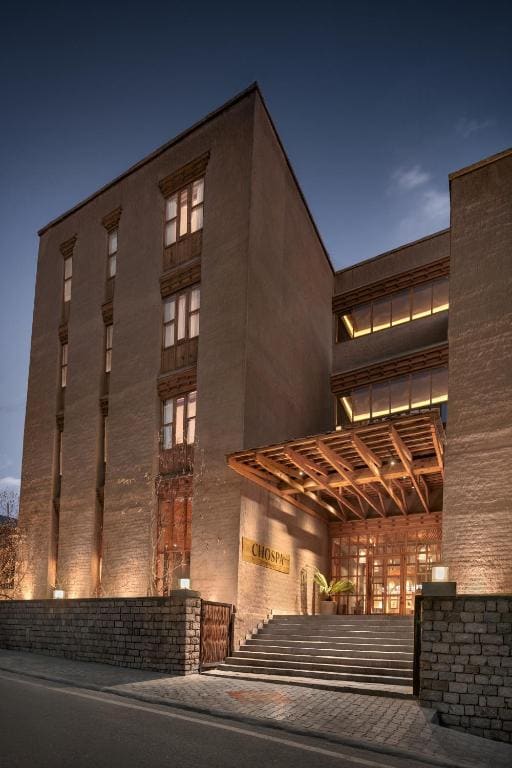
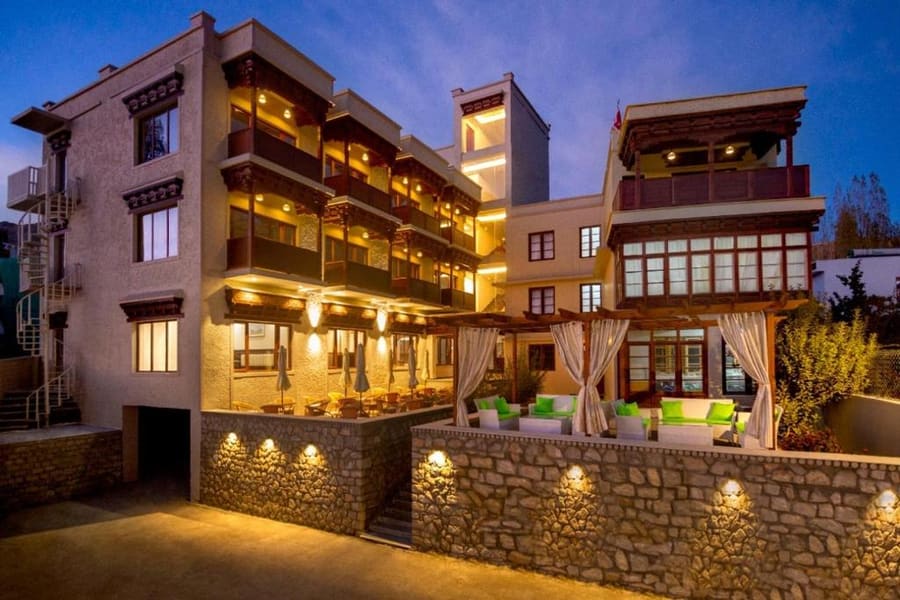
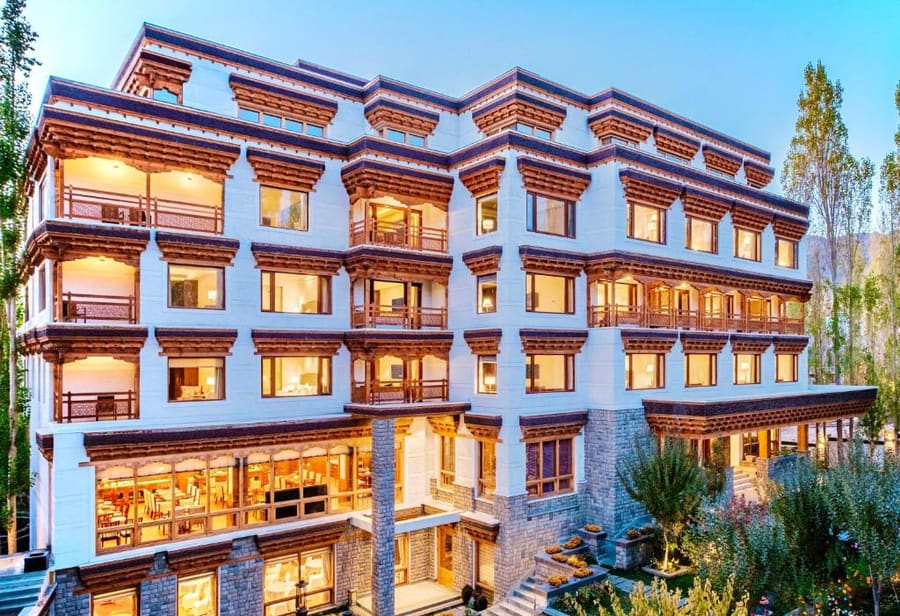
Choose your stay by altitude and walking distance. Central stays save your lungs on steep steps, while outskirts offer quiet solar-heated rooms.
Live rates, matched to the areas above.
transport
Central Leh is entirely walkable on foot. Private taxis operate through a strict local union with fixed rate cards.
Uber and Ola do not operate anywhere in Ladakh. All rides rely on local drivers.
Drivers carry printed rate sheets issued by the Leh Taxi Union. Prices are non-negotiable.
Minibuses to nearby villages like Shey and Choglamsar run regularly from New Bus Stand.
Taxis become scarce after 21:00. Arrange return rides with your driver in advance.
cost
Leh relies on truck supplies brought over mountain passes during summer. Transport overhead raises basic commodity prices above plains averages.
Served hot in local Old Town eateries.
Includes environmental fee and wildlife protection charges.
Covers round trip with return waiting time.
Paid directly at temple entrance gates.
seasonality
MAY – SEP
High season. Mountain passes clear of snow and flight schedules operate reliably.
OCT – NOV
Crisp autumn weather. High passes close as early winter snowfall begins.
DEC – FEB
Deep winter (-20°C). Land routes freeze; frozen Chadar trek opens on the Zanskar River.
MAR – APR
Spring thaw begins. High passes remain blocked while town shops reopen slowly.
practicalities
ATMs in Leh town center work fine, but remote valleys require physical cash.
Dry mountain air causes rapid dehydration. Drink three litres of water daily.
High altitude increases UV exposure dramatically. Wear SPF 50 sunscreen and a hat.
Always walk clockwise around chortens, mani walls, and inside Buddhist monastery shrines.