landmark
Stari Most
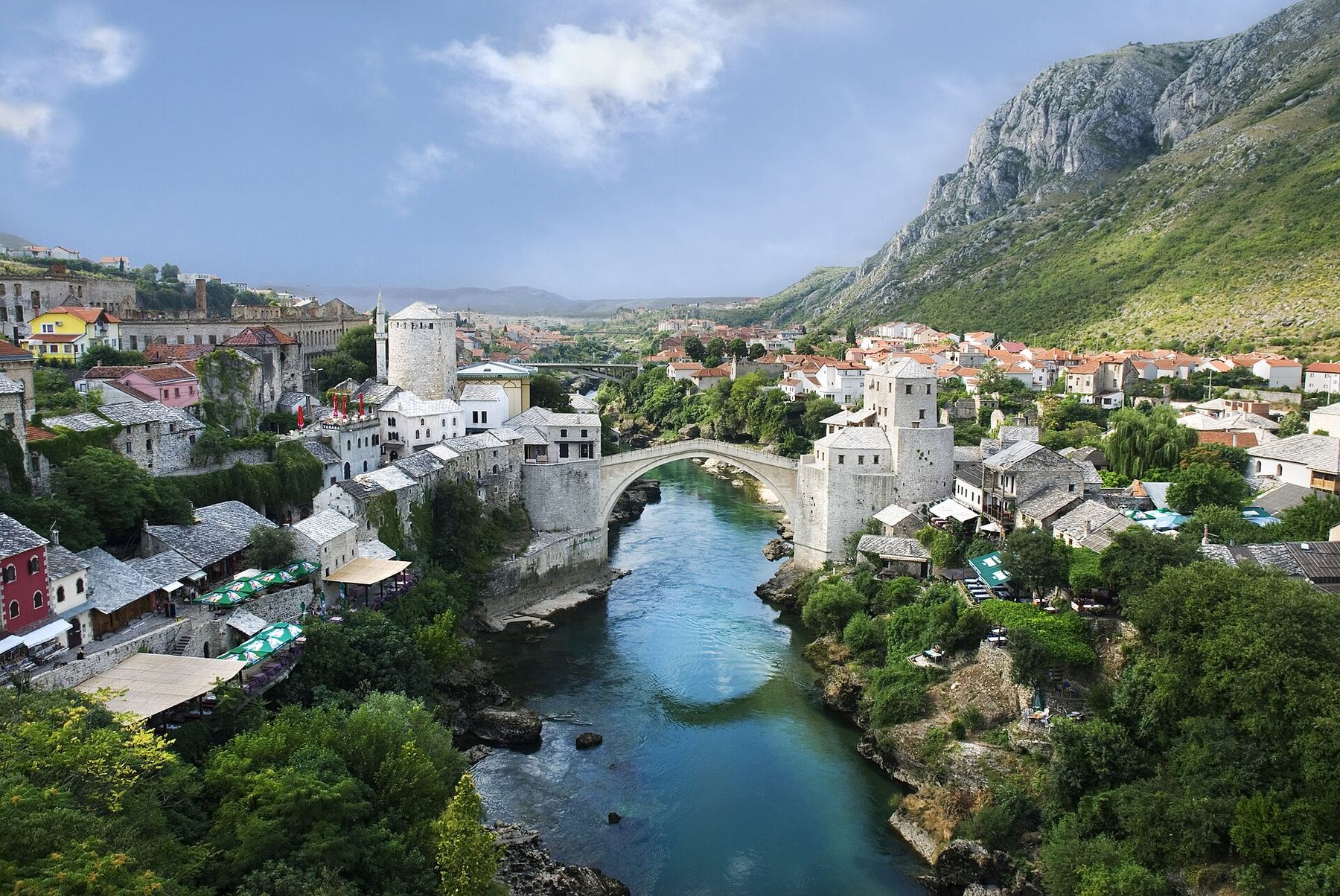
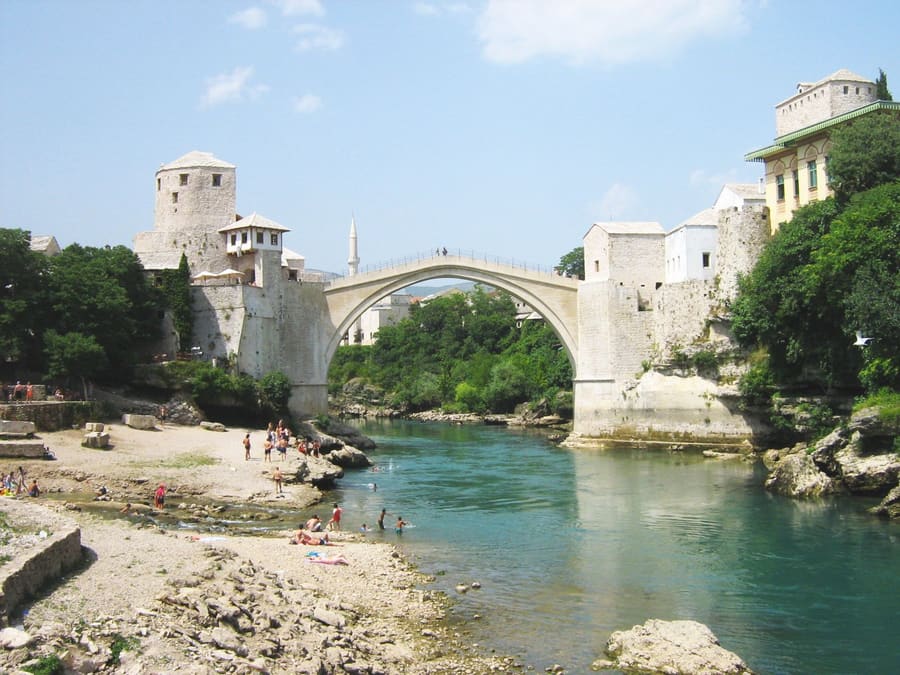
The reconstructed 16th-century Ottoman bridge stands 24 metres above the Neretva. Local divers jump when they collect enough cash.
Chiedi a ParleyBosnia ed Erzegovina
Ottoman stone, Cold War concrete, and a rushing river.
introduction
Mostar splits along the Neretva River into an Ottoman east side and an Austro-Hungarian and modern west side. You walk across cobblestone streets built in the 16th century, surrounded by limestone cliffs and bullet-scarred apartment blocks. Summers bring intense heat that traps in the canyon, so early morning is your best window for walking. The town is compact enough to cover entirely on foot.
Train arrival trick
The morning train from Sarajevo drops you at the main station, a 15-minute walk north of the Old Bridge.
UNESCO recognition
The Old Bridge area of the Old City of Mostar was named a UNESCO World Heritage site in 2005.
Cobblestone walking trick
Wear thick-soled shoes for the smooth stone cobblestones of Kujundžiluk, which become slick when wet.
Mostar
visitmostar · Public domain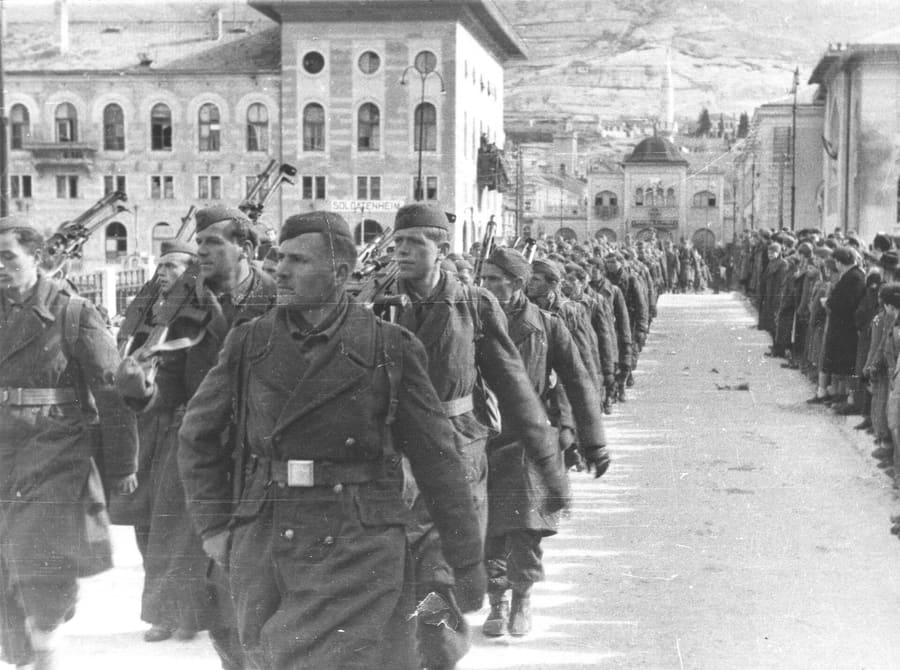
Stari Grad — Ottoman stone streets lined with copper workshops and river terraces.
Unknown authorUnknown author · Public domain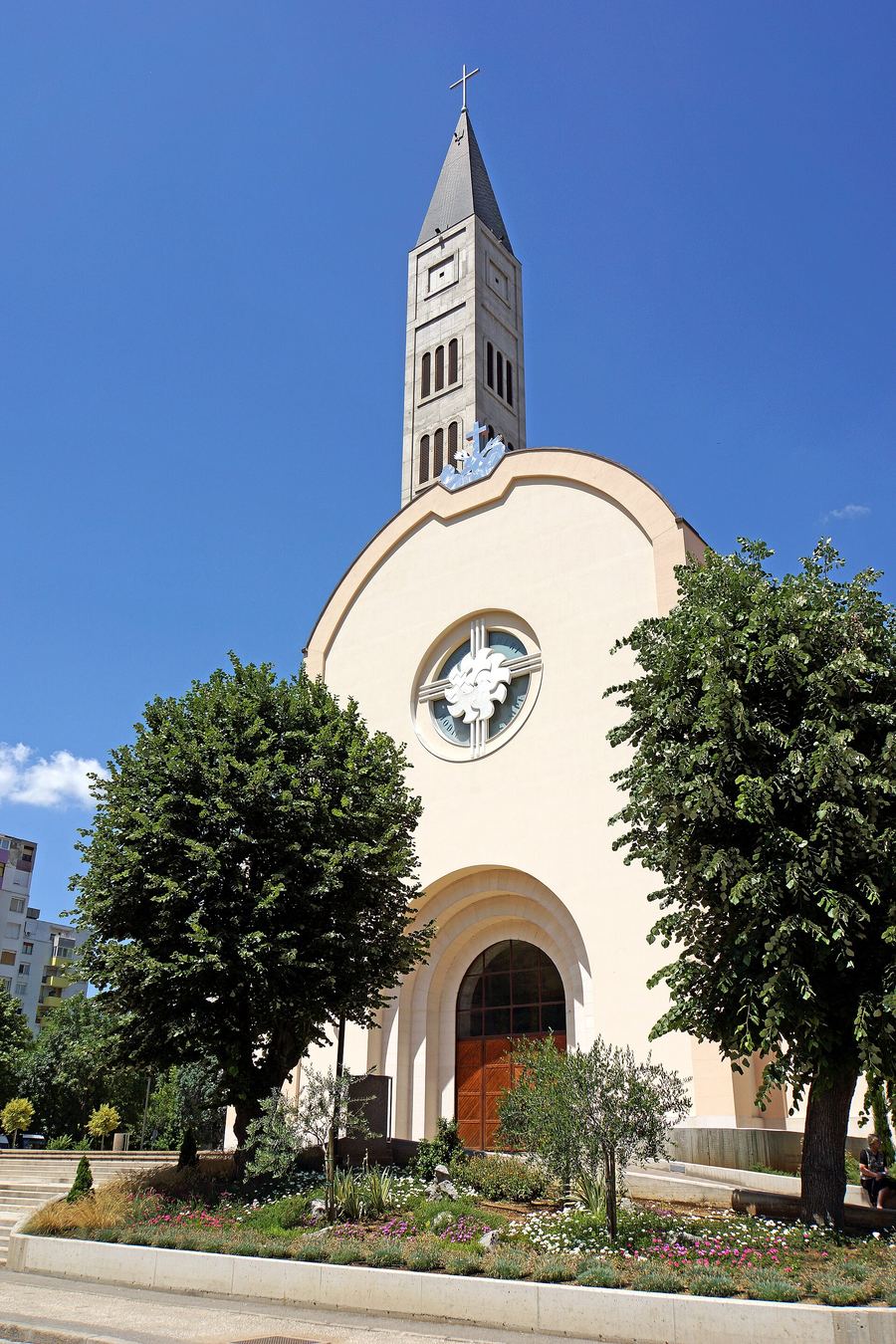
Podhum — Residential streets extending west along the Radobolja stream.
Dennis G. Jarvis · CC BY-SA 2.0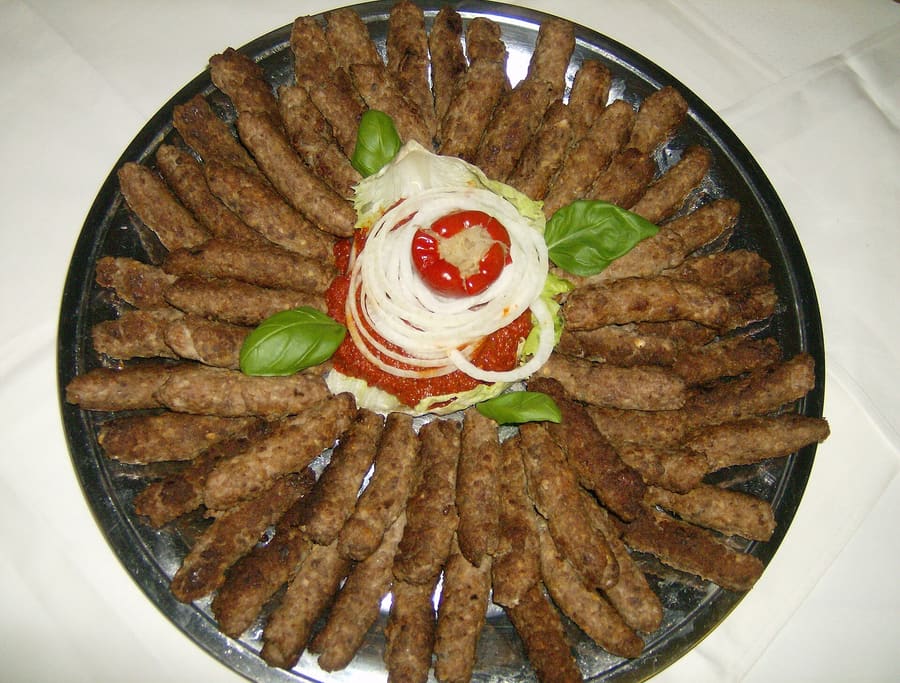
Traditional Bosnian dish set served in copper cookware near Stari Most.
kawu · Public domainhighlights
landmark
The reconstructed 16th-century Ottoman bridge stands 24 metres above the Neretva. Local divers jump when they collect enough cash.
Chiedi a Parley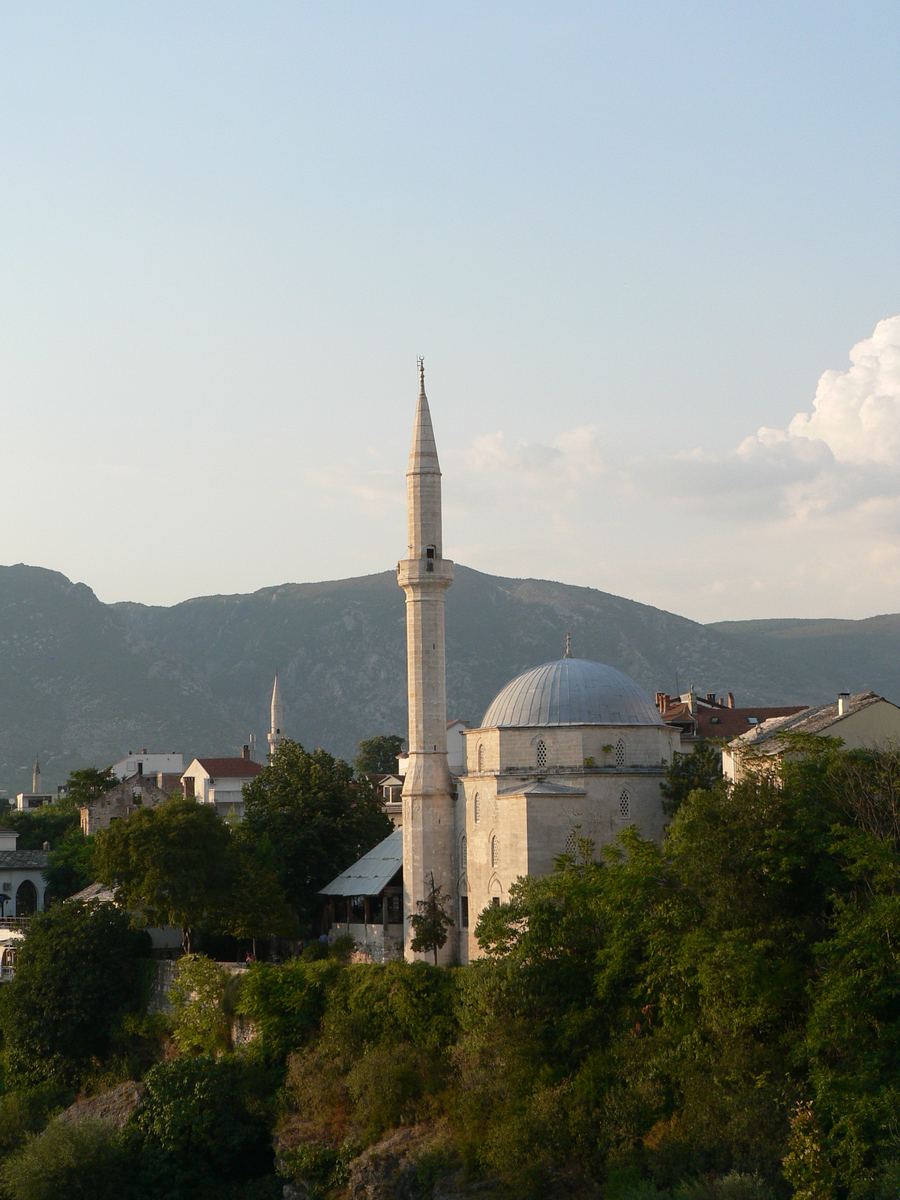
landmark
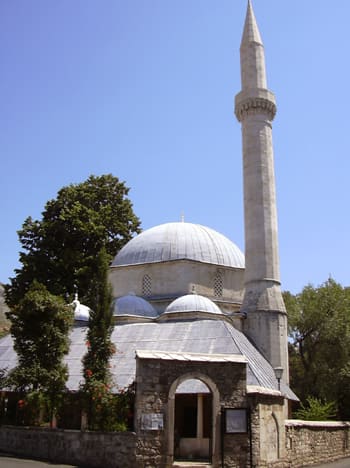
Climb the narrow minaret for the classic side-on view of the Old Bridge. Pay the entrance fee at the courtyard gate.
Chiedi a Parley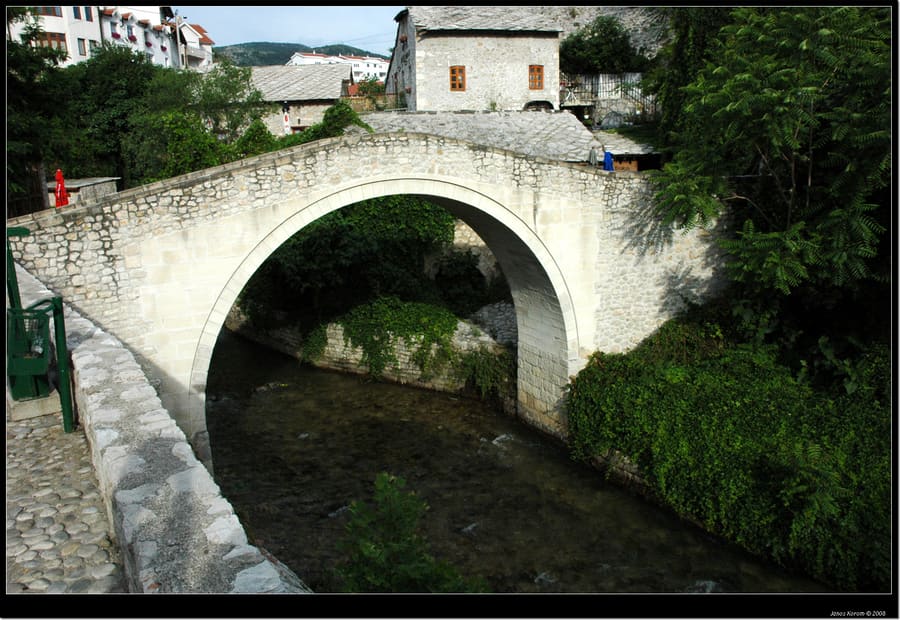
landmark
A miniature version of Stari Most built earlier over the Radobolja stream. Less crowded and close to waterside restaurants.
Chiedi a Parley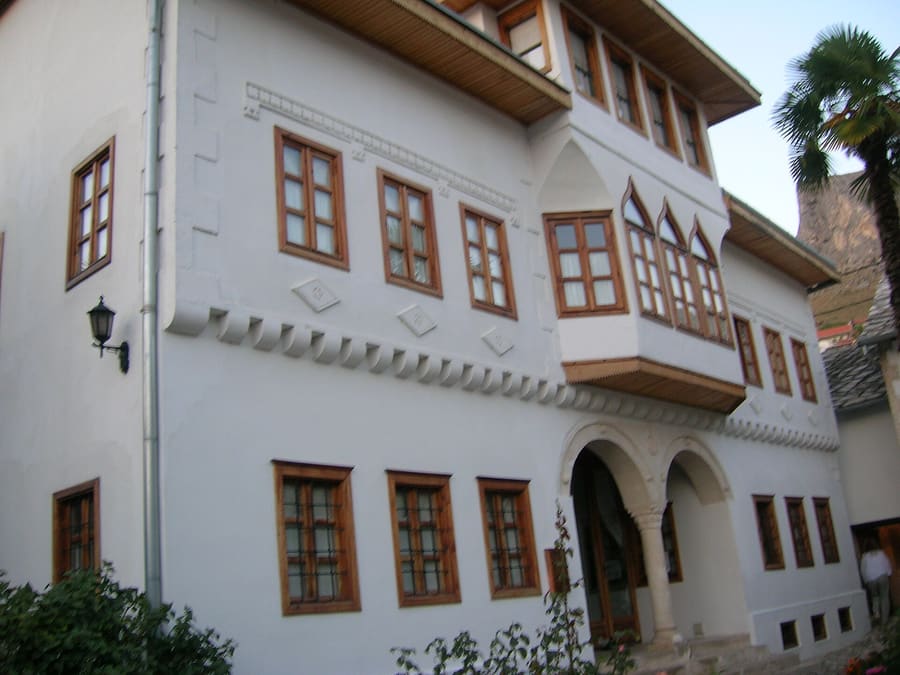
landmark
An Ottoman residential complex with preserved wooden woodwork and lush courtyards. Functions as both museum and boutique hotel.
Chiedi a Parley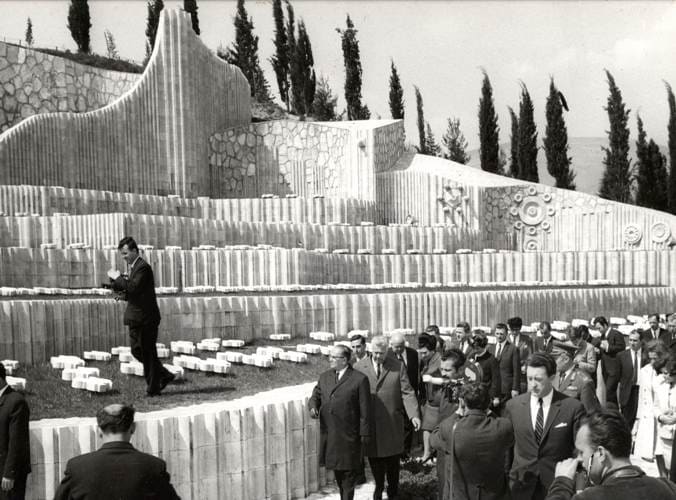
landmark
Designed by Bogdan Bogdanović on Bijeli Brijeg hill. Over 600 stone markers cascade down terraces among green parkland.
Chiedi a Parleyattractions
areas
Ottoman stone streets lined with copper workshops and river terraces.
Nei dintorniStari Most and Koski Mehmed Pasha Mosque.
Chiedi a ParleyResidential streets extending west along the Radobolja stream.
Nei dintorniKriva Ćuprija and Hum Hill trailheads.
Chiedi a ParleyQuiet mixed residential zone between the Old Town and the main boulevard.
Nei dintorniMuslibegović House and the central market.
Chiedi a ParleyModern Austro-Hungarian and post-war sector around Park Zrinjevac.
Nei dintorniSniper Tower and Croatian National Theatre.
Chiedi a Parleyfood
Mostar dining balances Ottoman traditions with Neretva river seafood. You find local grilled meats served alongside regional specialties like dolma and river trout. Table service near the bridge carries a location premium, while streets two blocks back serve local workers at lower prices.
Traditional Bosnian dish set served in copper cookware near Stari Most.
kawu · Public domainOrder ćevapi at Tima-Irma in the Old Town. You receive ten grilled minced meat sausages inside flatbread with minced onions and kajmak cream.
Order fresh trout at restaurants along the Radobolja stream near Kriva Ćuprija. The fish is grilled whole with garlic and olive oil.
Bosnian coffee arrives in a copper dzezva with a glass of water and Turkish delight. Let the grounds settle for two minutes before pouring.
Most small restaurants in the Old Town accept Bosnian convertible marks (BAM) or Euros in cash. Card machines often lose signal near the stone walls.
history
Mostar grew as an Ottoman garrison town surrounding its wooden bridge over the Neretva. Mimar Hayruddin replaced the wood with stone in 1566, creating an architectural marvel that stood for four centuries. The 1990s conflict saw heavy destruction, including the collapse of the bridge in 1993, followed by meticulous reconstruction.
First written record
Documentary sources mention Mostar as a settlement around a wooden bridge guarded by tower keepers called 'mostari'.
Stone bridge completed
Ottoman architect Mimar Hayruddin completes the single-arch stone bridge under order of Sultan Suleiman the Magnificent.
Austro-Hungarian rule
Austria-Hungary takes control of Bosnia and Herzegovina, introducing European civic architecture and railways.
Destruction of Stari Most
Heavy artillery bombardment during the Bosnian War causes the 427-year-old bridge to collapse into the Neretva River.
Reopening of Stari Most
The reconstructed bridge reopens after an international effort using traditional stone-carving techniques.
where to stay
Choose your neighborhood based on how you handle noise and stairs. Stari Grad puts you steps from the bridge, but morning delivery vehicles and tour groups start early. Staying west of Bulevar offers quieter nights and modern building elevators.
transport
Mostar is compact enough to walk everywhere within the central district. Regional buses and trains connect you to Sarajevo, Blagaj, and the Croatian coast. Taxis operate on fixed inner-city rates.
Da Mostar Bus Station (Autobuska stanica Mostar)
Scenic railway line from Sarajevo Main Station. Runs twice daily.
Frequent departures from Sarajevo Central Bus Station to Mostar East Station.
Standard fare for trips within Mostar city limits.
Mostar has two main bus stations: East (Autobuska stanica) near the train station and West (Kolodvor) near the cathedral.
Local taxis do not accept credit cards. Confirm the fare with the driver before getting in if the meter is off.
The stone paving in the Old Town is polished smooth by millions of footsteps. Avoid leather-soled shoes.
cost
Mostar uses the Bosnian Convertible Mark (BAM), pegged directly to the Euro at approximately 1.95 BAM to 1 EUR. Euros are widely accepted in small shops in the Old Town, but change is usually returned in BAM.
A standard portion of 10 ćevapi in somun bread with onions and kajmak cream at local joints.
Price for coffee in cafes around the Old Town and along the Neretva riverbanks.
Hand-hammered copper dzezva coffee pots in the Kujundžiluk bazaar street.
seasonality
MAR – MAY
Mild temperatures around 18–24°C. Perfect for walking around the Old Town before summer crowds arrive.
JUN – AUG
Temperatures frequently exceed 40°C in the canyon. High tour bus volume between 11:00 and 16:00 daily.
SEP – OCT
Warm days around 22–26°C with swimming still possible in nearby rivers. Autumn light is ideal for photography.
NOV – FEB
Cool, rain-heavy winter months with temperatures around 5–10°C. Many seasonal Old Town shops operate reduced hours.
practicalities
The limestone basin traps intense heat in July and August. Schedule your walking tours for early morning or after 18:00.
Local divers from the Mostar Diving Club collect tips until they reach a target amount before jumping from Stari Most.
Many vendor stalls quote prices in both BAM and Euros. Always check which exchange rate they apply when paying cash.
Independent blue-and-yellow ATMs charge higher conversion fees. Use official bank ATMs attached to branches along Bulevar.
The Neretva River remains cold year-round at roughly 7–10°C due to mountain runoff. Do not dive in without acclimatising.