landmark
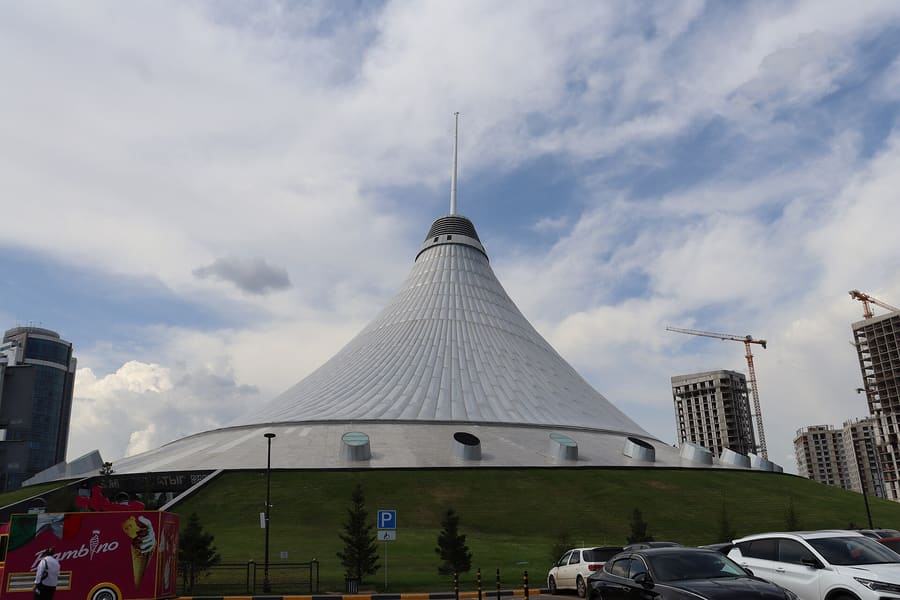
Khan Shatyr
Norman Foster designed this giant transparent tent housing a shopping mall and indoor beach with imported sand.
Parleyに聞くカザフスタン
Futuristic architecture rising from the windy Kazakh steppe.
introduction
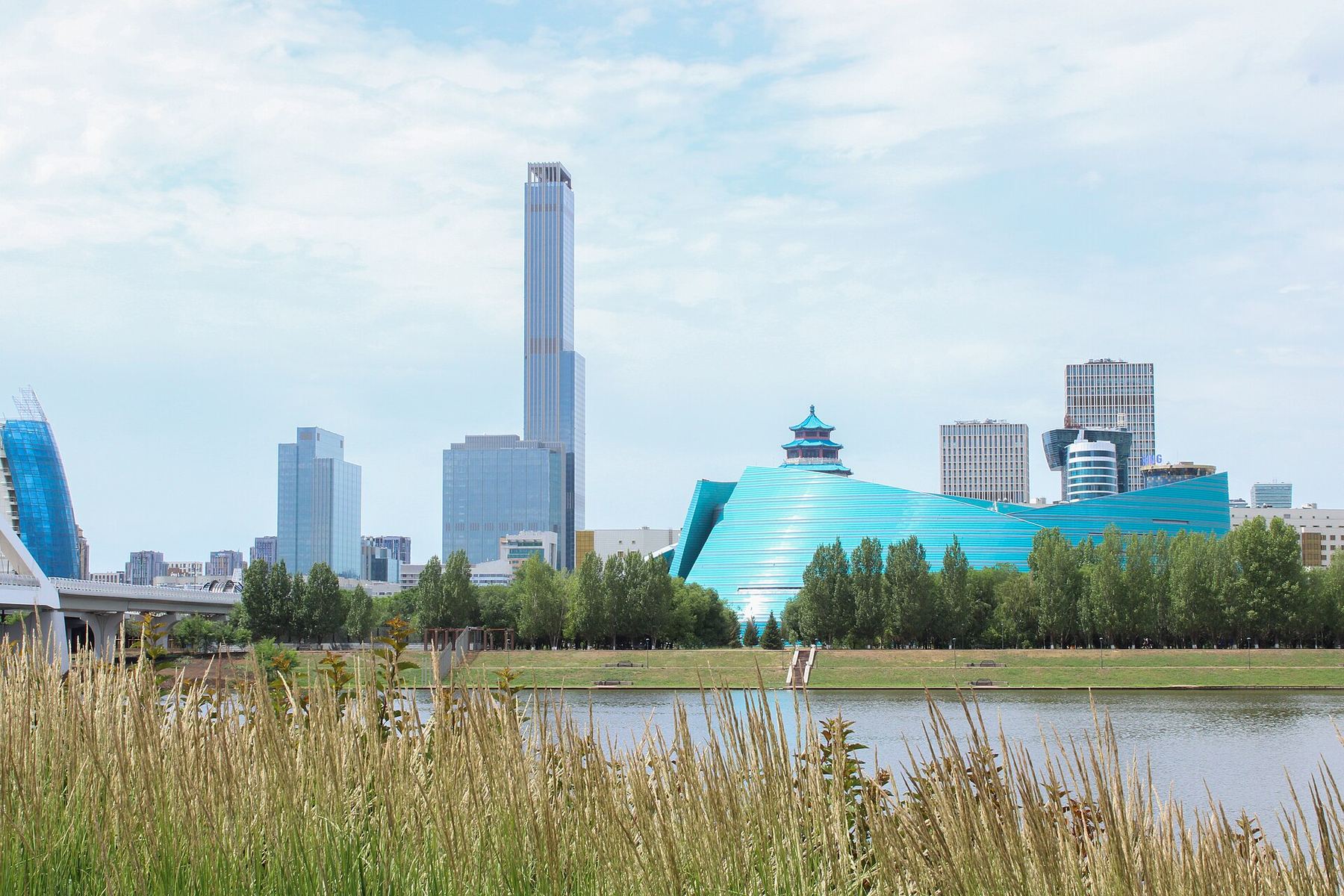
Astana is a planned capital split by the Ishim River. The Left Bank holds futuristic skyscrapers and wide government avenues built after 1997. The Right Bank feels like a traditional Soviet river city with walkable streets. Vast distances and harsh steppe winds make taxis essential for getting around.
Airport to city center
Yandex Go taxis cost around 2,500–3,500 KZT from NQZ airport. Never accept unregistered drivers inside the terminal.
UNESCO City for Peace
UNESCO awarded Astana the City for Peace title in 1999 for rapid, peaceful civic expansion.
Navigating winter cold
Underground passages and indoor malls connect major Left Bank towers. Use them to dodge sub-zero winds.
highlights
landmark
Norman Foster designed this giant transparent tent housing a shopping mall and indoor beach with imported sand.
Parleyに聞く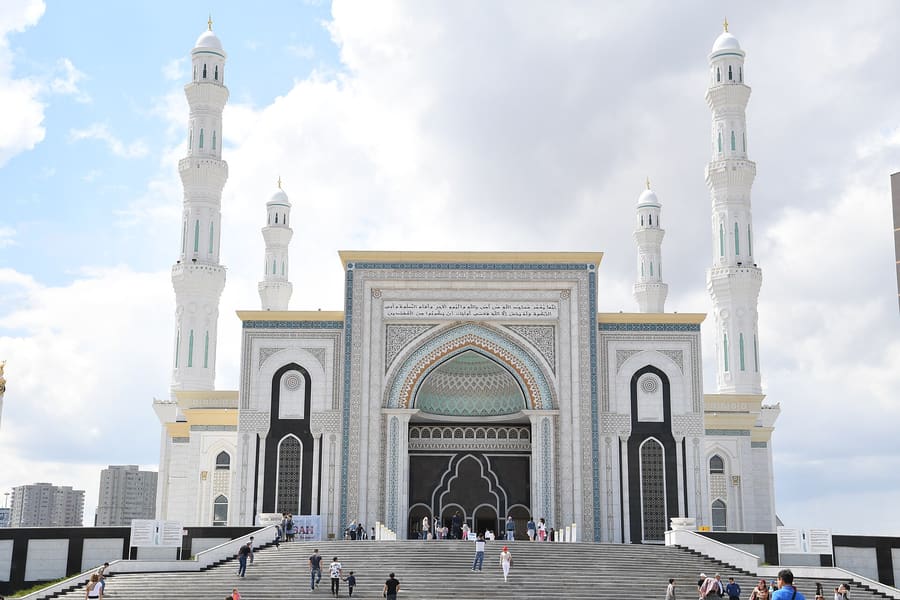
landmark
One of Central Asia's largest mosques features classical Islamic detailing. Cover legs and shoulders before entry.
Parleyに聞く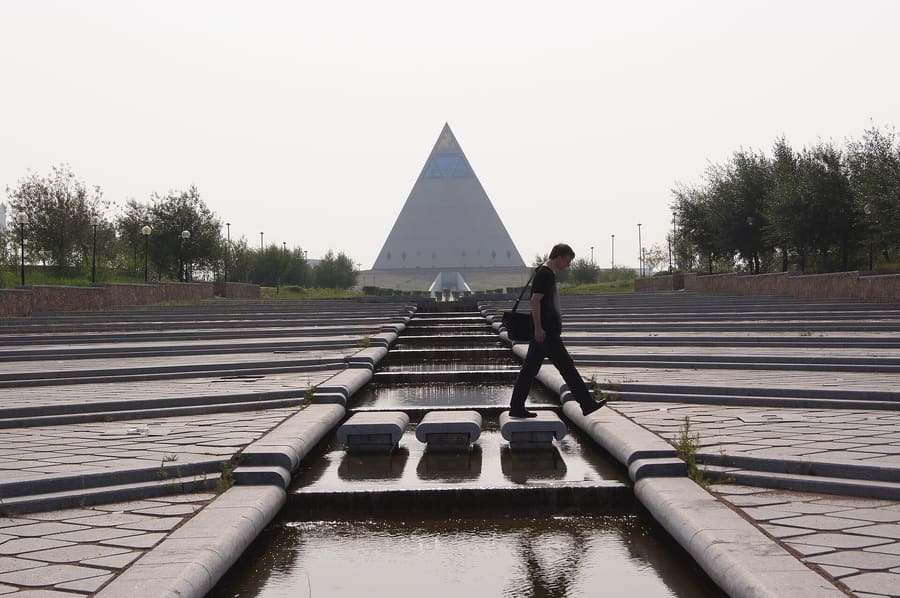
landmark
A 62-metre glass pyramid built for world religion summits. Guided tours run hourly and access the top atrium.
Parleyに聞く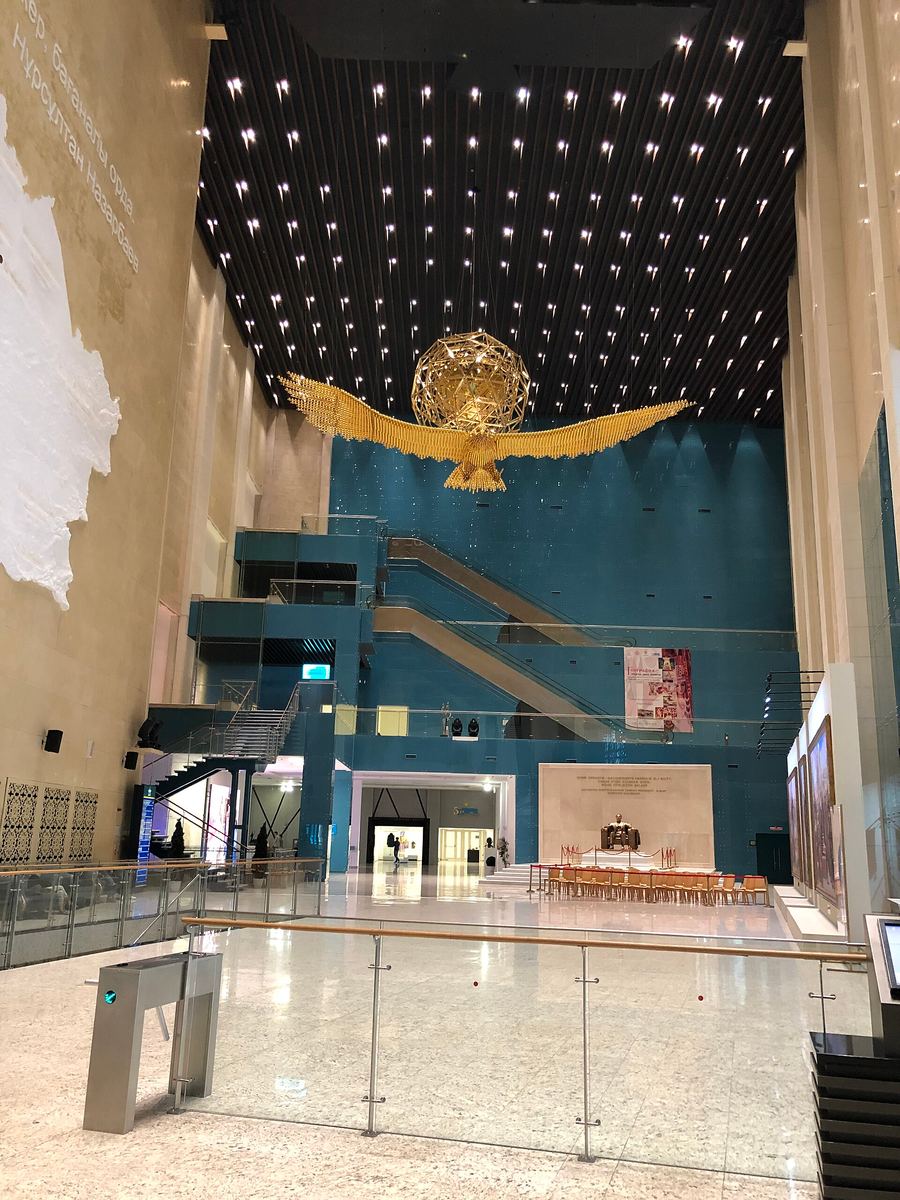
landmark
Houses the famous Golden Man artifact and massive historic halls. Give yourself two hours for the ancient history floor.
Parleyに聞く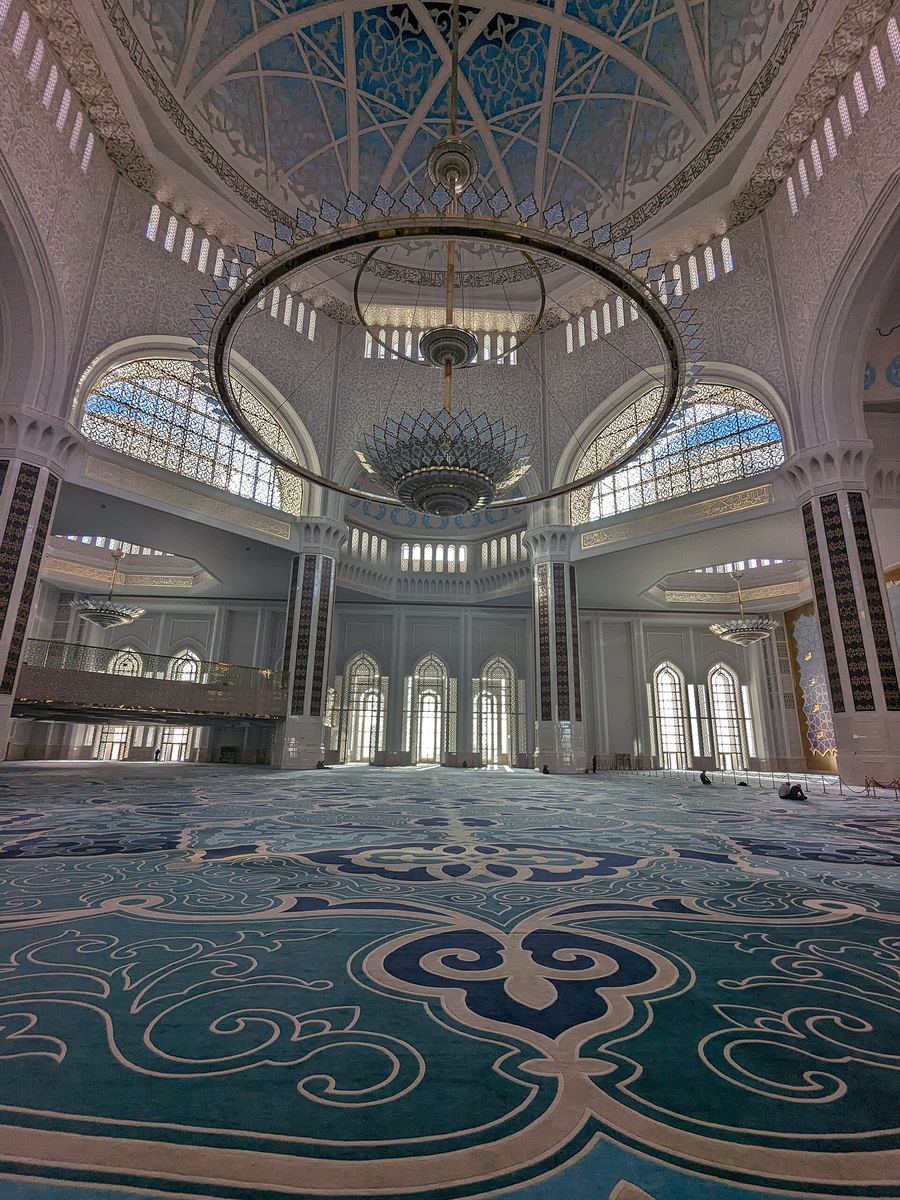
landmark
Opened in 2022, its main dome is one of the largest in the world. Located south near the Expo grounds.
Parleyに聞くattractions
areas
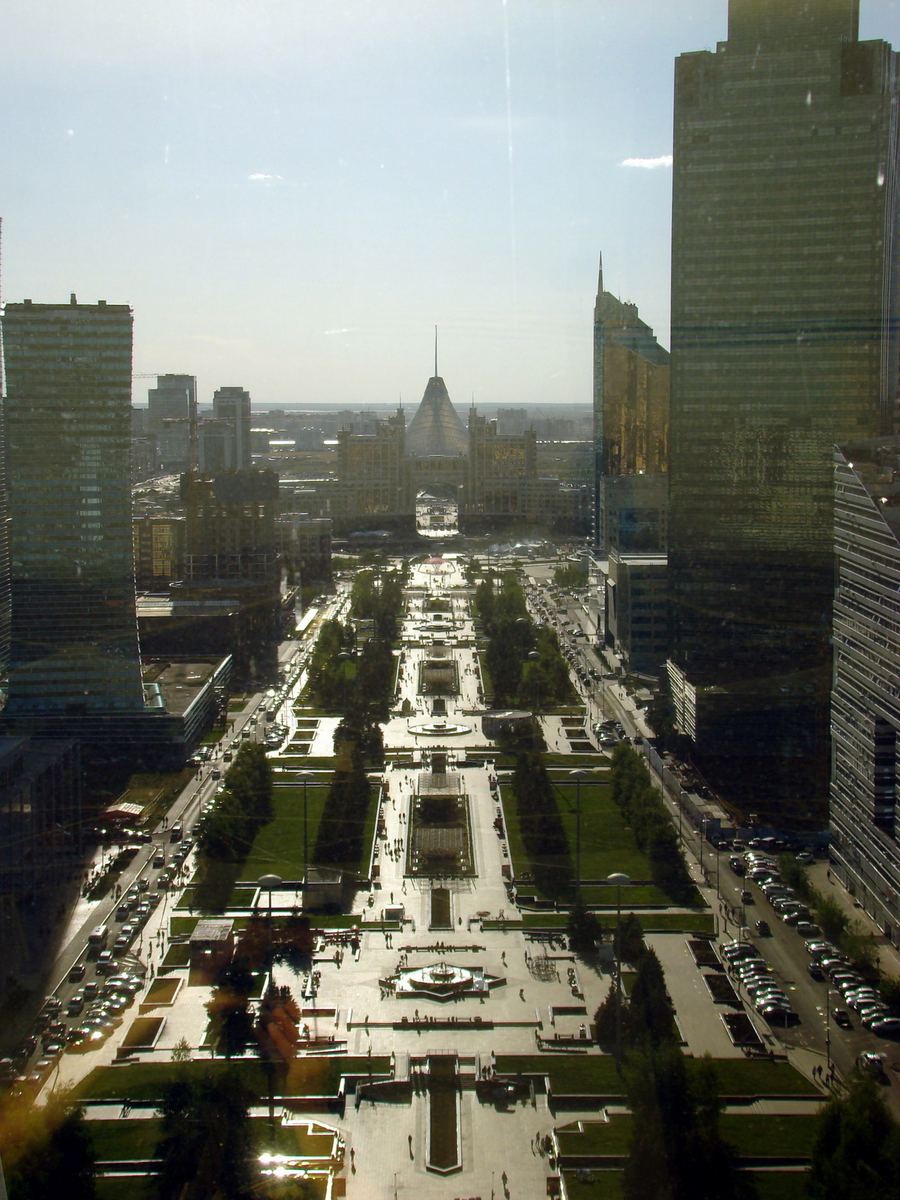
Monarchic avenues, futuristic skyscrapers, and wide plazas. Built for cars rather than pedestrians.
近くBaiterek Tower, Ak Orda, Khan Shatyr
Parleyに聞く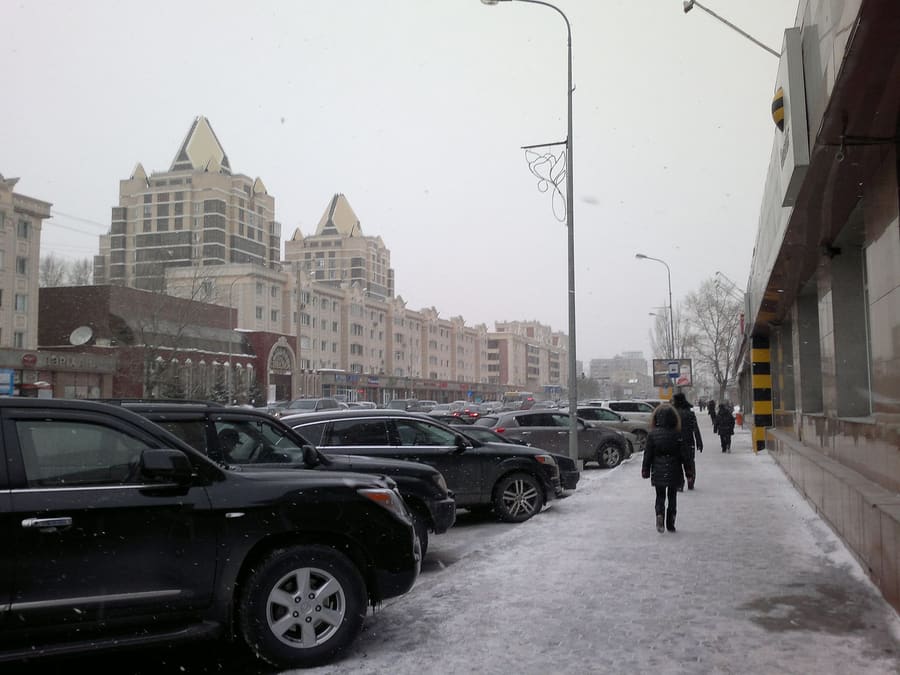
Older Soviet apartments, tree-lined streets, independent cafes, and human-scale sidewalks.
近くEmbankment, Arbat, Central Park
Parleyに聞く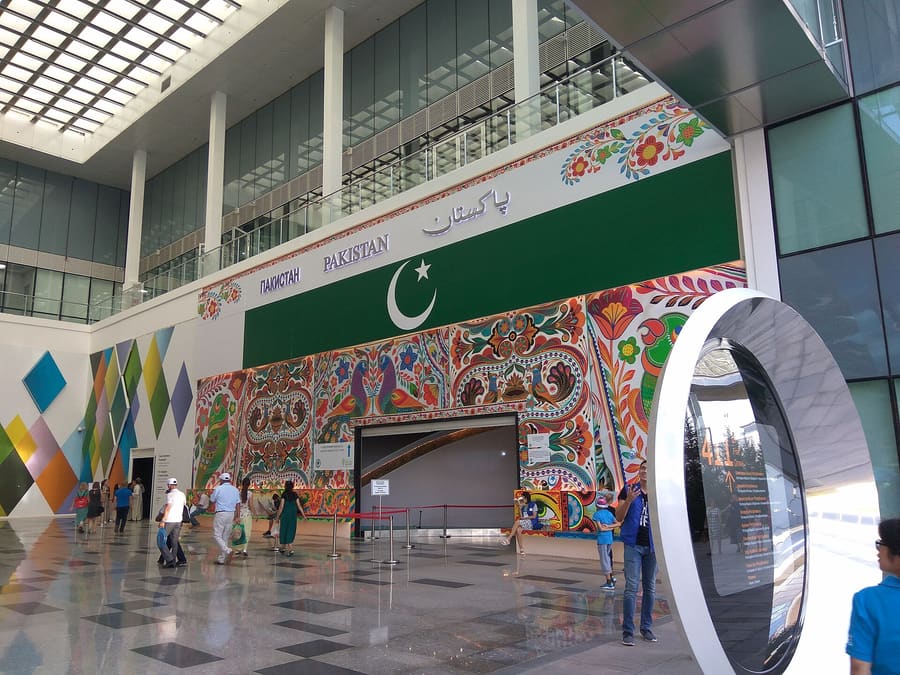
Ultra-modern eco-developments centered around the Nur Alem spherical building.
近くAstana Grand Mosque, Mega Silk Way
Parleyに聞く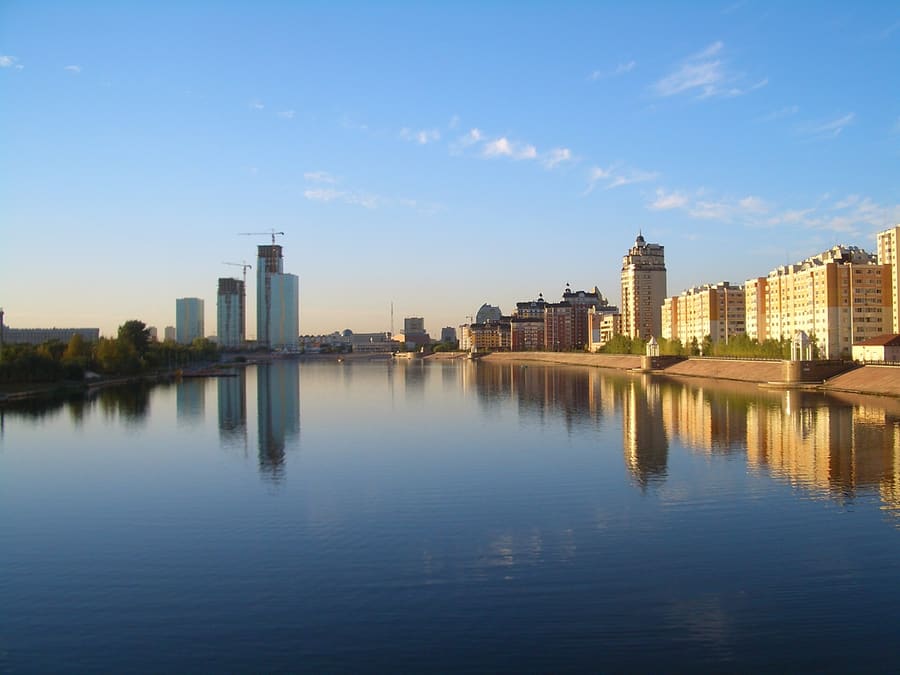
Green spaces around the Ishim River, urban beaches in summer, and family walking paths.
近くCentral Park, Embankment, Atyrau Bridge
Parleyに聞くfood
Astana dining leans heavily on horse meat, mutton, and fermented dairy. The central dish is beshbarmak, flat noodle sheets topped with slow-cooked meat and boiled onion broth. Modern Kazakh restaurants serve refined versions alongside traditional tea sets accompanied by baursaks, fried dough pillows.
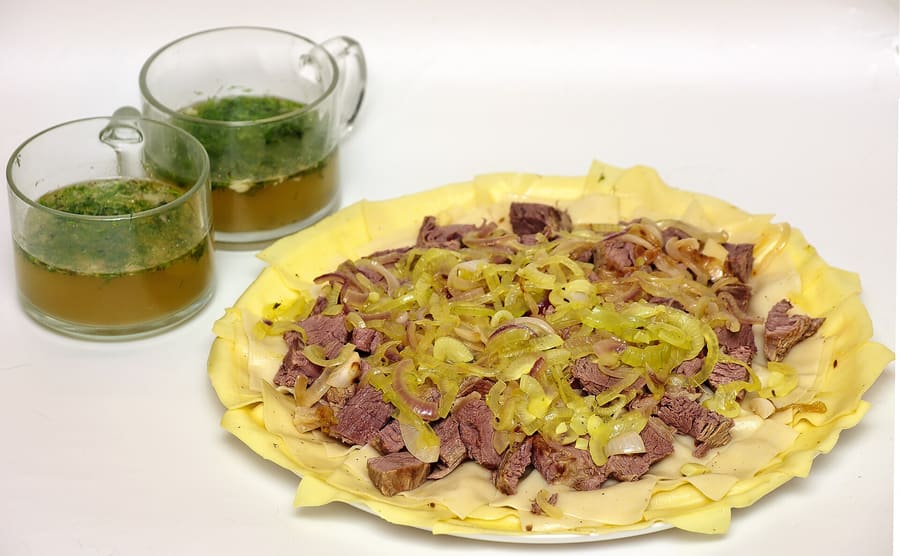
Beshbarmak served hot with boiled meat and thin dough sheets.
Pannet · CC BY-SA 4.0These restaurants specialize in elevated traditional Kazakh cuisine like horse rib roast and camel milk drinks.
Tea service is integral to Kazakh meals. Order black tea with milk and sweet baursak dough balls before hot courses.
Most Astana restaurants automatically add a 10% service charge to the final bill.
history
Astana grew from Akmolinsk (renamed Akmola in 1992), a 19th-century Russian military outpost on the Ishim River. Under Nikita Khrushchev, it became Tselinograd, the capital of the Soviet Virgin Lands Campaign. In 1997, President Nursultan Nazarbayev moved Kazakhstan’s capital here from Almaty, launching a massive architectural transformation.
Akmoly Fort
Russian forces establish a military outpost on the Ishim River to secure steppe trade routes.
Tselinograd Era
Renamed Tselinograd to lead the Soviet Virgin Lands agricultural campaign.
New Capital
Kazakhstan shifts its capital north to Akmola, soon renamed Astana.
EXPO 2017
The city hosts Future Energy Expo, adding the Nur Alem sphere and new southern urban grid.
where to stay
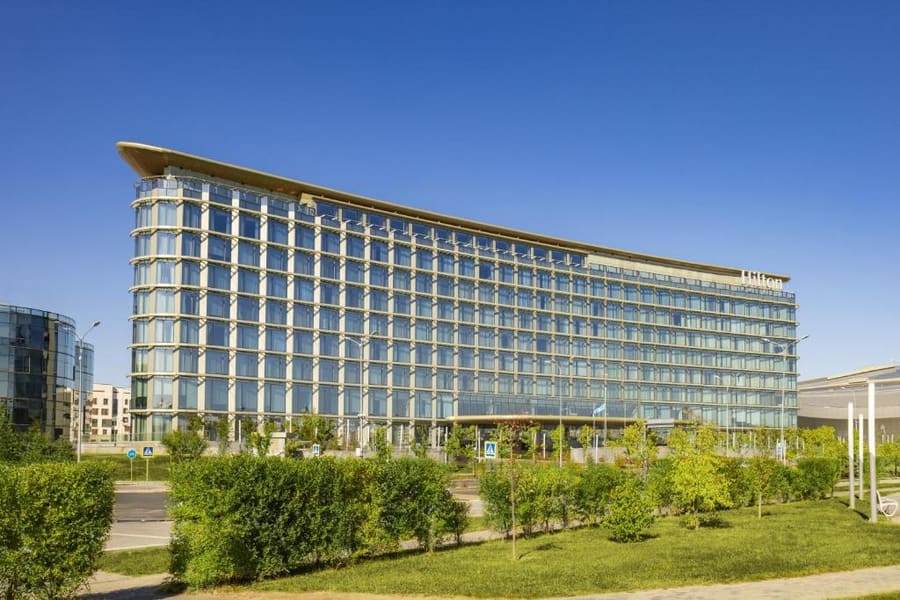
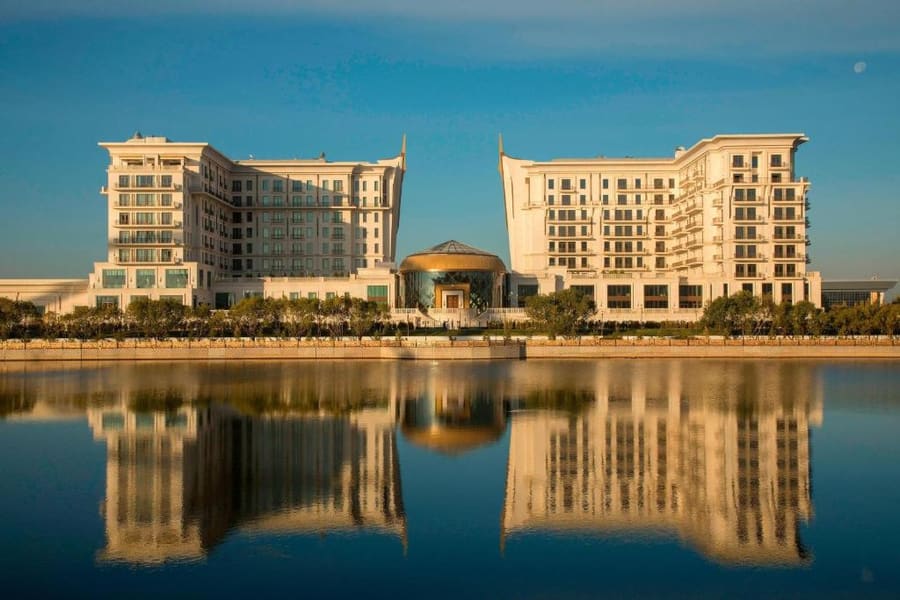
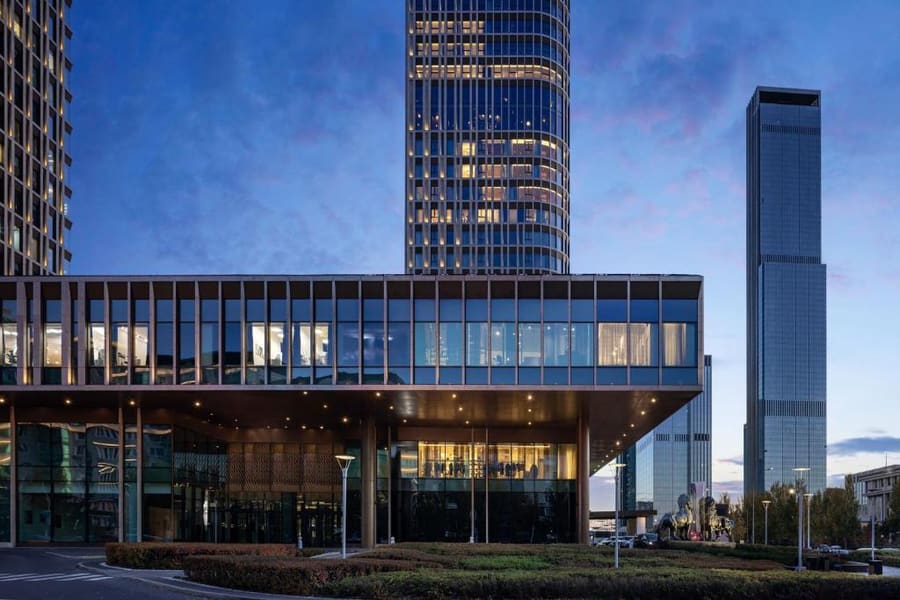
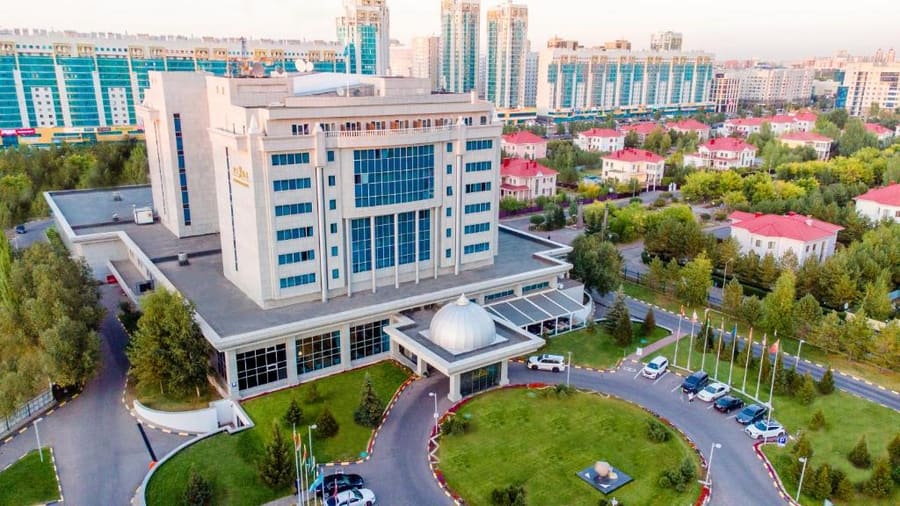
Choose your hotel base by river bank. Stay on the Left Bank if you want grand international hotels and direct proximity to government complexes and major sights. Choose the Right Bank for lower rates, leafier streets, and local neighborhood dining within walking distance.
transport
Astana is built for vehicles. The Left Bank features multi-lane avenues where walking between consecutive buildings can take twenty minutes. Taxis are cheap, reliable, and essential for getting around quickly, especially during winter months.
Nursultan Nazarbayev International Airport (NQZ)から
Book via Yandex Go app inside the airport terminal to avoid street driver overcharging.
Bus #10 and #12 run to the city center and main train station.
Street hailing is outdated. Yandex Go is the standard hailing app in Astana and accepts international credit cards.
Pay bus fares using the Avtobys app or QR codes inside buses; cash fare is higher.
Distances on maps look short on the Left Bank, but wide avenues make crosswalks hundreds of meters apart.
Bridges across the Ishim River jam during 08:00–09:30 and 18:00–19:30 weekdays.
cost
Astana is affordable compared to Western European capitals. Cash is rarely needed as card readers and QR payments dominate local trade, though keeping a few thousand Tenge for small market stalls is useful.
Includes main meat dishes, appetizers, and tea at a solid regional restaurant.
Flat white or espresso in modern Right Bank or Left Bank cafes.
Standard adult admission to the top observation deck.
seasonality
MAY – SEP
Warm, clear weather with river cruises open. July gets hot but wind keeps air fresh.
OCT – NOV
Brisk autumn transition. Temperatures drop rapidly below freezing by November.
DEC – FEB
Extreme winter with temperatures hitting -30°C. Ice sculpture parks open across the city.
MAR – APR
Spring thaw brings slush and windy weather. Nauryz celebrations occur in late March.
practicalities
Kazakhstan unified its time zones in 2024 to UTC+5. Astana operates on UTC+5 year-round.
Kazakh is the official state language and Russian is widely spoken in daily business and service.
Contactless card payments are accepted almost everywhere, including small kiosks and taxis.
Wind speeds are high year-round. Dress in windproof outer layers even on sunny days.
Remove shoes at entry. Women must cover hair and body; robes are provided at the entrance.
/02ddb9f4119c.jpg)