landmark
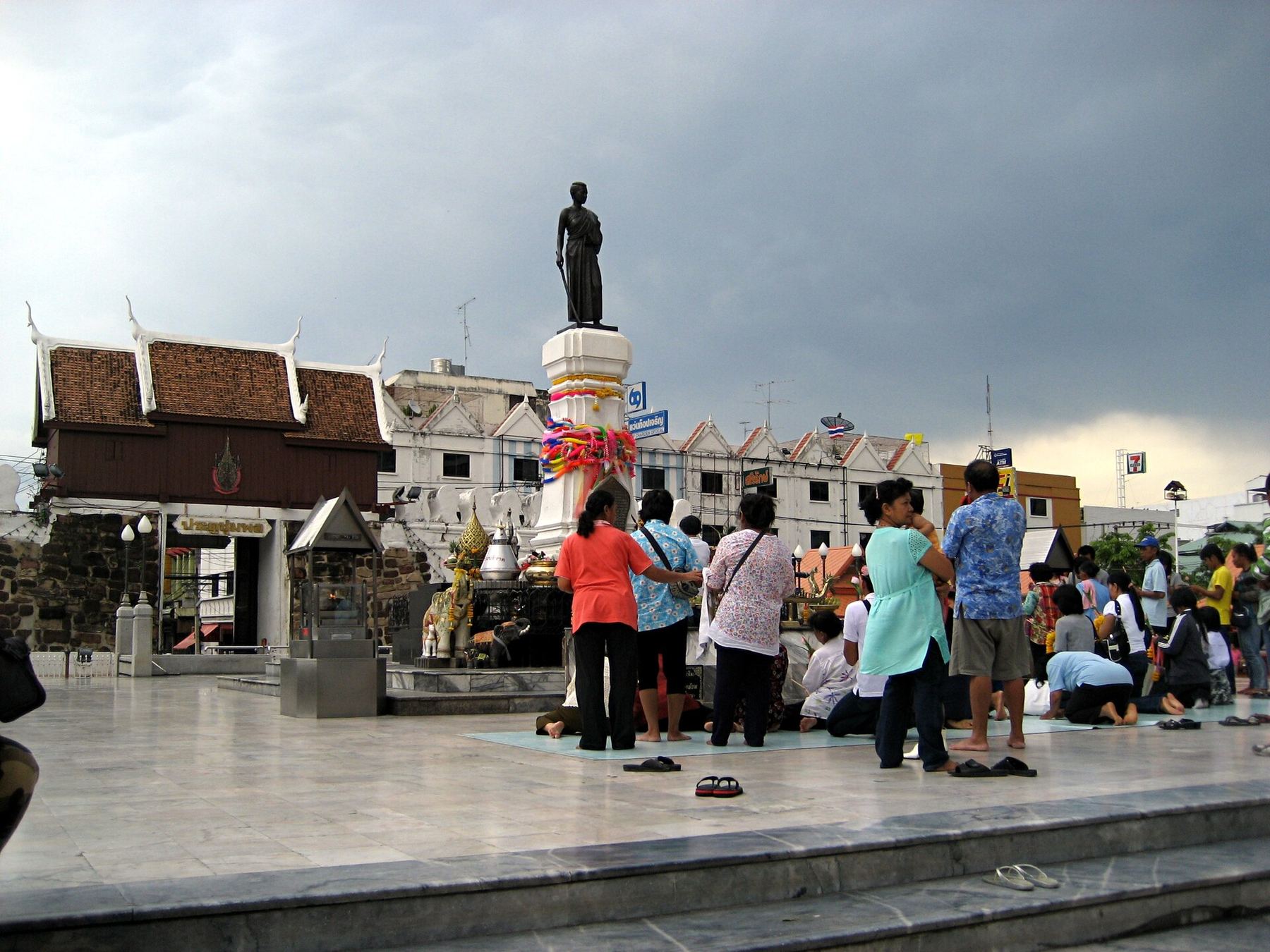
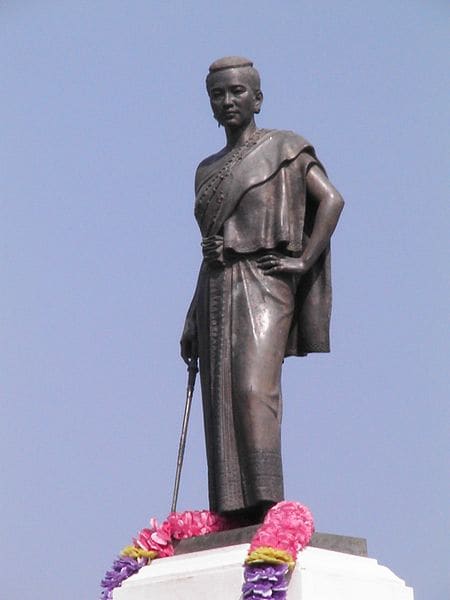
Thao Suranari Monument
The civic center of Korat. Local residents offer gold leaf and incense at all hours of the evening.
Parleyに聞くタイ
The gateway city to Isan built around ancient ramparts.
introduction
Nakhon Ratchasima serves as the commercial gateway to Thailand's northeastern Isan region. You move through the core on foot or blue songthaew trucks running fixed routes along old moat walls. The urban plan centers on a revered downtown monument surrounded by sprawling night markets and modern highway shopping hubs. Traffic builds fast on Thanon Mittraphap during holiday periods.
Arrival trick
Nakhon Ratchasima station links to Bangkok's Krung Thep Aphiwat Central Terminal. Express trains take under five hours.
Recognition
The surrounding province holds three UNESCO designations, including the Dong Phayayen-Khao Yai Forest Complex.
Planning trick
Numbered blue songthaews charge 10 THB per journey. Board along Suranari Road to bypass taxi haggling.
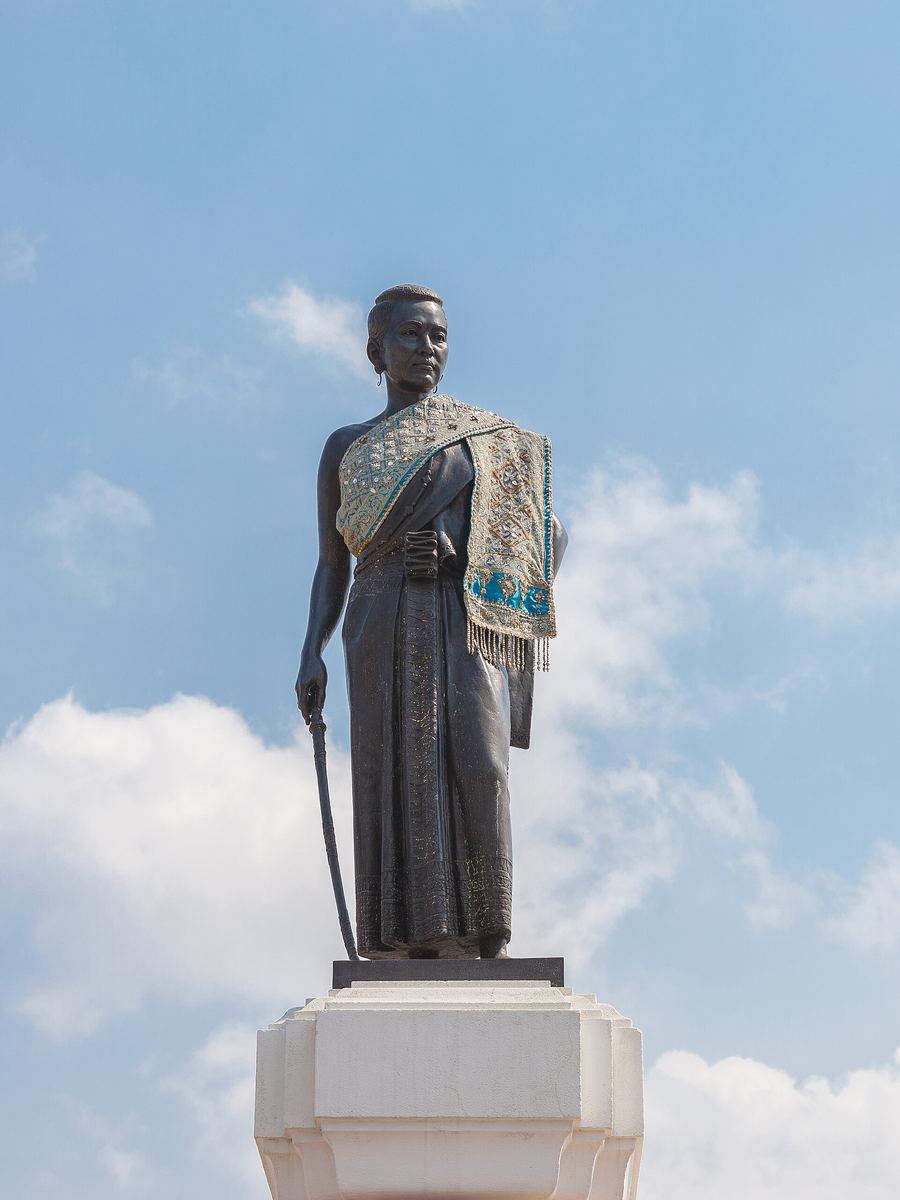
Nakhon Ratchasima
Supanut Arunoprayote · CC BY 4.0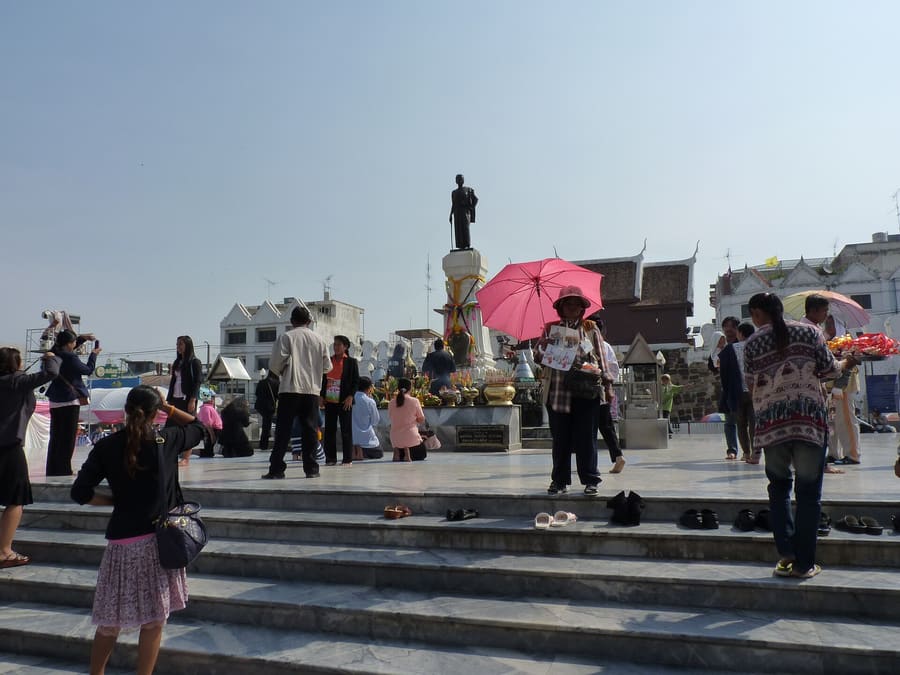
Old Town Moat — Historic square bordered by water channels, shrines, and morning food vendors.
Adriaan Castermans · CC BY-SA 3.0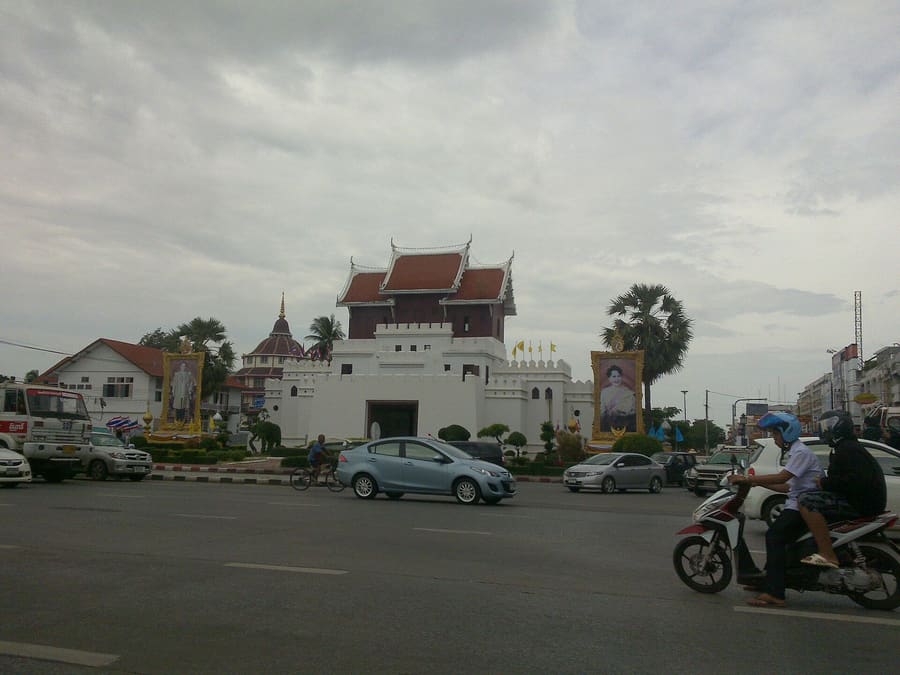
Chomphon Corridor — Traditional shophouse street packed with fabric merchants and noodle shops.
Edogawa · CC BY-SA 3.0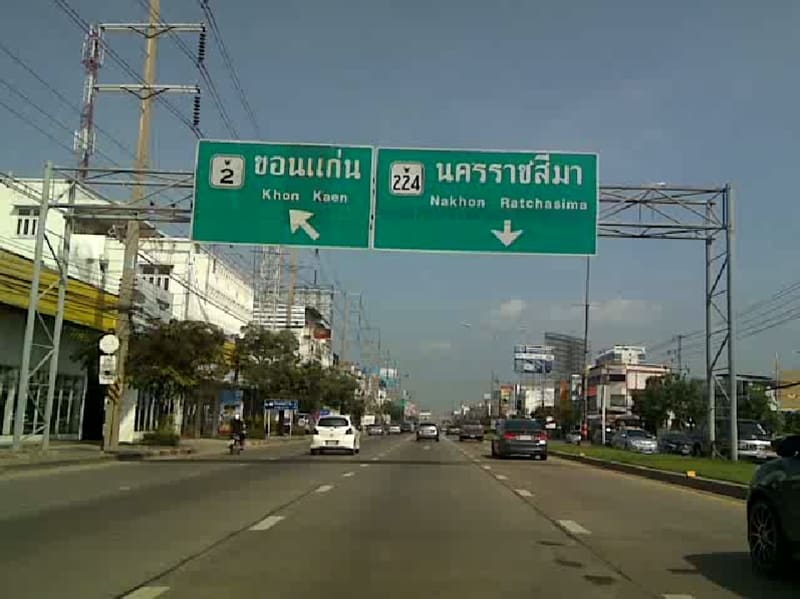
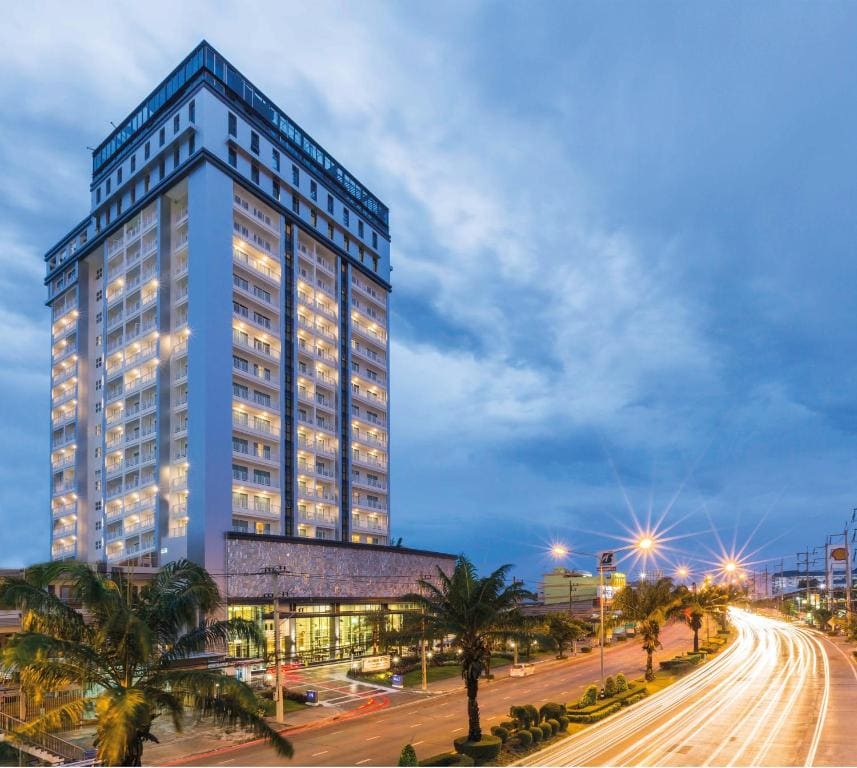
Mittraphap Highway — Commercial strip with air-conditioned malls, modern hotels, and transport links.
Mr.BuriramCN · CC BY-SA 3.0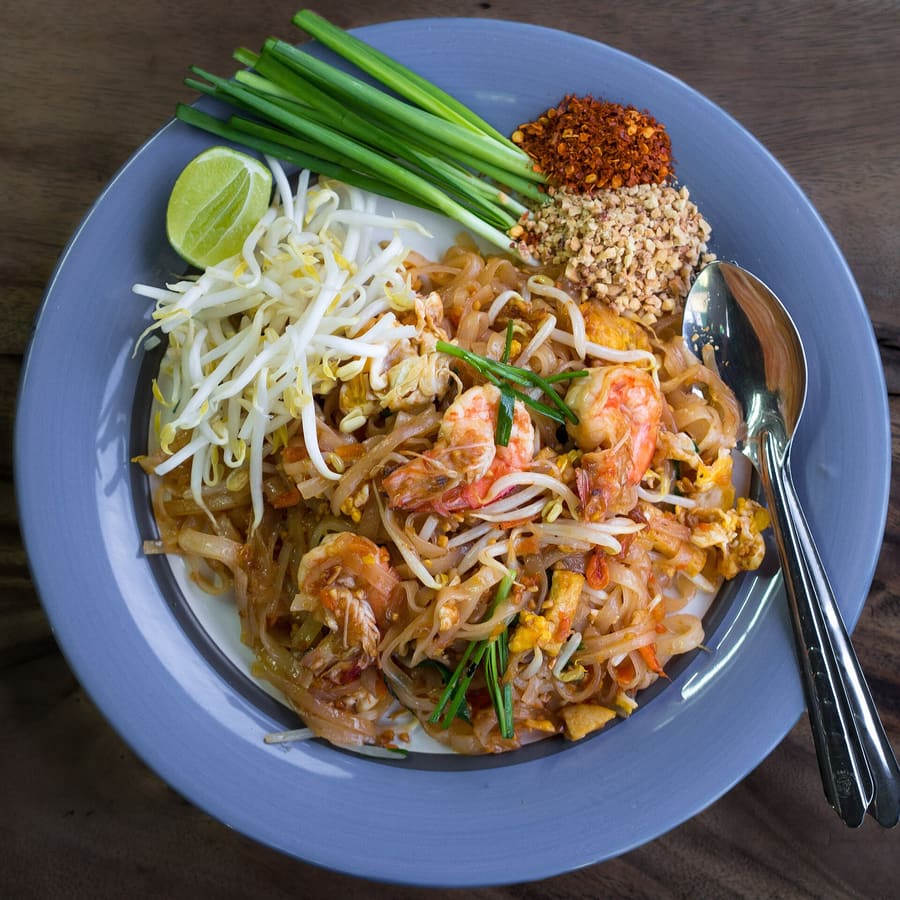
Pad Mee Korat stir-fried noodles cooked with chili paste and spring onions.
Takeaway · CC BY-SA 3.0highlights
landmark
The civic center of Korat. Local residents offer gold leaf and incense at all hours of the evening.
Parleyに聞く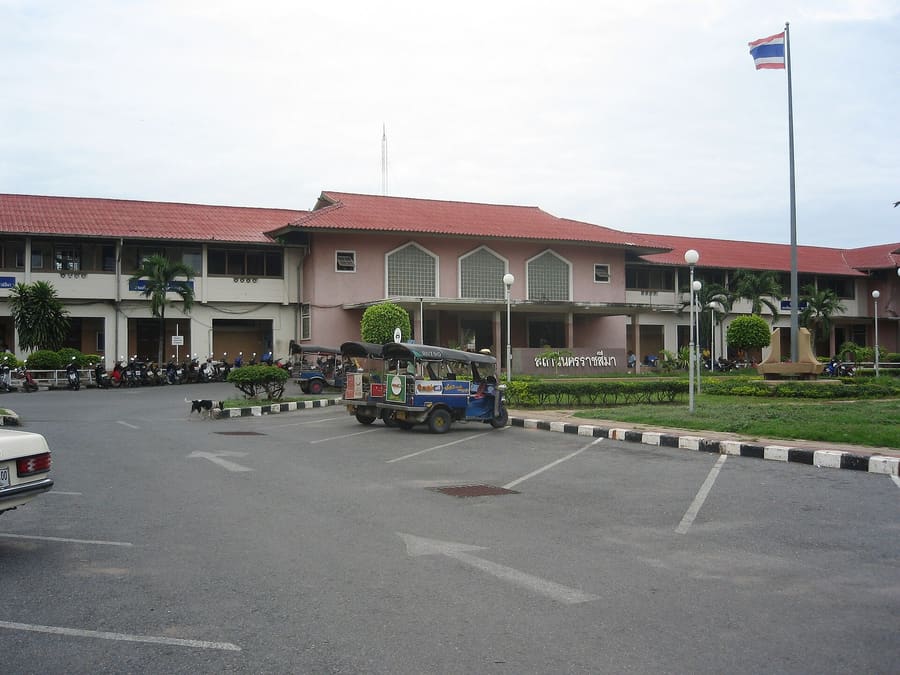
landmark
The historic terminus built during King Rama V's reign. Songthaew lines board directly outside.
Parleyに聞く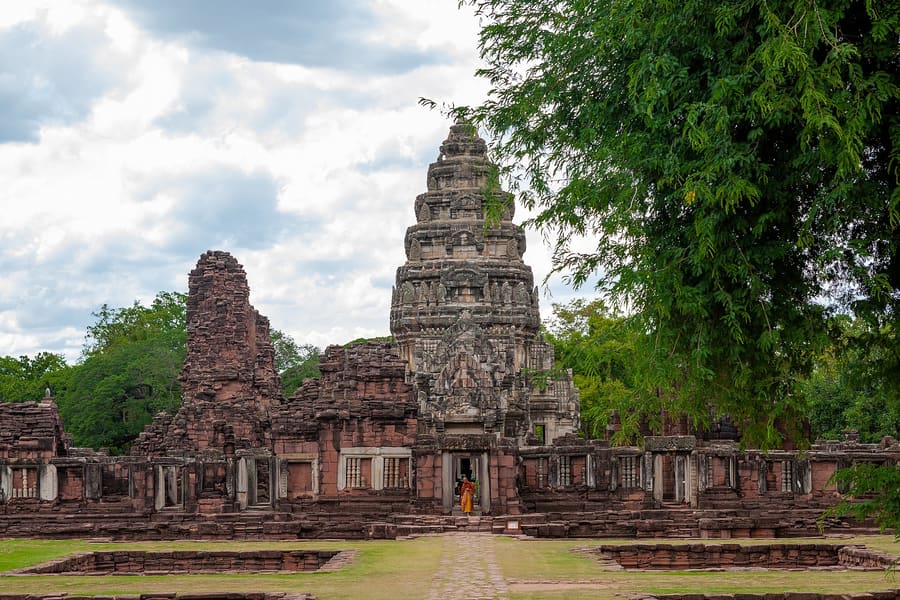
landmark
Eleventh-century Khmer sanctuary 60km north. Take the local public bus from BKS Terminal 1.
Parleyに聞くattractions
areas
Historic square bordered by water channels, shrines, and morning food vendors.
近くThao Suranari Monument, Wat Phra Narai, Chom Phon Gate
Parleyに聞くTraditional shophouse street packed with fabric merchants and noodle shops.
近くNight Market, City Moat west gate, Korat train station
Parleyに聞くCommercial strip with air-conditioned malls, modern hotels, and transport links.
近くTerminal 21 Korat, Central Korat, BKS Bus Terminal 2
Parleyに聞くSprawling outer suburb built around the province's largest evening night market.
近くSaveone Market, Highway 2 exit
Parleyに聞くfood
Nakhon Ratchasima cuisine sits at the border of central Thai and Isan culinary traditions. The signature local dish is Pad Mee Korat, a thin rice noodle stir-fry cooked with dark soy sauce, dried red chili paste, garlic, and sliced pork belly. Unlike Bangkok's Pad Thai, Pad Mee Korat contains no peanuts or dried shrimp, relying on tamarind paste, palm sugar, chili paste, and standard fish sauce or soy sauce for its flavor profile, not fermented fish sauce.Som Tum Korat differs from standard papaya salad by combining dried shrimp and peanuts with fermented fish sauce (pla ra) and salted crab. You buy it from roadside carts around Chomphon Road alongside sticky rice served in woven baskets.
Pad Mee Korat stir-fried noodles cooked with chili paste and spring onions.
Takeaway · CC BY-SA 3.0Dedicated Pad Mee Korat eateries prepare fresh noodle batches between 10:00 and 14:00.
Isan chili paste is significantly hotter than central Thai seasoning. Request 'pet noi' for mild heat.
Saveone Market vendors accept QR codes or cash. Overseas credit cards are not accepted at street stalls.
history
Nakhon Ratchasima was established under King Narai of Ayutthaya in the seventeenth century as a eastern frontier outpost. It consolidated two ancient settlements, Sema and Khorakapura, into a fortified rectangular city protected by brick walls and water moats. French engineer de La Mar designed the original defensive layout.In 1826, local heroine Thao Suranari (known as Ya Mo) led a defensive resistance against invading Lao troops from Vientiane. Her victory secured Korat's military reputation and turned her into the spiritual guardian of the province.
Fortress built
King Narai orders the fortification of Korat using stone walls and moats to guard Ayutthaya's eastern border.
Ya Mo defense
Thao Suranari repels Anouvong's forces, earning royal titles and everlasting local reverence.
Railway arrival
The first state railway line in Thailand reaches Korat, connecting the city directly to Bangkok.
US Air Force base
Korat Royal Thai Air Force Base opens, spurring rapid urban growth and modern road construction.
where to stay
Choose your base depending on how you plan to navigate Korat. If you arrive by train and want street food on foot, pick a hotel inside the Old Town Moat. If you have a car or want modern shopping amenities, book along Mittraphap Highway.
transport
Nakhon Ratchasima lacks a subway or overhead rail network. You navigate the city using color-coded songthaew pick-up trucks, tuk-tuks, or ride-hailing applications like Grab and Bolt.
Nakhon Ratchasima Railway Stationから
Blue trucks board outside the station entrance toward the central moat.
Agree on a fixed fare before luggage loading or insist on meter.
Grab and Bolt drivers operate throughout the city center.
Blue Songthaew Line 1 runs between the train station and the Ya Mo monument.
Pay the songthaew driver 10 THB exact change at the rear cab window upon exiting.
Tuk-tuks charge 80 to 150 THB within the old moat area. Always negotiate prior to sitting.
cost
Nakhon Ratchasima prices remain significantly lower than Bangkok or island tourist hubs. Meal costs at local markets average under 60 THB per plate.
Fresh street stall plate cooked with pork belly.
Flat single ride anywhere along the urban route.
Full air-conditioned restaurant meal for two people.
Foreign adult admission to the historical park.
seasonality
NOV – FEB
Cooler dry air with temperatures between 20°C and 30°C. Peak season for regional travel.
MAR – MAY
Intense dry heat exceeding 38°C. The annual Thao Suranari Fair takes place in late March.
JUN – OCT
Monsoon rain showers hit in the late afternoon. Countryside landscapes turn bright green.
practicalities
Night markets open around 17:00 and start packing up by 22:00.
Cover shoulders and knees before entering Wat Sala Loi or Wat Phra Narai.
Bank ATMs line Mittraphap Road and surrounds of the Ya Mo monument.
March temperatures cause dehydration fast during open-air ruin walking.
Bangkok residents drive north on Friday evenings, congesting Highway 2.
/8ad6166994b6.jpg)