landmark
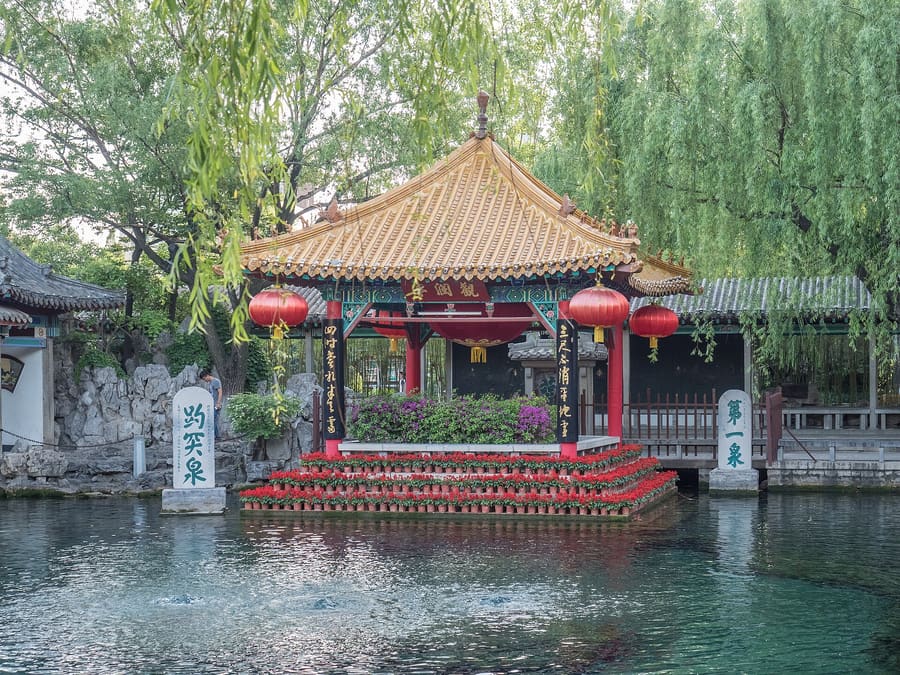
Baotu Spring Park
Three main artesian spouts push 70,000 cubic metres of cold groundwater daily. Buy tickets online to skip the park gate queues.
Perguntar ao ParleyChina
China's spring capital built over artesian waters.
introduction
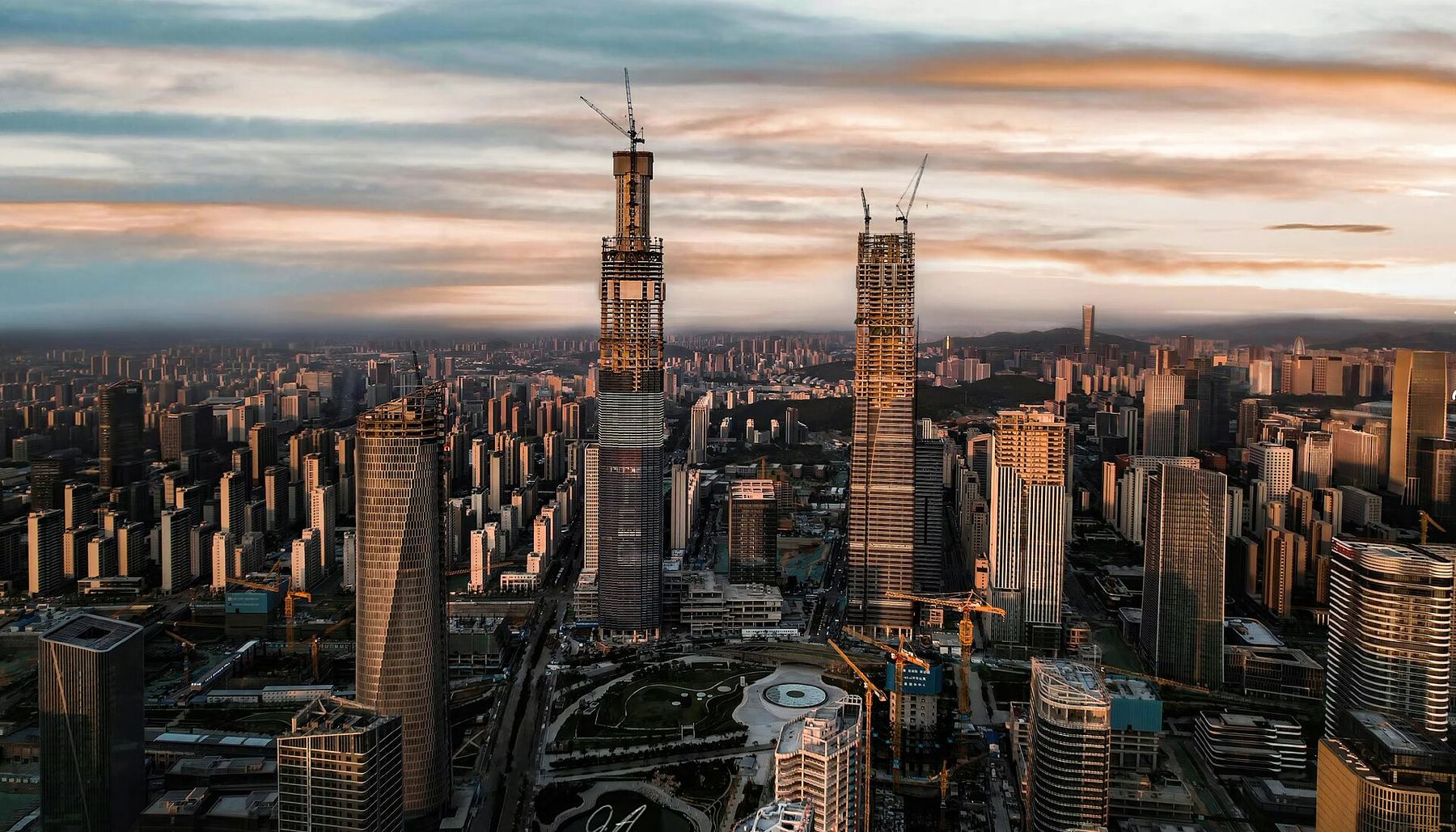
Jinan sits on a natural drainage slope between the Mount Tai massif and the Yellow River basin. Pressurised limestone aquifers force cold water into more than 700 urban artesian springs across the city core. You navigate the town by following these water channels, which feed directly into Daming Lake. High-speed rail connects Jinan to Beijing in under two hours, making it an easy stopping point in Shandong Province.
Hydrological designation
The city core contains 72 historic artesian springs that bubble continuously into canals. Locals still fetch free drinking water daily from designated taps at Black Tiger Spring.
Planning trick
Avoid national holiday weeks when spring parks hit maximum capacity. Spring water temperatures stay at a steady 18°C year-round.
Jinan
Vitsuha · CC BY-SA 4.0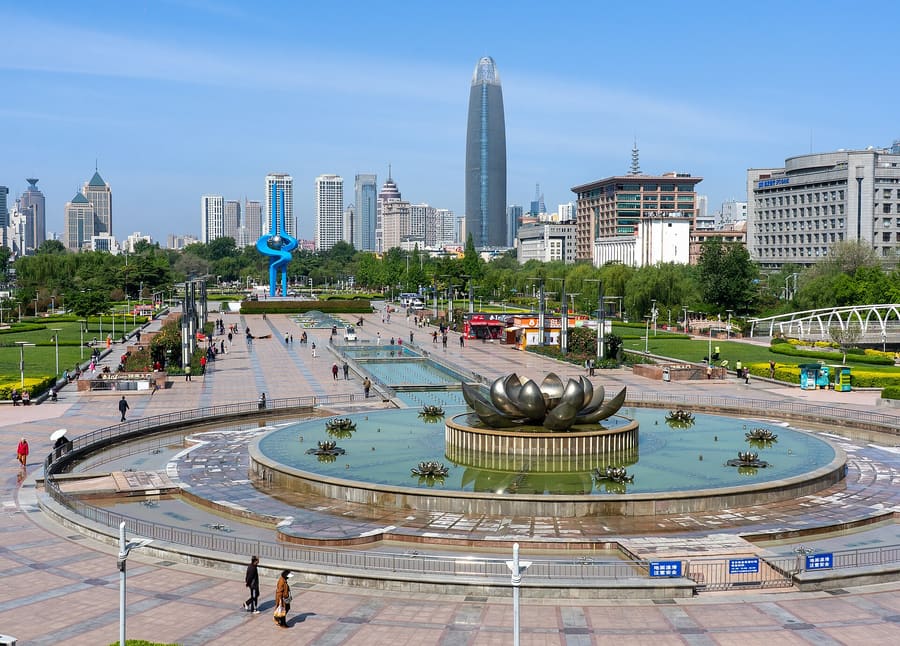
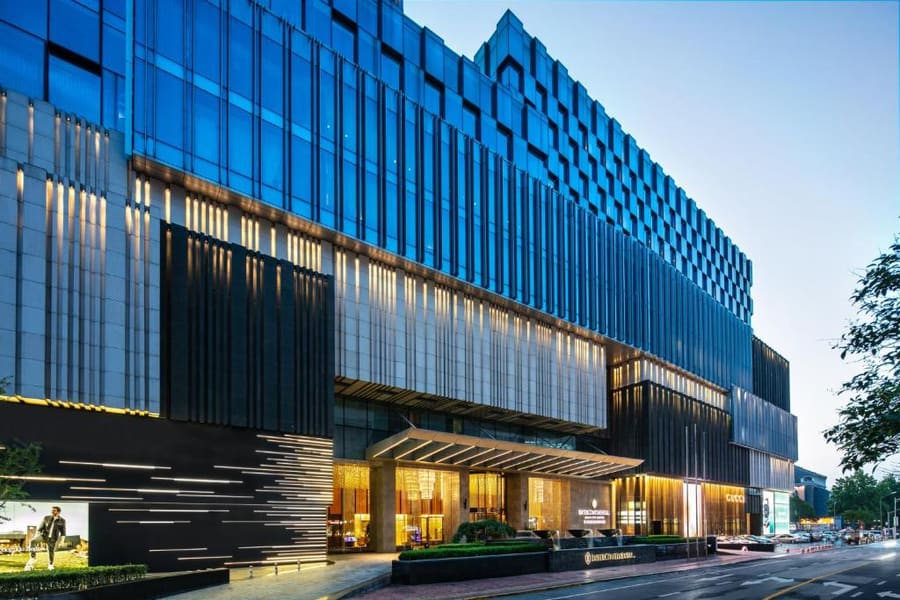
Quancheng Square Core — Central, walkable hub anchored by spring parks and major shopping malls.
Steven Sun · CC BY-SA 4.0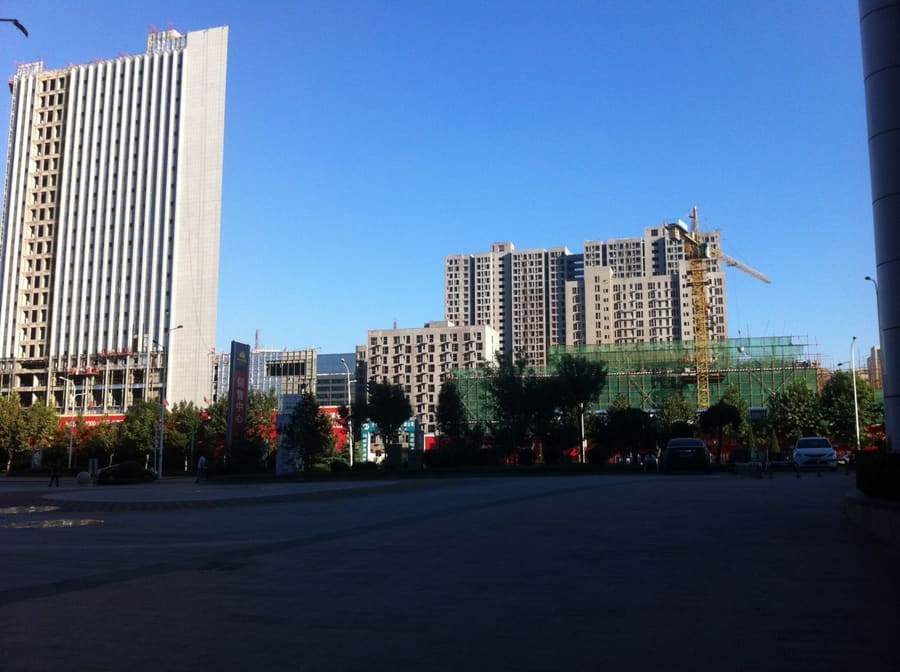
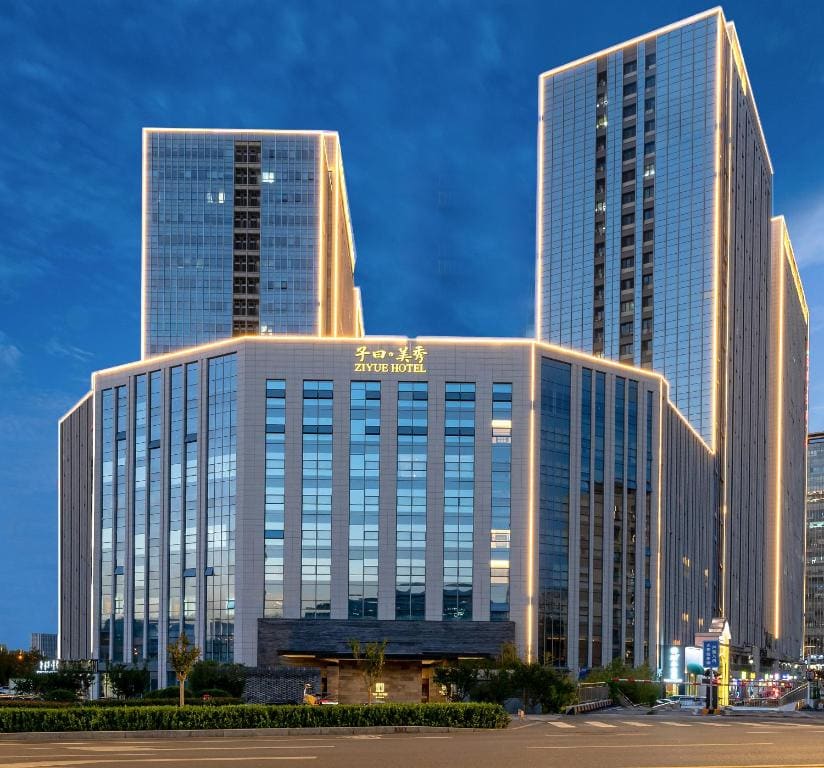
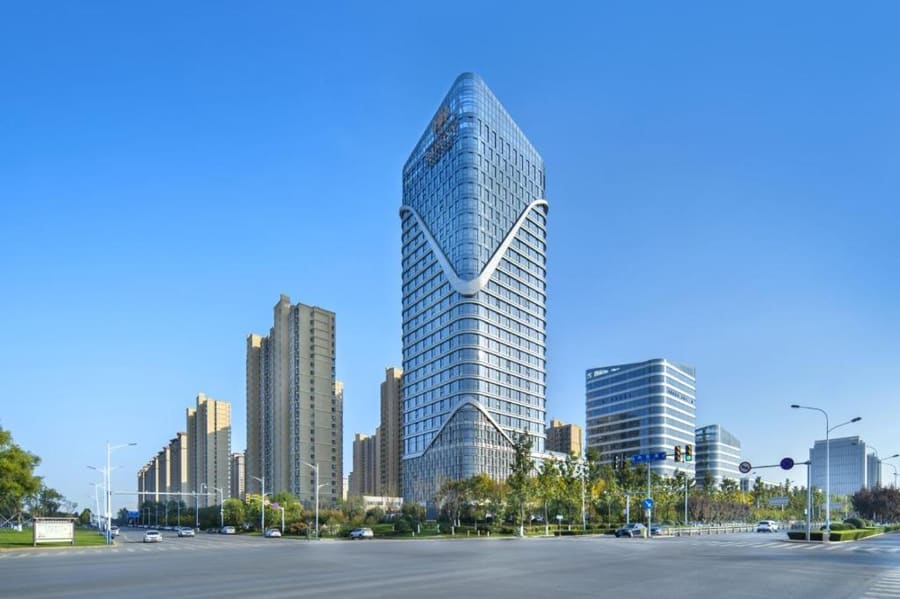
East High-tech Zone — Modern corporate expansion zone filled with wide avenues and contemporary hotels.
济南视角 · CC BY-SA 3.0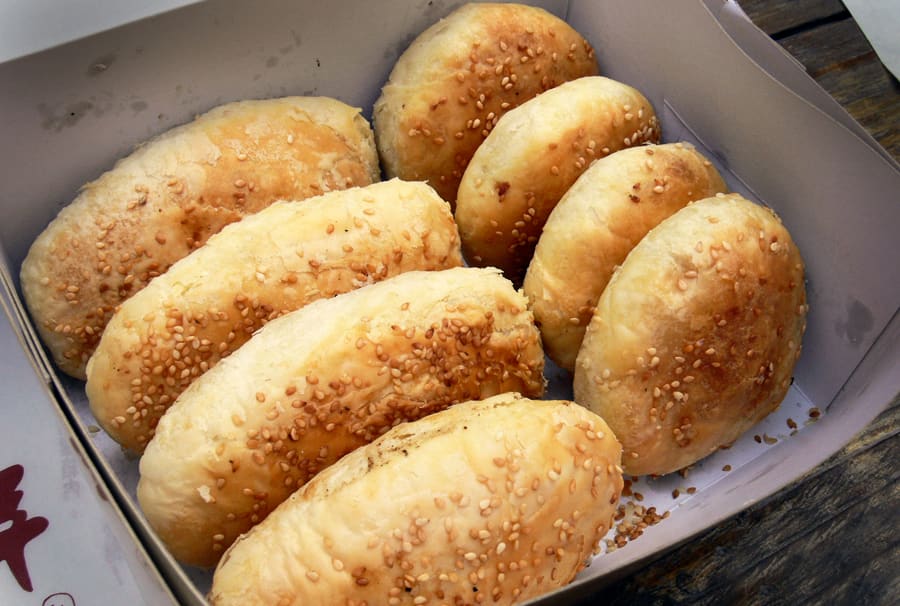
Classic Shandong banquet service featuring traditional braised and stir-fried delicacies.
C C · CC BY 2.0highlights
landmark
Three main artesian spouts push 70,000 cubic metres of cold groundwater daily. Buy tickets online to skip the park gate queues.
Perguntar ao Parley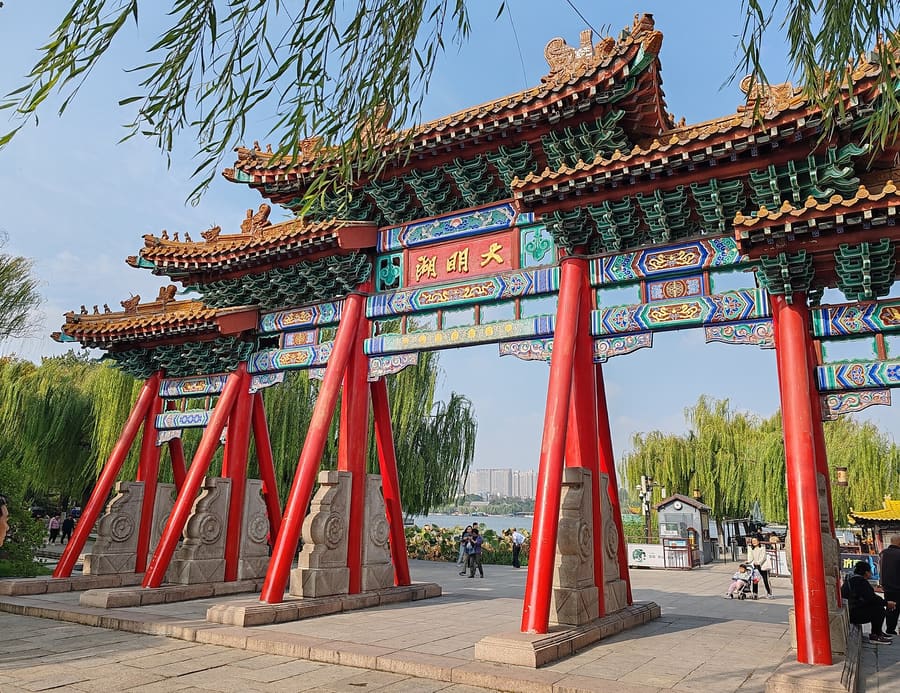
landmark
A natural spring-fed lake covering 46 hectares in the north centre. Public access is free; boat rides cross to Chaoran Tower.
Perguntar ao Parley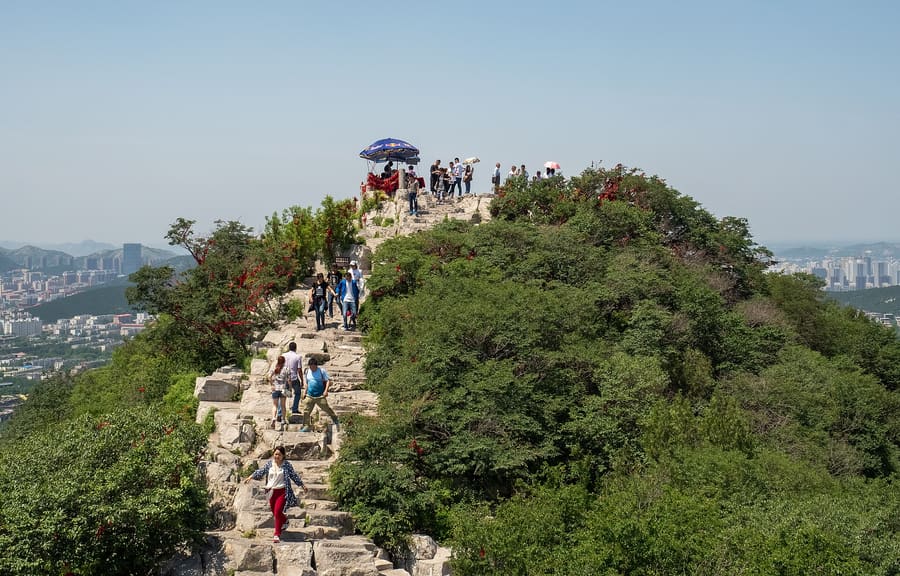
landmark
Sui Dynasty stone carvings dot the hillside south of the centre. Take the chairlift up and the gravity toboggan down.
Perguntar ao Parley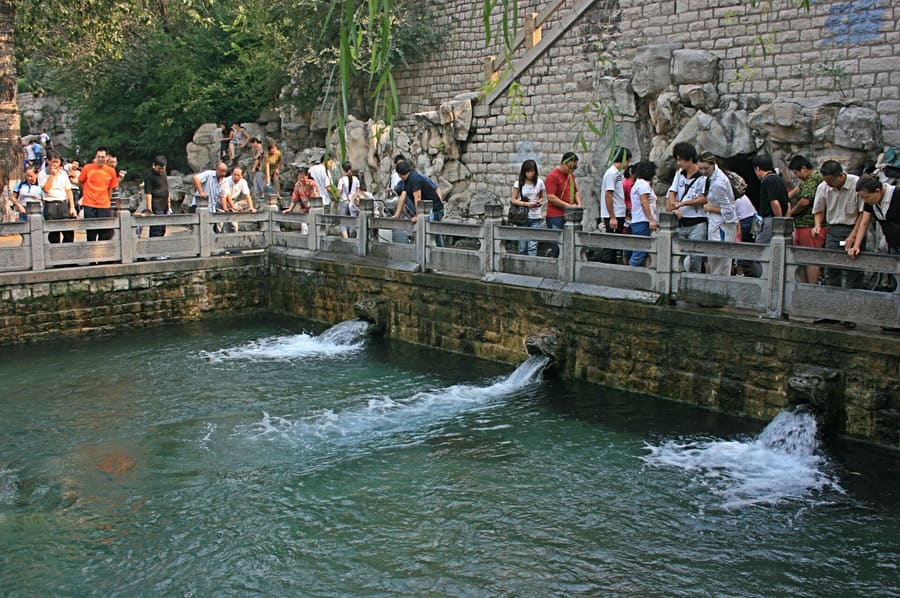
landmark
Water gushes from three stone tiger jaws into the moat. Free to enter; bring a flask to sample raw spring water from public spouts.
Perguntar ao Parley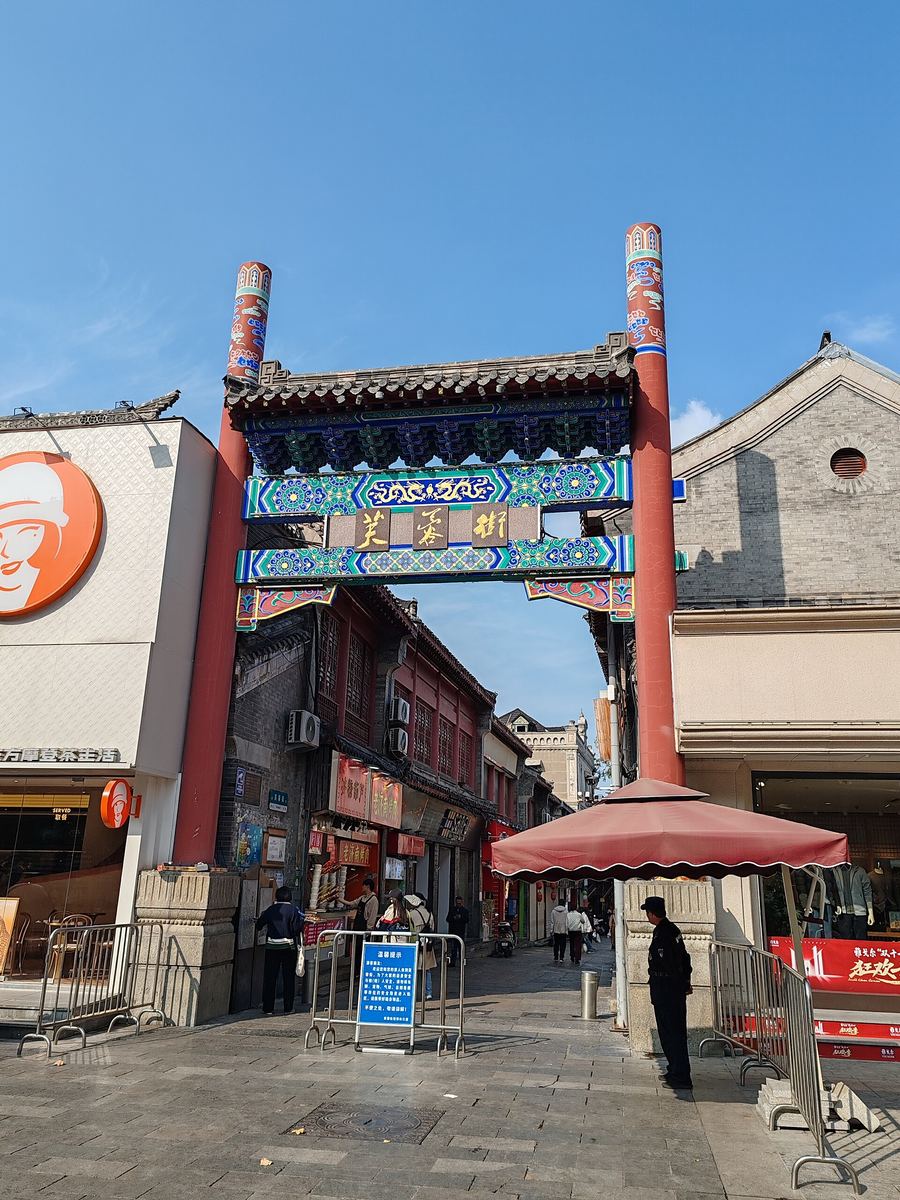
landmark
A narrow pedestrian artery running over hidden spring channels. Come for street snacks like sweet potato noodles and roasted tofu.
Perguntar ao Parley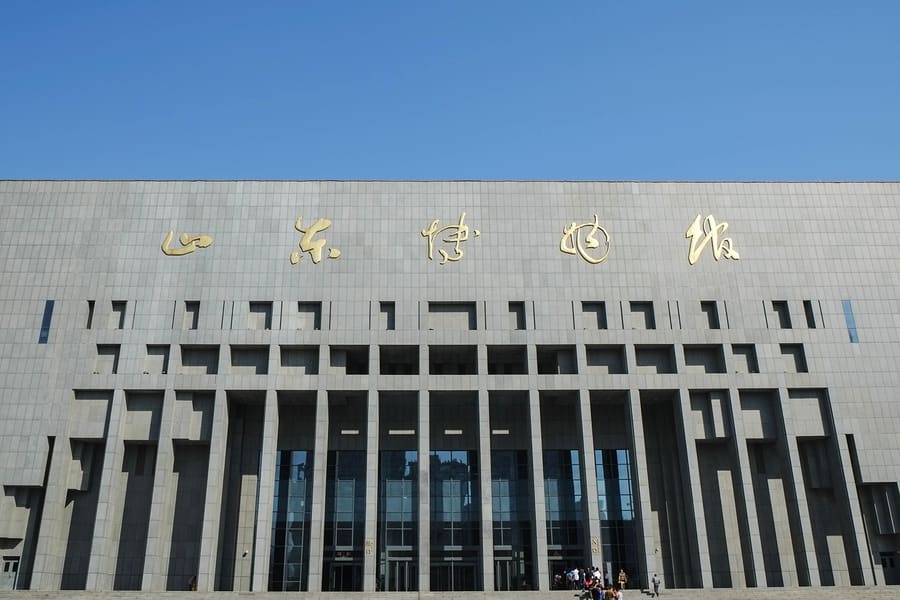
landmark
Massive provincial collection showcasing Han Dynasty relief stones and Longshan jade. Free admission requires your passport.
Perguntar ao Parleyattractions
areas
Central, walkable hub anchored by spring parks and major shopping malls.
PertoBaotu Spring and Black Tiger Spring.
Perguntar ao ParleyModern corporate expansion zone filled with wide avenues and contemporary hotels.
PertoShandong Museum and Olympic Sports Center.
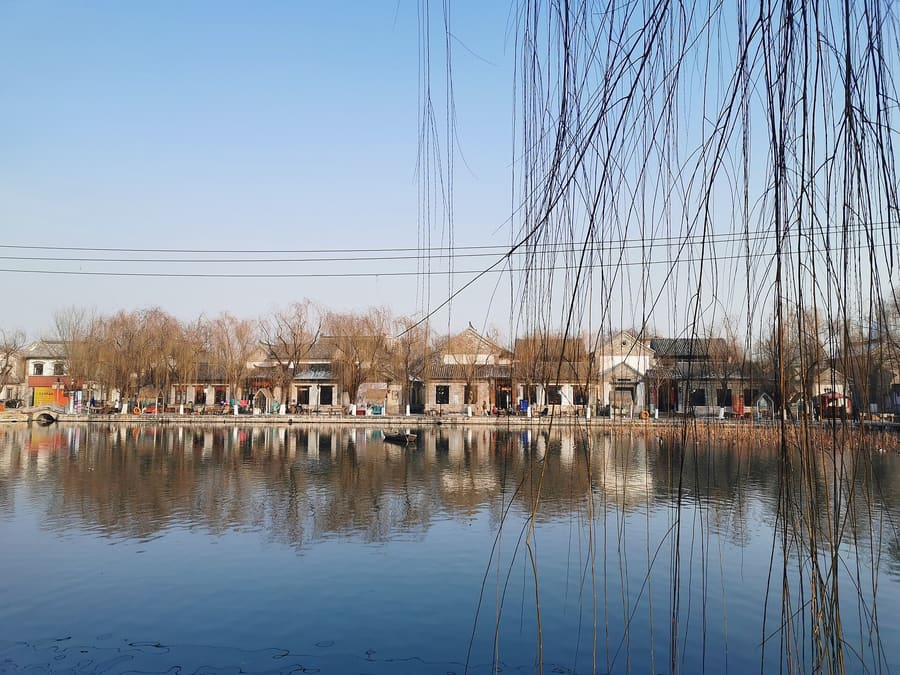
Perguntar ao ParleyHistoric alleyways with clear canals flowing past residential courtyard gates.
PertoDaming Lake and Furong Street.
Perguntar ao Parleyfood
Jinan is the birthplace of Lu cuisine, one of China's four foundational culinary traditions. The cooking relies heavily on clear broths, shallots, sea cucumbers, and freshwater carp from the Yellow River. Sweet and sour Yellow River carp (Tangcu Liuyu) is cooked with its tail curled upward to symbolise leaping over the dragon gate.Everyday dining centers on quick wheat-based staples rather than elaborate banquet meals. Savory, scallion-flavored pastries (Youxuan) and braised pork belly served over white rice (Jinan Bazi Rou) feed workers throughout the old town alleys.
Classic Shandong banquet service featuring traditional braised and stir-fried delicacies.
C C · CC BY 2.0Order thick slices of soy-braised pork belly served over rice with stewed tofu and chili peppers at local joints like Chaoji Bazi Rou.
Pick up hot, layered onion oil pastries (Youxuan) freshly baked before 09:00 at traditional stalls near Houzaimen Street.
history
Human settlement around Jinan dates back over 4,000 years to the Neolithic Longshan Culture, famed for its paper-thin black pottery. The city grew as a major administrative post during the Han Dynasty due to its position protecting the northern approaches to Mount Tai.In 1904, Jinan opened itself to foreign trade voluntarily, making it the first Chinese city to take this step without a treaty mandate. German engineering soon connected the town to the port of Qingdao via the Jiaoji Railway, transforming Jinan into a modern Shandong trade hub.
Longshan Culture
Advanced Neolithic settlements flourish in Longshan, producing iconic burnished black pottery.
Commercial Port Opening
Jinan officially opens to international commerce, establishing the Shangbu commercial district.
where to stay
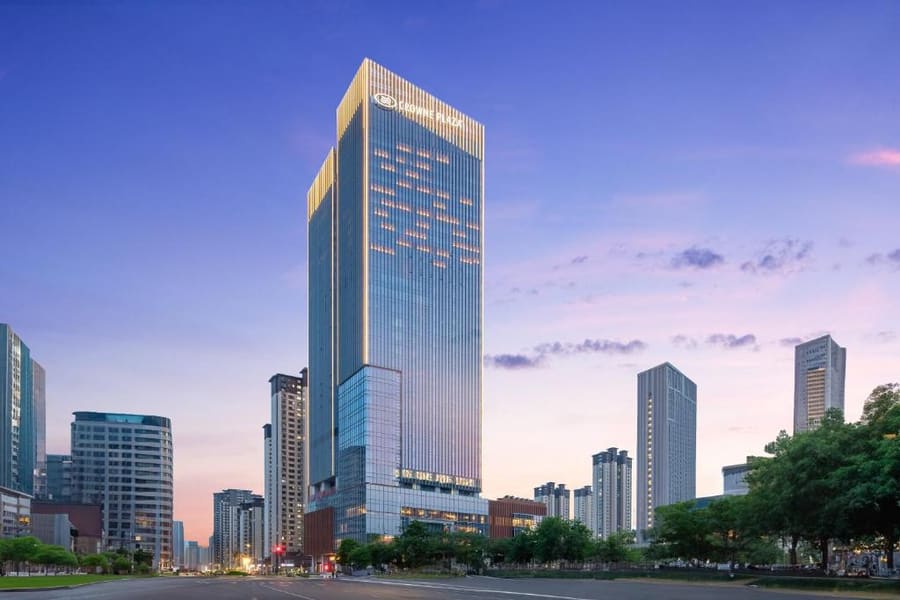
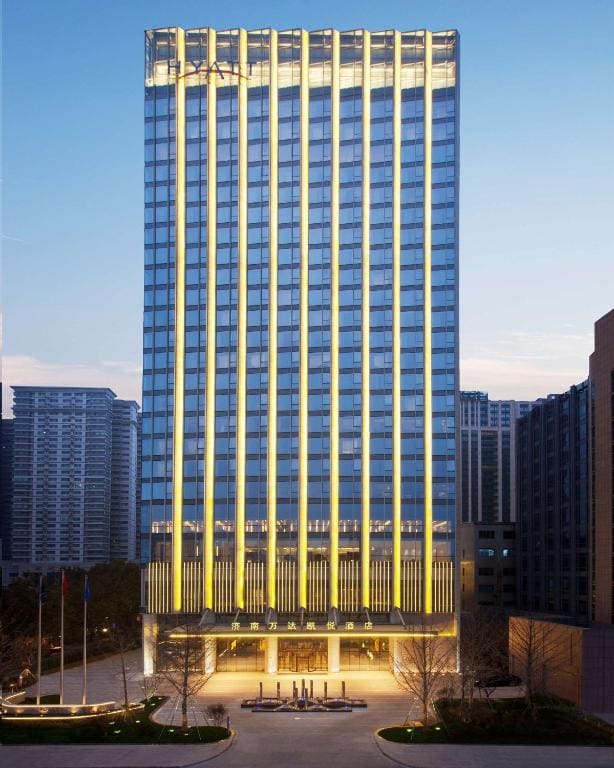
Choose your location based on rail transit connections and proximity to the springs. Staying near Quancheng Square puts all major parks within a 15-minute walk. High-speed rail travellers staying briefly should consider hotels near Jinan West Railway Station to skip city traffic entirely.
Live rates, matched to the areas above.
transport
Jinan operates an expanding metro system that includes more than three lines following recent network expansions, deliberately routed to avoid drilling into underground spring aquifers in the ancient core. Surface transit relies heavily on dedicated Bus Rapid Transit (BRT) lanes that cross the main east-west arterial roads.
De Jinan Yaoqiang International Airport (TNA)
Buses run every 30 minutes to Jinan Railway Station and Quancheng Square.
Use official queues on the lower arrivals level; insist on using the meter.
Metro Line 2 passes just north of the springs. Use public BRT buses or ride-hailing apps to enter the historic central ring directly.
Activate the Jinan Metro and Bus electronic transit cards in Alipay for instant QR tap entry across all routes.
Public ferry boats travel the historic moat canal between Black Tiger Spring and Daming Lake for ¥10 per leg.
Finding a taxi online or on the street becomes challenging between 16:30 and 17:30 due to driver shift swaps.
cost
Jinan is noticeably more affordable than tier-one hubs like Shanghai or Beijing. Sightseeing costs focus mainly on park entrance fees, while high-quality street food and casual dining remain cheap throughout the city.
Standard adult admission ticket for the main spring park and grounds.
Generous serving of soy-stewed pork belly, rice, and pickled veggies.
Fares depend on distance traveled across the urban transit network.
Park entrance fee; chairlift tickets run an additional ¥20 single way.
seasonality
MAR – MAY
Mild weather and blooming spring flowers make park strolling pleasant. Air quality is generally dry.
JUN – AUG
Hot and humid summer with frequent rains. Rainwater runoff boosts spring flow discharge to peak volume.
SEP – NOV
Clear skies and comfortable temperatures. Peak season for viewing high spring water spouts at Baotu Spring.
DEC – FEB
Cold and dry winter conditions. Mist rises above warm spring pools when air drops below freezing.
practicalities
Visit Baotu Spring at sunrise on frosty winter mornings to see thick white steam rise off the 18°C water.
Only dip bottles at designated public spring taps at Black Tiger Spring; do not scoop directly from ornamental pools.
Link a foreign credit card to WeChat Pay or Alipay before arriving; street vendors rarely carry cash change.
Wear sturdy shoes for Thousand Buddha Mountain; stone steps can become slippery after summer showers.