landmark
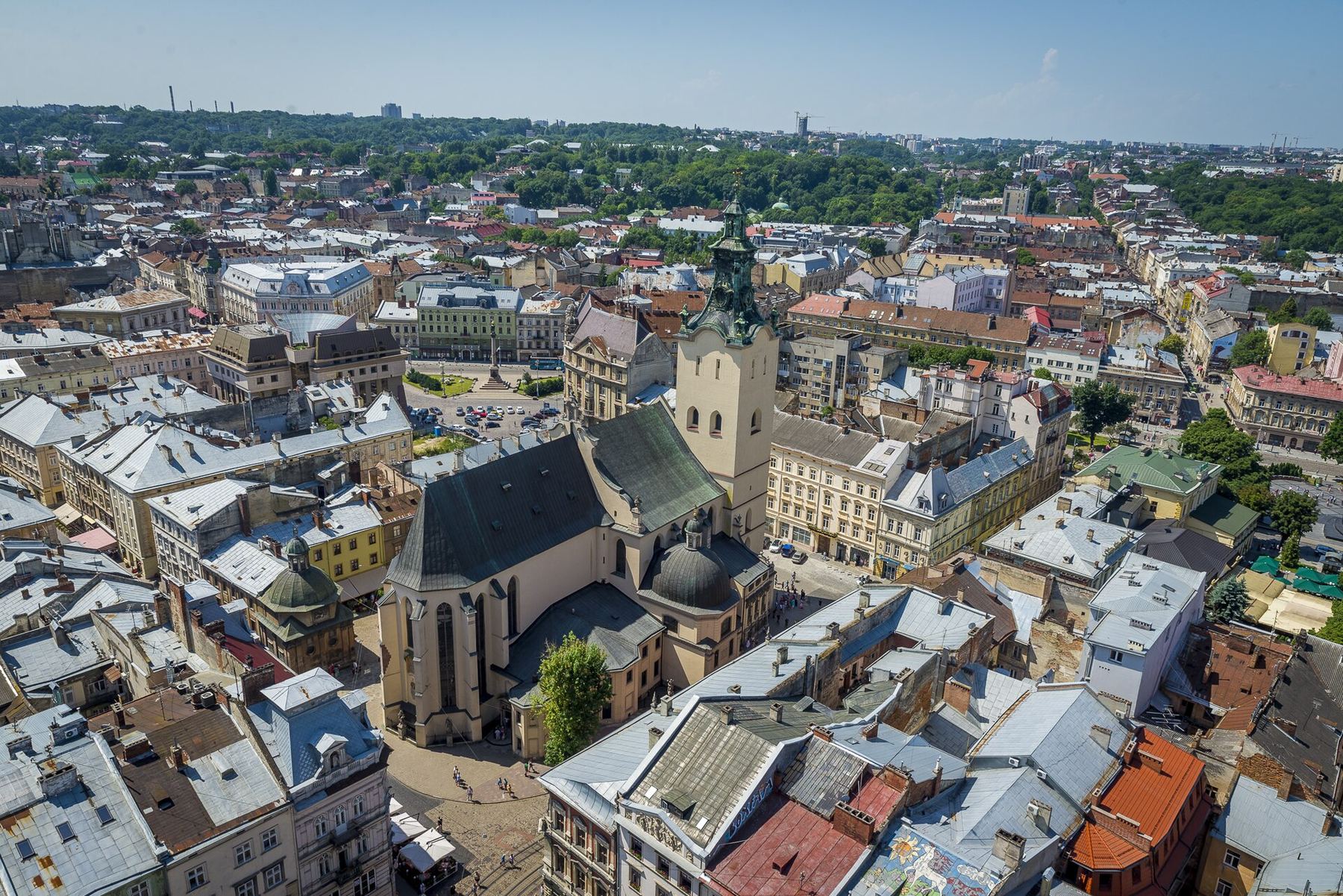
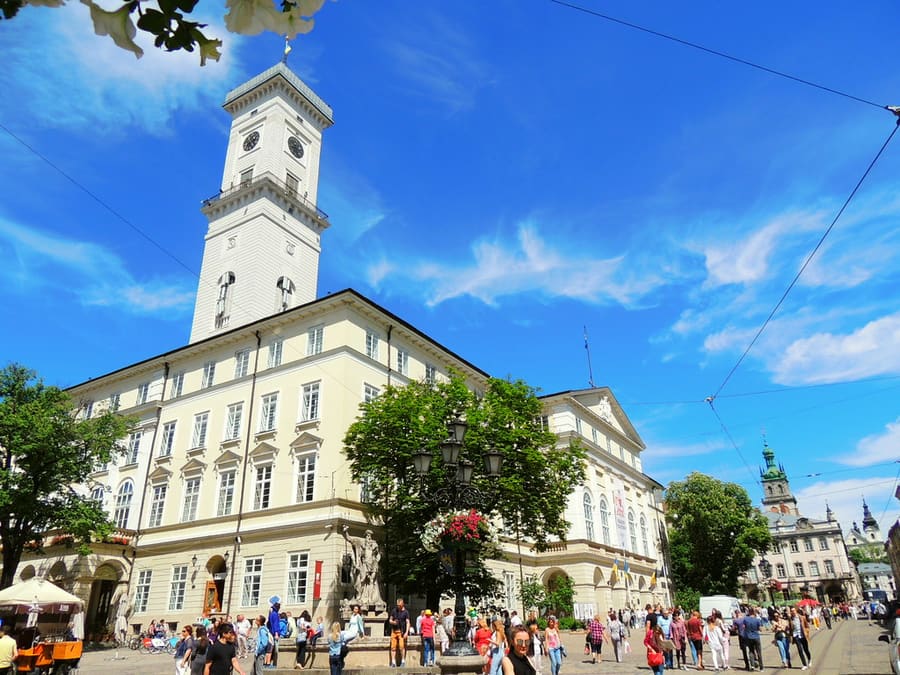
Rynok Square
The cobblestone central square framed by forty-four Renaissance townhouses. Climb the Town Hall tower for panoramic city views.
Perguntar ao ParleyUcrânia
Central European stone, cobblestones, and heavy espresso.
introduction
Lviv feels more like Kraków or Vienna than Kyiv. You navigate its dense Renaissance core entirely on foot, dodging vintage trams on narrow cobblestone corridors. Coffee houses and basement dining halls drive the local pace from early morning until late evening.
Rail arrival focus
Trains terminate at Lviv-Holovnyi main station. Tram lines 1 and 4 run directly from the station forecourt to the Old Town in under fifteen minutes.
UNESCO ensemble
The entire historic centre gained UNESCO status in 1998, preserving intact Polish, Austrian, and Armenian architectural layers.
Transit ticketing
Tap your contactless card on validator screens inside trams and trolleybuses. Physical paper tickets cost slightly more when bought from the driver.
Lviv
ru:User:Russianname · CC BY-SA 2.5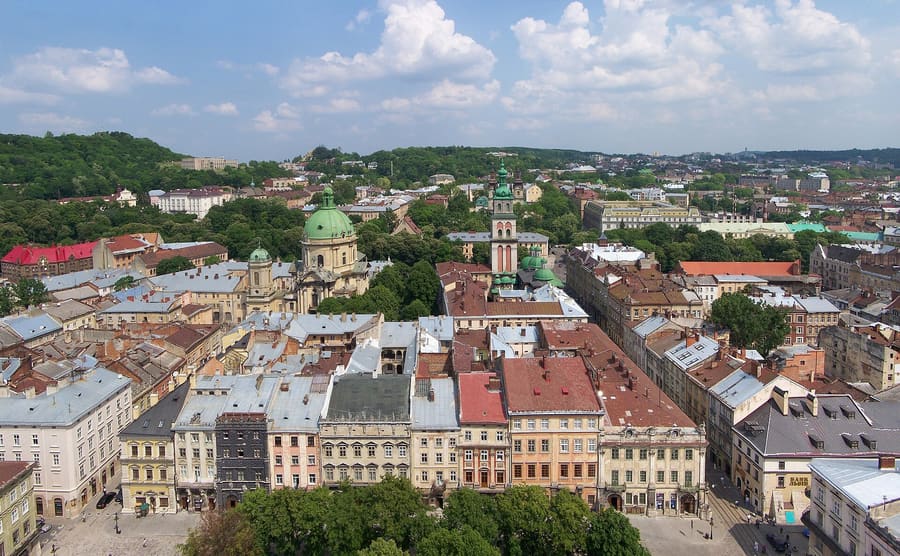
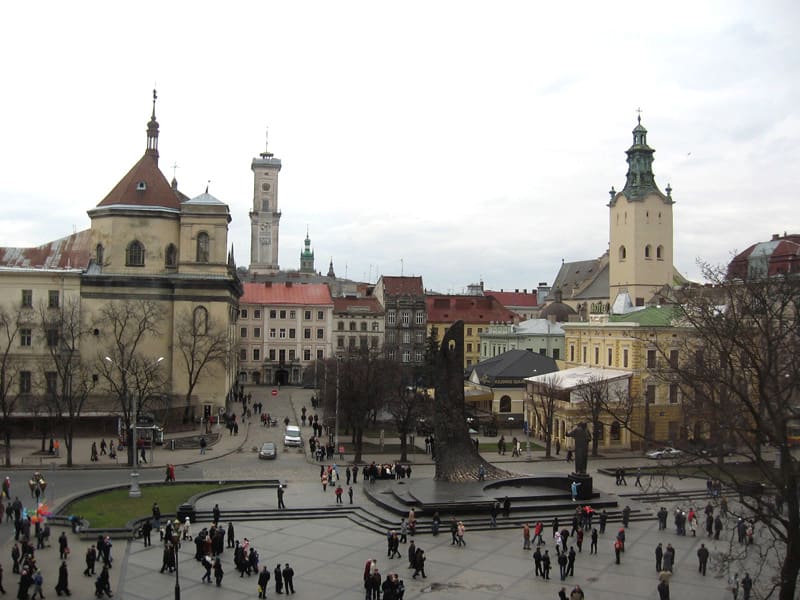
Stare Misto (Old Town) — Pedestrian alleyways, Renaissance façades, heavy tourist traffic, street musicians on cobblestones.
Lestat (Jan Mehlich) · CC BY-SA 3.0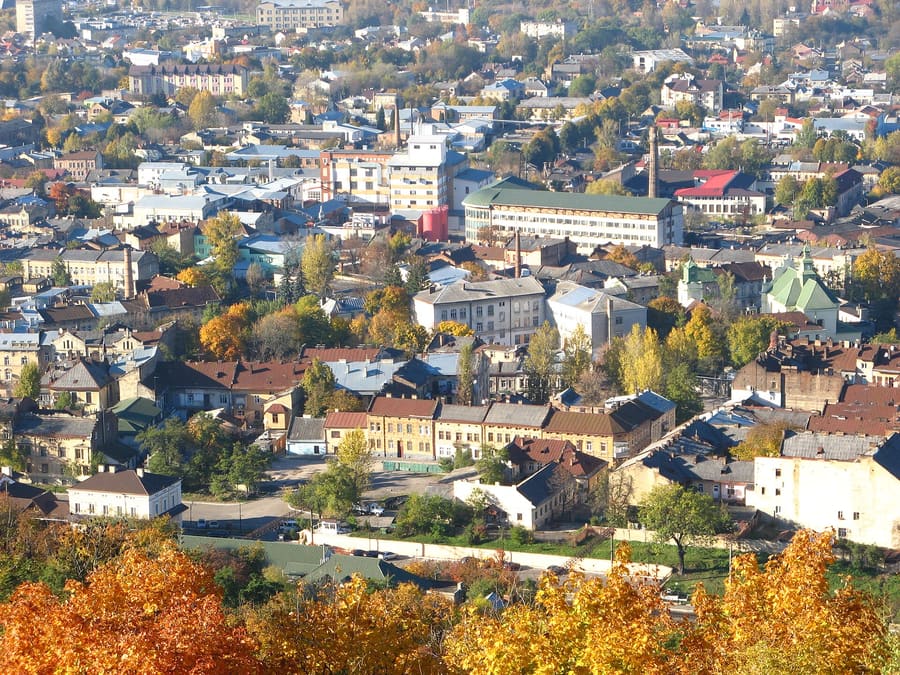
Pidzamche — Former industrial hub turned creative quarter north of the train tracks with brick factories.
uk:user:MSha · Public domain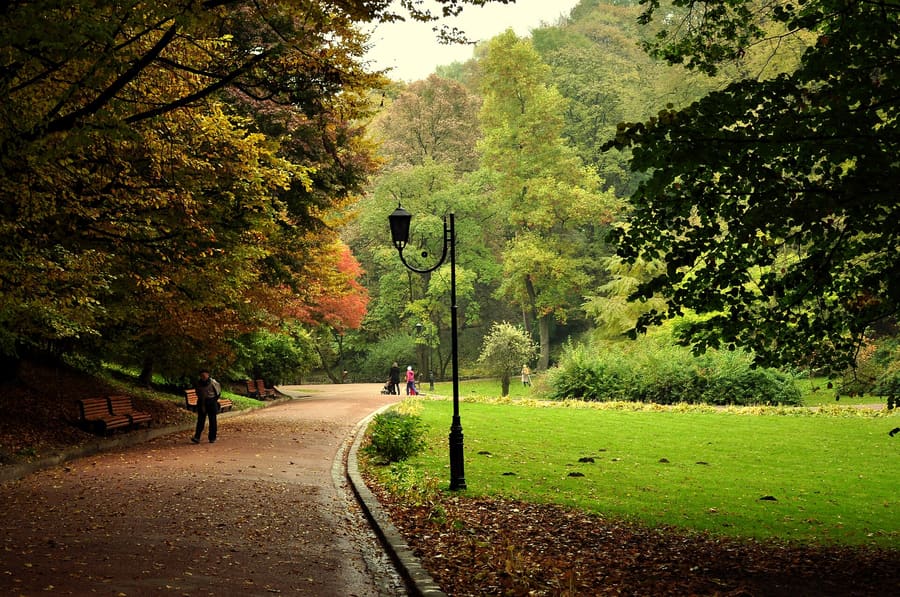
Frankivskyi — Leafy 19th-century avenue district surrounding the Polytechnic Institute and grand city parks.
Sofiya Hunchyk · CC BY-SA 3.0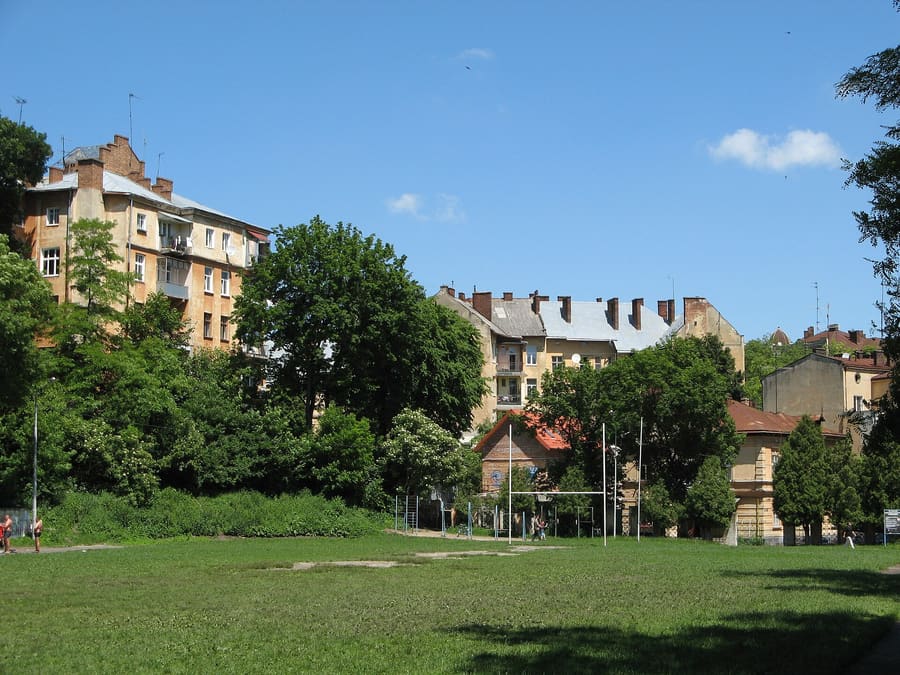
Kastelivka — Quiet garden suburb laid out in the 1890s with ornate Art Nouveau and Secession villas.
MSha · CC BY-SA 3.0highlights
landmark
The cobblestone central square framed by forty-four Renaissance townhouses. Climb the Town Hall tower for panoramic city views.
Perguntar ao Parley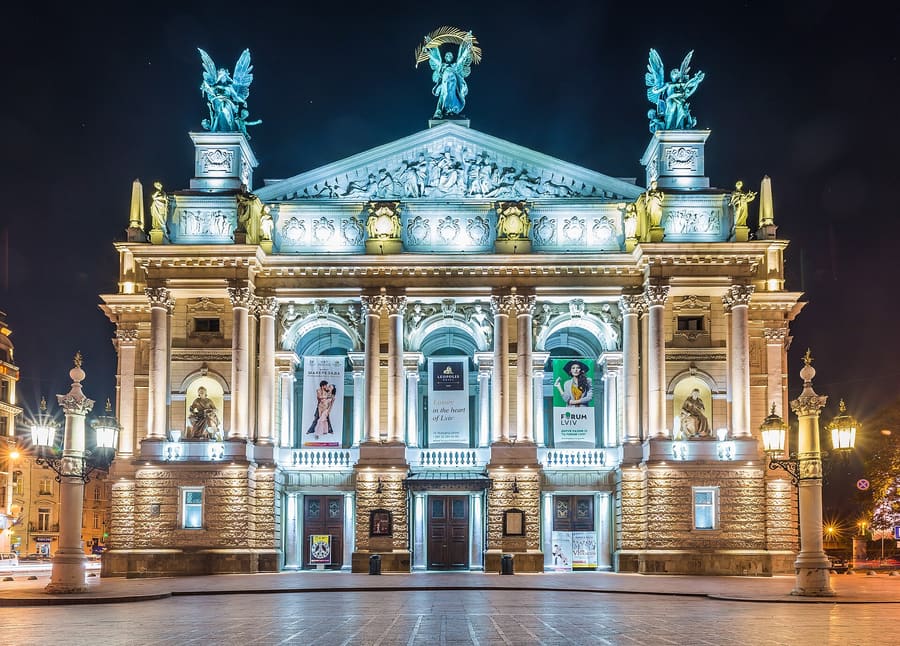
landmark
A Neo-Renaissance grand theatre built in 1900. Tickets for opera and ballet cost a fraction of Western European venue prices.
Perguntar ao Parley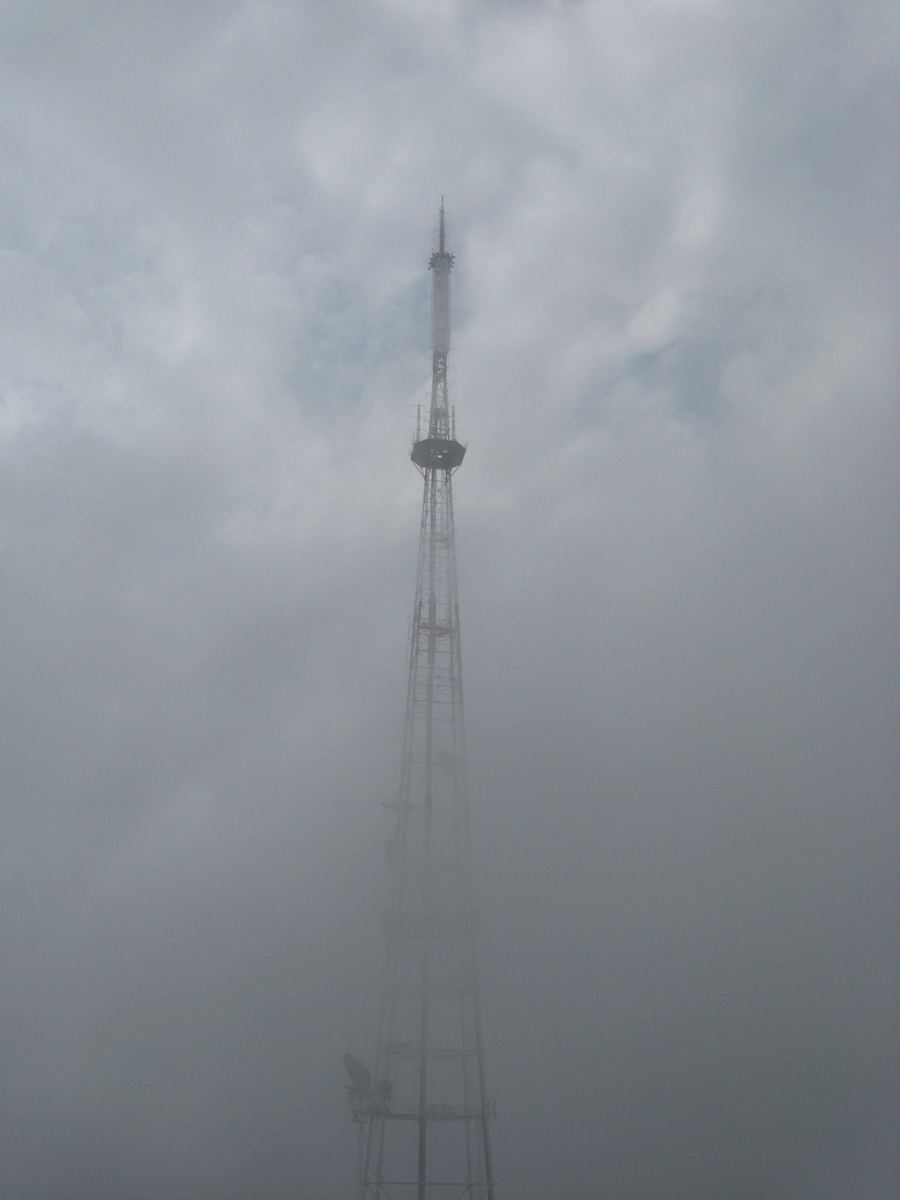
landmark
The highest point in Lviv with a 360-degree overlook. Steep uphill walk required; only ruinous mound traces of the castle remain.
Perguntar ao Parley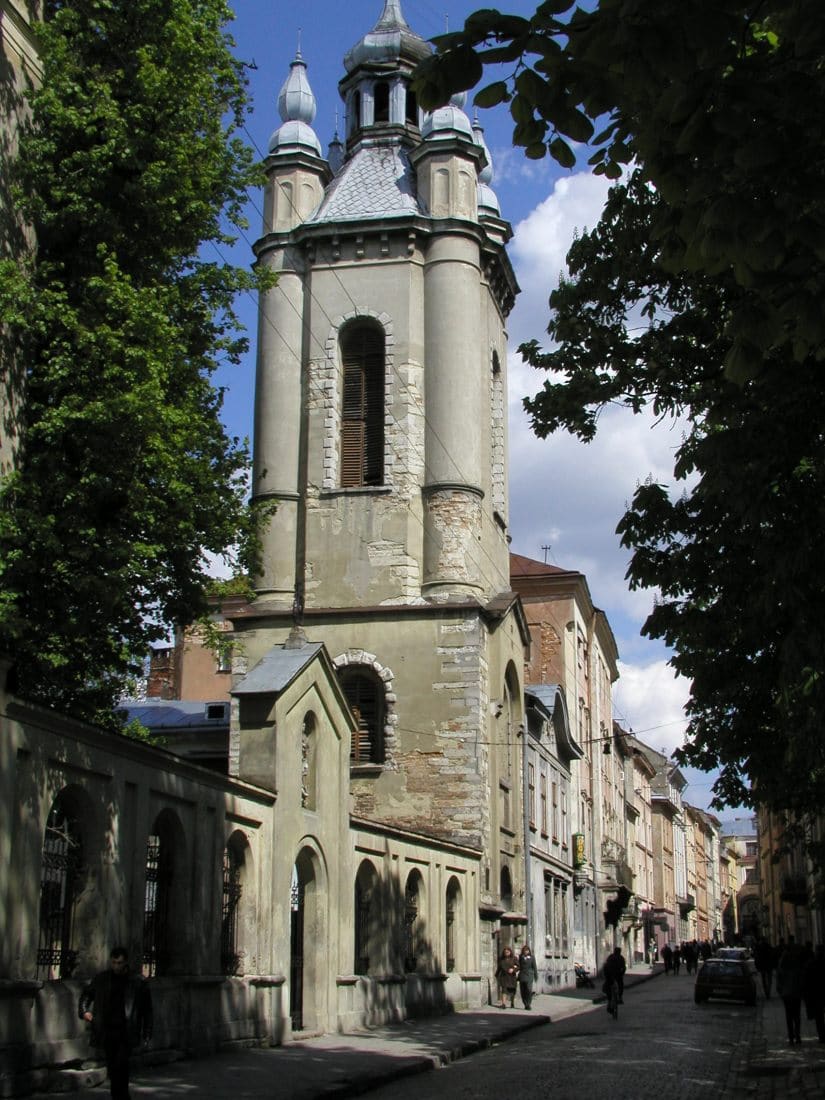
landmark
A 14th-century church with Art Nouveau interior frescoes added in the 1920s. Access through a quiet stone courtyard off Virmenska Street.
Perguntar ao Parley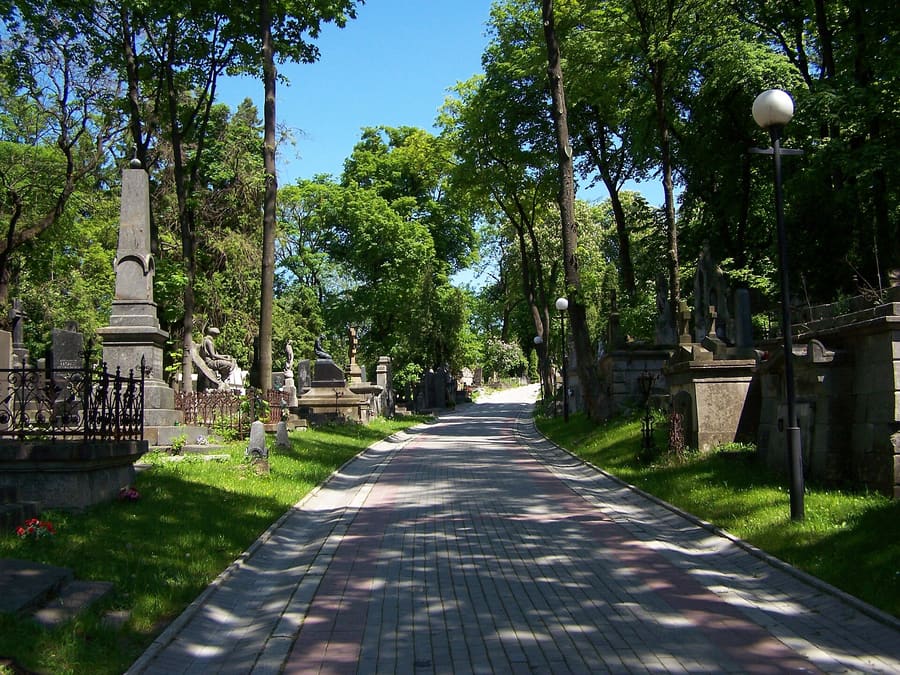
landmark
A historic garden necropolis founded in 1786. Buy an entry ticket at the gate; quiet cobblestone avenues wind past stone tombs.
Perguntar ao Parley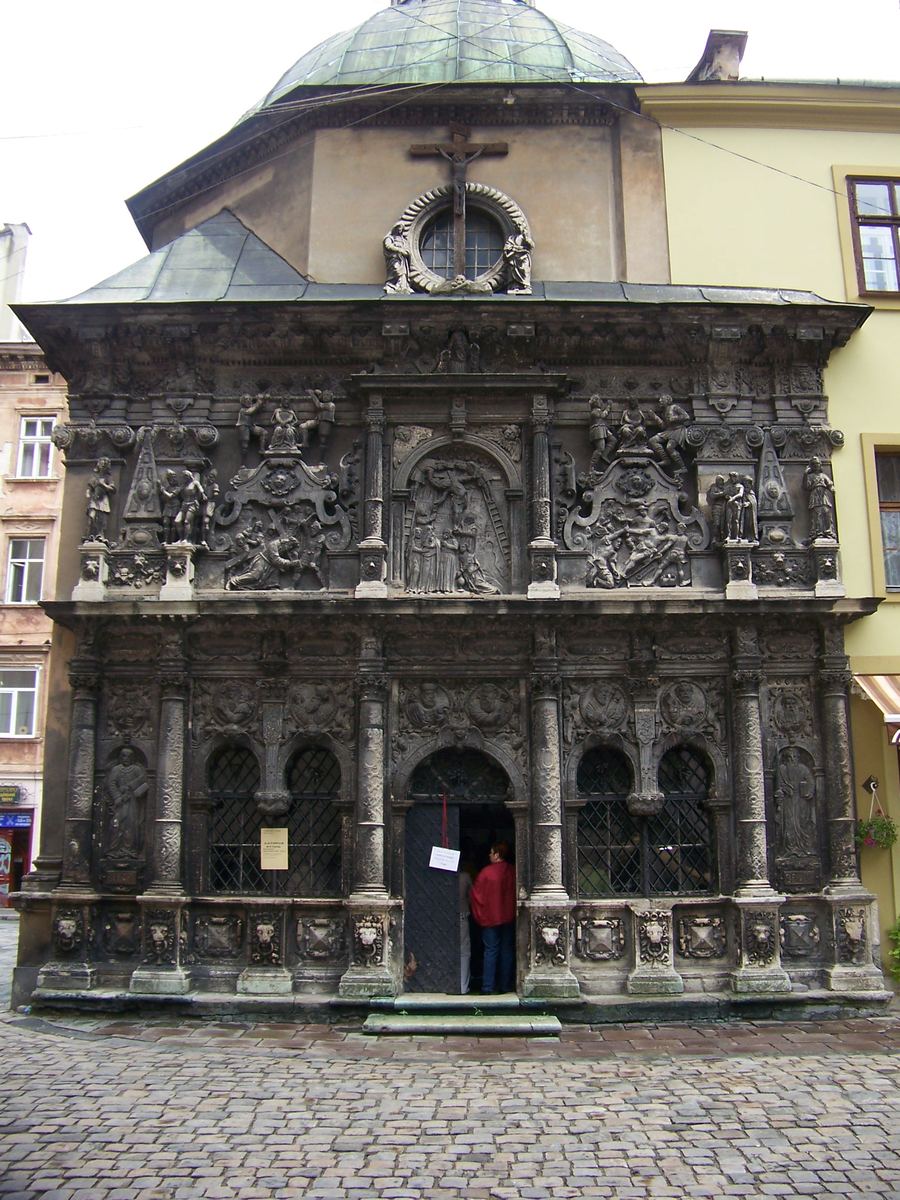
landmark
A 17th-century merchant family burial chapel with a relief facade carved from dark sandstone. Entry is seasonal.
Perguntar ao Parleyattractions
areas
Pedestrian alleyways, Renaissance façades, heavy tourist traffic, street musicians on cobblestones.
PertoRynok Square, Armenian Cathedral, Opera House
Perguntar ao ParleyFormer industrial hub turned creative quarter north of the train tracks with brick factories.
PertoHigh Castle, Jam Factory Art Center
Perguntar ao ParleyLeafy 19th-century avenue district surrounding the Polytechnic Institute and grand city parks.
PertoStryiskyi Park, Lviv Polytechnic University
Perguntar ao ParleyQuiet garden suburb laid out in the 1890s with ornate Art Nouveau and Secession villas.
PertoFrankivskyi, Altana Park
Perguntar ao Parleyfood
Lviv cuisine reflects Galician regional history, blending Ukrainian staples with Polish, Jewish, and Austrian influences. Dining revolves around thick soups, braised meats, and baked curd desserts enjoyed in cellar vaulted dining halls.Coffee here is treated with near-religious formality. Local roast houses serve espresso alongside Galician syrnyk, a dense baked cheesecake glazed in dark chocolate.
Order Galician syrnyk at traditional bakeries along Krakivska Street. It uses pressed cottage cheese rather than cream cheese.
Traditional Galician borscht in Lviv is often clear or served inside a hollowed rye sourdough loaf with garlic pampushky rolls.
Local cafes roast beans in-house; ordering a simple filter or cezve coffee is faster than complex dairy espresso drinks.
history
Founded in the 13th century by King Daniel of Galicia, Lviv grew as a crucial trading post along East-West trade corridors. Over seven centuries, the city passed between Ruthenian, Polish, Austrian, Soviet, and Ukrainian rule, giving its architecture a distinct Central European look.
City founding
King Daniel Romanovych builds a fortress on High Castle hill, naming the town after his son Lev.
Magdeburg Rights
King Casimir III grants self-governing rights, drawing German, Polish, and Armenian merchant guilds.
Habsburg administration
Lviv becomes Lemberg, the capital of Austrian Galicia, triggering grand imperial urban building.
Post-war reshaping
Lviv is incorporated into the Ukrainian SSR; population shifts alter the ethnic composition.
Modern Ukraine
Lviv establishes itself as the cultural anchor of independent western Ukraine.
where to stay
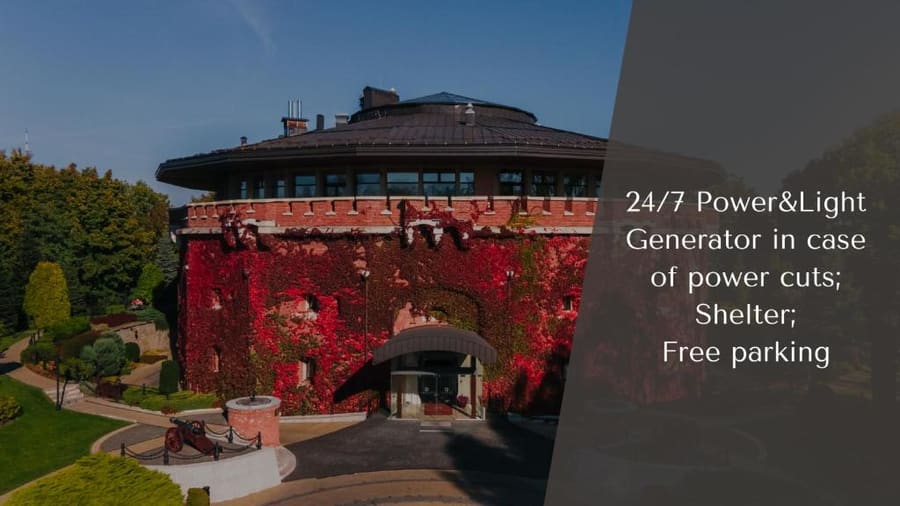
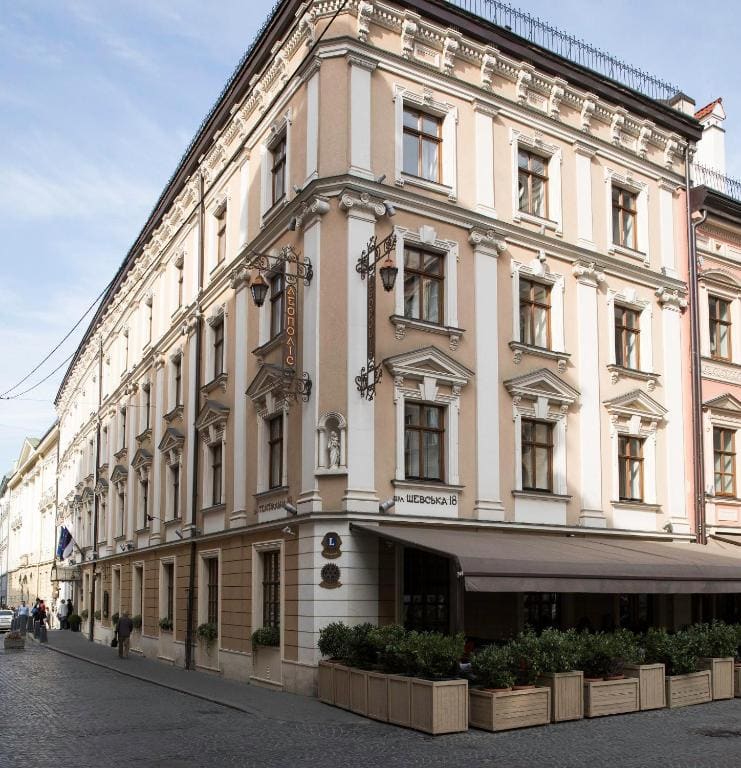
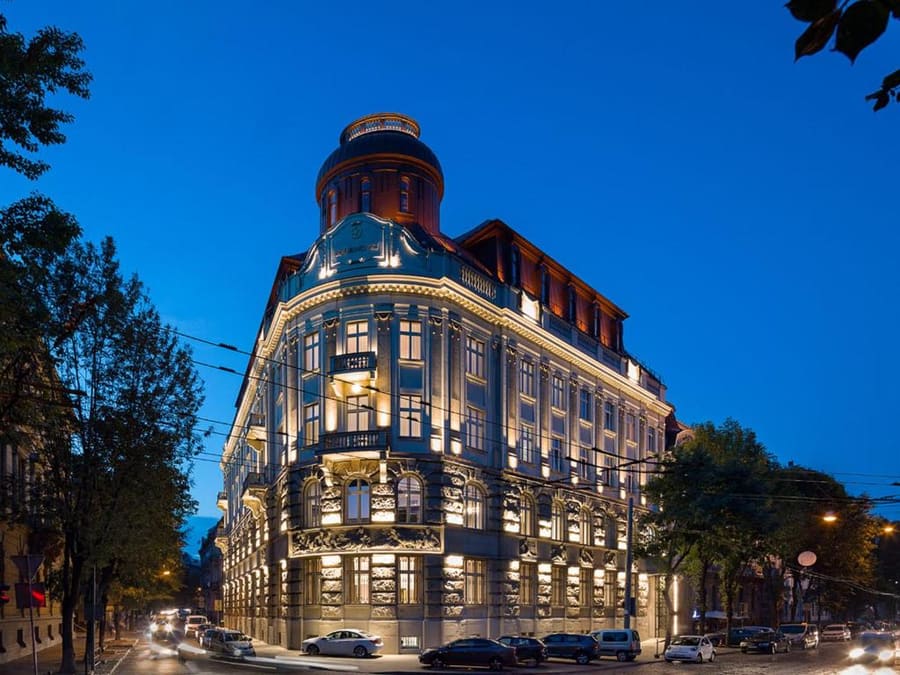
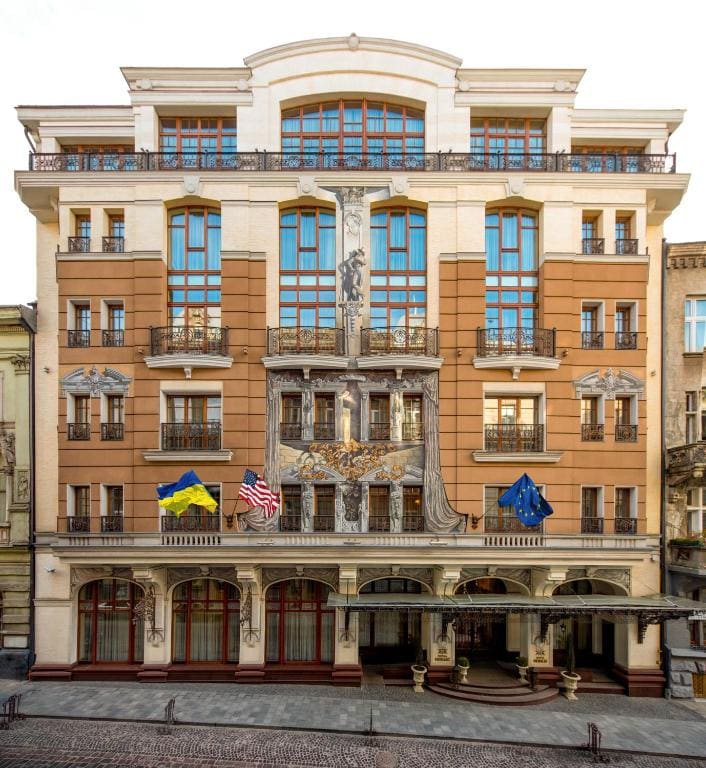
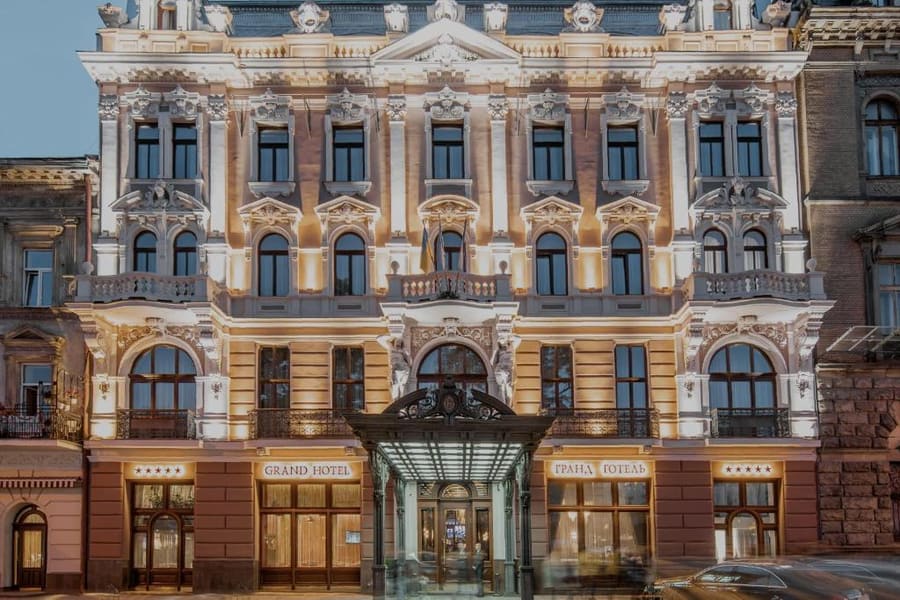
Choose your base based on transport access and noise tolerance. Stare Misto offers historic character but brings early morning street sweepers and late evening crowds. Frankivskyi and Kastelivka offer leafy quiet within a brief tram ride.
Live rates, matched to the areas above.
transport
The historic centre is entirely walkable. For trips to Lychakiv Cemetery or the main rail terminal, Lviv’s tram network provides direct service across major urban corridors.
De Lviv Central Railway Station (Lviv-Holovnyi)
Tram lines 1 and 4 go directly to Rynok Square. Pay via card on the onboard terminal.
Uklon and Bolt operate reliable app pickups from the station parking area.
Negotiate fare before entering unofficial street cabs parked outside the main hall.
Tap your contactless payment card against the green screen inside the carriage immediately after boarding.
Download Uklon or Bolt; local drivers rarely monitor taxi hailing on foreign transport platforms.
Uneven stone cobblestones dominate the Old Town. Flat, cushioned footwear prevents twisted ankles.
cost
Lviv remains significantly more affordable than Western European cities. Card payments are accepted in almost all restaurants and shops, though carrying small cash notes is helpful for street kiosks and market stalls.
Specialty roasters charge slightly more for single-origin filter pours.
Covers a traditional meat dish or soup bowl in central dining cellars.
Flat fare valid across the municipal transport grid when paying by contactless card.
Ticket office is located inside the main city hall lobby area.
seasonality
MAR – MAY
Spring brings mild weather and blooming chestnuts along Svobody Avenue. Rain showers are frequent.
JUN – AUG
Warm summer days with outdoor cafe seating spilling onto cobblestones. Reserve hotels early.
SEP – NOV
Crisp autumn weather and golden foliage in Stryiskyi Park. October brings light frost.
DEC – FEB
Freezing conditions and snow cover. Winter light fixtures and hot spiced beverages in Old Town cellars.
practicalities
Observe national safety regulations; check current local nighttime curfew hours before planning late-night walks.
Exchange money at official street exchange booths ('Obmin Valyut') in the centre rather than train stations.
Ukrainian is the primary language. Younger hospitality staff speak functional English in central venues.
Pay toilets require small cash coins (₴10–20). Modern shopping centres take electronic card taps.
Tap water in Lviv is heavily chlorinated; purchase filtered or bottled mineral water for drinking.