
landmark
Playa Zicatela
A three-mile stretch of beach famous for severe Mexican Pipeline surf break. Strong undertows make it unsafe for casual swimming.
Mexico
Heavy Pacific swells meet Oaxacan market culture.
Puerto Escondido spreads along four miles of Oaxacan coastline, divided sharply by topography and wave height. Big-wave surfers group around the punishing shorebreak of Zicatela, while swimmers gather in the sheltered coves to the west. Open-air pickup trucks called pasajeras run down Highway 200, connecting dusty beach quarters to the commercial hill town above. You come here for fresh Pacific seafood and reliable swells, trading air-conditioned comfort for intense heat and open-air living.
A crisp tlayuda topped with refried beans, quesillo, and grilled beef.
01
landmark
A three-mile stretch of beach famous for severe Mexican Pipeline surf break. Strong undertows make it unsafe for casual swimming.
landmark
A sheltered cove reached by 160 stone steps down a cliff. Calm water makes this the safest spot in town for beginner surf lessons.
landmark
A gentle bay shared with small fishing boats. Calm shallows suit families and casual snorkelers better than open-ocean beaches.
02
03
Beachfront strip lined with multi-story hotels, surf shops, and loud open-air bars.
NearbyDirect access to Playa Zicatela and main oceanfront strip.
Ask ParleyUnpaved streets, barefoot cafes, and a dense concentration of surf hostels.
NearbyLa Punta point break and southern beach bars.
Ask ParleyQuiet residential boulevard with paved sidewalks, bakeries, and family restaurants.
NearbyPlaya Carrizalillo and Playa Puerto Angelito.
Ask ParleyWorking-class hub centered on the highway and local markets.
NearbyMercado Benito Juárez and colectivos running along Highway 200.
Ask Parley04
Oaxacan cuisine meets coastal Pacific fishing in Puerto Escondido. Morning boats land yellowfin tuna, sailfish, and mahi-mahi directly onto the sand at Playa Principal. Inland Oaxacan traditions remain dominant away from the water, where evening grills serve toasted tlayudas slathered in asiento lard and quesillo cheese. Coastal stalls skip complex interior moles in favour of raw fish ceviche cured in local lime juice.
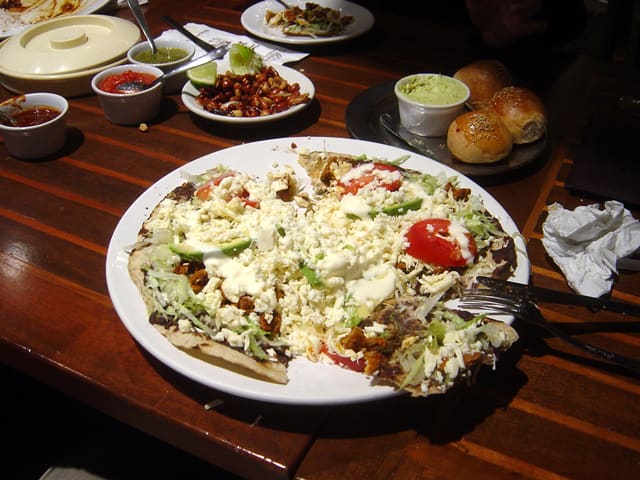
A crisp tlayuda topped with refried beans, quesillo, and grilled beef.
Eat seafood early in the day at Mercado Benito Juárez. Stalls close when daily catches sell out around 14:00.
Street grills near the Centro transport stops fire up after 19:00. Expect large portions meant for sharing.
Small bars stock wild agave spirits distilled in the Sierra Sur. Expect single-variety bottles like Espadín and Tobalá.
05
Puerto Escondido operated for decades as a small shipping point for coffee grown in the Oaxacan highlands. Its isolation ended in the 1970s when international surfers mapped the Pacific swells along Zicatela. The opening of Coastal Highway 200 integrated the settlement into regional transport networks, turning a quiet fishing port into a fast-growing coastal city.
Coffee port established
The bay serves as an anchorage for shipping highland coffee beans south to global markets.
Surfers arrive
International travelers discover the heavy sandbar waves at Zicatela, establishing the local surf culture.
Highway 200 completed
Paved road connections link the town directly to Acapulco and Huatulco along the coast.
Oaxaca highway opens
The Barranca Larga-Ventanilla toll highway opens, cutting overland transit time from the state capital to three hours.
06
Choose your location based on wave exposure and noise tolerance. La Punta offers walkability on unpaved roads near surf breaks, while Rinconada provides quiet residential blocks near calm swimming coves. If you plan to surf Zicatela directly, book along the main oceanfront strip.
Highly rated hotels in Puerto Escondido.


07
Puerto Escondido lacks unified municipal transit. Open-air pickup trucks called pasajeras and shared colectivos run constantly down Highway 200. Taxis do not use meters, so you must agree on a price with the driver before getting into the car.
Board open-back maroon pickup trucks on Highway 200 for cheap travel between quarters.
Local taxis operate on fixed tariff zones without meters. Ask the fare before closing the door.
Scooter rentals are common, but unpaved dirt roads in La Punta feature hidden ruts and deep sand.
White passenger vans marked Ruta 1 run north and south along the coastal road continuously until 20:00.
08
Prices spike during high season from December through April. Coastal quarters like La Punta carry higher prices for coffee and western food than the inland stalls in Centro.
Grilled whole fish with rice and beans at beach coves.
Large toasted tortilla topped with meat and cheese in Centro.
Fixed fare per passenger along Highway 200 routes.
Hourly board rental rates at La Punta or Zicatela.
09
NOV – FEB
Dry skies and warm water draw peak tourist crowds. Ocean swells remain manageable for average swimmers.
MAR – MAY
Air temperatures reach their annual high before the rains start. Coastal humidity rises sharply.
JUN – AUG
Pacific storm swells bring massive waves to Zicatela. Afternoon tropical rains fall regularly.
SEP – OCT
Heaviest rainfall of the year can cause muddy roads. Many tourist businesses close briefly for maintenance.
10
Strong undertows occur along open ocean beaches. Swim only in designated coves like Carrizalillo or Manzanillo.
Many smaller stalls, taxis, and surf shacks do not accept credit cards. ATMs in La Punta run dry on weekends.
Tropical heat and midday sun can cause severe dehydration. Tap water is not safe to drink.
Heavy summer rainstorms cause occasional electricity cuts and weak mobile data coverage.
Mosquitoes multiply after evening rains. Use repellent around unpaved quarter streets.
Contents
Your trip
Going to Puerto Escondido?
Tell Parley when you’re going and what you enjoy, and it plans the days around this guide.
Plan with Parley


